


Categories: What We Feel in Meditation?
May the blessings of the Triple Gem be with you all!
Today, as always, we gather to explore the spiritual path together. I wish to offer you a deeper understanding of a topic that is often discussed but sometimes narrowly understood: the concept of the Pāramitā. This term refers to what we can call the Buddhist perfections or virtues. Many ideas exist about these spiritual qualities, and it is essential that we gain a proper understanding.
Sometimes, a lack of clarity about the Buddhist perfections can cause us to feel stuck within certain limits, hesitant to strive beyond them. This teaching is intended to provide you with a broader, more expansive view, helping you move forward on your journey.
What Are the Buddhist Perfections (Pāramitā)?
If we were to define the word Pāramitā, it literally means an ‘accumulation’ or a ‘gathering together.’ The embedded meaning is one of filling up or completing. We most often encounter this concept in the history of the Buddha, particularly in the Jātaka tales, which narrate his previous lives as a Bodhisatta, a being dedicated to achieving enlightenment for the benefit of all.
Before attaining Buddhahood, he practiced and trained in these qualities for countless eons. Within those words, ‘practiced and trained,’ you can grasp the essence of what these Buddhist perfections are. It is something we all do. Every being traveling through saṃsāra, the long cycle of birth, death, and rebirth, is inevitably practicing and training in certain habits. These cultivated habits are what become our Pāramitā.
However, it is crucial to note that we do not count negative actions, or what are known as unwholesome deeds (akusala), as perfections. The Pāramitā refer exclusively to good, wholesome, and skillful actions (kusala). By focusing on this wholesome side, we create the possibility of ending our journey through saṃsāra and finding true liberation. This teaching has been shared in various ways before, but it became clear that a dedicated exploration of this topic would be beneficial for you.

Why Do Spiritual Results Differ from Person to Person?
To understand what the Buddhist perfections are in a practical sense, let’s look at our own lives. Sometimes people tell me, “Venerable Sir, I still haven’t attained any meditative absorptions (jhāna), nor have I reached any fruits of the path (magga-phala).” Others say, “I haven’t developed any higher mental powers or psychic abilities (abhiññā).” And some mention, with a sense of frustration, “No matter how much I meditate, my third eye (or the divine eye, dibba-cakkhu) has not opened.”
Some even say, “I don’t even have a basic level of concentration (samādhi).” This experience is itself the best evidence we have in this life. We have consistently advised you not to be disheartened or discouraged by this, but to keep trying.
If you look closely at your own nature, you may have noticed how some people only need to meditate for a short time to experience profound results. For example, let’s take two individuals. One may achieve results very quickly, while the other may take a significant amount of time. Some may even practice their entire lives until death with very few tangible results. There is a reason for this.
What we must understand is this: if we practice meditation until our death in this life but do not attain a specific stage of awakening or any of the eight jhānas, or any psychic powers, we might wonder why. The answer is simple: it is because we have practiced these things very little in our past journey through saṃsāra. Our training in recent past lives has been insufficient. We may have been human thousands of lives ago, perhaps even living as a monk, a hermit (rishi), or an ascetic. But we did not practice continuously.
Perhaps in our more recent lives, we were born human but lived as a king or an ordinary person, engaging in meritorious deeds like offerings but not cultivating meditation. This broken, inconsistent practice is the reason why we may have to strive until death in this life to see progress.
The Unbroken Path: Lessons from the Great Beings
Another aspect of the Buddhist perfections we must understand involves great beings like the Bodhisattas. This also applies to those who held chief positions in the Buddha’s dispensation, such as the great laywoman Visākhā, the great lay supporter Anāthapindika, Venerable Ānanda who was the treasurer of the Dhamma, Venerable Sāriputta who was foremost in wisdom, and Venerable Moggallāna who was foremost in psychic powers. To attain such positions, one’s aspiration and practice must be carried forward through saṃsāra without being broken.
This is true for the Great Bodhisattas. If you read the Jātaka tales, you will see that even a Bodhisatta could go astray in their early years. They might break certain precepts, killing, stealing, engaging in sexual misconduct, or consuming intoxicants. However, a Great Bodhisatta has one defining characteristic: they never tell a lie.
If they do wrong and are caught, they admit it truthfully. At a certain point in their life, perhaps around age 25 or 30, their deep-seated aspiration from past lives , their wholesome resolve and accumulated Buddhist perfections, begins to surface. They realize, “I am on the wrong path; I must return to the correct one.” From that point on, they dedicate themselves to accumulating the necessary Pāramitā for the remainder of that life.
This is not a simple journey. This process, governed by kamma, the law of intentional action, is a natural phenomenon, not something orchestrated by anyone. It affects us in countless ways. A Bodhisatta never remains on the wrong path as they approach old age or the deathbed. This is because their final moments and the state of their mind at death (the cuti citta) must be pure to set the course for their next birth, ensuring the continuation of their mission. This same principle of unbroken aspiration applies to all who aspire to significant spiritual roles, whether as a mother, wife, or father of a future Buddha.

The Power of Adhittāna: The Role of Strong Determination
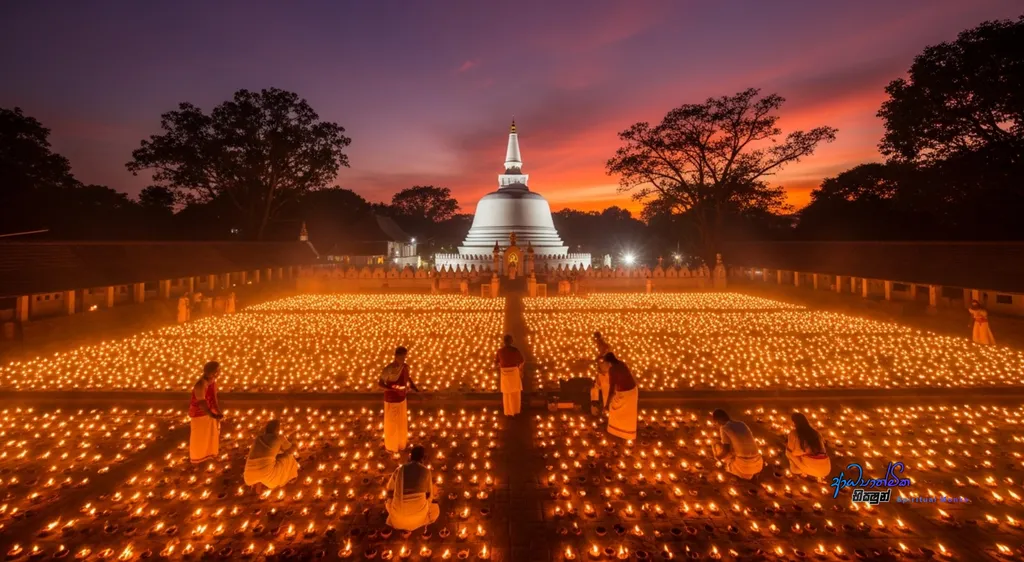
In this discussion, one word is exceptionally important: Adhitthāna. This can be translated as ‘strong determination,’ ‘resolution,’ or ‘aspiration.’ Let’s say we aspire to attain Buddhahood. If that is our goal, we must consistently perform meritorious deeds, both materially (āmisa) and through practice (patipatti). We should engage in meditation, strive to attain the jhānas, practice tranquility meditation (samatha), and study the teachings. After every wholesome act, whether offering flowers and lights, participating in a robe ceremony, or any other deed, we must make a powerful aspiration.
This aspiration should be firm: “May these wholesome deeds become the Buddhist perfections required for me to attain Buddhahood in saṃsāra! May the strength and energy (viriya) to carry this determination forward without break be with me! May this resolve remain active, so that in future lives, I will remember and walk this same path!” This kind of strong determination must arise within us.
This is not just for aspiring Buddhas or for those seeking high positions. Even if you simply wish to realize Nibbāna without any special status, you must think in this way. You must make a firm resolution. Some people perform good deeds, meditate, and then make a casual wish, “Oh, may this lead to Nibbāna.” This is not effective. Your aspiration should be made with such conviction that it gives you goosebumps. It requires building up a powerful inner drive, a spiritual ‘morale,’ much like a soldier gathers strength before heading into battle.
With deep concentration and a powerful, dignified resolve, you should determine: “May this act contribute to my specific spiritual perfection.” Whether your goal is Nibbāna, a high spiritual station leading to Nibbāna, or Buddhahood, whatever you aspire to you must direct your merit towards it with an unwavering Adhitthāna. If you hope to complete your journey in this very life, within the dispensation of Gotama Buddha, you must resolve with immense strength: “May this be a cause for me to attain the four stages of awakening!” It is only then that these efforts become truly successful. This is something you must remember well.
The Heart of the Path: Cultivating Paññā (Wisdom)
You must remember that to realize Nibbāna, Paññā, or wisdom, is absolutely essential. It cannot be done without it. Even the great disciples like Sāriputta and Moggallāna needed this wisdom, accumulated as one of their Buddhist perfections. A teacher, even a Buddha, can only show the way and provide the initial tools. The student must have the wisdom to understand the teachings.
No matter how many material offerings you make, if you do not cultivate wisdom, you will not receive it. How do you practice it? While you are listening to this very teaching, or while you are making an offering, notice the state of your mind. If you are acting out of anger, greed, or attachment, wisdom is not present.
Many people perform meritorious deeds as a matter of routine. They may have faith, but they lack the understanding that they must simultaneously subdue the unwholesome roots of greed (lobha), hatred (dosa), and delusion (moha), while cultivating the wholesome roots of non-greed (alobha), non-hatred (adosa), and non-delusion (amoha).
Because they lack this insight, even when they wish for Nibbāna, the aspiration is weak. But when you act with clear understanding, “To attain Nibbāna, I need to create the right conditions for meditation. May this act help me! May I attain wisdom!”, the aspiration becomes powerful. Here, I mentioned a crucial word: ‘wisdom.’
The moment you recognize and subdue a negative state of mind, for example, if you feel anger, or if looking at someone triggers lust or even simple affection for a child, and you consciously decide to let it go, that is the arising of wisdom. That wisdom becomes one of your Buddhist perfections. Once you have done this, you should make a determination: “In this way, may I be able to use wisdom to quickly gather my Pāramitā throughout saṃsāra.”
Wisdom in Action: From the Forest to Daily Life
This lack of developed wisdom is why many people today find meditation difficult. A teacher can explain the points, but grasping them is hard without this inner faculty. This is especially true for older individuals, whose physical senses may be declining. That is why the Buddha encouraged people to strive while they are young. It is not impossible when old—history is full of wise elders who attained enlightenment, but it is more challenging.
Wisdom is needed to develop both tranquility (samatha) and insight (vipassanā). It is needed to identify the defilements (kilesas) in the mind and to understand how to eradicate them. A teacher helps you understand this wisdom, but you must have some of it already, cultivated in past lives, for it to surface.
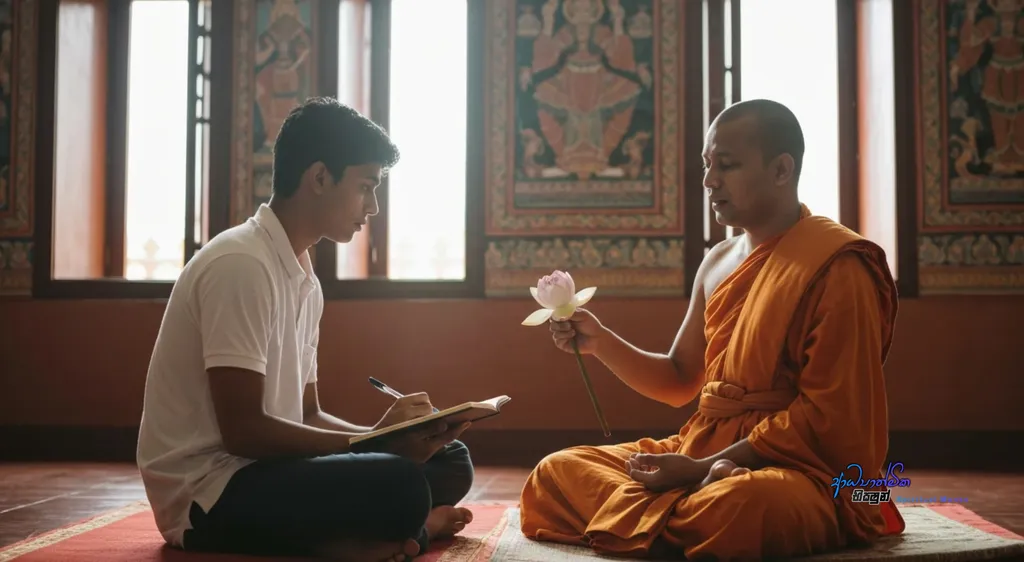
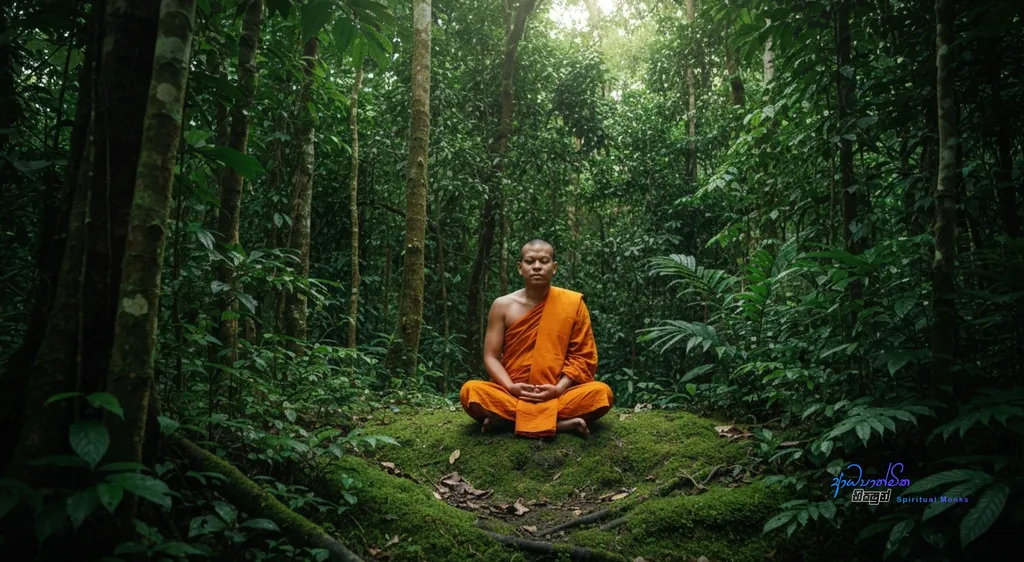
Consider a monk who has trained under a teacher for ten years and is now told, “Go to the forest and practice alone.” In the dense wilderness, he has no teacher. How does he develop his mind? He relies on the wisdom the teacher imparted. He recalls the teachings. When lust arises, he remembers the Buddha’s instructions on how to abandon it.
When various mental hindrances appear, he learns not to get caught by them. In the beginning, when hatred arises, he might get caught and act on it. But as his wisdom matures, he recognizes the hatred the moment it appears, with mindfulness and clear comprehension (sati–sampajañña). He immediately subdues or eradicates it.
This happens in daily life too. Imagine you are on your way to work and see a monk on his alms round. You have only your own lunch with you. Your mind debates, “Should I offer it or not?” A tug-of-war happens in your thoughts. The wise person quickly resolves this: “I can offer this and eat at the canteen, or even skip a meal and rejoice in this wholesome act.
I must offer this to a monk who is cultivating virtue, concentration, and wisdom.” That determination arises, and the offering is made. In that moment, you have wisely managed your mind. This itself is a moment of meditation. It contributes to your store of Buddhist perfections, like a single drop of water added to a great ocean.
Bringing It All Together: A Balanced and Continuous Practice
To accumulate enough Buddhist perfections for a goal like Buddhahood or even for the liberation of a disciple, we need countless such moments. If you find these concepts fading from your mind, I encourage you to read this teaching again and again. Doing so can help awaken the dormant habits from your previous lives. Those thoughts will re-emerge, and your mind will naturally incline towards following this path.
Therefore, with this understanding, engage in both material generosity and the practice of the path. But do not remain stuck only in the material aspects. Many people focus only on making offerings of flowers and other beautiful rituals. There is no fault in doing these things beautifully, but they become trapped within that limited scope. That alone is not enough. You must also train in the path of practice: tranquility and insight meditation.
This is how we quickly fulfill our Buddhist perfections. Otherwise, the Buddha would not have needed to teach the threefold meritorious actions: Generosity (Dāna), Virtue (Sīla), and Mental Cultivation (Bhāvanā). If giving was enough, he would have stopped there. You must practice all three. Even the Great Bodhisattas practice all three to accelerate their journey.
Often, people focus on just one: only giving, only virtue, or only meditation. Strive to practice all three, with an emphasis on meditation, as it is the direct cause for the arising of wisdom. This is what enables you to fulfill all ten Pāramitā, such as patience (khanti), energy (viriya), and the rest, whether your goal is Buddhahood, the liberation of a disciple, or that of a silent Buddha.
A Final Blessing for Your Journey
This is the understanding I wanted to share with you. I trust that I have provided all the necessary points for you to comprehend and walk the path of the Buddhist perfections. With these thoughts, I will conclude this teaching.
Reflecting on these points, may you be able to understand them deeply. By the power of the Triple Gem, the Buddha, the Dhamma, and the Sangha, may you gain the ability, strength, courage, and good fortune to fulfill your own chosen aspirations, perfecting your Pāramitā accordingly.
We invite you to walk this path with us. Read our teachings, and most importantly, apply them practically in your own life. as you practice, questions will naturally arise. Please feel free to share your experiences and questions in the comments below, via email or contact form. I will do my best to offer guidance in future talks based on your progress. For now, begin this practice with an open heart and a mind free from expectation. Cultivate it correctly, and may you find the clarity and peace you seek.
Thank you for joining us. We hope this blog will be of great benefit to your spiritual journey.
May you all be well and happy.
May the blessings of the Triple Gem be with you all!.


