


Categories: Third Eye: Practical Meditation
May the blessings of the Triple Gem be with you all!
Today, we will explore a topic that many of you have asked about: the ‘Third Eye’ and its connection to what we call wisdom. A common question arises: Is opening the Third Eye the same as attaining wisdom? Many people hold this belief, but it’s important to clarify this from the outset. To think that awakening the Third Eye, or what is known in the teachings as the divine eye, the Dibba-cakkhu-ñāṇa, instantly grants you complete understanding of everything is a misunderstanding. It simply doesn’t work that way.
Let me offer an example. We perceive the world with our two physical eyes. We see colors, shapes, and countless objects. But do we gather all the information about the world just through our eyes? No. We have other senses, hearing, smelling, tasting, touching, that also send data to our mind, creating a fuller picture of reality.
Each sense provides a different piece of the puzzle. Similarly, the Third Eye is just one specific spiritual or psychic ability. It is a powerful tool, but it does not provide a complete understanding of all realms of existence on its own. It is one faculty among many, not the final attainment of third eye wisdom.
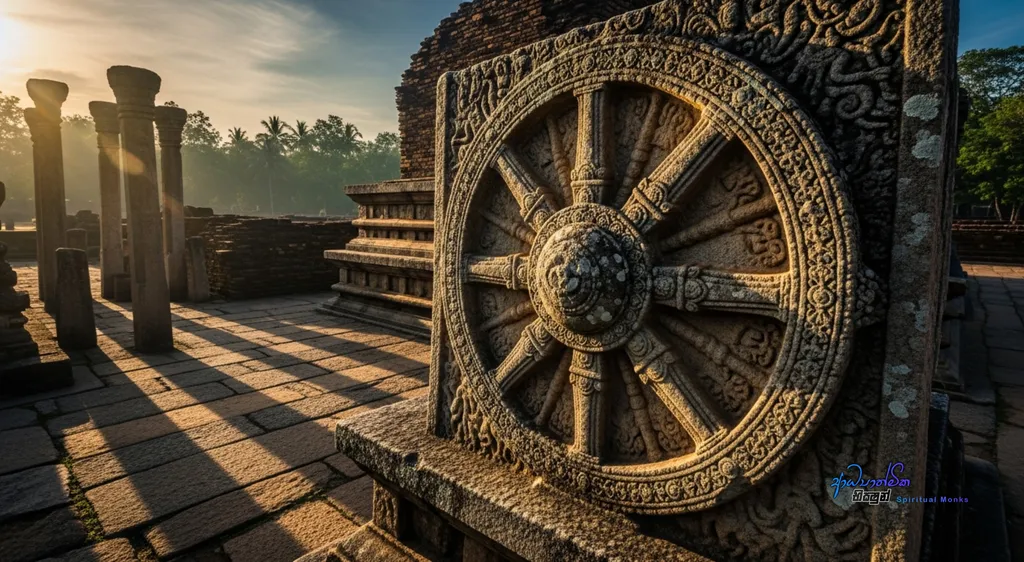
What is the Third Eye in a Spiritual Context?
The Third Eye, or the divine eye, is a spiritual capacity, a type of extrasensory perception. In our practical meditation programs, we have discussed the methods to develop it. However, whether someone develops this ability depends on their past practices and accumulated spiritual momentum from previous lives, a concept known as Saṃsāra, the long cycle of rebirth. Some may develop it in this life; others may not.
There is no need for disappointment if it doesn’t manifest for you now. If you practice diligently in this life, the conditions may ripen for it to arise very quickly in a future life. But if you become disheartened and stop practicing, you will face the same situation in the next life as well. It is your consistent effort that matters.
It is crucial to understand that this ability is distinct from wisdom, or what we call Prajñā. We have previously explored the differences between wisdom, intelligence, and knowledge. The Third Eye is a specific kind of knowledge or ñāṇa, gained after dedicated and systematic meditation practice.
This special sight can certainly support the development of third eye wisdom. It allows us to perceive things beyond the range of our physical eyes, things we couldn’t see before. Seeing these otherwise hidden aspects of reality can help deepen our understanding of the world, providing more data than our two physical eyes alone ever could.
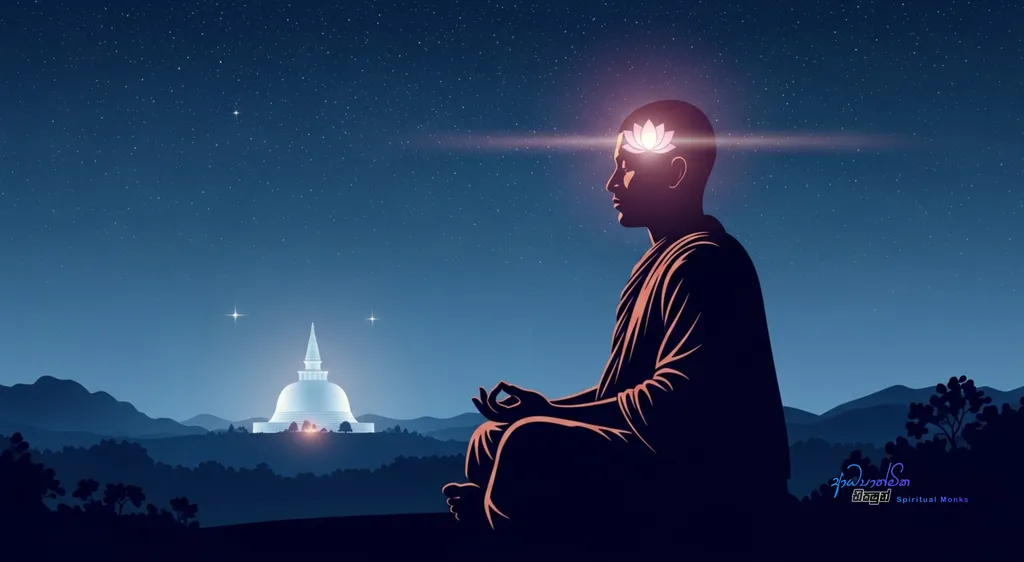
Stories of Spontaneous Awakening: When the Unseen World Appears
Let me share some real-world examples. You may or may not believe in non-human beings (amanussayo), and that is your personal right. However, I have personally spoken with individuals who previously did not believe in heavens, hells, or spiritual realms. Some of them came from other religious backgrounds, such as Catholicism.
Over time, some of these people began to naturally perceive unseen beings in their own homes. For some, this occurred due to malevolent spiritual influences or curses directed at their homes. For others, it happened because these beings wanted to cause them harm and disturbance.
But there is another group for whom the Third Eye opens naturally, without any external cause. We have discussed this phenomenon in our series on the natural opening of the Third Eye. Many of these individuals, some from different faiths, started seeing these non-human entities and were understandably confused. I’ve also spoken with young people, both Buddhist and non-Buddhist, including university students, who once held very skeptical views.
They would say things like, ‘Venerable Sir, in university, I had a different opinion. I didn’t believe in these things. I believed in the Buddha’s practical teachings about the mind, but I was skeptical about heavens and hells. I remained neutral on those topics.’ Some even admitted they used to mock such beliefs.
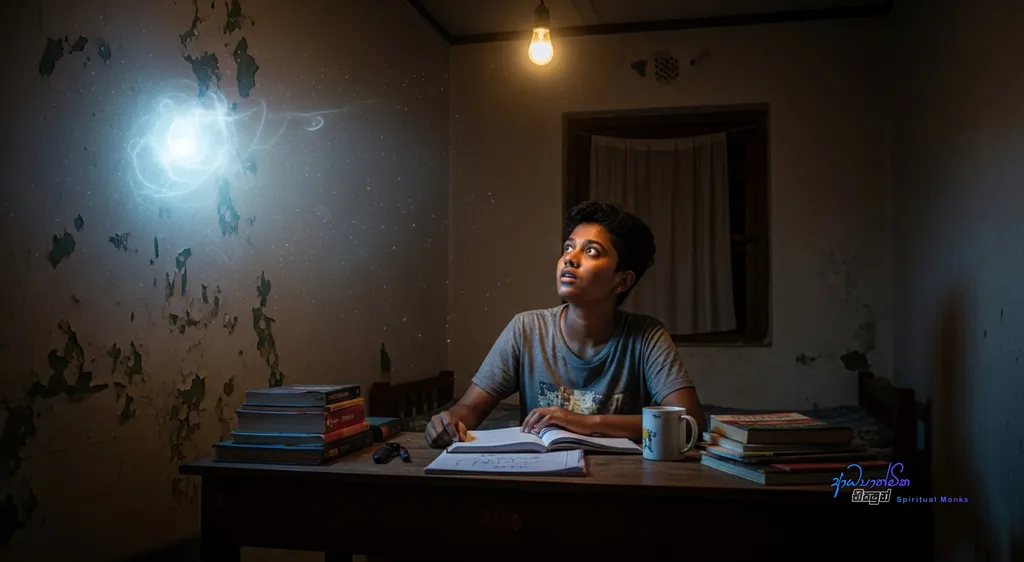
Navigating a New Reality: From Skepticism to Insight
For these individuals, life events triggered a spontaneous awakening, and they suddenly began to see things. Their first challenge was to figure out if they were experiencing a psychological delusion or something real. Unfortunately, some have harmed themselves by seeking help from the wrong places. They turned to psychiatrists, and while some mental health professionals respect the Buddha’s practical teachings, many are limited by a purely materialistic framework.
These professionals, much like the skeptical students, might accept the Buddha’s teachings on the mind because they find them practical, but they dismiss or remain neutral about anything that doesn’t fit their model. They operate from their own limited level of understanding. When a person with these experiences consults such a psychiatrist, they are often misdiagnosed with a mental disorder and prescribed medication. This is a great tragedy.
We have consistently taught that these extrasensory abilities, including the Third Eye and meditative absorptions (dhyānas), are not mental illnesses. It is crucial to approach this with understanding. If a friend or family member begins to have such experiences, do not rush them to a psychiatrist.
This is not something that requires medical treatment. It is a faculty arising from their past spiritual practices. The real problem is the lack of wisdom and guidance to understand what is happening. This is precisely why we speak openly and directly about these topics, to provide the clarity that is so often missing.
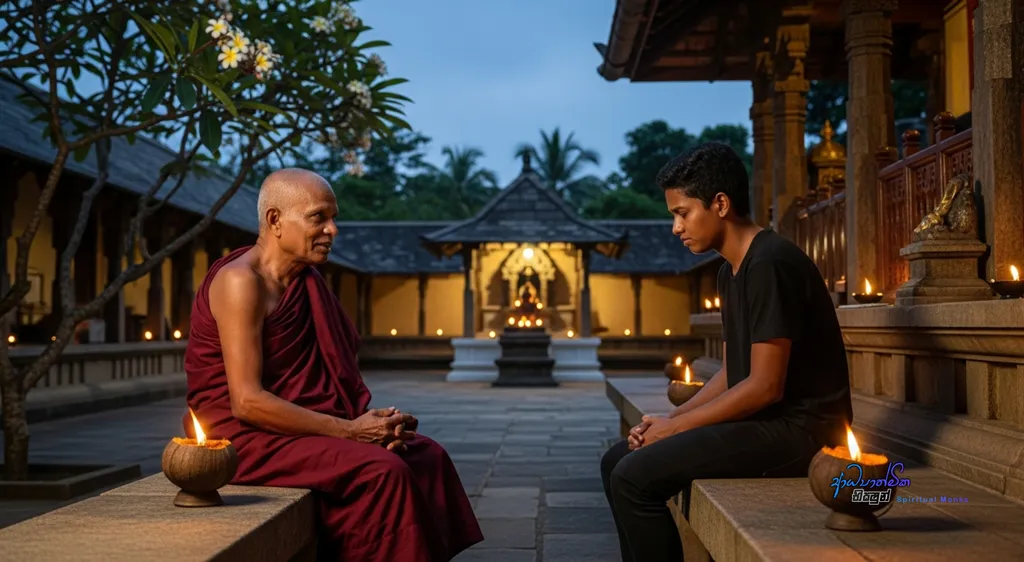
The Third Eye as a Catalyst for True Wisdom
Many people who once held wrong views have had their perspectives completely changed by these experiences. These abilities, arising from the power of past good deeds (puñña) and spiritual practice, allowed them to witness a deeper reality for themselves. This direct experience became a powerful catalyst, shifting their lives towards a spiritual path. They realized that their previous materialistic worldview was incomplete. This is a key point: seeing the unseen can help correct a wrong view (micchā diṭṭhi) and incline the heart toward the spiritual journey.
Some of these individuals, after their awakening, began to follow the Buddha’s teachings. Some even left their previous religions, like Catholicism, to pursue this path independently. We never force anyone to join our religion; that is not our aim. Our goal is to reveal the truth of nature, the universal laws that govern existence.
This truth, which includes the law of intentional action and its results (Kamma Niyāma), is what the Buddha taught. It is a path of cause and effect. By awakening to these deeper realities, people are motivated to explore this practical framework, and the third eye wisdom journey begins.
The Trap of Attachment: When a Tool Becomes a Prison
While the Third Eye can be a helpful starting point, it can also become a dangerous trap. There are many people in the world whose Third Eye has awakened, but they do not use it to follow the Buddha’s path. Instead, they grasp it as a part of their identity. They might renounce worldly pleasures, money, family, possessions, but they cling tightly to their psychic ability with the view of ‘I’ and ‘mine’. They believe that what they see with this eye is the ultimate truth, the final wisdom. They think, ‘There is nothing beyond this.’
I have seen spiritual teachers online who are caught in this very trap. They are confined to the limits of their psychic vision, and they keep their followers confined there as well. They have reached a certain stage and believe it is the final destination. We, however, always emphasize that you should not stop there. You must continue to follow the Buddha, for there is a reality that lies even beyond these psychic realms. True third eye wisdom is not just about seeing; it’s about understanding and letting go.
This warning applies not just to the Third Eye, but to all psychic powers, known as the higher knowledges or Abhiññā. These can include:
- The divine ear (Dibba-sota): Hearing sounds from other realms or at great distances.
- Mind-reading (Paracitta-vijāṇana-ñāṇa): Knowing the minds of others.
- Remembering past lives (Pubbenivāsānussati-ñāṇa).
- Various psychic powers (Iddhividha-ñāṇa): Such as moving through the air.
- Knowing the passing away and rebirth of beings (Cutūpapāta-ñāṇa).
One can attain any of these abilities, but you must never mistake them for the ultimate goal. Do not limit yourself by thinking, ‘This is wisdom; this is enlightenment.’ All of these combined still do not equal the final truth.
The Buddha’s Parable: Seeking the Heartwood of the Tree
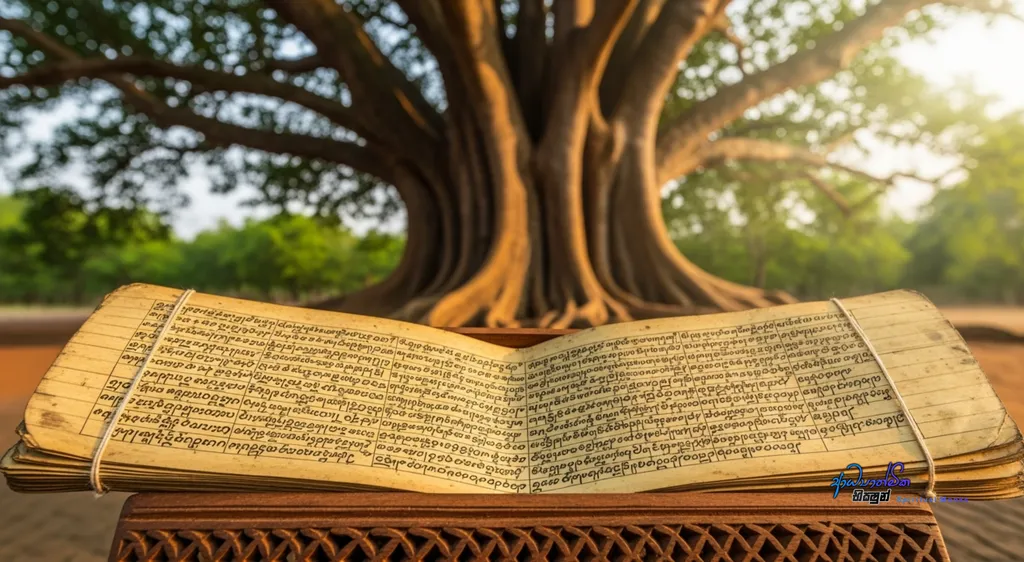
To understand this better, I recommend reading the Buddha’s discourses in the Majjhima Nikāya, specifically the Cūḷasāropama Sutta and the Mahāsāropama Sutta. You can easily find them online. In these teachings, the Buddha uses a beautiful parable of a man searching for the heartwood of a great tree. A person might enter the monkhood and achieve certain things along the way, but get stuck at intermediate stages, mistaking them for the final goal.
The Buddha compares these stages to the leaves, branches, bark, or softwood of the tree. The true seeker is the one who goes past all these and reaches the solid heartwood, the unshakeable liberation of the mind. I won’t give a full analysis here, as my focus is always on the practical application, but if you read it, you will understand what I mean about not getting stuck.
The spiritual journey should never be confined. All these abilities can become fuel for your wisdom, but they are not the wisdom itself.
The Real Path: Are Psychic Powers Necessary for Enlightenment?
At this point, you might wonder if you need to develop these five higher knowledges (pañca-abhiññā) to attain wisdom. The answer is no. It is absolutely not a requirement. There have been countless individuals in the past, and there are many in the present, who have attained the fruits of the path, even reaching the state of an Arahant (a fully liberated being), without ever developing special psychic powers. And such people will continue to arise in the future.
Therefore, walk your spiritual path without fear. Do not limit yourself. Whether you gain psychic abilities or not, whether you achieve meditative absorptions (dhyānas) or not, do not dwell on them. Constantly remind yourself, ‘This is not the limit; there is a wisdom and understanding beyond this.’
The core of the practice is to follow the Buddha’s teachings on mindfulness, the Four Foundations of Mindfulness (Satara Satipaṭṭhāna) and clear comprehension (Sati Sampajañña). Use these tools to study your own mind, to eradicate the mental defilements (kilesas), and to walk the Noble Eightfold Path (Āriya Aṭṭhaṅgika Magga).
This is not about rejecting or looking down on psychic powers. If you have them, use them as a support for your journey. If you don’t have them, simply proceed on the path without them. If you continue in this way, your mental state will elevate day by day. But remember, this is a practical path. Your progress depends entirely on your effort, dedication, and enthusiasm.
Conclusion: The True Purpose of Your Spiritual Journey
This is the understanding I wished to share with you today. True third eye wisdom is not a magical sight, but a profound understanding of reality. Please take this to heart and reflect on it. Understand this distinction clearly and proceed on your path with right intention.
May you all be able to put these teachings into practice.
We invite you to walk this path with us. Read our teachings, and most importantly, apply them practically in your own life. as you practice, questions will naturally arise. Please feel free to share your experiences and questions in the comments below, via email or contact form. I will do my best to offer guidance in future talks based on your progress. For now, begin this practice with an open heart and a mind free from expectation. Cultivate it correctly, and may you find the clarity and peace you seek.
Thank you for joining us. We hope this blog will be of great benefit to your spiritual journey.
May you all be well and happy.
May the blessings of the Triple Gem be with you all!.


