


Categories: Third Eye: Practical Meditation
May the blessings of the Triple Gem be with you all!
Third eye meditation is a powerful tool on our spiritual journey, where we often seek profound experiences, and many of you have asked about the practice of opening the ‘third eye’. Today, I wish to share a meditation for this purpose. But before we begin the practice, it is essential to prepare our hearts and minds.
If you haven’t read the previous article where I introduced the concept of the third eye and its significance, I encourage you to do so first. It provides important context that will help you get the most out of this meditation.
This preparation is the most critical part of any spiritual endeavor, whether it is a calming meditation, known as samatha, or an insight meditation, known as vipassanā.
The first and most important rule is this: we must release all expectations. In the spiritual world, clinging to a desired outcome creates a form of tension. If you start this third eye meditation thinking, “I must open my third eye, I will see pyramids, talk to divine beings, or remember past lives,” you are building a wall of desire. At the very least, one should not even have the expectation, ‘My third eye must open.‘ Holding such expectations only pushes what we can achieve further away. When we become attached to something with craving, it moves away from us. This is the very reason why some people do not make progress even after meditating for many years.
In Buddhism, this intense craving is called tanhā. This craving is a root cause of Dukkha a deep, pervasive unsatisfactoriness that goes beyond simple pain. The moment we grasp with attachment, the very thing we seek moves further away.
The Buddha taught us to neither cling nor push away, but to find a balanced, neutral state of mind. This is the essence of the Middle Path. We practice with a goal, yes, but we hold that goal lightly, without attachment. So, let go of the need for results. Your only focus should be on the path itself. If we do, not only will we fail to achieve the expected results, but even the concentration we currently possess may slip away. Even if one were to attain something, there is a risk of becoming attached to it and getting stuck right there.
Therefore, it is essential to approach meditation free from all these expectations.
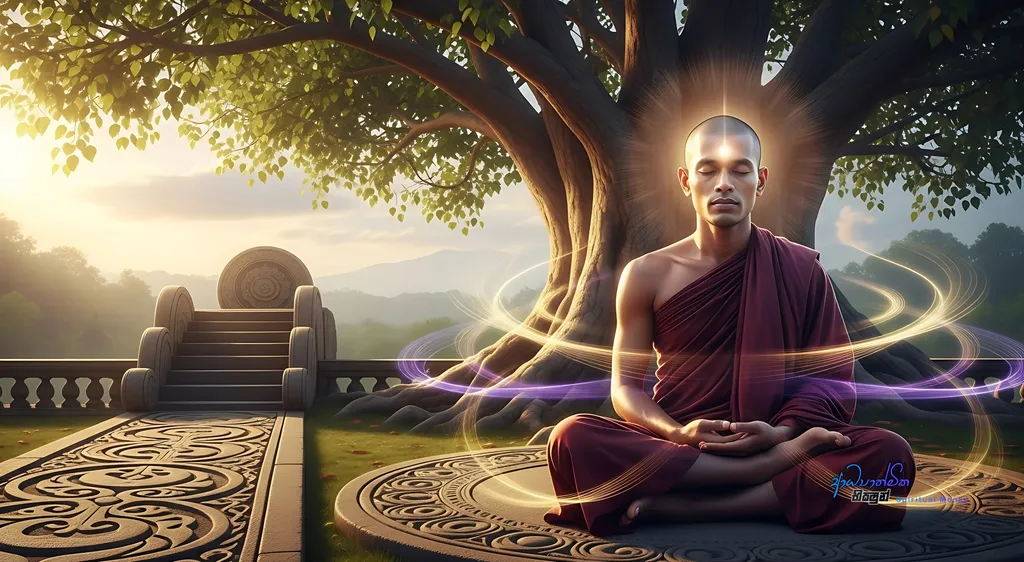
Setting Your Intention: Three Powerful Resolutions for Your Journey
Before you sit for meditation, it is helpful to set a clear intention. This is not a wish, but a way to align your energy with the universe and your own inner potential. I have found three resolutions, or adhiṭṭhāna, to be personally very powerful. You can write them down or hold them in your heart, repeating them before and after each meditation session.
1. “May all the subtle energies of the universe be available to me.”
2. “May all the skills and abilities I have cultivated throughout my many past lives be reawakened within me.”
3. “May all the dormant spiritual energies resting within me become fully active.”
These are not commands born of ego, but humble invitations. By stating them with a mind free from the craving we discussed, you cultivate the fertile ground of sincere effort and dedication. The only things you truly need for this journey are sustained effort (viriya) and a willingness to commit (chanda). These, combined with patience and a discerning mind, form the foundation for true spiritual progress.
The Practice: A Simple Third Eye Meditation Technique
Now, let us turn to the third eye meditation practice itself. It is beautifully simple, yet its depths are profound.
Find a comfortable and quiet place to sit. You can sit cross-legged on a cushion or upright in a chair. The key is to be relaxed but with your spine straight.
Gently close your eyes. Take a few moments to settle into your body. Then, bring your full attention to a single point: the space between your eyebrows, just above the bridge of your nose. In the texts, this is sometimes referred to as the nāsikaggē. Simply rest your awareness there. Do not strain or force it.
Your mind, which in Buddhism we call citta, will inevitably wander. It is its nature. It will drift to the past or race towards the future. When you notice this has happened, don’t be discouraged or critical. This is the practice. Simply acknowledge where the mind went, and then gently, lovingly, guide it back to the point between your eyebrows. Each time you bring it back, you are strengthening your focus. This gentle returning is the heart of the third eye meditation.
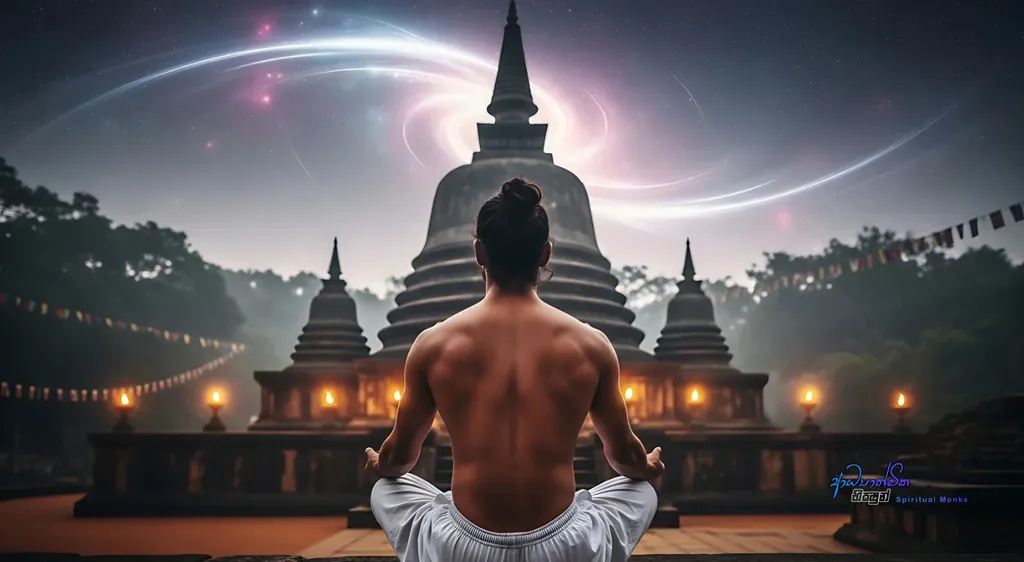
Navigating Your Inner Landscape: Sensations, Lights, and Visions
As you continue this third eye meditation over days and weeks, you may begin to notice changes. Physically, you might feel a pressure, a tingling, or a pulsing sensation on your forehead. This is normal; simply observe it without judgment.
Mentally, you may perceive inner phenomena. At first, it might be flashes of light or swirling colors purple, blue, green, or white. Sometimes, a dark dot might appear. As your concentration deepens, these lights may give way to images. You might see the form of a Buddha statue, a deity, or other human or non-human figures. Some people get excited and think, “The Buddha has come to me!” But it is important to understand these are manifestations of your own concentrating mind. They are like dreams, but in a meditative state.
The key is to approach all of this with equanimity, a calm and balanced mind known as upekkhā. Do not get excited by beautiful lights or frightened by strange images. They are simply clouds passing in the sky of your mind. Observe them, let them be, and keep your attention steady. If no images appear, that is perfectly fine. Simply continue to rest your awareness on the spot between your eyebrows. This non-reactivity is the true sign of progress.
Your Spiritual Journey: Commitment and Patience
This spiritual awakening journey is a gradual process. The fruits of this third eye meditation do not appear overnight. It requires consistent, patient effort. The Buddha taught the Four Right Efforts: the will to begin, the sustained effort to continue, the mindfulness to be aware, and the wisdom to investigate your experience. Embrace this path with patience and dedication.
We invite you to walk this path with us. Read our teachings, and most importantly, apply them practically in your own life. as you practice, questions will naturally arise. Please feel free to share your experiences and questions in the comments section below, via email or contact form. I will do my best to offer guidance in future talks based on your progress. For now, begin this practice with an open heart and a mind free from expectation. Cultivate it correctly, and may you find the clarity and peace you seek.
Thank you for joining us. We hope this blog will be of great benefit to your spiritual journey.
May you all be well and happy.
May the blessings of the Triple Gem be with you all!


