
Categories: Dhyana: Practical Training
May the blessings of the Triple Gem be with you all!
Welcome to this practical exploration of spiritual mind training. Today, we are reflecting on the practical steps of deep meditative absorption, traditionally known as Jhana. In our structured series of teachings titled To the Brahma Realm, we provide practical instructions on how to train the mind effectively. You can easily find these foundational guides organized step by step in our published library.
If you are new to these teachings, we warmly encourage you to read through our articles in order from the very beginning. This structured path ensures that you build a solid foundation. For those who enjoy reading written reflections, our teachings are available in Sinhala as well as in English across our official web publications. Today, we focus specifically on a key aspect of practical mind training that you must cultivate when engaging in first jhana meditation.
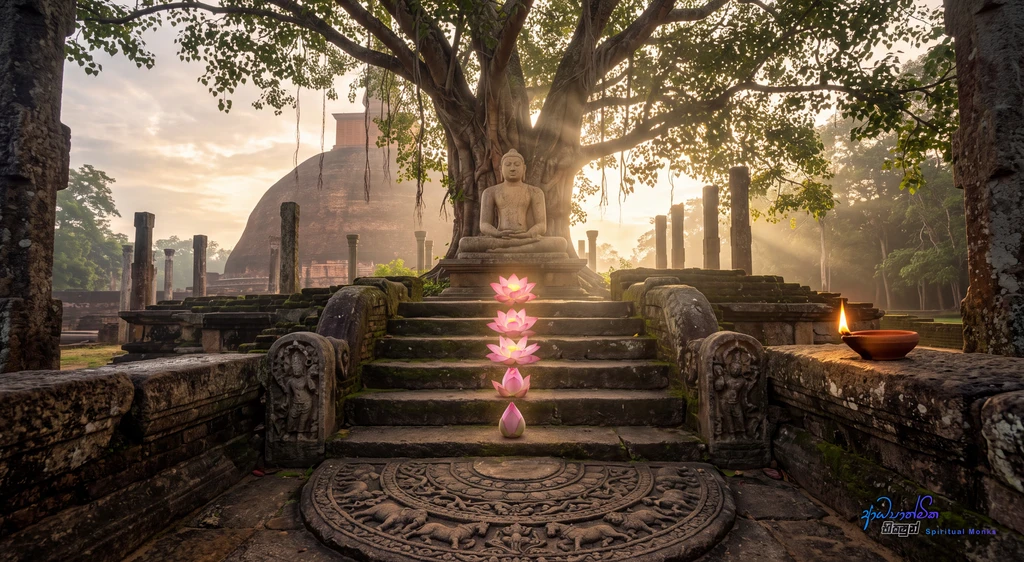
Practical Steps to Begin First Jhana Meditation
When we offer you a subject of meditation, known traditionally as a Kammatthana, we give you a concrete mental anchor. In our practical meditation program, the method begins by directing your conscious mind gently to the center of your forehead or the space between your eyebrows.
Once your attention rests there, make a firm three-fold mental determination: May the first Jhana arise. May the first Jhana arise. May the first Jhana arise. Follow this immediately with a single strong intention: May my mind become unified and focused.
You can also choose a simple word anchor to repeat in your mind. For instance, you may silently recite the word His, which signifies space, openness, or voidness. Alternatively, you may recite Buddho, honoring the quality of the Awakened One, or Araham. You have full freedom to choose any calming word that resonates deeply with you. This anchor is part of Samatha, or tranquility meditation. As you reflect on your chosen word continuously, it leads to a clear and measurable outcome that we must systematically achieve.
Overcoming the Five Hindrances in Buddhism
In traditional Buddhist psychology, we often speak about the mental obstacles that block deep concentration. These are known as the five hindrances in buddhism, or Panca Nivarana. They consist of:
- Kama-chanda: Sensual desire or longing for pleasant sights, sounds, and experiences.
- Vyapada: Ill-will, anger, or subtle resentment.
- Thina-middha: Sloth, lethargy, or mental dullness.
- Uddhacca-kukkucca: Restlessness, worry, and anxiety.
- Vicikiccha: Skeptical doubt or uncertainty.
To counteract these obstacles, our practice unlocks five uplifting factors of absorption, known as Jhananga. These factors are initial attention, sustained attention, rapture, bliss, and mental focus. When you begin your journey in first jhana meditation, whether within or outside formal Buddhist practice, your very first target is to secure the first two factors: Vitakka and Vicara. Do not get overwhelmed by academic definitions. In practice, their function is wonderfully direct and simple.

Mastering Vitakka and Vicara in Meditation
To understand how concentration develops, we must look at how vitakka and vicara function together.
Simple English terms describe these clearly: Vitakka means initial application, or the act of placing your mind directly onto your chosen object. Vicara means sustained application, or gently keeping the mind engaged with that same object over and over again.
The ancient scholar Venerable Buddhaghosa provided a beautiful illustration in the classic commentary, the Visuddhimagga. He compared Vitakka to striking a temple bell. The initial hit of the mallet represents directing the mind to the target. He compared Vicara to the lingering resonance that echoes through the air after the strike.
In practical first jhana meditation, when you place your awareness on your forehead, that initial anchoring is Vitakka. Continuously holding your awareness there while repeating your chosen word, such as His or Buddho, is Vicara. Through this persistent, gentle engagement, a profound shift takes place within your mind.
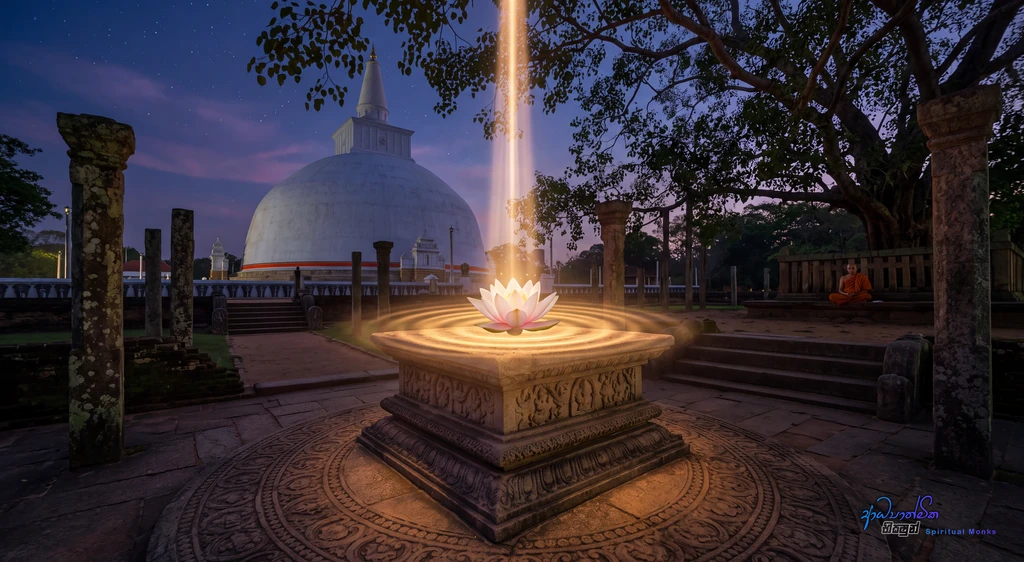
Achieving One-Pointedness of Mind
As you continuously apply vitakka and vicara, you reach a state where the active repeating of words naturally subsides. The mind settles deeply, and the five hindrances in buddhism sink away into the background.
In their place, a primary factor emerges: a quiet state of mental unity called Ekaggata, or one-pointedness of mind. This single-pointed focus is the main result we seek.
When one-pointedness of mind takes hold, stray thoughts about the past or future diminish significantly. If your mental anchor is your forehead, your awareness remains fixed right there effortlessly. If you practice breath awareness, known as Anapanasati, you can observe the rising and falling in-breath and out-breath with incredible clarity. If you are visualizing a Buddha statue, the image stays steady without flickering. You have successfully accessed the real result of quiet absorption.
Moving from Effort to Effortless Concentration
It is important to understand that deep concentration cannot be forced through sheer willpower. You cannot bully your mind into staying still. When the natural result of mental focus arrives, active verbal repetition resolves on its own. The words you recited were simply scaffolding to build one-pointedness of mind. Once that structure is stable, you no longer need the scaffolding.
This is why quality of practice matters far more than mere physical sitting time. Sitting in a posture for an hour while your thoughts wander aimlessly across daily problems offers little spiritual value. Instead, make sure every minute you spend meditating is filled with genuine mindfulness.
Whether you practice early in the morning upon waking, at night before sleep, or during dedicated periods throughout the day, focus on real quality. Over a few weeks or months of steady daily effort, your mental stillness will naturally expand from two minutes to five, ten, and eventually much longer.
Integrating First Jhana Meditation into Daily Life
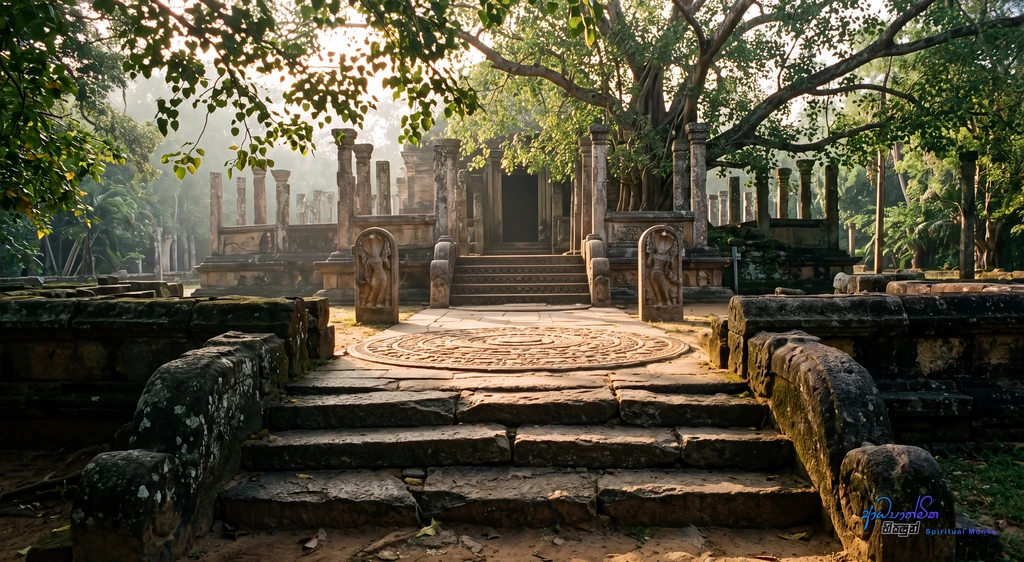
Once you cultivate stable absorption through first jhana meditation, your progress will not easily decay, nor will you succumb easily to mental obstacles. When you visit sacred sites like the magnificent Ruwanwelisaya stupa, or when you walk through a quiet forest, your mind will settle instantly into peaceful concentration without scattering.
This stability provides immense practical support in modern lay life. Whether you are a student preparing for university exams, a professional managing workplace stress, or someone navigating financial and family burdens, this training keeps you anchored. It protects you from emotional burnout and mental collapse.
Your mind becomes firm like a solid rock. With continued practice, you will easily remain in full absorption for an hour or two by simply renewing your determination. At this stage, word repetition stops completely, and your awareness rests directly within the meditative absorption itself.

Unlocking Deep Absorption and Self-Realization
Spiritual growth is ultimately your own practical journey. A spiritual teacher, like the Buddha himself, points out the path and offers clear instructions. However, the actual effort must come from you. Whether you study under a physical teacher or reflect on written guides, you are the one who must do the work.
Maintain consistency in your training for two to three months continuously. If travel or physical fatigue interrupts your schedule, simply resume your routine without discouragement. Even during busy work hours, take micro-breaks to center your mind on your chosen word like Buddho or Araham, training your awareness much like foundational mindfulness practice, known as Satipatthana.
Gradually, your absorption will surge from ten minutes to forty minutes, or even several hours at a time. Ignore unhelpful theoretical debates from online keyboard warriors arguing over words. Focus entirely on your direct, personal experience.
May you all apply these practical instructions diligently and experience the peace of true absorption.
We invite you to walk this path with us. Read our teachings, and most importantly, apply them practically in your own life. as you practice, questions will naturally arise. Please feel free to share your experiences and questions in the comments below, via email or contact form. I will do my best to offer guidance in future talks based on your progress. For now, begin this practice with an open heart and a mind free from expectation. Cultivate it correctly, and may you find the clarity and peace you seek.
Thank you for joining us. We hope this blog will be of great benefit to your spiritual journey.
May you all be well and happy.
May the blessings of the Triple Gem be with you all!