Categories: Other Meditation Teachings
May the blessings of the Triple Gem be with you all!
Welcome to this reflection on the vital distinction between spiritual joy vs sensual indulgence. In our daily lives, most of us are accustomed to seeking happiness through the sensual world. We constantly seek to satisfy our five physical senses: the eyes, ears, nose, tongue, and body. This pursuit of sensory pleasure, known in Theravada Buddhism as Kama, dominates the human experience.
Sensual indulgence manifests in many ways. It includes romantic attraction, physical passion, drinking alcohol, taking recreational trips, spending time with children and grandchildren, career accomplishments, accumulating wealth, buying land, acquiring vehicles, and building houses. We search endlessly among living beings and physical objects to extract moments of delight. However, true inner peace, or unconditioned bliss called Niramisa Sukha, operates on an entirely different level.

Realms of Existence: Why the Human Realm is Unique for Awakening
In Buddhist cosmology, the human world is considered a fortunate realm of sensory experience, known as Kama Sugati. Yet human life contains a constant mixture of both pleasure and pain. Higher divine realms, or celestial planes, are also classified as happy sensory realms, but physical suffering there is minimal. Heavenly beings do not suffer bodily diseases or physical aches like humans do. Their suffering is limited to subtle mental distress, known in the Buddhist psychological texts as Chitta Chetasika pain, which occurs when their feelings are hurt.
These profound truths are detailed in the higher teachings of the Buddha, known as the Abhidhamma Pitaka. Practitioners seeking deeper insight can study classic authentic works, such as the writings of the Most Venerable Rerukane Chandawimala Maha Thera or scholar Amaradasa Ratnapala. In contrast to divine worlds, the woeful realms, or Kama Durgati, consist of four lower states: the realm of hungry ghosts (Preta), the demon realm (Asura), the hell realm (Niraya), and the animal realm (Tiracchana).
It is precisely because physical suffering, or Dukkha, is clearly visible in the human world that great aspiring Buddhas, known as Bodhisattvas, choose to be born here to attain enlightenment. In celestial worlds, intense luxury makes it difficult to comprehend the reality of stress and impermanence. While divine beings can listen to a Buddha's teaching and attain stages of awakening, they cannot fulfill the vows of supreme Buddhahood directly within those realms. Even if a heavenly being listens to the Dhamma and becomes a Non-Returner, known as an Anagami, they do not remain in the lower celestial worlds. They immediately pass away and are reborn in the highest purified Brahma realms, called the Suddhavasa planes.
Earthly Sensuality versus the Reality of Spiritual Joy
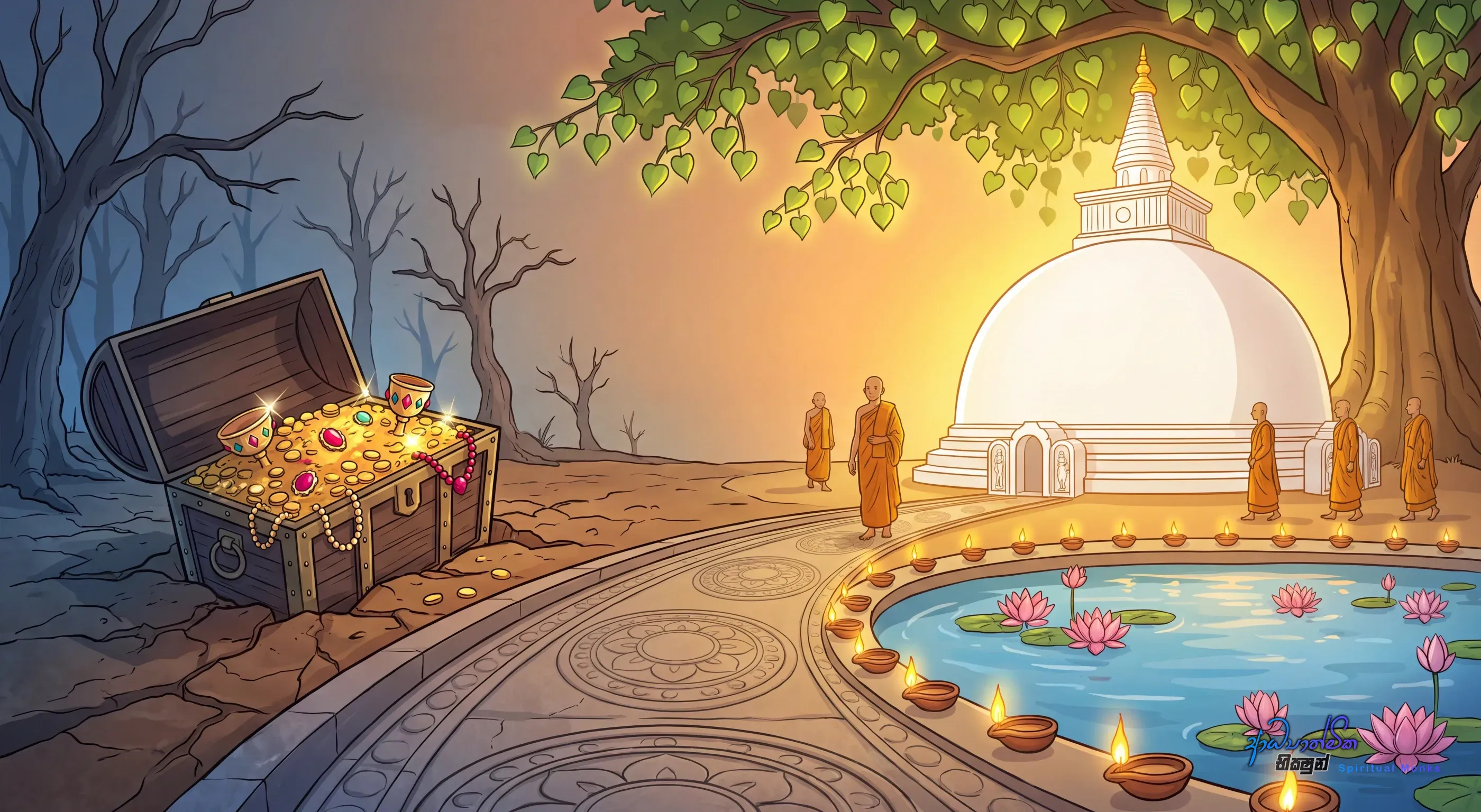
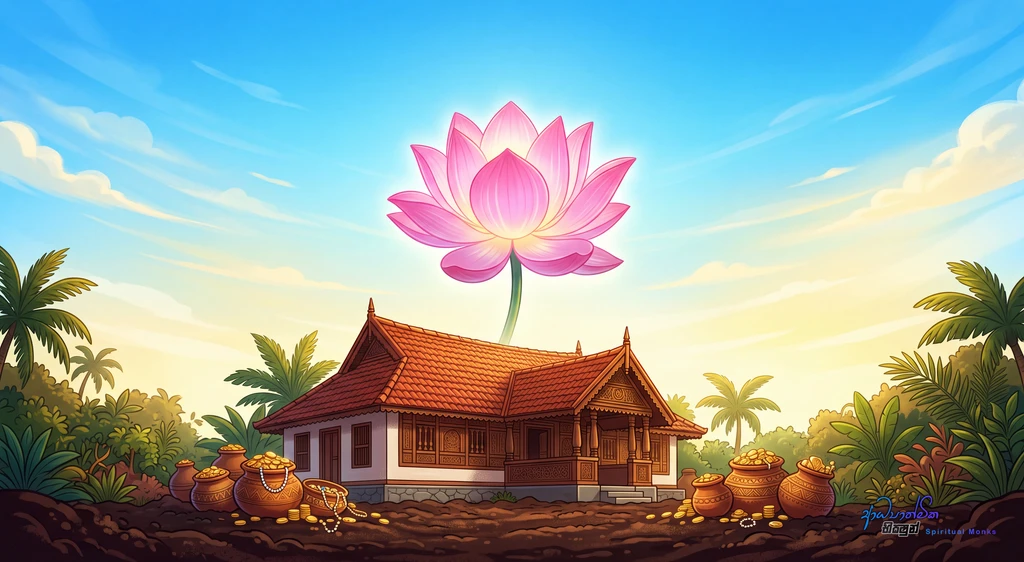
We exert immense effort and spend vast sums of money seeking worldly pleasures. Consider how many years you worked at your job to purchase a vehicle or build a home. You spent endless energy earning money, hiring builders, and managing construction just to secure a physical structure. Sensual indulgence is always dependent on external objects or persons to temporarily satisfy the senses.
Even when someone cannot afford a luxury item like a car, they often attempt to enjoy it mentally. They construct a physical mental image, daydreaming about driving it in the future. This proves that sensual gratification is always bound to material form or external entities.
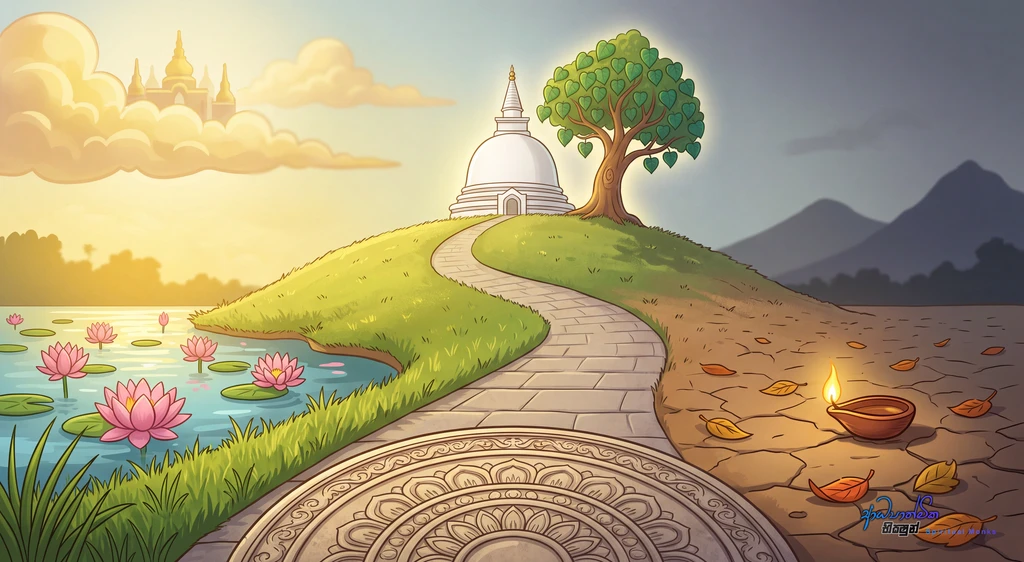
In contrast, true spiritual practice does not rely on any person or object. When you practice serenity meditation, called Samatha, or insight meditation, called Vipassana, even for five minutes, your peace is entirely self-contained. Comparing spiritual joy vs sensual indulgence is like comparing the vast sky to the solid earth. If a practice depends on attached objects or personality cults, it is not authentic spirituality, but merely another form of worldly delusion.
Discerning Authentic Dhamma from Distorted Modern Trends
If a teacher or system tells you that spirituality involves clinging to a person or engaging in sensory thrills, a serious issue exists. True spiritual growth does not mean closing your eyes to search for an external savior or deity. The Buddha acts purely as a guide, encouraging us to look inward and understand our own mind.
Throughout history, distortions have arisen. Historical records in the Vinaya Atthakatha (commentaries on monastic discipline) and the ancient chronicle Mahavamsa note that around the time of the historical Buddhist Councils, about ten thousand monks who refused to adhere to the pure discipline separated from the core Sangha. Over time, these groups formed alternative traditions, such as Mahayana, which eventually split into roughly seventeen sub-sects. Some of these traditions gradually incorporated worldly elements, such as ritual alcohol consumption or sensory practices, blending secular entertainment with religion.
Today, some individuals attempt to market a fun or chill version of Buddhism involving music, guitars, or wine. The Buddha never taught such methods. Before his awakening, Prince Siddhattha lived in three magnificent seasonal palaces named Rammya, Surammya, and Subha, surrounded by ultimate sensory luxury. Yet he renounced all worldly indulgence, mastered deep meditative absorptions called Jhana, attained higher spiritual knowledge called Abhijna, and ultimately went beyond them to discover full liberation. Authentic spirituality transcends sensory amusement.

Examining the Self and Evaluating Spiritual Guidance
A core foundation of Theravada Buddhist teachings is the contemplation of the Three Marks of Existence, known as Tilakkhana. These are impermanence, called Anicca, unsatisfactoriness, called Dukkha, and non-self or the absence of a permanent soul, called Anatta. The Buddha instructed us to realize that there is no solid, unchanging ego or person behind our experiences.
A genuine meditation teacher will always help you dismantle the illusion of self, known as Mamathvaya, rather than feeding your vanity. Monastics are expected to limit their physical needs to the four basic requisites, called Catura Paccaya: robes (Civara), almsfood (Pindapata), shelter (Senasana), and medicine (Gilana Paccaya). When a teacher or practitioner constantly craves luxury beyond these basic boundaries, their spiritual progress requires careful reflection.
You have the right to evaluate whether a teacher offers genuine guidance or remains bound to worldly desires. However, do not use this discernment to harbor anger or spend all your time judging others. Investigating a teaching takes time and practice. Once you determine the validity of a path, turn your attention fully inward to correct your own flaws.

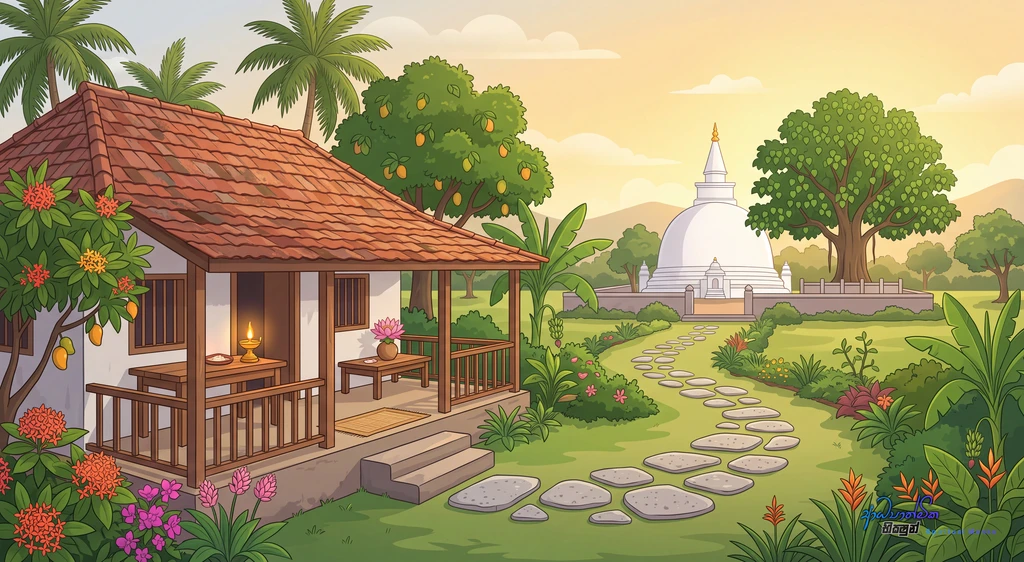
Understanding the dynamic of spiritual joy vs sensual indulgence does not mean you must immediately abandon your family, give up all personal property, or become a ordained monk. As laypeople, you carry important family duties, employment obligations, and social responsibilities.
The natural law of intentional action and cause, known as Kamma, governs our life circumstances. According to your past wholesome actions, your present life unfolds. As your spiritual understanding matures, your attachment to material excess naturally decreases without any forced pretense or hypocrisy.
Wealthy individuals who have enjoyed endless material comforts often realize that physical possessions cannot bring lasting peace. They eventually seek spiritual depth. Whether rich or poor, regardless of race, caste, or religious background, every human being needs authentic spiritual contentment. True happiness is already hidden within your own mind, obscured only by delusion, or Moha.
Transcending Heavenly Rebirth: Ultimate Liberation in This Life
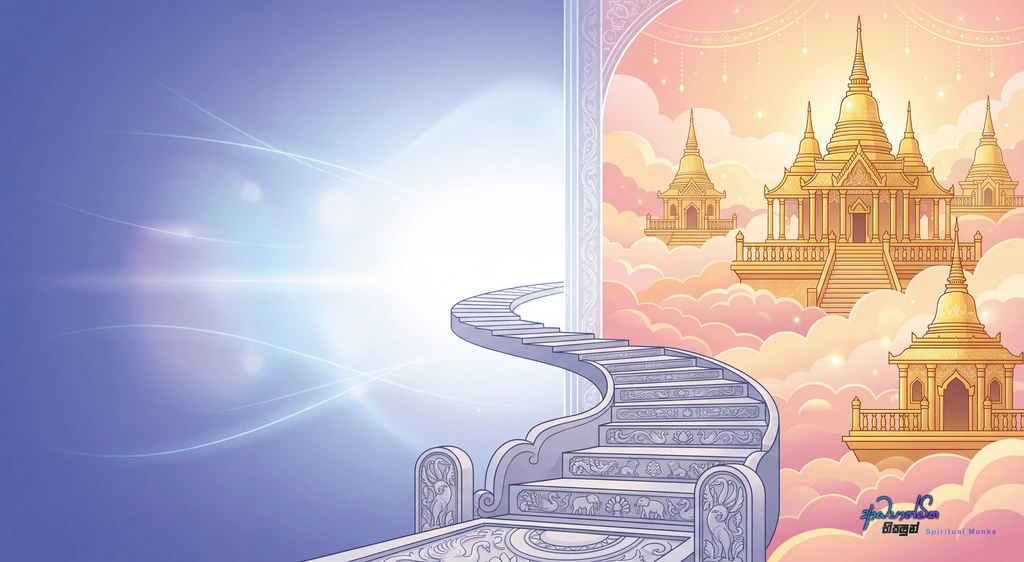
A high level of spiritual clarity requires recognizing that even the desire to be reborn in heavenly realms is a subtle form of sensory attachment. In the Methuna Sutta of the Anguttara Nikaya, the Buddha explains seven forms of sexual bond or sensory indulgence, known as Samaithunaya or Methuna. He highlights that living a holy, celibate life (Brahmacariya) merely with the wish to be reborn as a divine celestial being remains a subtle form of sensual indulgence.
While many people perform good deeds simply hoping for a comfortable future rebirth, the true spiritual path aims for the complete ending of cyclical existence, or Nibbana, in this very life. Whether your goal is full Buddhahood, solitary Buddhahood, or noble discipleship, spiritual practice must never be tied to worldly entertainment or temporary celestial rewards.
Reflect on your life daily. Ask yourself whether your happiness comes from external sensory pursuits or from quiet self-inquiry. By gradually fulfilling your daily duties and freeing your mind from material dependence, you cultivate real spiritual bliss.
We invite you to walk this path with us. Read our teachings, and most importantly, apply them practically in your own life. as you practice, questions will naturally arise. Please feel free to share your experiences and questions in the comments below, via email or contact form. I will do my best to offer guidance in future talks based on your progress. For now, begin this practice with an open heart and a mind free from expectation. Cultivate it correctly, and may you find the clarity and peace you seek.
Thank you for joining us. We hope this blog will be of great benefit to your spiritual journey.
May you all be well and happy.
May the blessings of the Triple Gem be with you all!