


Categories: Eradicate the Fear of Meditation
May the blessings of the Triple Gem be with you all!
Today, I want to share a true story with you. It is a profound account that will help us understand the kinds of obstacles we can face on the spiritual path. When we work to develop our inner selves, various challenges arise. This teaching is meant to illuminate these obstacles, show us how to navigate them, and deepen our understanding of our long journey through saṃsāra, the endless cycle of birth, death, and rebirth. We will explore how promises made and attachments formed out of craving in past lives can cause harm today. This is the story of a monk dedicated to his spiritual development and an encounter he had with the unseen world.
The key lesson to grasp from this account is how to continue our own journey through saṃsāra without falling into similar traps. By the end of this article, these points will become clear. As you read, the story itself will reveal its own profound truths. Let us begin.
The First Sign: An Unseen Pressure in Meditation
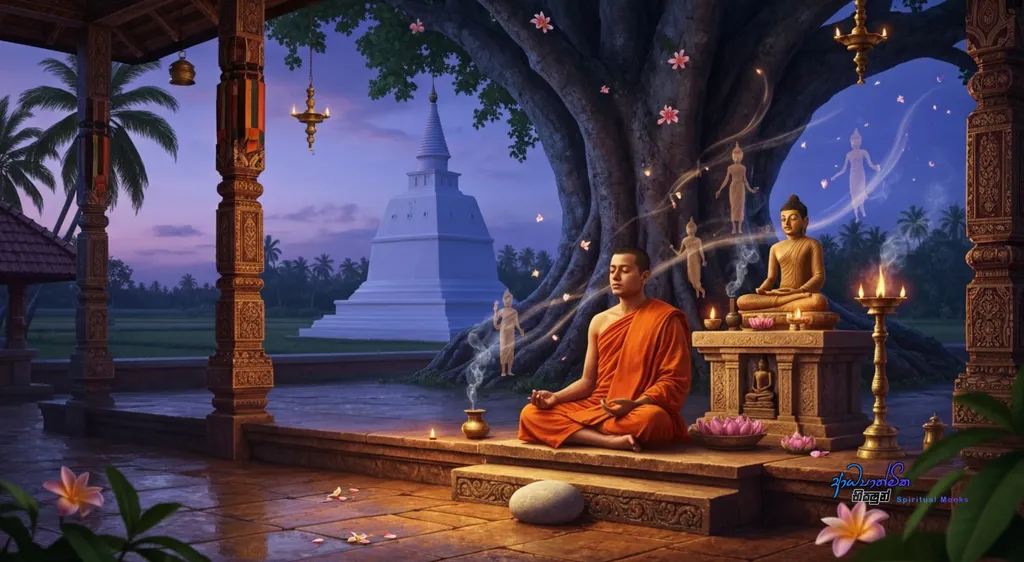
There was a monk who was deeply committed to developing his spiritual practice. For many years, as he progressed, he faced a persistent obstacle. Whenever he would meditate for a period, say, half an hour, forty minutes, or an hour—he would experience an intense physical pressure. His entire body would feel as if it were being squeezed.
Now, it’s important not to confuse this with the natural sensations that can arise as the mind develops in meditation. Many people mistakenly label normal meditative experiences as supernatural or demonic influences. This was something different. Initially, the monk himself believed it was a natural phase of his practice, just another experience to observe. This continued for years.
To give you an idea of the sensation, imagine having your blood pressure checked by a doctor. The cuff wraps around your arm and inflates, rising to 140 or 150, creating an intense, constricting pressure. You’ve likely felt that tight, squeezed feeling. This monk experienced that same intense pressure throughout his entire body, from the top of his head to the soles of his feet.
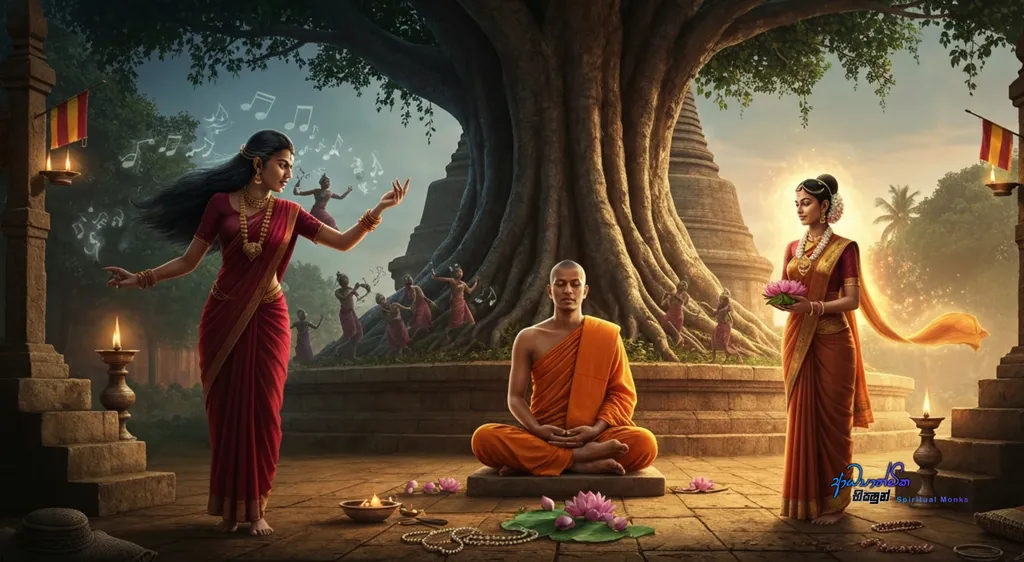
This would happen consistently during his meditation, sometimes after thirty minutes, sometimes after forty. Along with this pressure, another disturbing phenomenon would occur: a sudden and overwhelming surge of lustful thoughts would flood his mind, precisely at the moment the pressure was most intense. For years, he simply accepted this, thinking, ‘This must be a defilement from my past, a saṃsāric flaw,’ or ‘This is just the nature of the mind and body.’ He took it all upon himself, carrying this burden for a very long time.
The Second Clue: Mysterious Scratches in the Night
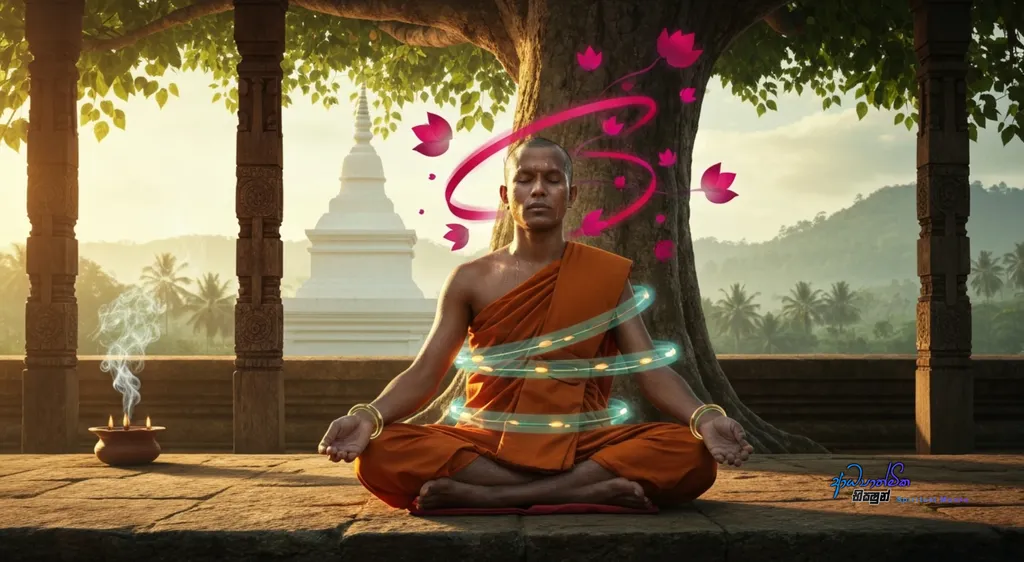
As time went on, another strange thing began to happen, something that eventually planted a seed of doubt in the monk’s mind. This had been occurring even during his lay life, but he had never paid it much attention. Even after he ordained and had been a monk for several years, he dismissed it. He would wake up in the morning with scratches on his body. These weren’t single scratches; they looked exactly as if someone had dragged three fingernails across his skin. In the morning, the scratched area would have a burning sensation.
At first, he attributed this to an insect or some small animal, a perfectly rational explanation. He investigated thoroughly. He asked others, consulted doctors, and even searched online to see if any small creature could make such a distinct, three-pronged scratch. The medical professionals he spoke to confirmed that no known animal could create such a mark. Despite this, he remained steadfast and unafraid. He continued his life of practice, whether he was staying in a village temple, a city monastery, or a forest hermitage. The problem persisted wherever he went.
Many people, if faced with something like this, would become frightened and mentally collapse. But this monk was strong. He continued his duties, his chanting, and his meditation with unwavering resolve, living freely, happily, and with a smile. On the outside, there was no sign of any trouble.
A Glimpse into the Unseen World
This monk had developed his spiritual faculties to a high degree. He had opened what we sometimes call the ‘Third Eye,’ or what in Buddhism is known as the Dibba-cakkhu, the Divine Eye. This is the psychic ability to see beings in other realms: gods (devas), celestial beings (brahmas), and various non-human entities (amanussa). Despite having this clear vision, he began to suspect that an unseen force was at play only after many years as a monk.
The persistent pressure during meditation, which sometimes became so unbearable he had to open his eyes and stop, combined with the intense lustful thoughts and the mysterious scratches, created a growing suspicion. Was an invisible energy trying to block his spiritual progress? Even with this doubt, he spent several more years observing and investigating the situation.
He shared his experience with us, and we also began to observe. But for a long time, nothing could be confirmed. Even with the help of other spiritually developed individuals focusing their minds, no definite cause or external influence could be detected. The source of the disturbance remained hidden.
The Revelation: An Attachment Made Visible
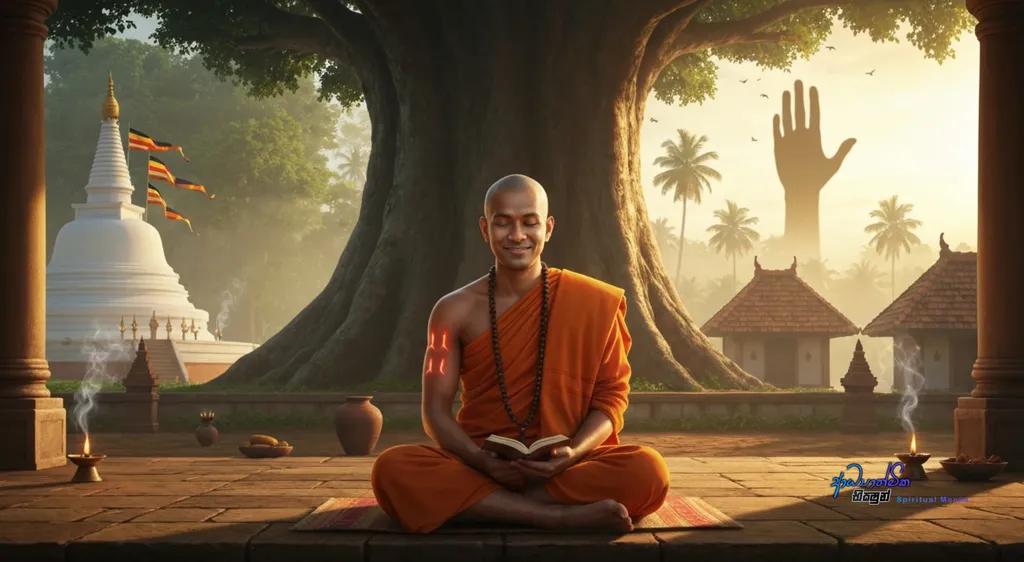
About a year later, the situation intensified. The monk began receiving spiritual messages from developed beings, indicating that a period of his negative karma was ripening. They told him, ‘There is a group that helps your spiritual progress, and another group that obstructs it.’ This confirmed his suspicion that an external force was at work.
One day, while meditating with a spiritually gifted lay friend who also possessed the Divine Eye, the monk decided to investigate the root of this years-long problem. After they both emerged from a state of deep concentration, or jhāna, the monk asked his friend, ‘Look at my body. Do you see anything unusual?’
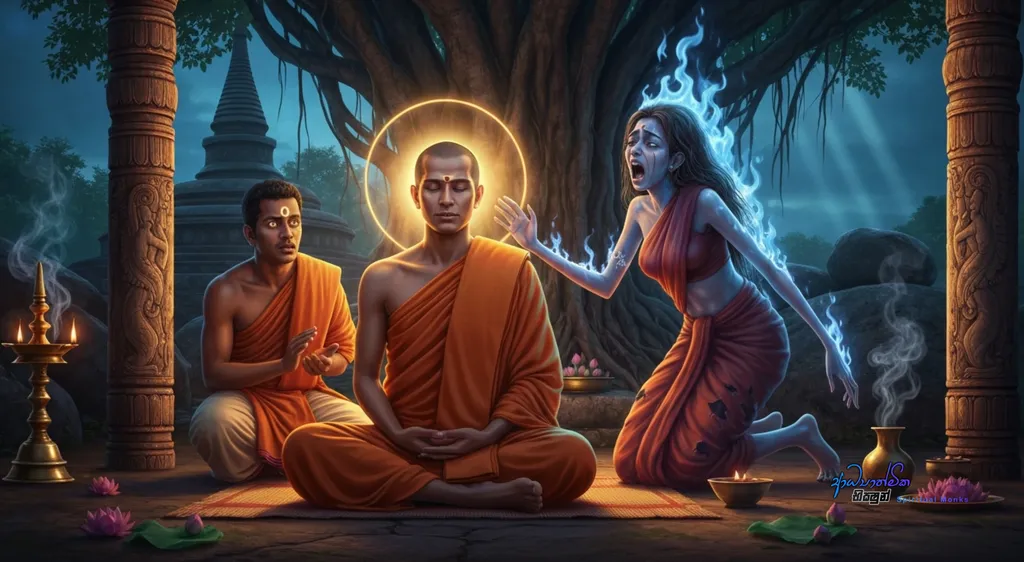
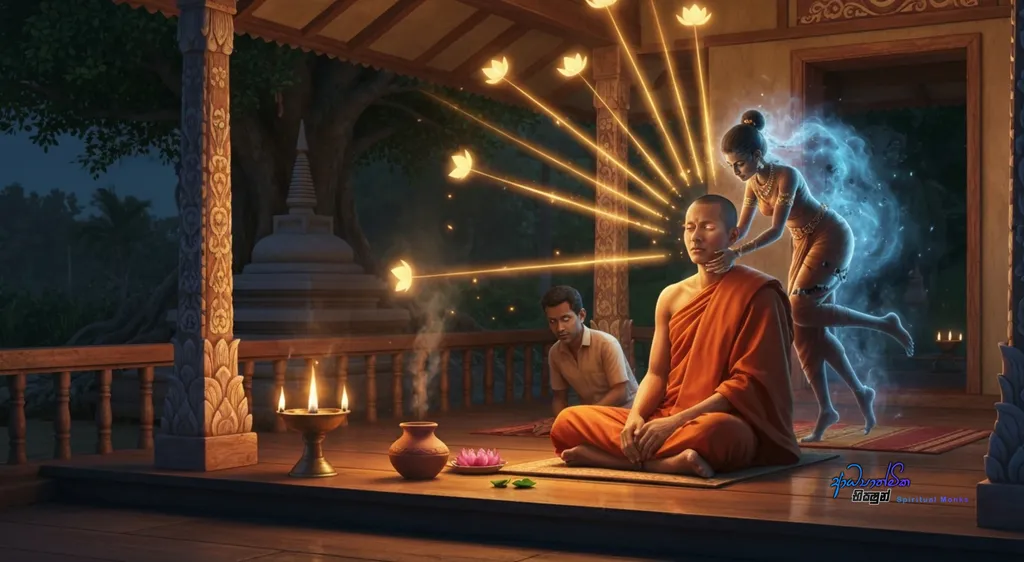
The friend focused his mind and saw it clearly: a female non-human being, a yakkhinī, was clinging tightly to the monk’s neck. A yakkhinī is a type of spirit, often female, bound by powerful earthly attachments. His long-held suspicion was finally confirmed. There was indeed a non-human entity connected to him.
To test this further, the monk told his friend, ‘Watch her. I am going to enter deep meditation again. See if she lets go.’ As the monk entered a profound state of meditative absorption, the yakkhinī did not release her grip. However, the spiritual energy radiating from the monk was unbearable for her. The friend could see her burning, screaming in agony, yet she clung on, refusing to let go. This might seem confusing, shouldn’t meditation repel such beings? The answer to that will come later. For now, remember this crucial point: she endured the burning pain to hold on.
Breaking a Bond Beyond Ordinary Means
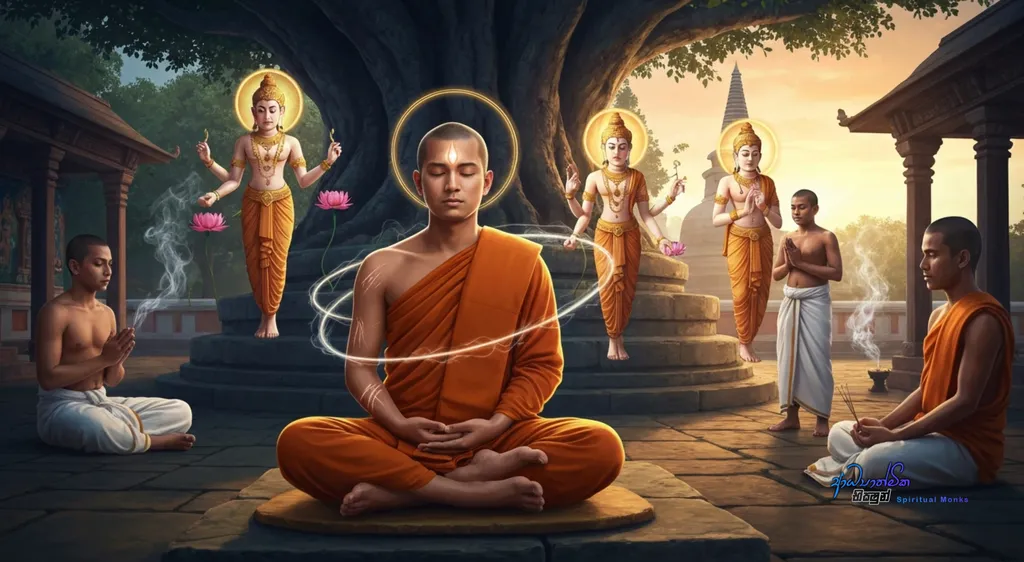
The monk then used various spiritual techniques to try and remove her, but she could not be dislodged. It became clear this was not a simple haunting; it was a deep karmic bond, a past life attachment. Despite his powerful meditative state, she would not leave. This entity was bound to him.
What’s remarkable is that externally, the monk showed no signs of this. People possessed by spirits often change their behavior. They might become angry, neglect hygiene, or live in filth, reflecting the nature of the spirit. A person influenced by a powerful yakkha might crave meat and live an aggressive life. This monk, however, was the opposite. He was pleasant, kept his living space immaculate, and was diligent in his practice. The yakkhinī was incredibly cunning.
Even when the monk applied intense spiritual energy, which his friend could see was causing the spirit to almost dissolve or melt, she would re-form and continue clinging to his neck. It was evident that a powerful saṃsāric connection, a deep past life attachment, was at play.
In that moment of reflection, wisdom arose in the monk’s mind: ‘Remember the Buddha.’ He began to focus on the virtues of the infinite Buddhas, invoking their mental radiance. As he did this, he could see with his own Divine Eye the light-like mental rays arriving. As they touched him, the yakkhinī was forced to detach and move away temporarily. It was a relief, but not a permanent solution.
Uncovering a Promise Made Lifetimes Ago
With his suspicions confirmed, the monk sought the help of another highly advanced monk to investigate further. What they discovered was astonishing. The yakkhinī was not alone; she had a retinue of around 500 other spirits helping her. This was not a problem that could be solved by traditional exorcisms or rituals. This was a deep saṃsāric entanglement.
The investigation revealed that she had been with him constantly, hiding so subtly that even other psychics couldn’t detect her. She was assisted by her spirit helpers and two or three other powerful, unseen forces who wanted to prevent the monk’s spiritual advancement.
These forces had used her past life attachment to create a binding on him, similar to a ritual where pins are stuck into an effigy. This was why she was so difficult to remove. Together with the other advanced monk, they worked spiritually to remove these ‘pins,’ which caused an intense heat in his body but resulted in a feeling of immense lightness afterward. The yakkhinī was detached from his physical body, but the connection was not yet severed.
Then came the most critical revelation. The root of this entire ordeal was a promise made three lifetimes ago. In that life, the monk and the woman who was now the yakkhinī had stood before the Ruwanwelisaya, a great and sacred stupa in Sri Lanka. At this spiritually potent place, they made a powerful resolution: ‘Let us be together in every lifetime on our journey through saṃsāra, and may we attain Nibbāna together.’ Because this vow was made at such a powerful site, filled with the Buddha’s relics, it carried immense force, allowing her to follow him across lifetimes.
The Peril of Possessive Love vs. Wise Aspiration
Now, filled with jealousy and a sense of betrayal, the yakkhinī‘s sole purpose was to stop the monk from attaining liberation alone. She felt he was breaking their promise. Her love had twisted into an obsessive force, and with the help of her 500 attendants, she was doing everything she could to sabotage his meditation and stir his passions. This highlights the grave danger of making such binding promises. This was not the work of Mara, the great tempter; it was the direct result of his own past actions, his own past life attachment.
One might wonder, what about wholesome aspirations, like that of Princess Yasodharā, who supported the Bodhisatta (the future Buddha) for countless lifetimes? The difference is crucial. The promise made by the monk and the woman was rooted in lustful attachment, the desire to be together as partners in every life. Yasodharā’s aspiration was selfless; she promised to support the Bodhisatta’s quest for Buddhahood, even if it meant he would leave her behind to practice in the forest. Her love was a force for liberation, not possession.
In contrast, many relationships today are based on possessiveness. A wife might obstruct her husband’s spiritual practice, fearing he will ordain. A husband may resent his wife for wanting to meditate. These are the attitudes of the yakkhinī, not of a Yasodharā. This story asks us to reflect: do our relationships support our journey to end suffering, or do they create more bonds to keep us trapped in saṃsāra?
The Final Resolution at a Sacred Site
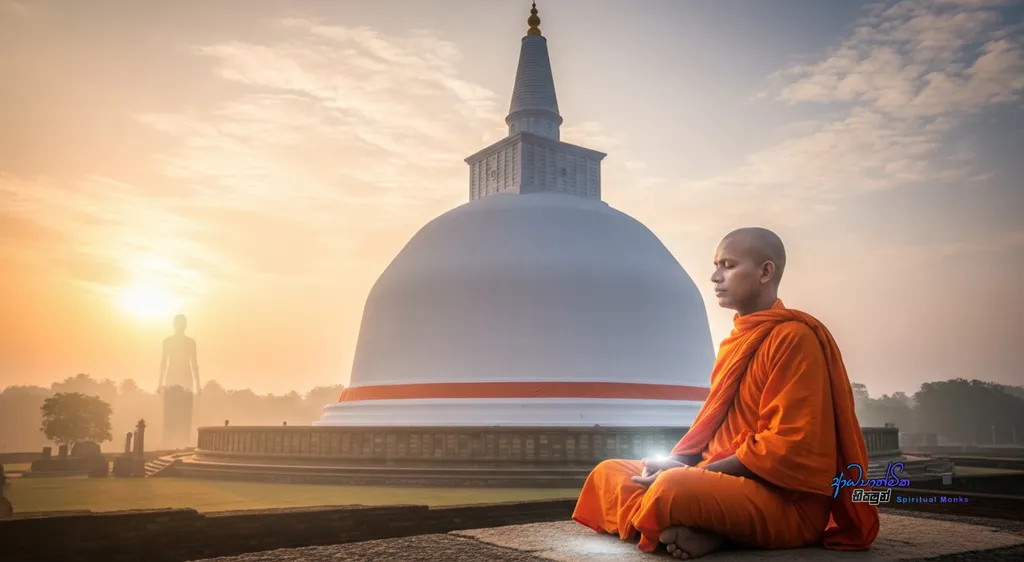
Once the root cause was understood, the path to resolution became clear. Spiritual guidance, aided by benevolent deities, revealed the solution: the monk had to return to the very place the promise was made, the Ruwanwelisaya stupa. There, he was instructed to meditate for an hour, radiating unconditional loving-kindness (mettā) to the yakkhinī and all the beings involved. Then, he had to formally and intentionally break the vow, declaring: ‘I hereby dissolve this promise. May it no longer be active in any future life. May you understand the truth and be free.’
Knowing his intent, the yakkhinī and her helpers intensified their attacks in the final days. She knew his every move, having been by his side for so long. She was incredibly cunning, never interfering when he was helping others with their spiritual problems, only when he worked on his own liberation, like someone who lives in your own house and secretly undermines you.
The monk followed the instructions precisely. He traveled physically to the sacred site in the early morning hours as advised. Over a period of months, he made three such visits. Each time, the bond weakened further. After the final visit, the karmic connection was severed. The possessive beings, their purpose dissolved, departed after receiving the merits. The monk was finally free from this profound past life attachment. Today, he continues to develop his practice peacefully, without any obstacles.
Lessons from a Karmic Debt
Why was this accomplished monk protected all those years, and why couldn’t he see the spirit himself? The advanced beings revealed it was due to three things: his accumulated spiritual perfections (pāramī) from past lives, the protection of righteous deities, and the strength of his moral precepts (sīla). The yakkhinī had tried relentlessly to get him to break his precepts, but he remained firm.
This story teaches us the terrifying nature of saṃsāra and the danger of attachment. Young people today make promises of eternal love as easily as drinking water, without understanding the karmic weight. We see people who take their own lives over a breakup and then follow their former lover as a ghost. This attachment isn’t limited to romance; it extends to parents and children, to land and property. After death, these attachments can cause one to be reborn as a hungry ghost (peta) or a yakkha, bound to the people or places they craved.
One might ask why the 499 helper spirits were sent away to a place called Giri Island, but the main yakkhinī could not be. This is because her direct karmic tie, her past life attachment, was like a sticky piece of gum; it could not be simply cut and thrown away. It had to be dissolved at its source. Giri Island is a realm created by the Buddha’s power where disruptive non-humans can live peacefully without harming humans. Sending them there is an act of compassion, not punishment; it provides both humans and spirits with their own space, as they cannot coexist peacefully.
A Final Word of Caution for Your Journey
This true story offers a profound lesson, but it comes with a caution. If you are experiencing difficulties in your practice, do not immediately assume it is a non-human entity or a past life attachment. Like the monk, first investigate rationally. Many sensations, pressure, tightness, heat, are normal parts of meditation as the body and mind adjust. Do not jump to conclusions.
Instead, be patient. Continue your practice of chanting, meditation, and sharing merits with all beings. Make a strong aspiration for the correct answer to be revealed to you in time. Just as the answer came to the monk when the time was right for his karma to resolve, it will come to you.
Be especially wary of making vows to be with someone in every future life unless it is a pure aspiration to support one another on the path to liberation, like a true spiritual friend (kalyāṇa-mitta). Otherwise, it is best to let this life’s connections be for this life alone. Attachments to parents, children, or spouses can lead them to linger after death, hindering both their journey and yours. Be mindful of the bonds you create. Understand the danger, and walk the path with wisdom and clarity.
May the power of the Buddha, Dhamma, and Sangha help you to understand these truths, to overcome any obstacles on your spiritual path, and to develop your meditation practice towards ultimate liberation. May all your karmic debts be settled, and may you find the way to cross the ocean of saṃsāra.
We invite you to walk this path with us. Read our teachings, and most importantly, apply them practically in your own life. as you practice, questions will naturally arise. Please feel free to share your experiences and questions in the comments below, via email or contact form. I will do my best to offer guidance in future talks based on your progress. For now, begin this practice with an open heart and a mind free from expectation. Cultivate it correctly, and may you find the clarity and peace you seek.
Thank you for joining us. We hope this blog will be of great benefit to your spiritual journey.
May you all be well and happy.
May the blessings of the Triple Gem be with you all!.


