


Categories: Non-human Problems
May the blessings of the Triple Gem be with you all!
Today, we will explore a question that I receive frequently from people of all walks of life, men and women, young and old, those deep on a spiritual path and those just beginning. It is a sensitive topic that many struggle with in silence: an intense, often overwhelming, experience of sensual desire.
This teaching is offered as a compassionate response for everyone seeking understanding and a way forward, whether you are a dedicated meditator or someone simply wishing to live with more inner peace. We will discuss this challenge openly, aiming not just for intellectual understanding but for a practical path to freedom from the grip of what can feel like an addiction to lust, sexuality, and self-gratification.
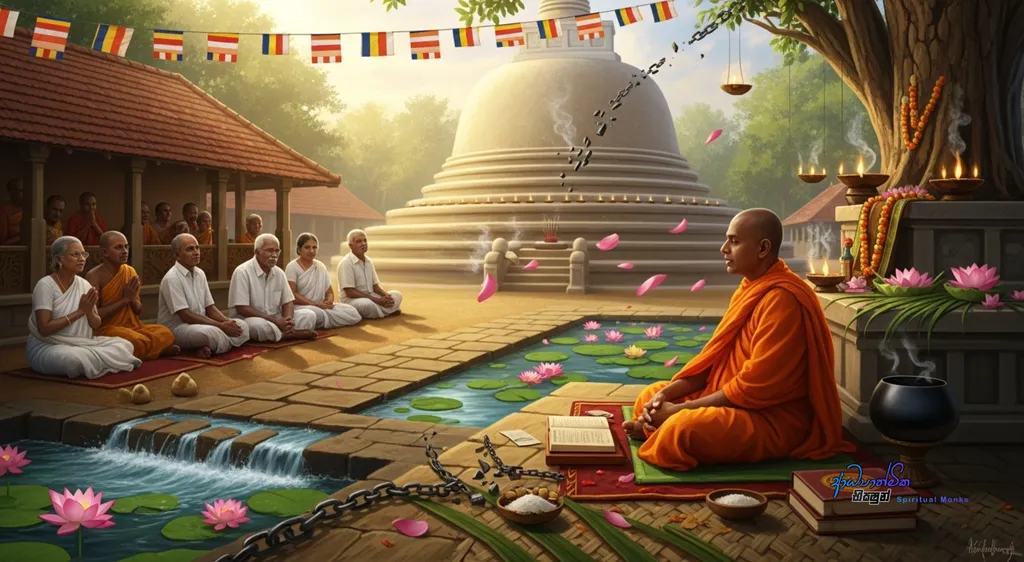
Understanding the Nature of Desire on the Spiritual Path
When you begin to practice tranquility meditation, known as Samatha Bhavana, you start to suppress the mind’s defilements, or kleshas. An interesting phenomenon can occur during this initial stage: for some, the underlying tendencies of lust (Raga) and aversion (Dvesha) can surface with surprising intensity. This is a natural state of the mind revealing itself. I have spoken before about whether tranquility meditation makes lust increase; it is a temporary phase that must be understood.
This struggle is not limited to meditators. Many people who wish to live a purer life, perhaps observing celibacy (Brahmacharya) or simply wanting freedom from compulsive thoughts, face this same challenge. This teaching is for both groups.
The challenge of addiction to lust, sexuality, or masturbation is universal. It knows no gender, age, race, or religion. There is a misconception that it affects only young men, but it can be a profound struggle for women, for the middle-aged, and even for the elderly. The intensity varies from person to person. At its root, this is a natural function of the mind. The Buddha taught with great clarity that as long as greed, hatred, and delusion exist, our journey through the cycle of rebirth, or samsara, will continue.
It’s important to state that we are not framing this as a mental illness. While Western psychology might label an aversion to sexuality as a disorder, from a spiritual perspective, it can be a helpful step toward inner development. The goal is to understand and skillfully work with these energies, not to pathologize them.
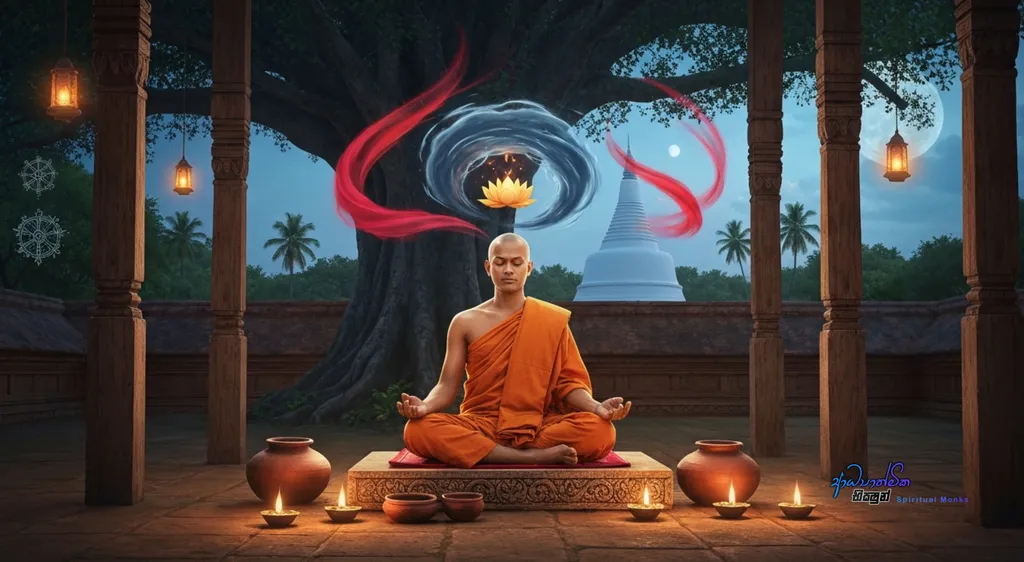
Modern Technology: A Magnifier for Addiction
In our technologically advanced age, the challenge of overcoming spiritual lust has become even more pronounced. Unlike in the past, triggers are everywhere. A simple scroll through social media can expose you to sexually suggestive images and sounds almost instantly. Smartphones provide constant, private access to websites with pornographic content. This ease of access has led to severe addiction for many.
I have heard from young people, both men and women, who are trapped in a cycle of masturbating six, seven, or even twelve times a day. They express a deep desire to stop, even trying practices like meditation on the unattractive nature of the body (Asubha Bhavana), only to find that their lustful thoughts intensify the moment they begin.
They sit to meditate, but the urge becomes so strong they get up, watch a video on their phone, and fall back into the cycle. For married individuals, this can create immense pressure and conflict with their partners. This is the background against which Mara, the tempter, uses modern technology to perform his work, making it incredibly difficult for people to find freedom.

When It’s More Than Just Your Mind: Unseen Influences
Here we arrive at the most crucial part of this teaching. When a person is severely addicted to sexual gratification, engaging in it for a large part of the day, and finds it impossible to stop despite a sincere desire to do so, we must consider another factor: the influence of unseen, non-human forces (amanussa).
This is not a theory but something we have observed through spiritual investigation and direct experience. These beings, which can be ghosts, demons (yakshas or yakshinis), or other entities, are drawn to the energy of lust. If someone has a strong habit, these forces can attach to them, feeding on their sensual energy and actively provoking their mind to engage in these acts. They don’t want the person to find freedom, because if they do, the entity loses its source of nourishment.
These beings are cunning. They may not interfere with your daily work or other activities. They might only become active when you try to do something spiritual, like meditate or observe precepts (Sila). Their goal is specific: to keep you trapped in the cycle of lust so they can continue to feed on that energy.
Some of these entities consume the energy of the lustful thoughts themselves, while others, like certain types of ghosts (preta), are said to consume the physical substances released during sexual activity. Sometimes, it’s not just one being, but a group.
The presence of such an entity can sometimes manifest in a person’s life as general uncleanliness, a foul odor in their room, or a chaotic lifestyle. However, some of these beings are very clever and will keep their human host appearing perfectly normal and tidy on the outside, using them only for this specific purpose.
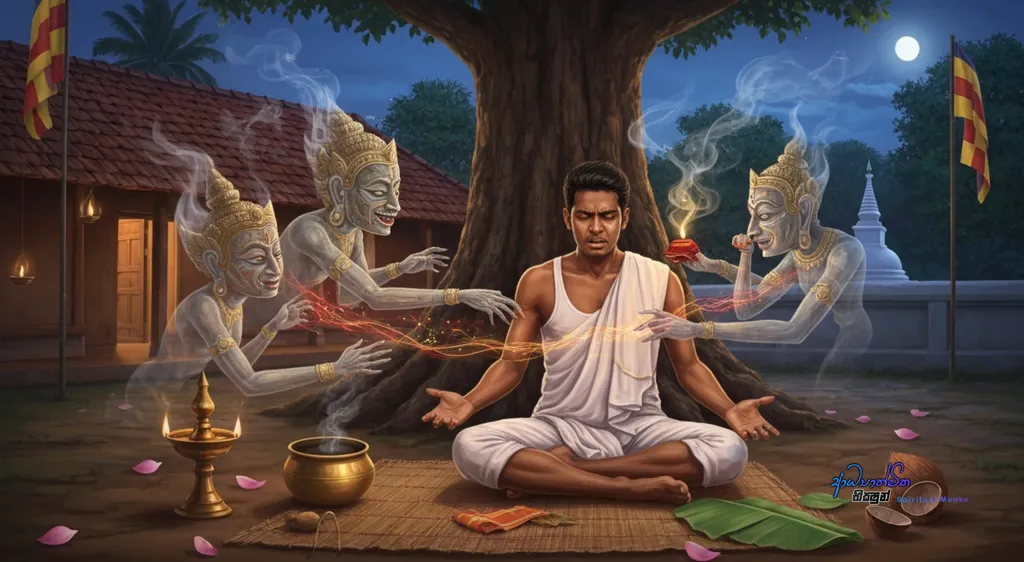
Three Sources of Spiritual Obstruction
When you embark on the spiritual path, there are primarily three sources of opposition you must be wary of when it comes to overcoming spiritual lust.
1. Lust-Feeding Entities (Amanussa): As discussed, these non-human beings attach themselves to people to feed on their sensual energy. They will actively sabotage any attempt you make to become more virtuous or mindful because your spiritual progress threatens their food source. They can create family conflicts or use your parents or partner to discourage you, saying things like, “Don’t do all this, you’ll end up becoming a monk!”
2. Beings Opposed to the Dhamma: This category includes a broader group of non-human beings, including misguided deities with wrong views (miccha ditthi), who are fundamentally opposed to anyone progressing on the path to liberation. They will amplify your lust and sexual desire simply to derail you from the path.
3. Mara (The Tempter): The most formidable opponent is Mara and his ten armies. Mara personifies the ultimate force of spiritual obstruction. He will do everything in his power to stir up your passions and break your resolve, preventing you from escaping his domain of samsara.
If you find that your resolutions to practice virtue repeatedly break after a few days, that meditation on impurity immediately triggers overwhelming lust, or that you are disturbed by sexual dreams, it is a strong sign that one of these forces is at work.
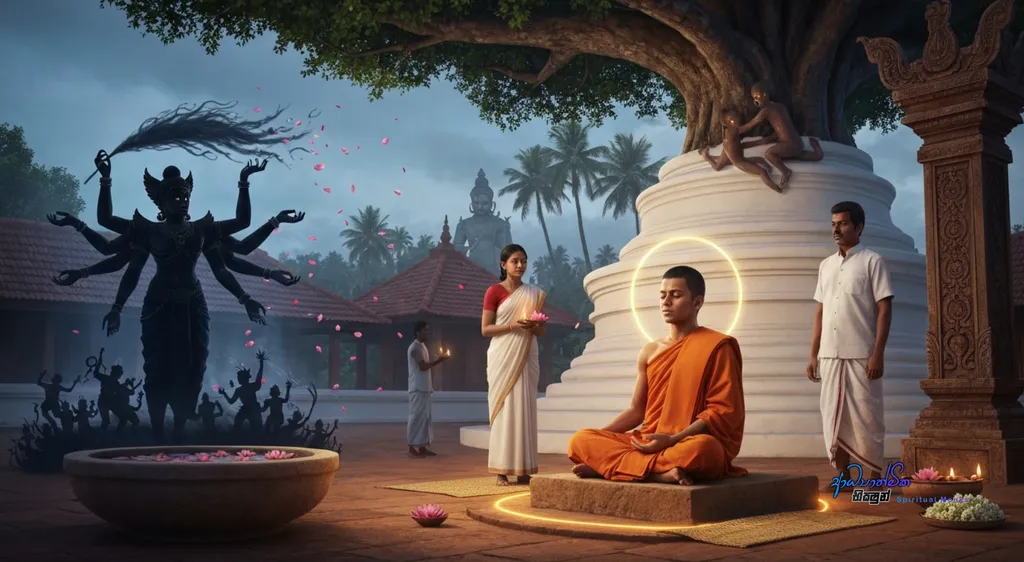
A Practical Guide to Liberation: Four Essential Steps
If you recognize yourself in this description and have a sincere desire for freedom, here are a set of practices that can help you break free. You must undertake them with strong determination.
As you engage in these practices, continue to attempt meditation on impurity (Asubha Bhavana). Even if lust arises, do not stop. Persist. The combination of these practices will begin to weaken the external influence and your internal habits.
Finding Balance: Self-Awareness is Key
After following these steps, you will begin to notice a change. You might think, “My lust is much less than before… the thoughts hardly come now.” This is the moment you can confirm that an external influence was indeed at play. This experience is your new defense. If, in the future, you feel a sudden, intense surge of these desires again, you will recognize it immediately as an external attack and will know how to respond.
However, this is a critical point: do not blame every single lustful thought on Mara or spirits. This is a dangerous trap. We all have greed, aversion, and delusion in our minds until we attain Nibbana (liberation). These external forces simply exploit the defilements that are already within us. The ultimate solution is to purify your own mind.
Therefore, you must also practice mindfulness. Explore our teachings on the Four Foundations of Mindfulness (Satipatthana), especially the practice of silently watching the mind. Learn to recognize your own thoughts of lust, aversion, and delusion as they arise. By identifying them, you develop control. It is through this inner work, combined with the protective measures, that you achieve true and lasting freedom from the struggle of overcoming spiritual lust.
Navigating the Path with Wisdom and Compassion
When helping a friend or a partner who is severely addicted, be skillful. Do not bluntly tell them, “You have a demon attached to you,” especially if they are not receptive to such ideas. This could cause more conflict in your family life. Use wisdom and find gentle ways to guide them toward these practices.
Remember, desire has no age limit. It’s a mistake to believe it disappears after a certain age. We see in the Jataka tales, stories of the Buddha’s past lives, elderly women who were so consumed by lust they were willing to harm their own sons. Do not fall into the trap of judging or blaming others, men blaming women, or women blaming men. This is a shared human condition. Pointing fingers at others is a way of avoiding the real work: looking at your own mind and taking responsibility for your own liberation.
If you have access to a truly spiritually developed person with the Divine Eye (dibba-cakkhu), they may be able to see such attachments and help remove them. We have shared methods for this, but these powerful practices are a last resort. The methods shared here, which you can do yourself without spending vast sums of money at shrines or on rituals, are often sufficient. They empower you to take charge of your own spiritual well-being.
The Ultimate Danger and the Precious Opportunity
Why is overcoming spiritual lust so important? These unseen forces have two main goals: to delay your spiritual progress and to gain pleasure through you. The ultimate danger lies at the moment of death. If such a being is attached to you, it can appear in your mind’s eye as you are passing away and pull your consciousness into its realm of existence. You could be reborn as one of them, suffering and then seeking out another human to feed upon, perpetuating the cycle.
Look at the world today. Lust is being amplified everywhere. Sri Lanka is known to rank highly in the consumption of pornography. As these energies intensify globally, think of how many beings are trapped in this cycle. We are fortunate to be in a country where the authentic Theravada teachings of the Buddha are still available.
In many parts of the world, there is no refuge beyond faith in a god, with no clear path to this kind of profound inner purification. We have been given the tools. It is up to us to use them before distorted teachings obscure the path entirely.
As a parent or elder, be mindful of the children born after the year 2000. They are growing up with smartphones in their hands from birth. Be aware of what they are consuming and what habits they are forming. Early addiction can set a course for a lifetime of suffering.
As you undertake these practices, you may face obstacles. Your body might feel weak, or you might experience burning sensations, especially during the “Gahajja” meditation. Do not stop. These are signs that the negative energy is being confronted. Persevere, and you will break through.
Your Path Forward
Once you have successfully navigated this difficult phase, your experience becomes your strength. You will not easily be fooled again by intense, compulsive desires. You will recognize their source and know how to remain free, allowing you to proceed with your spiritual journey, be it tranquility meditation, insight meditation (Vipassanā), or simply living a life of virtue, with greater stability and peace.
These teachings are offered to empower your journey. With this understanding, we conclude today’s reflection. May the power of the Buddha, Dhamma, and Sangha, the Triple Gem, bless you with the clarity and strength to understand these principles and put them into practice.
We invite you to walk this path with us. Read our teachings, and most importantly, apply them practically in your own life. as you practice, questions will naturally arise. Please feel free to share your experiences and questions in the comments below, via email or contact form. I will do my best to offer guidance in future talks based on your progress. For now, begin this practice with an open heart and a mind free from expectation. Cultivate it correctly, and may you find the clarity and peace you seek.
Thank you for joining us. We hope this blog will be of great benefit to your spiritual journey.
May you all be well and happy.
May the blessings of the Triple Gem be with you all!.


