


Categories: Maintaining Mindfulness
May the blessings of the Triple Gem be with you all!
Welcome. For those of you who follow our spiritual teachings, you know that a central aspect we train in is the practice of maintaining mindfulness. We have offered many teachings on what this mindfulness is and how to develop it, guiding you in this training. Many of you are already engaged in this practical work and have begun to see for yourselves what the mind is and what its nature is. Through direct experience, you are starting to perceive your own inner world with clarity.
You might be realizing whether you are a person with a lot of desire or little desire; whether you are someone with much aversion or little aversion. Going deeper, you are learning to identify all the thoughts that arise within: deceptive thoughts and honest ones, thoughts of goodwill and thoughts of jealousy. This recognition of every thought is a direct result of your practice. Mindfulness, you see, is a powerful weapon.
After being born in this human world, among people who often live heedlessly, you are choosing a path of wakefulness. To practice buddhist mindfulness is to live with alertness, to be truly awake. Most people are living as if in a deep sleep, but the person who practices mindfulness is like someone striving to awaken from that slumber. This helps you understand the state in which most people in the world exist.
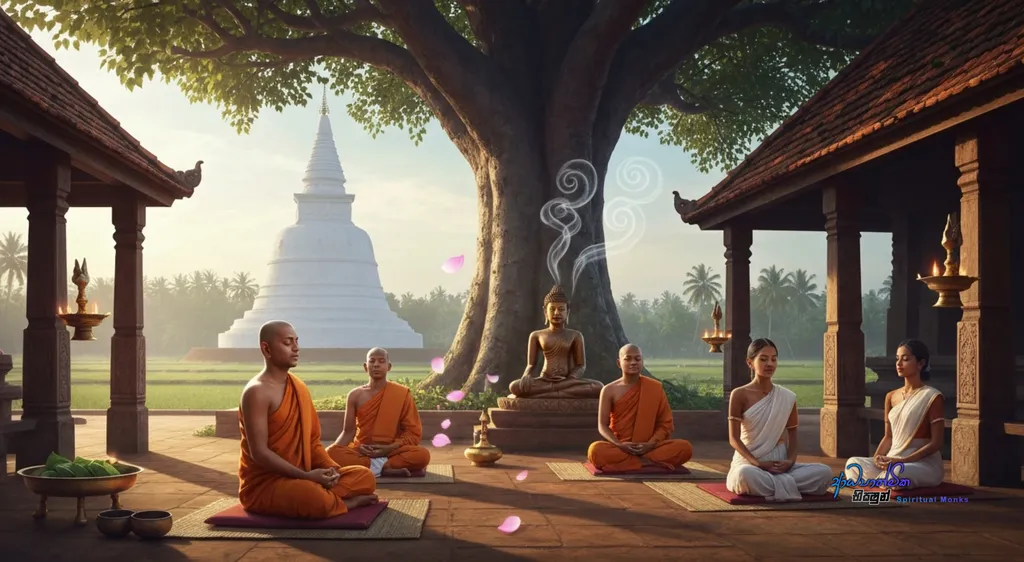
Everyday Awareness vs. the Buddha’s Mindfulness
In our spiritual explorations, we touch upon two interconnected paths: the path of tranquility, known as Samatha, and the path of insight, or Vipassanā. Both paths lead to the development of your inner, spiritual life, and mindfulness is a key component of this journey.
It is a direct aid in cultivating your mental landscape. Why? Because when you act with mindfulness, you begin to recognize your thoughts and the very nature of your mind, just as I mentioned. This recognition provides direct support for developing higher mental abilities and meditative states, known as Jhāna, because mindfulness gives you the ability to control your mind.
That is why I call it a powerful weapon. The Buddha himself described mindfulness as the most potent tool for seeing the world as it truly is. Without it, we couldn’t even manage our daily tasks. Relatively speaking, every human has some level of mindfulness to get through the day, to do their job, to run errands. This is how people discover things and move forward in the world. But among them are also those who live in a state of utter heedlessness.
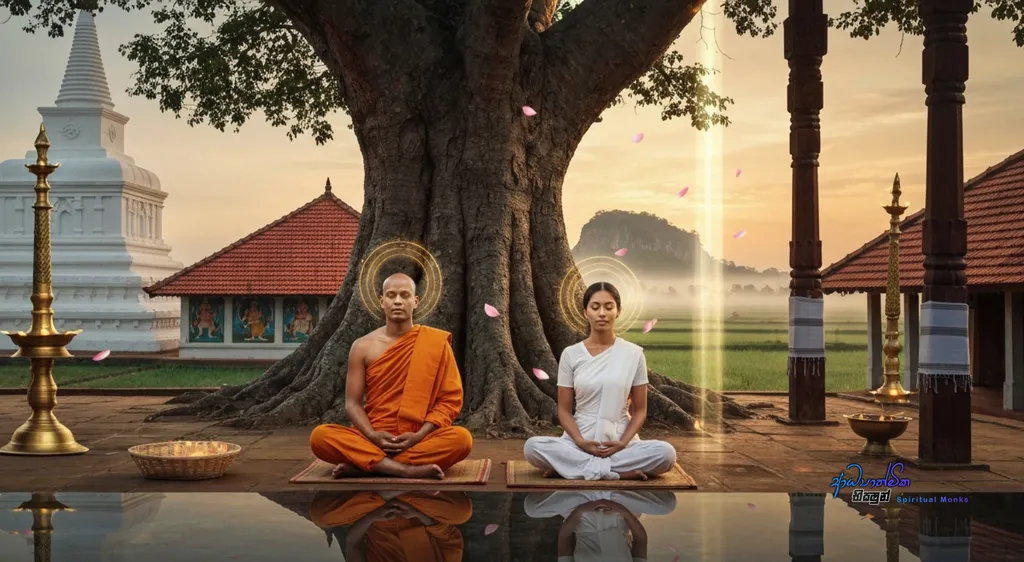
The Mindfulness That Liberates: Beyond Daily Tasks
The ordinary mindfulness we use for daily tasks is different from the mindfulness the Buddha taught. When you drive a car, you are mindful of the road, the accelerator, the brake, and the turn signals. If you weren’t, you would certainly get into an accident. People who drive unmindfully, perhaps under the influence of intoxicants that increase heedlessness, are far more likely to have a crash. So, a certain mindfulness exists in people.
However, you must understand this is not the *correct* mindfulness for liberation. It is a mindfulness limited to the task at hand, driving the car, cooking a meal so you don’t add too much salt, or handling files at work so you don’t make mistakes.
Remember this crucial distinction: this worldly mindfulness does not destroy your mental defilements, the Kilesas. This is where the difference lies. The mindfulness used for worldly tasks does not eliminate greed, hatred, and delusion, the Rāga, Dvesha, and Moha. This conventional mindfulness exists in everyone, regardless of race, caste, or religion.
But the buddhist mindfulness that the Buddha taught, the mindfulness for understanding yourself, for understanding your mind and seeing what is inside it, is not used by everyone. It must be revealed by a fully enlightened Buddha. When you are driving your car, are you studying your own mind? No. You are focused on the task. But the mindfulness taught by the Buddha is an investigation of yourself.
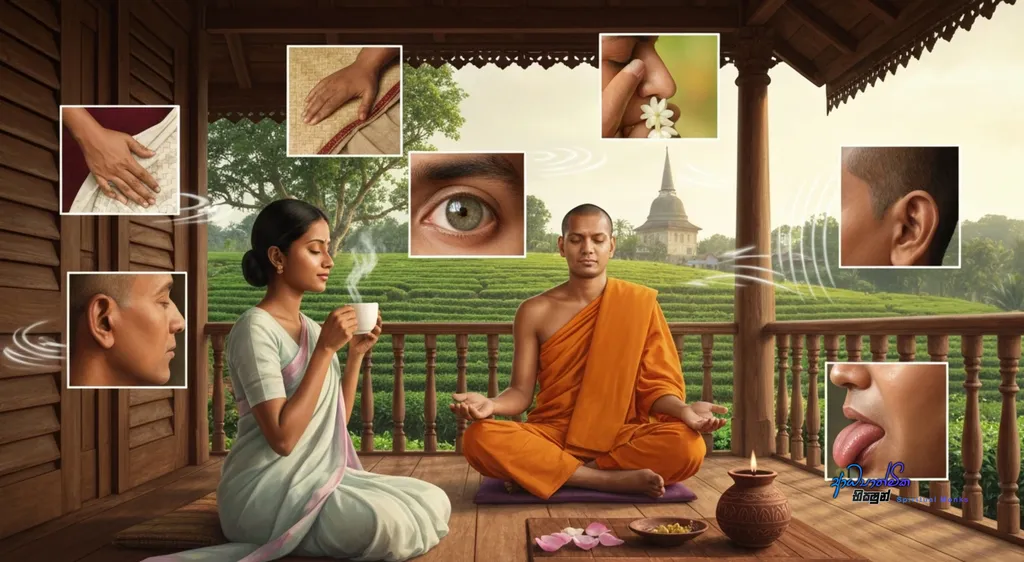
A Practical Guide: Finding Mindfulness in a Meal
So, how do you practice this deeper buddhist mindfulness? Here is what you can do today, in line with our topic. We all experience many things in life. Let’s focus on the act of eating. Until now, perhaps you have never developed mindfulness, practiced it, or even known what it was. If you need more background, please explore our collection of teachings on mindfulness practice. But the core instruction is this: learn to watch your own mind.
The next time you sit down to eat a meal, whether at home or elsewhere, I want you to try this. From the moment the food arrives at your table or the moment you serve it onto your plate, begin to observe. Watch your mind while you savor the food. This is your practical task. As you taste the meal, study the sensation of flavor on your tongue. You will begin to understand whether the food is truly delicious or not.
You can see for yourself how much flavor you actually perceive in the food that the world calls ‘tasty.’ Try this. Notice how composed or agitated your mind becomes. See how much your mind changes because of the food, because of its taste. You can witness this directly within yourself.
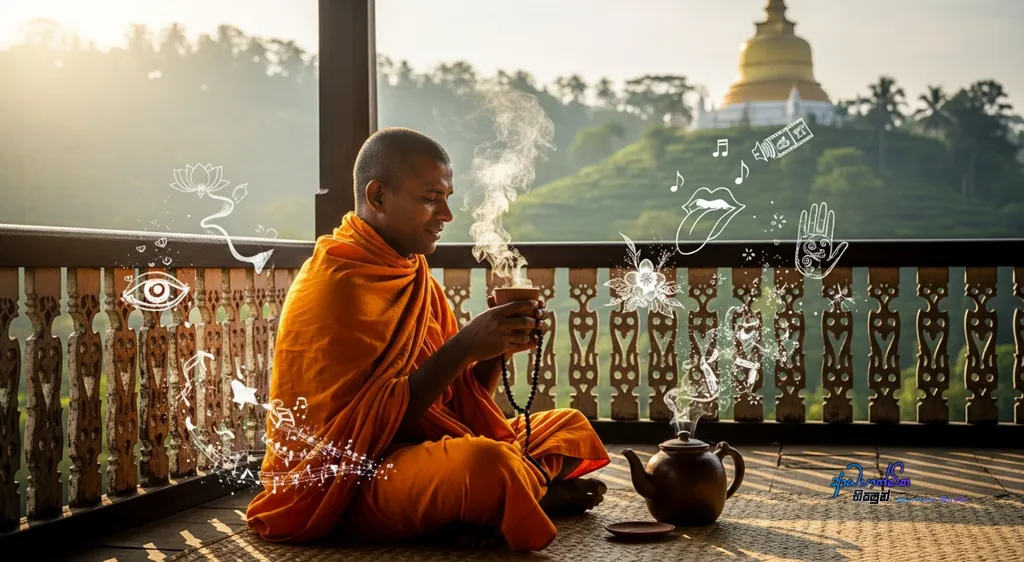
Apply this same practice when you drink something, a cup of milk tea, a plain black tea, a fruit juice. As you drink, mindfully watch your own mind. You will become aware of the flavors touching your tongue. Just observe this. This is the practice.
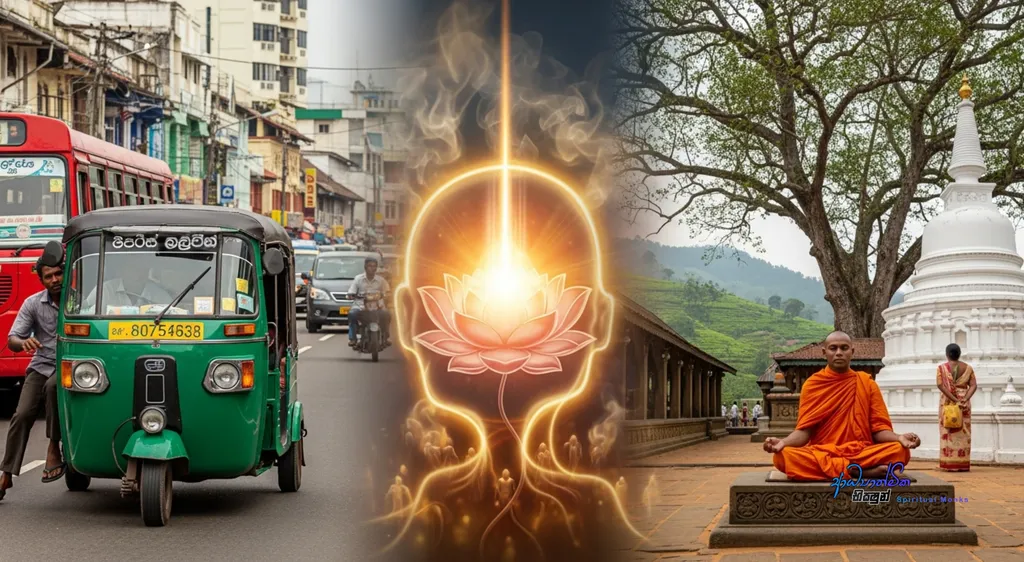
Beyond Taste: Understanding Sensory Pleasure (Kāma)
The Buddha pointed out that pleasing the five senses, the eye, ear, nose, tongue, and body, is the realm of sensory pleasure, known as Kāma. Often, we narrowly think of Kāma as only sexuality or lust. But the Buddha showed that it encompasses all five. If we are addicted to or attached to pleasing our eyes, ears, nose, tongue, or body with anything, these experiences belong to the category of sensory pleasures.
So, watch this process closely. When you are drinking tea, observe the mental states that arise. You might not be someone who can practice buddhist mindfulness all day, every day. For those who do practice according to our teachings, there will be times when the practice breaks, when you forget and become heedless. In every one of these moments, whether practicing consistently or starting again after a lapse, train yourself to look at your mind. Watch how your tongue savors the taste. Study it.
Similarly, if you are someone who listens to music or enjoys entertaining stories, watching videos and delighting the eye and ear, use those moments to look at your own mind. What do you enjoy the most in life? We cling to many different things we find pleasurable. It could be through the eye, the ear, the tongue, the nose, or the body.
If you are enjoying something through any of these five senses, study that experience intently. See what it’s like. Observe how that enjoyment feels to you. In doing so, you will begin to understand how long these pleasures last. You will see their arising and passing nature. And you will also see their drawback, the ādīnava, which is the inherent unsatisfactoriness and eventual disappearance of the pleasure.
The Path Unfolding: From Pleasure to Dispassion
The drawback, or ādīnava, also includes how much you struggle and strive for these fleeting pleasures. Think about it: how hard do you work to live happily within a family unit? How much do you suffer, toiling day and night? Reflect on this yourself. This truth becomes self-evident once you begin to develop your own mindfulness.
As you practice this over time and come to understand the pleasure (the gratification) and the danger (the drawback) of sensory experiences, your mind will naturally want to distance itself from them, even while living a lay life. The worldly life is built upon these sensory pleasures. When this understanding deepens, you might feel inspired to live a celibate life at home. Or, if you are married and your partner also follows this path, you might decide together to pursue this truth. For others, this path may lead to entering the monastic life to continue the journey.
This is the natural progression. Our purpose is to help you on this spiritual journey. Through our teachings, we discuss various aspects, including meditative states like Jhāna and higher knowledges (Abhiññā), which are part of the tranquility path. We also teach the Buddha’s direct instruction on the Four Foundations of Mindfulness, the Satipaṭṭhāna. Both are aimed at developing your spirituality. We share these truths about spiritual experiences to give you a framework for understanding them, especially since you may not have had them yet but could encounter them on the path.
An Invitation to Practice, Not Argue
There are those who criticize our teachings, who claim that talk of things like a ‘third eye’ or insights gained through tranquility meditation is false or a distortion of Buddhism. That is their opinion, and it is relative to their understanding. Such views often arise from a lack of practical training. However, the practice related to buddhist mindfulness is something everyone can verify for themselves.
While the things I mentioned earlier are also taught by the Buddha, the practice of identifying greed and hatred in your own mind is universal. This very identification helps to destroy delusion, the Moha. The Buddha taught that ignorance of these states of greed, hatred, and delusion *is* delusion itself.
So, for those who criticize, who say our teachings on these subtle aspects are false, here is your opportunity. If you cannot practice that path, then practice what the Buddha unequivocally taught: the abandoning of greed and hatred. Sadly, many who criticize do neither. They do not practice what the Buddha truly taught, but instead attack others. They are often stuck on the purely material, physical level of reality, and even their understanding there is incomplete. They are just talking for the sake of talking.
What everyone should do is practice the Buddha’s real teaching. Practice the Four Foundations of Mindfulness, practice insight meditation, practice the genuine art of studying your own mind.
Your Ongoing Journey: Practice Without Ceasing
So, whenever you are indulging in sensory pleasure, whether it’s through sexuality and lust, eating a meal, listening to a song, going on a trip, or even just scrolling through social media, in any moment where you are intoxicated by a sensory experience through one of the five senses, look closely at your mind.
Use that moment to see for yourself whether the things the Buddha taught are true or false. Try to realize this truth by observing your own mind. That direct realization will carry you forward, again and again. Your spiritual capacity will expand because you are gaining an understanding of your own mind.
This is the work you must do, starting today, as part of your mindfulness practice. As you continue, you might feel you have reached some level of understanding. But do not stop there. Do not get caught up investigating the understanding itself. I emphasize this again: do not stop your practice just because you feel you’ve had a breakthrough. Continue to practice, and your mind will evolve in the ways I have described in this teaching.
Continue with your efforts. For today, I will conclude this teaching here. May the power and blessings of the Buddha, the Dhamma, and the Sangha, the Triple Gem, give you the strength to understand these matters clearly and put them into practice. May you all train in this way and realize the truth for yourselves.
We invite you to walk this path with us. Read our teachings, and most importantly, apply them practically in your own life. as you practice, questions will naturally arise. Please feel free to share your experiences and questions in the comments below, via email or contact form. I will do my best to offer guidance in future talks based on your progress. For now, begin this practice with an open heart and a mind free from expectation. Cultivate it correctly, and may you find the clarity and peace you seek.
Thank you for joining us. We hope this blog will be of great benefit to your spiritual journey.
May you all be well and happy.
May the blessings of the Triple Gem be with you all!.


