


Categories: Eradicate the Fear of Meditation
May the blessings of the Triple Gem be with you all! Welcome. For those of you who are part of our community exploring the spiritual life, and for those who are new, today we will delve into a profound topic. We will explore a specific result that can arise from dedicated meditation practice, particularly from practices like the ‘Third Eye’ meditation we have shared previously.
The purpose of this article is to explain the significance and usefulness of an experience known as the light sign in meditation. While we have touched upon this in various teachings, it deserves a dedicated exploration because many people experience it without understanding its value. This guidance is offered as a helpful support, so that when you encounter this phenomenon, you recognize its potential and know how to proceed on your path.
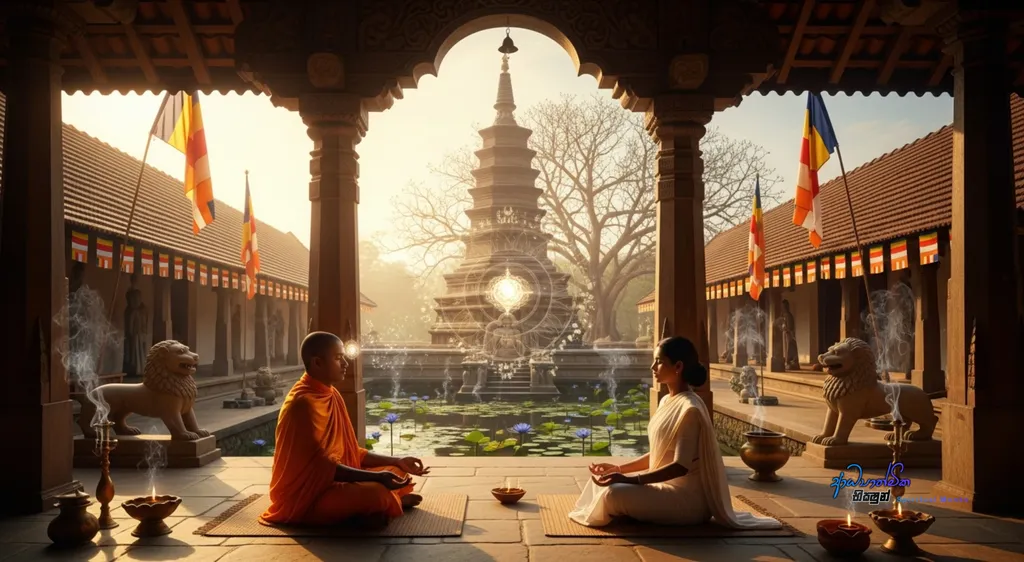
What is the Light Sign and How Does it Appear?
When you engage in certain meditation practices, a particular sign or signal can begin to arise. For example, in the ‘Third Eye’ meditation, as you focus on the point between the eyebrows, or when you practice with the meditation object of ’emptiness’, you may start to perceive a light. This is what we call the light sign in meditation, or āloka saññā in the Pali language. This is a sign that your concentration is deepening.
This light can manifest in many different ways for different people. We have discussed this in our foundational teachings before:
- Colors: It may appear as a blue, yellow, or red light. Sometimes, it is a brilliant white.
- Shapes: The shape can also vary. Some see it as a circle, others as a square, and for some, it appears as a vertical or horizontal bar.
These experiences are a natural part of the journey for many practitioners. It’s not limited to just one technique. While it can arise from the ‘Third Eye’ practice, it is also known to occur during other traditional Buddhist meditations, such as:
- Ānāpānasati (mindfulness of breathing).
- Buddhānussati (recollection of the Buddha).
- Other recollection practices like Dhammānussati (recollection of the teachings), Saṅghānussati (recollection of the community), Cāgānussati (recollection of generosity), and Devatānussati (recollection of celestial beings).
- Asubha meditations (contemplations on the unattractive nature of the body).
Furthermore, this light sign in meditation isn’t exclusive to Buddhist practices. It can appear in many contemplative traditions, including those focused on Kundalini energy, various Yoga methods, or chakra awakening practices.
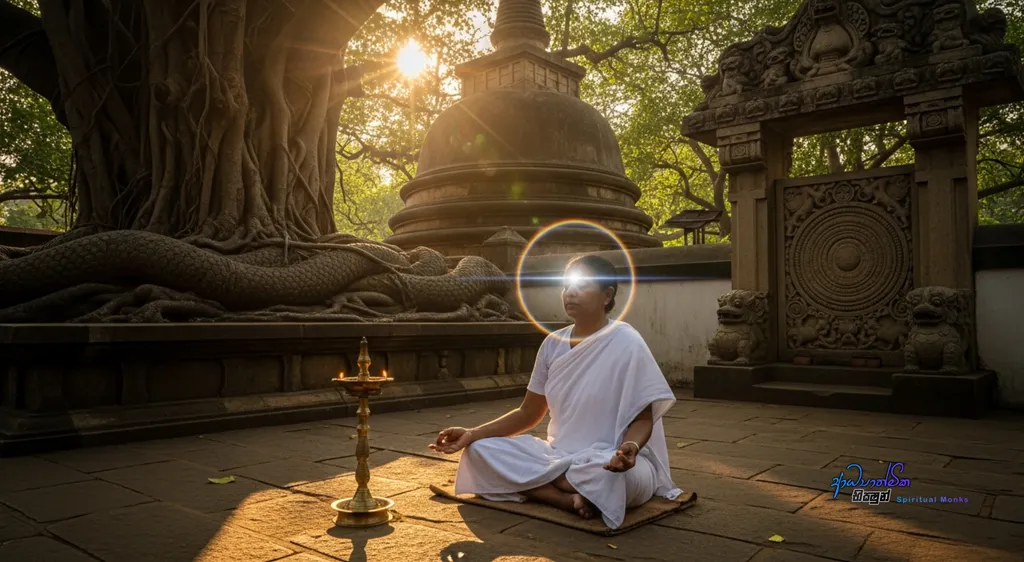
An Experience for Everyone, Transcending All Boundaries
It is crucial to understand that the emergence of the light sign in meditation is a universal human experience. It is not something that happens to everyone, and that is perfectly okay. We have always emphasized that you should never practice with the expectation of seeing it. Expectation can become a hindrance. However, for those to whom it does appear, it is important to know that this experience is not limited by any external factors:
- It is not guaranteed: Some people will experience it, and some will not. There is no need to feel that you are missing something if it doesn’t appear.
- No age limits: We have heard from university students, young children in junior school, and elderly practitioners who have all experienced this light.
- No religious or cultural barriers: I have spoken with Catholic and Muslim individuals who, through their own contemplative practices, have seen this light sign. Tamil and Sinhala Buddhist practitioners also report this experience. It transcends all such divisions.
This is why we repeat this point: do not meditate with the hope or expectation of seeing a light. If you do, it will likely not come. Simply practice sincerely, and if this experience arises, know that it is a natural step for some.
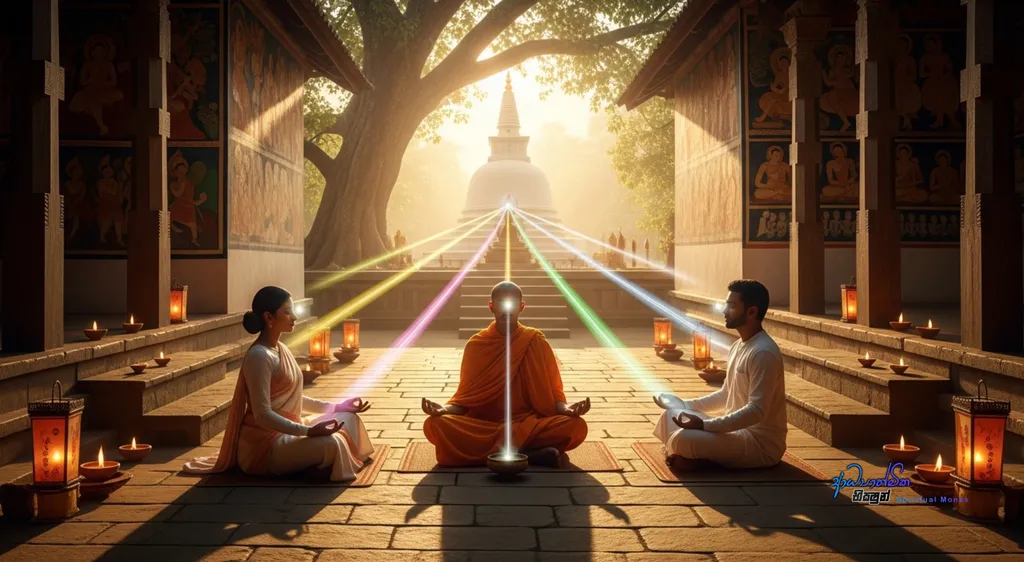
The Purpose of the Light Sign: A Gateway to Deeper Insight
So, what is the primary benefit of this light sign in meditation? The most direct and powerful use of this light is as a gateway to awakening what is known as the ‘Third Eye’ or, in the more formal language of the Buddha’s teachings, the Dibbacakkhu-ñāṇa, the ‘divine eye’. This is one of the five supernormal knowledges (Pañca-abhiññā) described in the texts. The light sign is the precursor, the foundation upon which this deeper knowledge can be built. Following the arising of the light, the next stage is the appearance of ‘mind-images’ (citta–rūpa), which eventually leads to the development of the divine eye.
It is true that some meditation masters (kammaṭṭhānācariya), especially those focused purely on insight meditation (Vipassanā), may advise their students to disregard the light and not follow it. They guide their students to stay strictly on the path of insight. However, it is essential to remember that the light itself can be used to reach the ultimate goal of liberation, or Nibbāna.
The Four Paths to Liberation Taught by the Buddha
The Buddha taught that there are multiple pathways to awakening. The light sign in meditation is primarily associated with developing deep states of calm or tranquility (Samatha), but this can be integrated with insight (Vipassanā) to achieve liberation. The Buddha outlined four main ways:
- Samatha-pubbangamā Vipassanā: Developing tranquility first, and then using that deep calm as a foundation for insight.
- Vipassanā-pubbangamā Samatha: Developing insight first, which then leads to the natural emergence of tranquility.
- Samatha-Vipassanā Yuganaddha: Developing both tranquility and insight in a balanced, parallel way.
- Sukkha-vipassaka: The ‘dry insight’ practitioner, who focuses purely on insight without developing deep states of meditative absorption (jhāna).
All four of these paths can lead to Nibbāna. A skilled teacher, like the Buddha himself, would guide a student based on their individual nature and how their practice naturally unfolds. This is why we, through our teachings, offer different methods. For those who do not experience the light sign in meditation, we have provided other practices like the ‘To the Brahma World’ meditation, which is designed to help one easily attain states of deep absorption or jhāna. For some, the light sign may even appear after attaining these states. The path is unique to each individual, and a wise guide helps the student navigate based on their personal experiences.
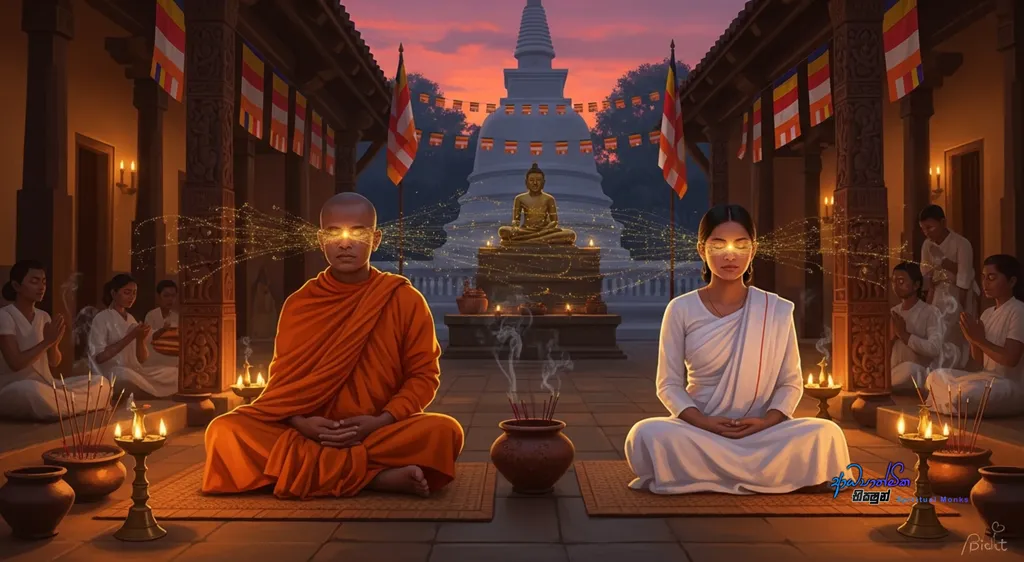
How the Light Can Appear and How to Work With It
The light sign in meditation doesn’t only arise during formal sitting practice. Many people have shared that it appears at other times of deep concentration or reverence. We have heard from individuals who experienced it:
- While performing their evening devotional practices or chanting at home.
- During the chanting of protective verses (pirit).
- While listening intently to a Dhamma talk with their eyes closed.
Some have reported the light becoming so bright that it feels like a lamp is switched on in a dark room, making it difficult to sleep. In our teachings, we explain that one can learn to make a gentle determination (adhiṭṭhāna) to let the light fade for a while, for instance to sleep, and then bring it back. This shows that the experience can be mastered.
Often, this experience is a fruit of past efforts. It may arise not just from your practice in this life, but from a habit of meditation cultivated in previous lives. It is a sign of your accumulated merit (kusala). When your mind momentarily becomes concentrated, this past potential can manifest as the light sign. It is a gift from your own past.
The Immense Potential: Beyond Just a Light
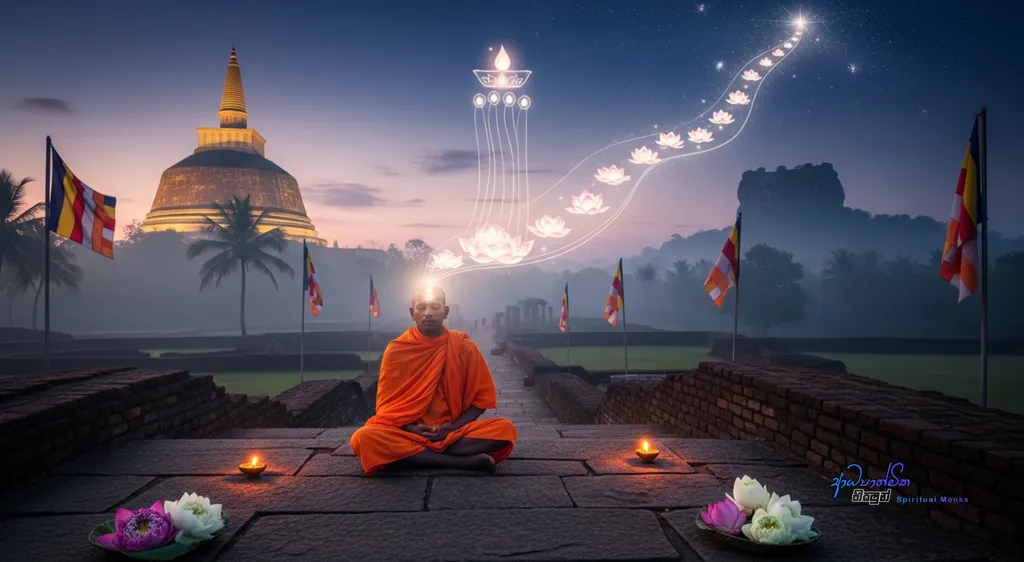
The light sign in meditation is not just a stepping stone to the divine eye; it unlocks many profound possibilities. For someone who has awakened the Third Eye, it becomes possible to perceive things beyond ordinary sight, such as the sacred relics within the Ruwanwelisaya stupa, the interior of Sigiriya Rock, or the powerful energies of sacred sites across Sri Lanka and the world. We have provided detailed guidance on how to explore these things practically.
But there is even more. The light sign in meditation is a powerful tool for entering the formless meditative absorptions (arūpāvacara jhānas). After mastering the light with the ‘five masteries’ (pañca vasītā), one can easily transition to the ‘sign of infinite space’ (ākāsa nimitta) and cultivate the first formless absorption, the sphere of infinite space (ākāsānañcāyatana). From there, the subsequent formless states can be developed. This shows how incredibly helpful the light sign can be.
It is like an electric train or an airplane, it provides a very rapid way to travel on the spiritual path. For those without the light sign, the meditative absorptions must be developed sequentially from the first jhāna. But with the light sign, one can access the sublime equanimity of the higher absorptions more directly. It is a powerful accelerator for your spiritual development.
A Common Misunderstanding: Don’t Reject This Precious Gift
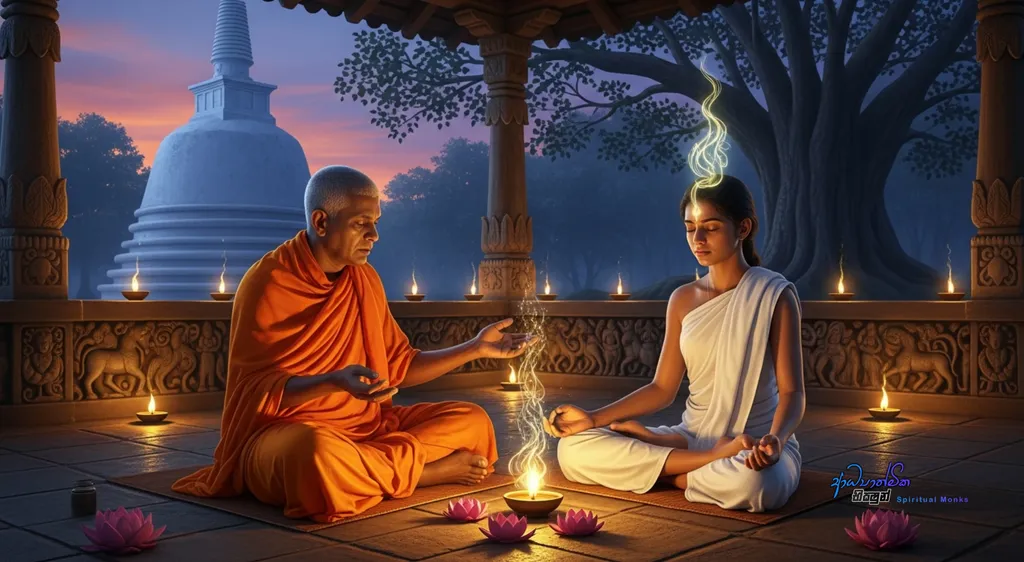
Despite its immense value, some people, and even some teachers, advise practitioners to dismiss the light sign in meditation, calling it a wrong path or a distraction. While it is true that a practitioner of pure insight (Vipassanā) should not get attached to, be greedy for, or be averse to the light, they should simply note it and let it go, this doesn’t mean it has no value. Using the balanced path of Samatha-Vipassanā Yuganaddha, one can work with the light without clinging to it. You can mindfully observe, ‘I will not cling to this light, nor will I reject it,’ and simultaneously continue to cultivate tranquility using a meditation object like ’emptiness.’
Some people, out of misunderstanding, believe the light is a trick of Māra (the tempter) or that it will lead them astray. Thinking in such an ignorant way, they try to push it away. But often, the more you reject it, the stronger it becomes. We have seen people who become so distressed by this that they abandon meditation altogether. This is the tragedy of not having correct understanding or proper guidance.
Your Past Merit and Future Path
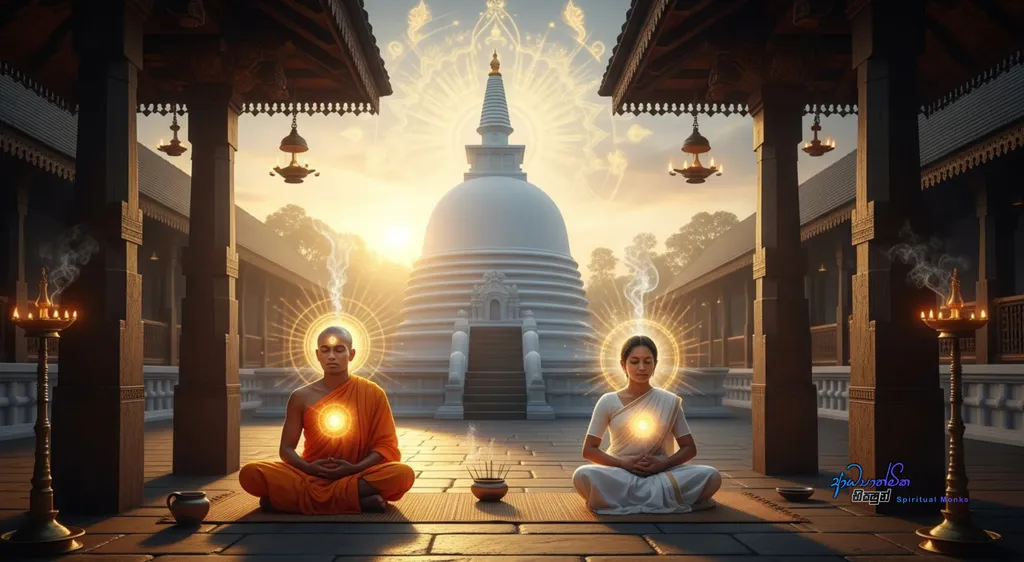
If you experience a light sign in meditation, regardless of your age, religion, level of knowledge, or how new you are to meditation, please remember this: it is a sign that you have a great store of merit from practicing in past lives. You are a person with the potential for immense spiritual growth. This is a special kind of energy, a pathway to a special kind of knowledge.
Through this light, one can practice insight and even reach the final goal of Nibbāna and become an Arahant (a fully awakened being). Even the great Bodhisattvas (beings training to become Buddhas) used the divine eye, developed from this light, to understand what perfections they needed to cultivate, to see the future, and to understand their past actions to guide their journey.
When you understand this, you realize what a great loss it is to discard this experience. If this is happening to you, or if you know a friend to whom this is happening, please encourage them to explore these teachings from the beginning. By helping them, you too will gain great merit.
Developing the formless absorptions through the light can also lead to rebirth in the Brahma worlds. While the Buddha taught that any rebirth is ultimately a form of suffering (dukkha) and not the final goal, these realms are states of great happiness compared to others. More importantly, this same spiritual power, this light sign in meditation, can be the very energy that propels you all the way to final liberation. So please, understand its value and continue your practice with diligence, virtue, and mindfulness.
Conclusion: A Blessing for Your Journey
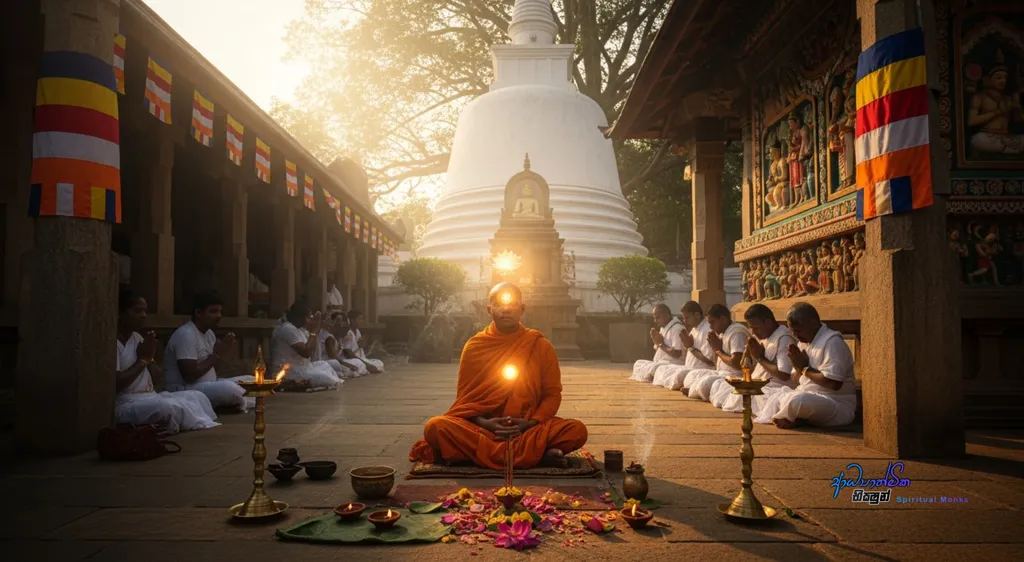
This teaching on the usefulness and importance of the light sign in meditation has been offered to you today. Though it was a detailed exploration, may you be able to act upon the matters you have understood from listening. With the powerful blessings of the Buddha, Dhamma, and Sangha, the Triple Gem, may you gain the ability to comprehend these matters clearly and practice accordingly.
We invite you to walk this path with us. Read our teachings, and most importantly, apply them practically in your own life. as you practice, questions will naturally arise. Please feel free to share your experiences and questions in the comments below, via email or contact form. I will do my best to offer guidance in future talks based on your progress. For now, begin this practice with an open heart and a mind free from expectation. Cultivate it correctly, and may you find the clarity and peace you seek.
Thank you for joining us. We hope this blog will be of great benefit to your spiritual journey.
May you all be well and happy.
May the blessings of the Triple Gem be with you all!.


