


Categories: Spiritual Expectations
May the blessings of the Triple Gem be with you all!
Today, I want to share a simple but profound secret to deepening your spiritual practice: the art of meditation without expectation. Many of you have begun this journey, perhaps through our ‘Third Eye Practical Meditation‘ series. A common question that arises is, ‘What should I be aiming for?‘
We often start with a list of rules: ‘My mind must be calm,’ ‘I must not have any thoughts,’ ‘My mind cannot wander.’ But what if I told you that the very first step is to let go of all these goals?
This is the essence of letting go in meditation releasing the need to control, to achieve, or to measure your progress. When you surrender the urge to reach a certain state, you open yourself to the deeper stillness that already exists within you. True growth in meditation often begins not with striving, but with softening allowing the present moment to simply be, without resistance or judgment.
This might sound counterintuitive, but approaching meditation with a checklist is one of the biggest obstacles we create for ourselves. True progress comes not from achieving, but from releasing. Let’s explore why letting go is the most powerful thing you can do for your peace of mind.
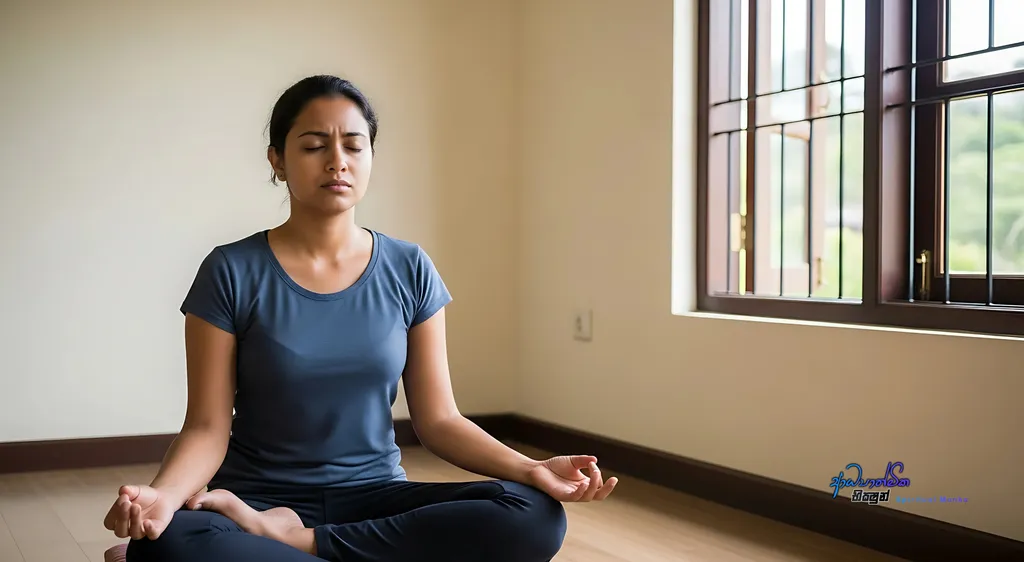
The Beginner’s Trap: Setting Unrealistic Rules for Your Mind
The Buddha taught that our minds have been wandering for an unimaginably long time through what we call Samsara the endless cycle of birth, death, and rebirth, shaped by our actions. More simply, you can think of it as a lifetime of ingrained mental habits. We have spent years, lifetimes even, chasing desires, running from fears, and wrestling with our thoughts. Our minds are conditioned to be busy.
To sit down and suddenly demand silence from a mind that has been chattering for so long is not just unrealistic; it is a form of unkindness to yourself. It’s not a sign of failure if your mind isn’t instantly still. It is simply the nature of a mind that has not yet been trained. So please, do not be discouraged. If you happen to be someone who finds stillness easily, perhaps due to practice in past lives, that is wonderful. But do not get attached to that idea either. The key is to begin where you are, without judgment.
Please do not misunderstand this point. Don’t fall into the trap of thinking, ‘Meditation is too difficult,’ or ‘I can’t tame my mind,’ or ‘This practice is not for me.‘ These are what we might call negative ideas thoughts that weaken us. Do not even entertain such attitudes. This is simply not the case.
If, by chance, you are someone who has practiced meditation well in your past lives within Samsara, your mind absolutely can become disciplined very quickly. This is because you have a pre-existing habit from the cycle of rebirth and have accumulated past merit, or kusala. The habit of meditation is already strong. So, do not fall into either extreme: neither the rigid expectation of immediate success nor the despair of feeling that it’s impossible. We must avoid burdening our minds with these kinds of fixed attitudes.
The School of Meditation: Be a First Grader Again
To illustrate this, imagine it’s your very first day of school. On that day, you don’t know about final exams, university applications, or scholarships. Your teacher gives you a simple task: learn to write the first letter of the alphabet. You focus only on that. You don’t know the second letter exists until the teacher introduces it. Your world is beautifully simple, focused on the present task much like the practice of letting go in meditation, where attention is fully on the present moment, free from distractions or worries about what comes next.
This is how we should approach meditation. When you sit, just sit. Don’t think about achieving deep states of concentration, which we call Samadhi. Don’t worry about whether your mind is wandering or still. Your only job is to be present with the practice, gently and patiently, just like that child learning their first letter. Approaching meditation without expectation is the most direct path to progress.
Today is simply your first day in grade one.
The Danger of Craving Spiritual Experiences
When we expect things from meditation, we often don’t receive them. It’s possible, but it can take a very long time sometimes ten or fifteen years. So when you, as a meditator, sit down, do not expect your mind to be disciplined, still, concentrated, or like a rock, free from thoughts. Sit down with an extremely light and relaxed attitude. Then, practice with interest and dedication. That is all that is required.
As you continue your practice, you will inevitably have pleasant experiences. You might feel a wave of profound peace, see beautiful lights or landscapes in your mind’s eye, or touch upon deep states of absorption known as Jhana. These are natural signs of a concentrating mind. The danger lies in our reaction to them.
The moment we think, ‘Wow, this is amazing! I want more of this!‘ we have introduced craving, or Tanha. This is the subtle thirst for pleasant experiences. Once this craving takes root, you might sit for your next meditation session hoping to recreate that wonderful feeling. When it doesn’t come, you feel disappointed and frustrated. This can cause you to become weak and give up on meditation, thinking, ‘Oh, I didn’t get that experience again.‘
The very expectation you created becomes the reason for your struggle. These experiences are like beautiful clouds passing in the sky of your mind; they are there to be observed, not grasped. The key is letting go in allowing these experiences to arise and pass without clinging, which frees you from the cycle of craving and disappointment.

A Tale of Two Worlds: The Worldly vs. The Spiritual Path
In the physical world, we chase after things like cars, land, and property putting in great effort, driven by desire, attachment, and even anger or aversion. We work hard, often struggling, to acquire what we believe will bring us satisfaction. But the spiritual path operates on entirely different principles.
What brings success in the material world craving and striving cannot bring you peace, wisdom, or inner clarity.
Spiritual states cannot be possessed like objects. They arise not through forceful effort but through letting go through a relaxed, open mind free from pressure and expectation. Qualities such as deep concentration (Samadhi) or higher insight (Abhijna) emerge naturally when the inner world is allowed to unfold, rather than being forced.
With the right methods, even profound states like Samadhi, Jhana, and the eight attainments (Aṭṭhasamāpatti) can be reached swiftly. I offer practical techniques drawn from my own experience simple yet powerful tools suited for those living active lay lives. These include awakening abilities like divine sight and hearing, perceiving others’ minds, recalling past lives, and remaining in deep meditation for hours or even days. When you apply these methods, you won’t just understand them intellectually you will experience them directly.
The True Path: Practice with Diligence, Not Demand
The purpose of today’s talk was to make one thing clear: do not expect anything from your meditation. Please take this meaning to heart. Approach your meditation like that small child on their first day of school, sitting down with a light and easy mind. This is how your practice will develop. The only things you need are a desire to meditate, interest, and dedication. Your only goal should be, ‘I am developing in meditation.‘ But do not turn this into a plan or a map, thinking, ‘I will develop this way, then that way.‘
In the world of meditation, enter with no expectations at all. As the Buddha taught, be balanced, without attachment or aversion. Become equanimous, a state known as Upekkha. When you do this, your meditation can develop very quickly in an hour, a day, a week, or a month. I can tell you it will not take a year. You can develop your practice in this short time.
This is the matter I wanted to explain to you all, and I hope you have understood it well. Practice your meditation in exactly this way. In the future, I will teach you how to easily attain psychic powers, the eight attainments, and how to stay in meditation for long periods. I share these from my own experience in simple language for busy people like you. When you practice what I say, you will understand it for yourselves. The key is to practice with interest, dedication, and a goal to develop, but without mapping out or expecting specific results. Be equanimous, and your practice will flourish.
In future talks, I will guide you on how to practically develop these skills and explore deeper states of mind. But for today, the most important lesson is this: approach your meditation with an open heart and empty hands. That is where the real journey begins.
We invite you to walk this path with us. Read our teachings, and most importantly, apply them practically in your own life. as you practice, questions will naturally arise. Please feel free to share your experiences and questions in the comments below, via email or contact form. I will do my best to offer guidance in future talks based on your progress. For now, begin this practice with an open heart and a mind free from expectation. Cultivate it correctly, and may you find the clarity and peace you seek.
Thank you for joining us. We hope this blog will be of great benefit to your spiritual journey.
May you all be well and happy.
May the blessings of the Triple Gem be with you all!


