


Categories: Dhamma Discussions
May the blessings of the Triple Gem be with you all!
Today, we are moving away from a formal sermon to have a more personal discussion. We want to explore the Five Hindrances, not just as a list to be memorized for an exam, but through our direct experiences. This is about understanding how to confront these challenges on the spiritual path. The Five Hindrances, known in Pali as the Pañca Nīvaraṇa, are mental states that block our progress in meditation and prevent us from seeing clearly. You likely know their names:
- Sensual Desire (Kamacchanda)
- Ill Will (Vyāpāda)
- Sloth and Torpor (Thīna-middha)
- Restlessness and Worry (Uddhacca-kukkucca)
- Doubt (Vicikicchā)
These hindrances are the primary reason we struggle to develop concentration and attain deeper meditative states, or jhanas. Our conversation today will focus on the very first one: Kamacchanda, or sensual desire. By sharing our experiences, we hope to illuminate this common obstacle and help you navigate it on your own journey.
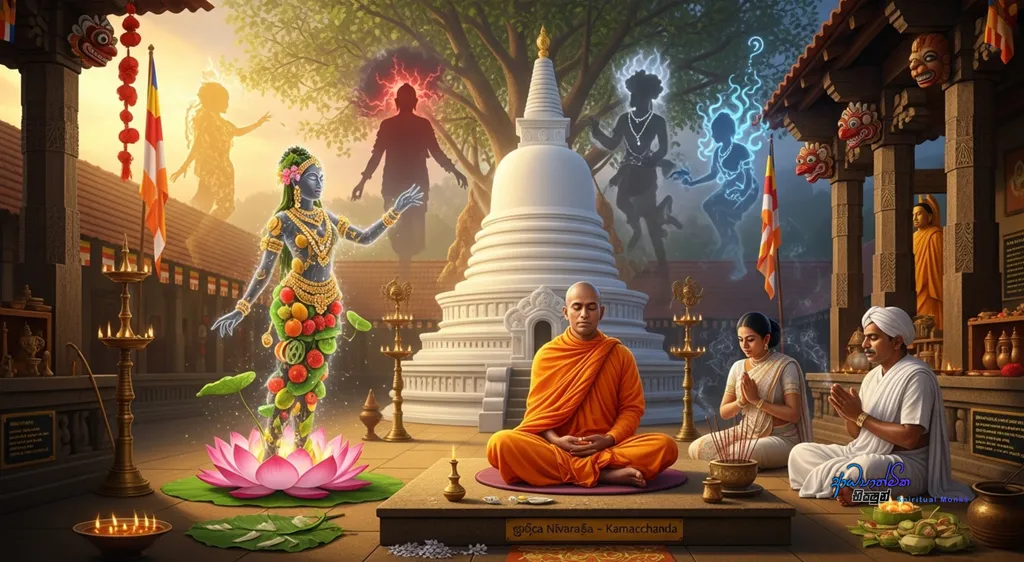
What is Kamacchanda? Desire vs. Indulgence
The term Kamacchanda literally translates to ‘a desire or will for sensuality.’ It is the craving for pleasure through our five senses and mind. For a layperson living in the world, this often involves active indulgence in sensual pleasures. Their life is structured around experiencing these things.
However, for those of you who have chosen the monastic life, the situation is different. You have stepped away from a life of indulgence. You are no longer actively seeking these pleasures. Yet, the underlying desire, the chanda , or inclination, remains. This is the essence of Kamacchanda for a spiritual practitioner. It’s a subtle tension. On one hand, there is a reluctance to indulge because you know it will tarnish your precepts (sīla), stain your monastic life, and obstruct your path to concentration and liberation. On the other hand, the pull of past habits and desires still exists.
Several factors protect you. The monastic life offers few opportunities for indulgence, even secretly. There is the fear of being seen and the shame that would follow, a powerful protection known as hiri-ottappa (moral shame and fear of wrongdoing). These outer structures help, but the inner work is about dealing with the desire itself.
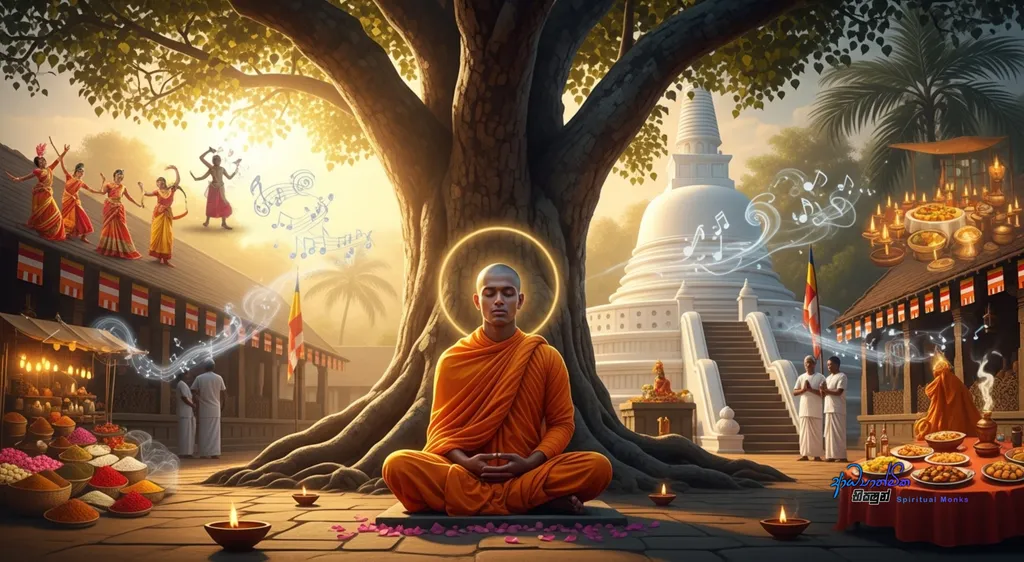
The Vast Spectrum of Kamacchanda: More Than Just Sexuality
When we hear ‘sensual desire,’ we often immediately think of sexuality, which is indeed a primary form of Kamacchanda. However, its scope is far, far wider. It encompasses any craving we experience through our six sense doors: the eye, ear, nose, tongue, body, and mind.
This includes:
- Attraction and love: The pull towards another person.
- Entertainment: The desire to listen to music, watch movies, or even cartoons.
- Addictive interests: This can even include a deep obsession with politics or reading novels.
- Desire for sensory experiences: The craving for beautiful sights, which can drive someone to travel far just to see a landscape. The wish to hear beautiful sounds. Even the pleasure derived from the smell of incense, if clung to, falls into this category.
Essentially, any time the mind is stirred and seeks out an experience through the senses, that is Kamacchanda at play. Initially, it starts as a simple preference, a chanda (will or inclination). For example, a small liking for a certain sight. If we indulge it, this inclination grows into a powerful desire (craving), which can then lead to action. This is how a simple wish to see a beautiful place can lead you to travel across the world. In monastic life, you have withdrawn from the action, but you are left to deal with the root inclination, the chanda. This is what troubles the mind and prevents it from settling into a state of deep concentration, or samadhi.

The Subtle Disguises of Desire in Spiritual Life
One of the trickiest aspects of Kamacchanda is how it manifests in a spiritual environment. After renouncing worldly possessions like houses and careers, the mind can latch onto the smallest things with the same intensity. We have seen nuns argue over an apple with the same fervor that laypeople might argue over land. That apple becomes their entire world of possession.
You might have left behind money and jobs, but you could make a tiny needle your greatest treasure. This attachment is still Kamacchanda. It can even come in the guise of the Dhamma itself. One might leave behind all worldly arguments only to engage in heated debates about spiritual concepts, creating a great internal conflict. This is a form of spiritual possessiveness, sometimes called Dhamma mātsarya (spiritual stinginess or jealousy).
This desire can attach to anything:
- To a supporter: Becoming attached to a lay supporter who provides you with requisites.
- To a book: Becoming overly attached to a particular book, even a sacred one like the Abhidhamma or a Sutta collection.
- To meditative states: This is a very subtle trap. When you experience a pleasant state of concentration (samadhi) or a meditative absorption (jhana), a desire arises to have it again. Saying, ‘This is pleasant, I want this,’ and constantly trying to recreate that experience is a form of Kamacchanda. The state itself is a tool to be used and then let go of to move forward. You must release your attachment to one stage to proceed to the next.
The scope of this hindrance is vast and profound, far beyond what we might learn from a simple textbook definition.
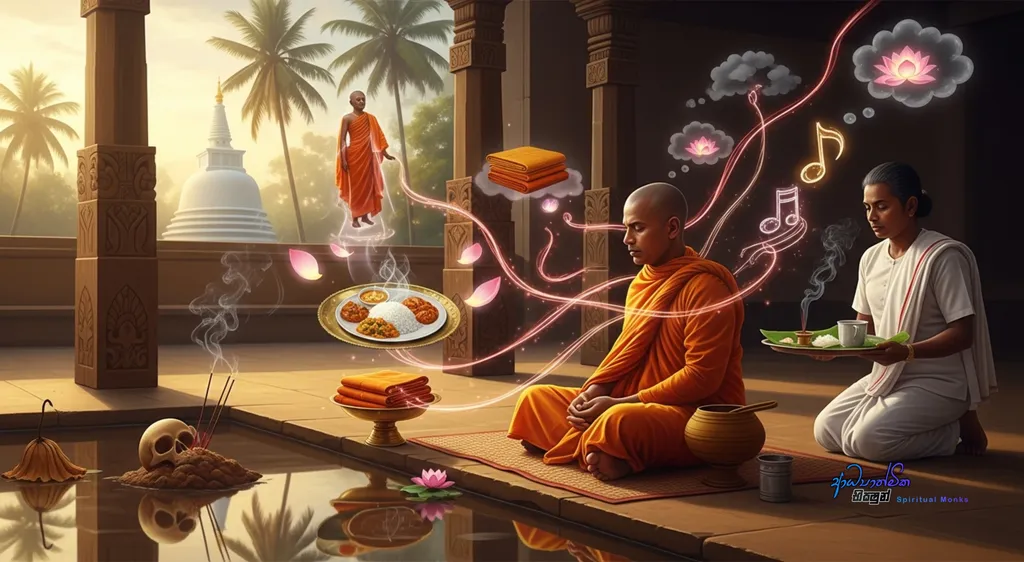
The Trap of Spiritual Experience and the Urge to Share
Here is a very common and powerful example of Kamacchanda in action during meditation. Imagine you are meditating and, suddenly, you experience a state of deep concentration you’ve never felt before. While you are experiencing this profound peace, a thought arises: ‘I must tell the teacher about this! I need to tell my friend!’
This urge to share can become overwhelming. The mind insists, ‘Get up and tell them right now!’ If you don’t recognize this as a hindrance, you will act on it. A state of concentration that might have naturally lasted for fifteen minutes is cut short. After just five minutes, you get up and go tell someone, feeling a sense of pride and accomplishment.
Later that day, feeling confident from your morning ‘success,’ you sit down to meditate again. You wash, have some tea, and settle in, expecting to find that beautiful state waiting for you. But it’s gone. It’s not there. This happens because the experience was disturbed by conceit (māna) and the desire to announce your attainment.
Instead of fully experiencing the state and letting it cease naturally, you broke it with agitation and ego. The correct approach is to simply stay with the experience, observe it, and allow it to run its course. By remaining calm and not grasping, you create the conditions for it to arise again more easily in the future.
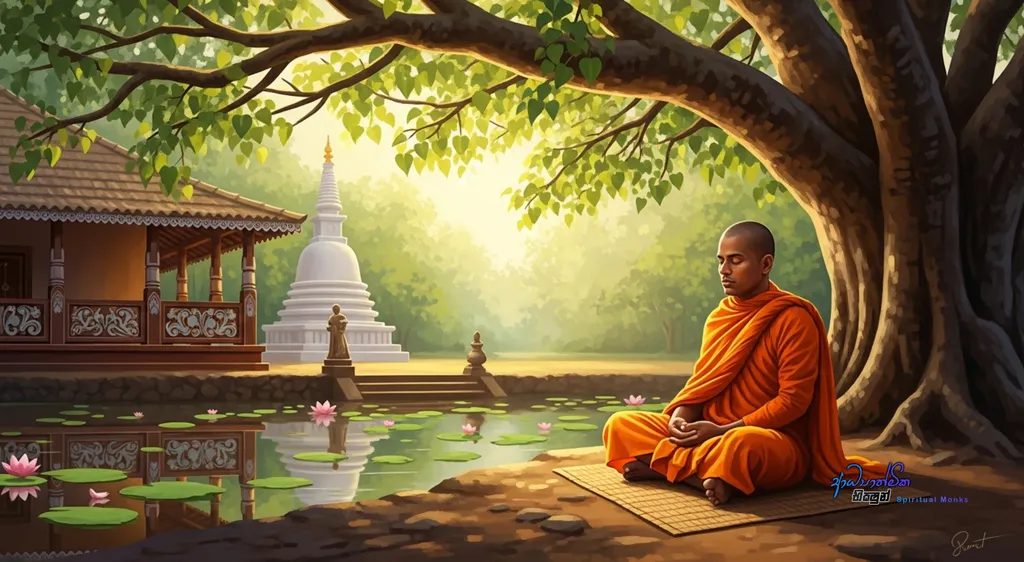
Kamacchanda in the Fabric of Daily Life
Sensual desire weaves itself into the most ordinary activities. Consider these examples:
- Thoughts of the future and past: Planning for the future, like organizing a meal offering for the next day, is necessary. But if you start thinking, ‘A certain supporter is coming tomorrow, so I should look especially pious. I should shave my head perfectly and wear my robes this way to impress them,’ that is Kamacchanda. Similarly, reminiscing about past pleasures is a form of mental indulgence.
- Attachment to requisites: A desire to accumulate more robes than you need, or wanting a new robe when your current one is perfectly fine, is a subtle form of this hindrance. The key question is always: Does this thought or desire disturb my meditation? If it creates mental agitation, it is an obstacle.
- The urge for distraction: During meditation, the mind might suddenly insist you need to do a chore, like washing your robes. Even if this task could easily wait, the mind creates an urgency to get you off the meditation cushion. This is the restless energy of Kamacchanda trying to pull you back into activity and distraction. Once you get up, the desire to do the chore often vanishes. The goal was simply to break the meditation.
Each person’s main obstacle is different. For one person, it might be lustful thoughts. For another, it might be food. For someone else, it could be attachment to a song from their past. The work is to patiently observe your own mind during meditation and identify what pulls it away from the breath. What is your specific form of Kamacchanda? If it is lust, then practicing meditation on the unattractive aspects of the body (asubha) is the antidote. But if lust is not your issue, there is no need to practice that specific meditation.
The Root of the Problem: The Mind, Not the Object
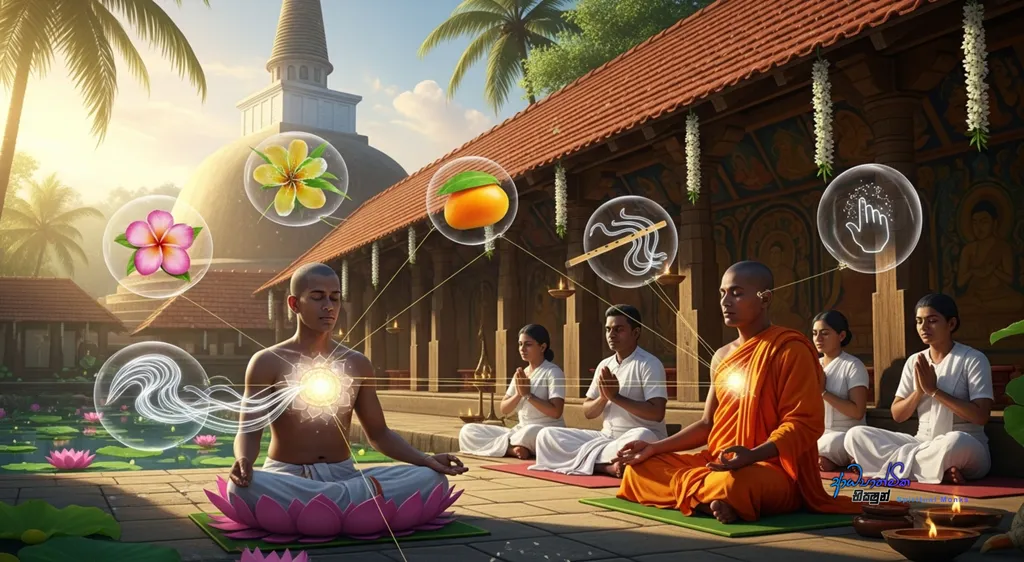
The Buddha taught that the problem is never in the external object, the sight, sound, smell, taste, or touch. A form itself contains no lust, hatred, or delusion. The issue lies entirely in the mind and its reaction. The Buddha said, ‘Sankappa rāgo purisassa kāmo’ which means, ‘A person’s sensuality is their thought of desire.’
The process works like this: an object makes contact with a sense door. This gives rise to a feeling (vedanā) in the mind. The mind then perceives (saññā) this feeling and labels it as pleasant, unpleasant, or neutral. It mistakenly attributes the pleasure to the external object, thinking, ‘The pleasure is in that form.’ This ignorance (avijjā) or delusion (moha) creates a desire, a chanda, to experience that object again. The mind starts seeking out the object, believing it to be the source of happiness.
This is why we get trapped in the sensual world (kāma loka). We are constantly chasing forms, sounds, and smells, believing happiness lies within them. The key to freedom is to see with wisdom (paññā) that the feeling, the experience of pleasure or pain, arises in the mind. It is a mental factor (cetasika), not a quality of the object.
When we realize we can generate a much deeper and more stable happiness from within, through meditation, by moving from coarse sensual pleasure to the refined bliss of the form and formless absorptions(rūpa and arūpa jhānas), our dependence on external objects begins to fade. The problem is in the mind, and so is the solution.

The Ultimate Path: Letting Go of Everything, Even Wisdom
The path of purification is a gradual process of letting go. First, we let go of coarse, physical things, the house, the car, the worldly life. Then, we work on letting go of the subtle attachments in our minds. Ultimately, to touch the unconditioned, Nibbāna, even the tools we used to get there must be released.
This means that eventually, even the wisdom (paññā) that illuminates the path must be let go. To hold onto wisdom is still a form of grasping, a subtle greed. All conditioned things, including the most wholesome mental states, must be relinquished to realize that which is unconditioned. All views (diṭṭhi) must be abandoned, for Nibbāna is the place where all views cease.
This can be difficult to grasp because for so long, we have been conditioned to move towards things, to accumulate, to hold on. The spiritual path is a radical reversal of this lifelong habit. It’s like a river that has flowed downhill for eternity; trying to make it flow back uphill is incredibly difficult. The mind resists. But this resistance is not a ‘someone’ who is unwilling. It is simply the momentum of causes and conditions. The way forward is through clear comprehension, patiently untangling the knots of attachment in the mind, one by one.
Conclusion: Your Constant Companion on the Cushion
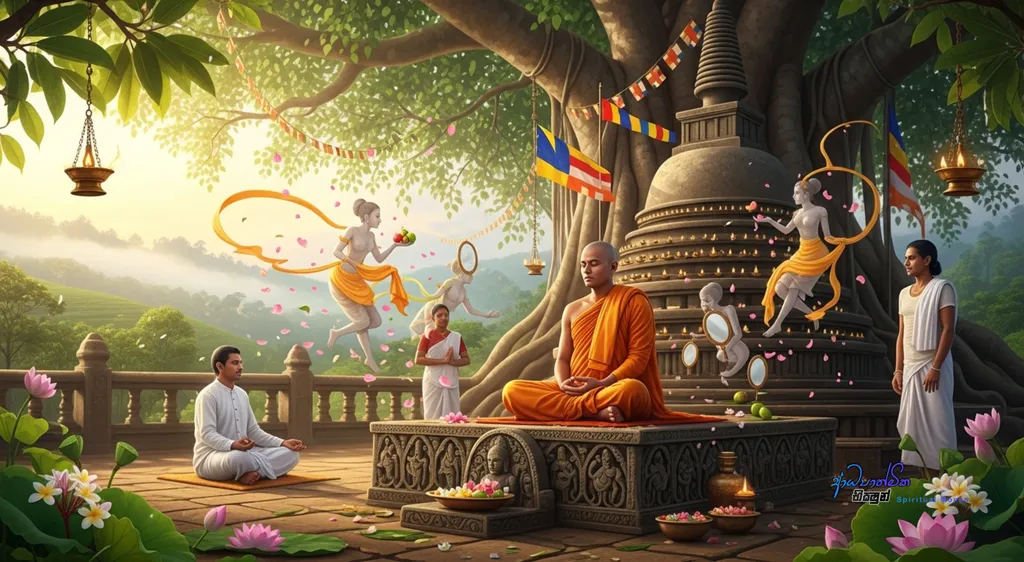
Remember, the Five Hindrances are what constantly try to lift us from our meditation posture. And of these, Kamacchanda is a primary culprit. It is the desire for sensual pleasure that whispers in our ear, urging us to get up and do something else. This can even extend to the discussion of Dhamma itself. While discussion is useful, becoming addicted to the pleasant feeling of conversation and always seeking it out is another subtle form of Kamacchanda.
We hope this exploration, drawn from experience rather than just books, has helped you see the vast and intricate nature of this hindrance. Use these reflections to observe your own mind. See what patterns exist from your lay life to now. Understand which aspects of Kamacchanda are your primary obstacles.
One practitioner may struggle greatly with sloth and torpor, while finding sensual desire easier to manage. However, do not assume any hindrance is completely absent. All five are interconnected; when you subdue one, you weaken them all. By recognizing them with wisdom, you can cut them at the root and continue your journey forward.
In our next discussion, we will explore the second hindrance, Ill Will (Vyāpāda).
We invite you to walk this path with us. Read our teachings, and most importantly, apply them practically in your own life. as you practice, questions will naturally arise. Please feel free to share your experiences and questions in the comments below, via email or contact form. I will do my best to offer guidance in future talks based on your progress. For now, begin this practice with an open heart and a mind free from expectation. Cultivate it correctly, and may you find the clarity and peace you seek.
Thank you for joining us. We hope this blog will be of great benefit to your spiritual journey.
May you all be well and happy.
May the blessings of the Triple Gem be with you all!.


