


Categories: Lost Your Meditation Spark?
May the blessings of the Triple Gem be with you all!
Today, in this series of teachings on mindfulness, I hope to offer some practical guidance on a topic that has become a mental burden for so many: the various worldly challenges that cause us pain. As you navigate your daily lives, you are constantly met with situations that impact your mind. This impact is what you might call mental pressure or stress. This form of mental suffering can manifest in very real ways, such as headaches or intense physical discomfort.
To escape this feeling, some people may fall into various addictions, like alcohol or drugs. Others might turn to different forms of entertainment, seeking a temporary distraction. We also see people who become addicted to sleep, trying to find release in unconsciousness.
All of these are attempts to cope with a mind in distress. This mental pressure arises from many different sources, but at its core, it is a sign that something is out of balance within us. We have experienced this pressure throughout our lives, yet we often fail to reflect on its true cause.

The First Hidden Root of Our Pain: Clinging and Attachment
From a spiritual perspective, the primary cause of this mental suffering is attachment. You have become attached, or are clinging, to certain things in your life. The Buddha taught that if you are excessively attached to any person, object, or idea, that very attachment robs your mind of its freedom.
Think about it. If you are deeply attached to someone and love them intensely, you are bound to them. In that bond, your mental freedom is lost. You become vulnerable to their actions and words. If they do something you dislike, your heart can be struck with great sadness and pressure. This applies to everyone in your life: your mother, father, siblings, your beloved spouse, and your children. If you cling to them too tightly, this kind of pain is inevitable.
This clinging extends beyond people. It can be directed toward pets you raise, or to your valuable possessions, your house, your land, your vehicle.
If you are bound to these things with greed, which in Buddhism is called Lobha, an intense desire that arises in the mind, you create the conditions for your own suffering. Lobha isn’t just wanting something; it’s a powerful, grasping quality of mind. If any harm comes to these things you are so attached to, that event immediately becomes a source of mental torment. You lose your inner peace.
The Second Hidden Root of Our Pain: Conflict and Aversion
The other side of this coin is aversion, or what we call geteema in the Dhamma. This refers to a state of conflict, friction, or dislike. Imagine you have a strong dislike for a particular person, and that person starts working at your office. You feel a constant sense of anger and resentment towards them. This feeling, which stems from a sense of injustice or simply a clash of personalities, can make it impossible to do your job peacefully. Your mind is occupied by this aversion.
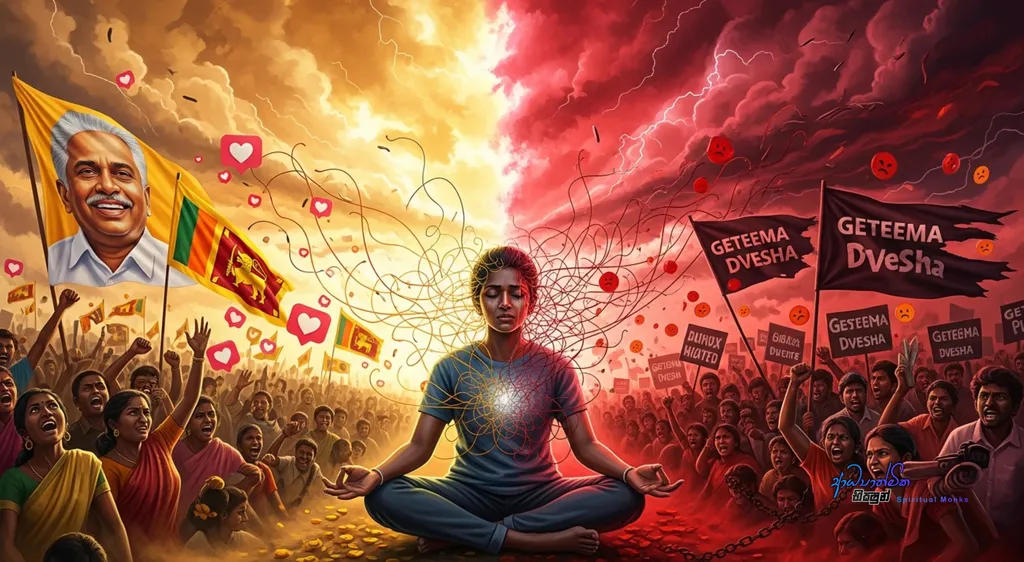
This same dynamic plays out on a larger scale. In society today, you might have a government or a political leader that you like, or one that you dislike. If you are attached to the leader you prefer, you will feel disappointment, sadness, and distress when they don’t meet your expectations. Conversely, if a leader you dislike is in power, you will feel a constant state of conflict, or geteema, in your mind.
This aversion, a form of hatred known as Dvesha, creates agitation and anxiety. It can lead to arguments with friends and family, causing rifts in your relationships. We see this constantly on social media, where people divide into camps, sharing posts and leaving comments fueled by this very attachment and aversion.
Look closely at this. When we cling too tightly to someone or something, we create mental suffering. And when we push away or feel aversion towards someone or something, we also create mental suffering. Both extremes lead to the same painful outcome.
The Antidote: How to Let Go Through Mindful Observation
So, how do we let go of all the things that cause us this mental burden? As someone walking a spiritual path and developing your mind, this next point will become very clear, especially if you have been practicing the Samatha-Vipassana meditation techniques that focus on developing mindfulness. The key is to understand this attachment and this aversion. You must learn to see them as they are.
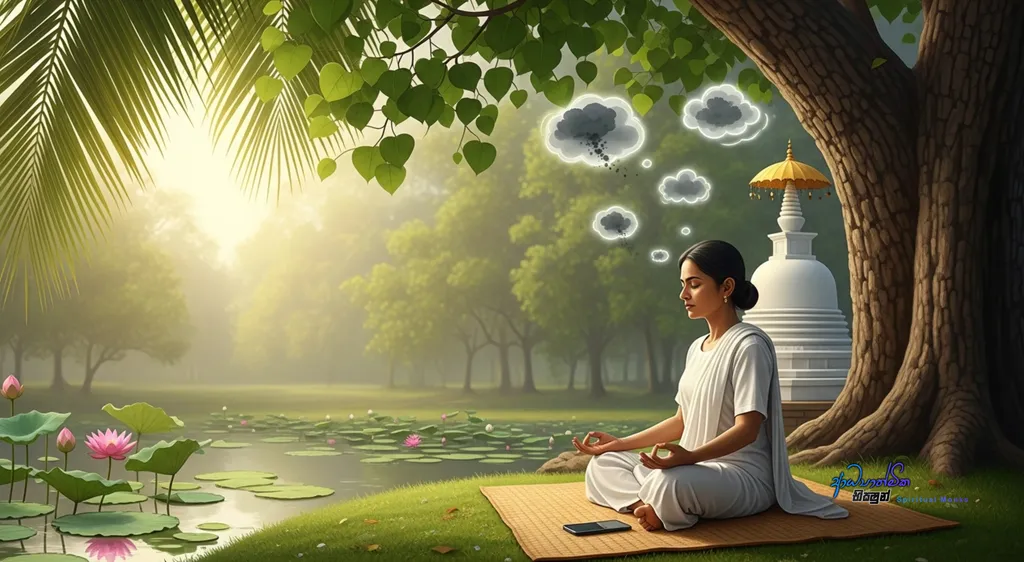
The practice begins with mindfulness, or what we call Sihiya. When you feel that mental pressure arise, perhaps from seeing a social media post or comment that angers you, the instruction is to develop mindfulness in that very moment. Look at the feeling. Use your own mind to observe your mind. In Buddhist philosophy, we use different words like manas (intellect), chitta (heart-mind), or viññāṇa (consciousness). While Abhidhamma explains their distinct functions in different contexts, for this practical purpose, think of them as all pointing to your own mind.
Simply look at your mind in that moment. As you look, you will begin to understand, ‘This headache, this mental pressure, is arising because of my dislike for this post I am seeing.’
You come to a conclusion about yourself, through direct observation. Once you have made that decision, you gain the ability to tell yourself, ‘Alright, I must let go of this thought that is tormenting my mind.’ You have identified the thought of aversion that was causing the mental suffering. And once you have identified it, it becomes incredibly easy to let it go.
Applying Mindfulness to Daily Worries: Relationships and Finances
If you are new to this, it is helpful to explore teachings on mindfulness more deeply. We have teachings on observing the hindrances in the mind and on practicing the Four Foundations of Mindfulness, or Satara Satipatthana. Engaging with these practices will give you the tools to let go of mental suffering.
Let’s apply this to another area: relationships. If you are deeply attached to your spouse, that bond can sometimes give rise to suspicion and jealousy. If you find yourself suffering from such thoughts, the practice is the same: establish mindfulness and look at your own mind.
You will see clearly, ‘I am bound to my spouse with intense attachment, with greed (Lobha) and lust (Raga).’ You will see how this bond creates fear that they might do something wrong, and how you try to control the situation to prevent that possibility. If a doubt arises, ‘What if they form another relationship?’, look directly at that doubt. That suspicion itself becomes a source of immense mental pressure.
We receive many questions about these kinds of problems. The advice is always to develop mindfulness and gradually reduce that intense attachment. As you do, you will begin to feel a great mental relief. Your mind will become lighter. You will start to see, ‘Wow, I was really clinging to this,’ or ‘I get caught in this conflict over and over again.’ You will recognize the pattern. As you continue to practice, this attachment and aversion will slowly diminish.

The Profound Freedom of Letting Go
As the grip of these patterns loosens, you will realize, ‘My mind is so much freer than before. What a wonderful mental freedom this is!’ You will see for yourself the truth in what the monks teach, the truth in what the Buddha taught over 2,500 years ago. This is the truth that all Buddhas teach. You will understand it from your own direct experience.
This is a universal remedy. It works for anyone, regardless of age, race, nationality, or religion. So many people are afflicted by various forms of mental suffering stemming from their job, their family situation, their children, their parents, or their spouse. The solution is to learn to look at every one of these issues in this mindful way.
When you experience the results, you will understand the truth of these teachings. The things we embrace, thinking they will bring us lasting happiness and pleasure, never provide permanent mental peace. Instead, they bring intermittent problems and challenges. Yes, there are moments of happiness, but they are often outnumbered by moments of sorrow and pressure. Many people, of all ages, have already realized this through painful experience. This practice will confirm that truth for you.
This is not a false promise. We know this with 100% certainty because we have realized it for ourselves through direct validation (pratyaksha).
Your Path Forward: A Final Blessing
In your worldly life, you may not be able to physically abandon everything. You are bound by commitments and responsibilities. In fact, it is these very responsibilities and bonds that cause you to suffer. The practice is to mentally let go. Establish your mindfulness according to the Buddha’s teachings on the Four Foundations of Mindfulness and clear comprehension (Sati-Sampajañña). Identify the thought, recognize the attachment or aversion within it, and release it.
When you let it go, you will feel a wonderful lightness. The nature of the mind is to try to cling again, but now you will instantly remember the danger (ādīnava) of doing so. You’ll think, ‘If I get attached to this person or object, or if I feel aversion, I will have to suffer mentally. Therefore, I must let this go.’ You will transform into a person who walks the Middle Path, the Noble Eightfold Path, avoiding extremes. This is the goal.
The relief you feel must be experienced to be understood. It is a profound peace. In that peace, you can compare your present state to your past. ‘Before, when I was attached to these things, I was under so much pressure. Because I was attached to this person, or this gem, I was constantly worried about losing it or having it stolen. I couldn’t sleep or eat properly.’
All of these are symptoms of mental suffering. Many suffer from economic problems today, and this pressure is immense. The practice is the same: develop mindfulness, identify the thought ‘I have financial problems,’ and watch the aversion you feel toward that reality. Through wise attention (prajñā), that conflict will diminish.
Instead of turning to your old habits, simply close your eyes and look at your mind. You will see the cause of your pain, and you will find the power to release it. This is the path to healing yourself, from within.
Conclusion
As you practice, you will discover the truth of these teachings for yourself. I encourage you to engage in this training and reflect on your own experiences. May the power of the Triple Gem, the Buddha, the Dhamma, and the Sangha, give you the strength to understand these matters clearly, to engage in the practice, and to achieve the results of peace and liberation.
We invite you to walk this path with us. Read our teachings, and most importantly, apply them practically in your own life. as you practice, questions will naturally arise. Please feel free to share your experiences and questions in the comments below, via email or contact form. I will do my best to offer guidance in future talks based on your progress. For now, begin this practice with an open heart and a mind free from expectation. Cultivate it correctly, and may you find the clarity and peace you seek.
Thank you for joining us. We hope this blog will be of great benefit to your spiritual journey.
May you all be well and happy.
May the blessings of the Triple Gem be with you all!.


