


Categories: Maintaining Mindfulness
May the blessings of the Triple Gem be with you all!
In our spiritual journey together, we have previously explored the practical methods of how to cultivate mindfulness. We’ve touched upon this in teachings like ‘The Empty Present Moment’ and ‘Developing Mindfulness for Serenity Meditation’. Today, we will delve deeper into a fundamental question: Why is this practice so essential? This article is dedicated to explaining the profound importance of mindfulness, illuminating why we should nurture this quality within ourselves.
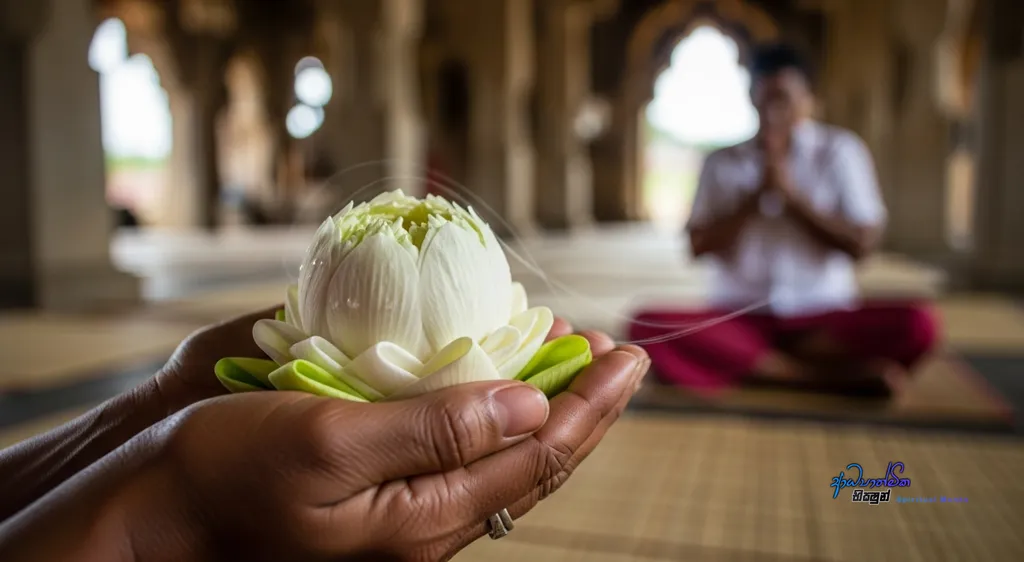
What is Mindfulness? The Path to Truly Knowing Yourself
Before we can grasp the importance of mindfulness, we must first understand what it is. In the simplest terms, mindfulness is the most direct method for getting to know yourself. This teaching, brought to the world only by a Buddha, is the key to understanding your own characteristics, your strengths and weaknesses, and the very nature of your life. We call this practice Sati in the Pali language. It is not a complex theory but a direct, intimate seeing.
I have touched on this before when explaining the difference between serenity (Samatha) and insight (Vipassanā) meditation. The entire journey of self-understanding begins with this simple, yet powerful, tool of mindfulness.
Observing Your Mind: An Analogy for Deeper Understanding
To understand the importance of mindfulness, let’s use an analogy. Imagine there is a person named Nimal. To truly know him, his character, his good and bad habits, his integrity, how he treats his family, whether he contributes positively or negatively to society you must spend time with him. You have to observe him over a long period.
You cannot know Nimal’s true nature in a day. Some people can maintain a facade of virtue for years. But eventually, their real character emerges; it’s a natural law. It might take six months or two years, but the pretense cannot be maintained forever. The true nature will inevitably reveal itself.
Practicing mindfulness is exactly like this. We are learning to observe the ‘person’ inside us our own mind. We are getting to know its habits, its tendencies, and its true nature, not by judging it, but simply by watching it patiently.

Confronting Our Inner Defilements: A Universal Human Experience
When we begin this process of self-observation, we discover something universal. Every unenlightened person’s mind contains what might be called ‘junk’ or mental defilements. This isn’t a judgment, but an honest observation. These unwholesome thoughts are present in everyone. Outwardly, people may appear good or bad based on societal conventions or their actions, but inwardly, the root defilements (known in Buddhism as kilesas) are always there.
These include:
- Lobha (Greed and Craving)
- Dosa (Aversion and Hatred)
- Moha (Delusion and Ignorance)
- Issā (Jealousy)
- Kuhakakama (Hypocrisy)
These tendencies, like feeling jealous of what others have or feeling smug when we get something they don’t, are present in the minds of all worldly beings. Only those who have completed the path to enlightenment are free from them. For those of us on the path, the practice of mindfulness is how we identify and gradually reduce these defilements within ourselves.
From a Single Thought to Ultimate Freedom
The entire journey of this life, and our long journey through the cycle of rebirth, known as Samsara, is driven by thought. Every action, every creation in the physical world, every technological advancement, it all begins as a thought in the mind. The Buddha taught in texts like the Aggañña Sutta that even the development of the world and society arose from the needs and desires that began as thoughts in the minds of early beings.
Therefore, the path to freedom, the path to what we call Nibbāna or liberation, can only be walked by understanding this fundamental process. We must see our own thoughts clearly. And the only way to achieve this is through the constant practice of mindfulness.
It allows us to recognize our craving (taṇhā), our attachments (rāga), our pride (māna), and all the other mental states that bind us. This is the primary importance of mindfulness: it is the direct tool for understanding the very mechanism that creates our reality and our suffering, and thus, it is the only tool that can lead to its end.

Mindfulness in Action: A Practical Example with Jealousy
Let’s make this practical. Imagine you dress up nicely to go to a party. You arrive and see someone else (man or woman) who you feel is dressed even more beautifully. What happens in the mind? A thought arises, tinged with jealousy: ‘Look at them, showing off.’ Or perhaps a darker thought: ‘I hope they spill something on that outfit.’
This is the natural, untrained state of the mind. An external sight, seen through the eyes, triggers a cascade of unwholesome thoughts rooted in jealousy. This is where the importance of mindfulness becomes clear. Instead of being carried away by the feeling, you simply notice it: ‘Ah, a thought of jealousy has arisen.’
Here, both mindfulness (Sati) and wisdom (Paññā) are at work. The jealousy may not disappear instantly. Just like getting to know Nimal takes time, understanding and weakening these deep-seated habits takes practice. By repeatedly identifying these thoughts of jealousy, you begin to see your own patterns, your own flaws. You are using mindfulness to know yourself.
From Jealousy to All Mental States: Turning the Gaze Inward
This practice of observation extends to all our inner states. The same way we watch jealousy, we watch our attachment or lust (rāga), our possessive love for our children, our craving for land and money, our laziness, and our lack of effort. All these states are built within the mind.
Through mindfulness, you come to understand yourself. Do you see the profound importance of mindfulness now? It gives you the ability to comprehend your own being. For so long, you may have wasted your precious, short human life perhaps 60 or 70 years at most by looking outwards. You spent your time observing others, gossiping, feeling jealous, and searching for the faults in everyone else.
If you had found this focal point earlier, you would not have wasted so much time. Look inward and see the mountain of ‘junk’ and defilements within your own mind. When you see how uncultivated and messy it is, you understand there is real work to be done—not on others, but on yourself. This realization is a cornerstone of the spiritual path.

A 24/7 Practice: Integrating Mindfulness into Every Moment
This is not a part-time practice. The goal is to maintain mindfulness 24 hours a day. You watch your mind until you go to sleep, and you pick it up the moment you awaken. With dedicated practice, this awareness can even continue into your dreams. You might be in a dream and suddenly realize, ‘Ah, this is a dream.’ You become lucidly aware, even while sleeping.
By practicing this continuously for months or years, depending on your past conditioning you start to understand yourself at the deepest level. The defilements like pride, jealousy, hypocrisy, and greed are seen so clearly that they begin to lose their power. You might even find that you have realized a state of profound peace or even enlightenment (Nibbāna) almost without noticing the exact moment it happened, because the process is so natural and gradual. This is the transformative power and ultimate importance of mindfulness.
The Domino Effect: How Mindfulness Activates All Spiritual Qualities
Mindfulness is the turning point, the master key. When you cultivate it, all the other positive spiritual qualities develop automatically. Think of it like a complex irrigation system or a computer’s circuit board all the parts are interconnected. When the main switch of mindfulness is on, the entire system comes alive.
You don’t need to worry about developing the other factors individually. The 37 Bodhipakkhiya Dhammā (Factors of Enlightenment), the Five Spiritual Faculties (Faith, Energy, Mindfulness, Concentration, Wisdom), and the Seven Factors of Enlightenment (Satta Bojjhaṅga) all begin to grow and mature on their own. Even advanced meditation states (Samatha), psychic abilities, or the awakening of spiritual energies like Kundalini become more accessible. This is why I speak with such conviction about the critical importance of mindfulness. It is the foundation upon which the entire palace of wisdom is built.

Your Invitation to Practice: A Call to Inner Exploration in Every Moment
Therefore, you must remember to practice mindfulness in every single moment. I have taught this before, but it bears repeating. Practice when:
- Eating and drinking
- Bathing
- Going to sleep and waking up
- Walking, standing, sitting, or lying down
- Driving or riding in a vehicle (car, bus, train, plane)
- Talking on the phone or in person
- Watching television
- Working at your job
- Caring for your children or parents
- Engaging in charity work or religious functions
- Meditating formally
- Going on trips with your family
- Exercising, walking in a park, or going to the gym
In every conceivable situation, you must practice mindfulness. You must get to know yourself. Stop wasting your precious time and energy investigating the lives of others. It’s a waste. Don’t get caught up in gossip; it’s a meaningless distraction that has taken up so much of your life already. This is the core of the Buddha’s teaching. Those who understand this do not get stuck merely listening to stories or performing rituals. While observing precepts (sīla) and giving donations (dāna) are good, the Buddha urged us to go higher, to move beyond these preliminaries to the essential practice.

The Tangible Fruits of Mindfulness: From Inner Peace to Ultimate Truth
I am not just teaching this; I am practicing it myself. Through this practice, I experience its results. It brings a deep silence and allows me to see and correct my own faults. I experience a profound mental freedom that is a joy to behold. The Buddha’s Dhamma is described as Sanditthiko, meaning ‘visible here and now,’ and Akāliko, meaning ‘timeless.’ This isn’t a theory; it gives immediate results.
Think about it. When you feel anger, if you are mindful, you can feel the heat in your body, the pressure in your head, the physical pain it causes. You see directly how your attachments and entanglements imprison you. This self-understanding, cultivated over time through continuous mindfulness, leads to a day when you have fully understood yourself. On that day, your journey is over. You have reached Nibbāna. You have realized the ultimate truth. This is why the Buddha taught this, and this is why I say again and again: the importance of mindfulness cannot be overstated. It is something you must do.
Practical Clarifications and the Path to True Freedom
To be clear, the core practice of mindfulness does not require chanting or repeating a mantra. In a previous teaching on the ‘Empty Present Moment,’ I offered the word ’empty’ (his) as a tool for beginners to help focus the mind during formal, seated meditation. That was a support, a convenience for those just starting out. For those who are more practiced, this word is no longer necessary.
Chanting or mental repetition is primarily a tool for concentration-based meditation, or Samatha, such as the meditations on space (ākāsa) or the formless spheres. For everyday mindfulness, the simple, silent, choiceless awareness of your own mind is all that is required. Do not confuse the two or make it complicated. The practice is simple.
We undertake this practice to develop our spiritual life, and there is no easier or more direct way. It is open to everyone, regardless of age, gender, or religion. It is a completely internal practice that no one else can see. It is the single answer to so much of our suffering the pressure from family, work, and education, and the feelings of despair and frustration. By understanding yourself through mindfulness, you build true self-esteem, integrity, and a profound sense of inner freedom.
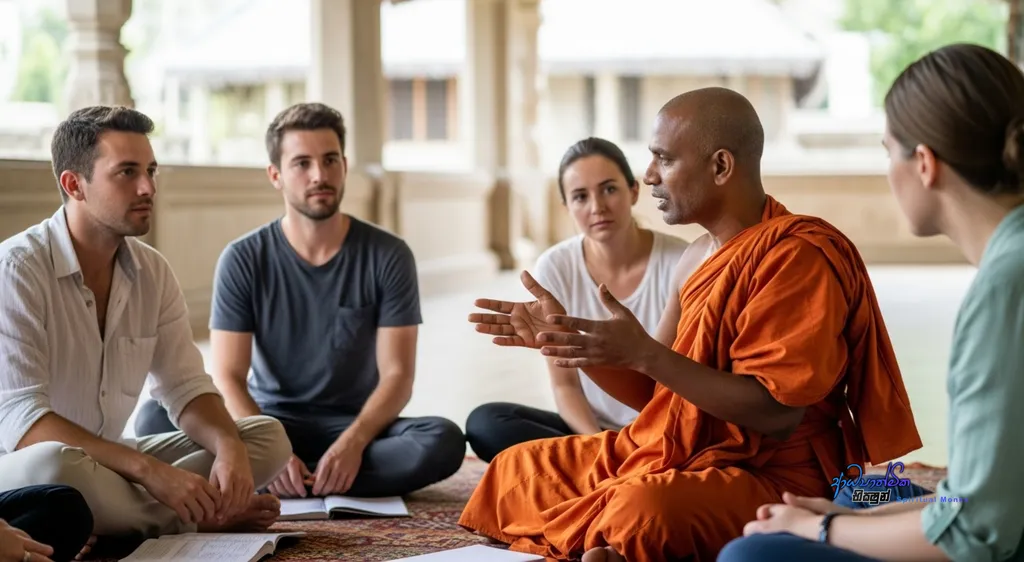
Your Path to Freedom and Authenticity
Understanding the importance of mindfulness will change your life. Your confusion will fade, replaced by genuine understanding (avabodha). Your wrong views (ditthi) will be dismantled. You will become a truly free person, living with an independent mind. You will find your own clear, unobstructed path and begin to walk it in freedom.
This teaching is incredibly important. Please take it to heart and, most importantly, put it into practice out of compassion for yourself. Continue to practice again and again. It is the key to ending suffering and realizing the highest wisdom.
May the power and blessings of the Buddha, the Dhamma, and the Sangha support you in your practice. May you cultivate mindfulness, develop all wholesome states, and may this path lead you to cross the ocean of Samsara and attain the ultimate peace of Nibbāna.
We invite you to walk this path with us. Read our teachings, and most importantly, apply them practically in your own life. as you practice, questions will naturally arise. Please feel free to share your experiences and questions in the comments below, via email or contact form. I will do my best to offer guidance in future talks based on your progress. For now, begin this practice with an open heart and a mind free from expectation. Cultivate it correctly, and may you find the clarity and peace you seek.
Thank you for joining us. We hope this blog will be of great benefit to your spiritual journey.
May you all be well and happy.


