


Categories: Other Meditation Teachings
May the blessings of the Triple Gem be with you all!
Today, through these teachings, I wish to clarify something that many people find to be a practical problem on their spiritual journey. The topic is this: Let Virtue be Preserved Naturally as The Mind Develops. This has become a significant question for many who are starting to meditate with us, and for some, it has become a barrier, a restrictive frame that prevents them from even beginning the practice.
I felt it was essential to address this to help break down these mental frames and support people in their spiritual growth. What I will explain is a natural process, and it is my hope that this clarification will be helpful.
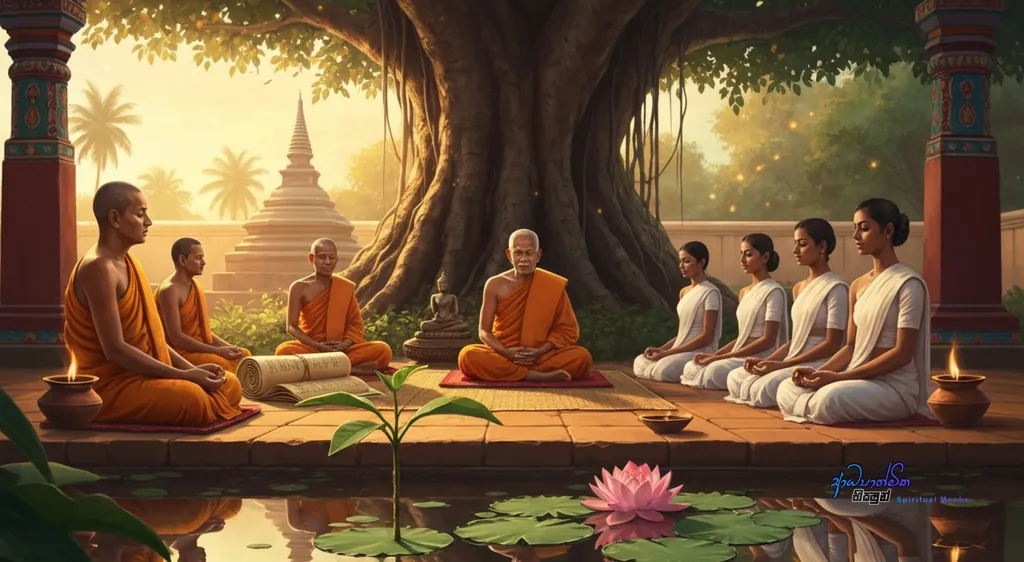
The Precepts: Must We Be Perfect to Begin?
When we talk about letting virtue develop naturally, we first need to understand what is meant by virtue. In Buddhism, this is often discussed through precepts, or ethical guidelines. You may have heard of the Five Precepts (Panca Sila), the Eight Precepts (Aṭṭhasīla), or the Ten Precepts (Dasa Sīla). For monastics, there are even more, such as the precepts for novice monks and the full ordination precepts for bhikkhus.
A common question I receive is, ‘Do I need to formally undertake and perfect these precepts before I can start meditation, such as concentration practices (Samatha) or energy work?‘
Many are told they must first perfect their virtue. This idea creates a huge obstacle. People feel helpless, and the very thought of meditation, which could help them, becomes intimidating. I want you to listen to this explanation with a neutral, open mind. Some with rigid views may misunderstand this, but it is crucial to grasp this point to break free from unhelpful perspectives.
The Reality of Observing Precepts in Daily Life
Let’s be honest about how precepts are often observed. Many people take the Five Precepts in the morning but break them almost immediately. A business owner might venerate the Buddha and then begin their workday with a lie (musāvāda), feeling it’s necessary for business. This isn’t everyone, but it is common.
Consider the full moon day (Poya day), when many go to the temple to observe the precepts. What often happens? People spend the day gossiping, only appearing mindful and restrained when a monk is giving a sermon. Once the formal program ends, the mind, speech, and body become restless again. This is the reality for many, though not all. So, we see that simply taking precepts formally doesn’t guarantee a virtuous mind.
Now, let’s look at a more difficult situation. Some people struggle with the fifth precept against intoxicants (Surāmerayamajjapamādaṭṭhānā). They might be addicted to alcohol or drugs. These individuals often call me and ask, ‘Venerable sir, I have this weakness. I need to drink every day, or every few days. Does this mean I cannot meditate?‘

A Compassionate Path: Just Begin to Meditate
Here is the advice I offer, and please listen carefully to avoid misunderstanding. To the person struggling with addiction, I do not say, ‘Go ahead and drink.‘ Nor do I say, ‘You must stop drinking right now.‘ I remain neutral on that specific action because I know that a deeply ingrained habit cannot be stopped instantly by command.
If I were to demand they stop drinking, smoking, or using drugs as a condition for meditating, they would simply give up on meditation. The path to goodness would be blocked for them.
Instead, my advice is this: ‘You should meditate.‘ Just do the practice. Follow the chanting, the loving-kindness meditation (Mettā Bhāvanā), and the mindfulness practices we teach. Your habit is a habit. It is deeply rooted. I acknowledge that it is incredibly difficult to stop overnight. But your desire to meditate is also real.
So, if you cannot give up the habit but want to meditate, you need to do both for a while. The only instruction I give is to practice meditation consistently, every single day, at the same time if possible.
How Virtue Unfolds Naturally from Within
This is what I have seen from experience. As a person continues to meditate daily, even while still engaging in their habit, something begins to shift. They start to taste the peace and joy that arises from a quiet mind. This inner experience is more satisfying than the fleeting pleasure of the substance.
Spontaneously, without force, a change occurs. The person who drank daily might find themselves drinking every two days. Then every three days, then once a week, then once every two weeks. The gap between indulgence naturally widens. I can guarantee this 100%. I say this with absolute certainty. They will, bit by bit, become distant from that harmful habit.
Even observing the precepts for a short time, like during meditation, has merit. The Buddha taught in the scriptures (like the Petavatthu and Vimānavatthu) that observing virtue even for half a day brings great benefits. So, as they meditate, their life begins to change.
I have seen people we work with reduce and even quit smoking without me ever telling them to. Their inner development leads the way.
Wisdom from the Buddha: Stories of Transformation
Some might ask, ‘But doesn’t the Buddha’s path begin with Virtue (Sīla), then Concentration (Samādhi), and then Wisdom (Paññā)?‘ Yes, that is the noble sequence.
However, I believe that if the Buddha were alive today, he would give this same compassionate advice. Look at the stories from the scriptures. Patācārā came to the Buddha naked and distraught, yet he taught her. Sarakāni was known for his drinking, yet he attained the first stage of enlightenment (Sotāpanna).
There is a story in the commentary to the Dhammapada about a king who rewarded a warrior for winning a difficult battle by making him king for seven days. The warrior was celebrating, intoxicated and riding an elephant, when the Buddha delivered a discourse from below. While still drunk, the man understood the teaching and attained the highest state of liberation (Arahantship). These stories show that the door to the Dhamma is open to everyone, regardless of their current state.
Avoiding the Twin Traps of Extremism
Please do not misunderstand this teaching and fall into an extreme view. One extreme is to think, ‘Ah, so virtue is not necessary at all!‘ This is wrong. The other extreme is to insist, ‘Perfect virtue is an absolute requirement to begin!‘ This is also wrong, because it is unjust to those who are struggling with deep-rooted habits. If you hold that view, you make it impossible for them to ever change.
Do not adopt either of these rigid views (diṭṭhi). Simply meditate. No one in this world is perfect, except for the fully enlightened ones like the Buddhas and Arahants. All ordinary beings, whether they are monks, ascetics, scholars, or laypeople, have faults. It is part of the human condition. Feeling sad or frustrated about your imperfections is natural, but it shouldn’t stop you from walking the path.

Overcoming Regret: The True Obstacle to Progress
As you walk this path, you will stumble and fall. A moment may come when you think, ‘Oh no, I broke my precept today! I was doing so well, and now I’ve slipped.‘ This feeling of regret (kukkucca) is a powerful mental hindrance. If you let it, this very thought will become your ‘Mara‘ (your inner obstructor) and block your meditation.
When you slip, do not dwell on the sadness. The simple thought, ‘I need to fix this,‘ is enough. That intention itself is the re-establishment of your commitment to virtue. You do not need to go and formally take the precepts again. Just let go of the painful thought and continue your practice. Be prepared to fall but always get back up. Do not weaponize your mistakes against yourself; this self-criticism is the real enemy of your progress. This applies to all faults, lying, anger, jealousy, lust, or any other unskillful action.

Freeing Yourself to Walk the Path
Your progress comes from the power of your own mind and intention. You might have heard of the ‘Law of Attraction,’ which suggests that a small thought, when cultivated, becomes powerful and shapes our reality. Similarly, by cultivating the thought, ‘I am healing,‘ or ‘I will create more space between my urges,‘ you empower yourself. A small, independent thought arises: ‘I will only drink at a party,‘ or ‘I will not drink with this group of friends.‘ These small resolutions, powered by your meditation practice, become strong and bring about real, lasting change.
You must break free from all limiting frameworks. Some people ask if it’s okay for women to meditate during their monthly cycle, of course, it is! These are just more rigid views that hold people back. It does not matter if you are under the sun or moon, on land or at sea. There are no auspicious times or bad omens. You can meditate anywhere, anytime. Trust yourself, trust the spiritual journey, and walk this simple, light, and liberating path. This is how you will let your virtue develop naturally.
Conclusion: Your Path to an Authentic Spiritual Life
I have explained this in detail to help you find balance and avoid extremes. It is important to speak up against rigid people who try to block progress by finding fault in everything. These critics are stuck in their own ways and will not succeed, so it is best to simply ignore them.
You now understand how, through consistent meditation and spiritual development, your ethical conduct will naturally be restored and perfected. This is the essence of the teaching: as the mind develops, virtue arises naturally. Let it happen. The path is simple and free. By walking it, your life will become complete.
I have shared enough for anyone, from a child to an elder, to understand. With faith in this process, I conclude this teaching.

We invite you to walk this path with us. Read our teachings, and most importantly, apply them practically in your own life. as you practice, questions will naturally arise. Please feel free to share your experiences and questions in the comments below, via email or contact form. I will do my best to offer guidance in future talks based on your progress. For now, begin this practice with an open heart and a mind free from expectation. Cultivate it correctly, and may you find the clarity and peace you seek.
Thank you for joining us. We hope this blog will be of great benefit to your spiritual journey.
May you all be well and happy.
May the blessings of the Triple Gem be with you all!


