


Categories: Other Meditation Teachings
May the blessings of the Triple Gem be with you all!
Today, through our spiritual teachings, I wish to clarify a question that many who engage in practical meditation have asked me. It’s a common concern, and because so many have brought it to me, I felt it was important to explain this topic and share how you can skillfully navigate it. The question is this: does practicing Samatha meditation actually increase sensual desire?
Let’s explore this together.
Understanding the Stirring of Sensual Desire
This question arises for many practitioners, regardless of age or gender. If you have been practicing Samatha meditation, you have likely already faced this challenge. Sensual desire, or what we call kāma in Pali, is a universal human experience. It is the longing for pleasant sensory experiences, particularly the intimacy between men and women. Whether you have personal experience, have learned about it through books, or encountered it in media, you understand this powerful energy.
This feeling can manifest as a stirring of desire, and many have shared with me that this seems to happen more frequently during their meditation practice.
What is Samatha Meditation? The Analogy of the Muddy Pond
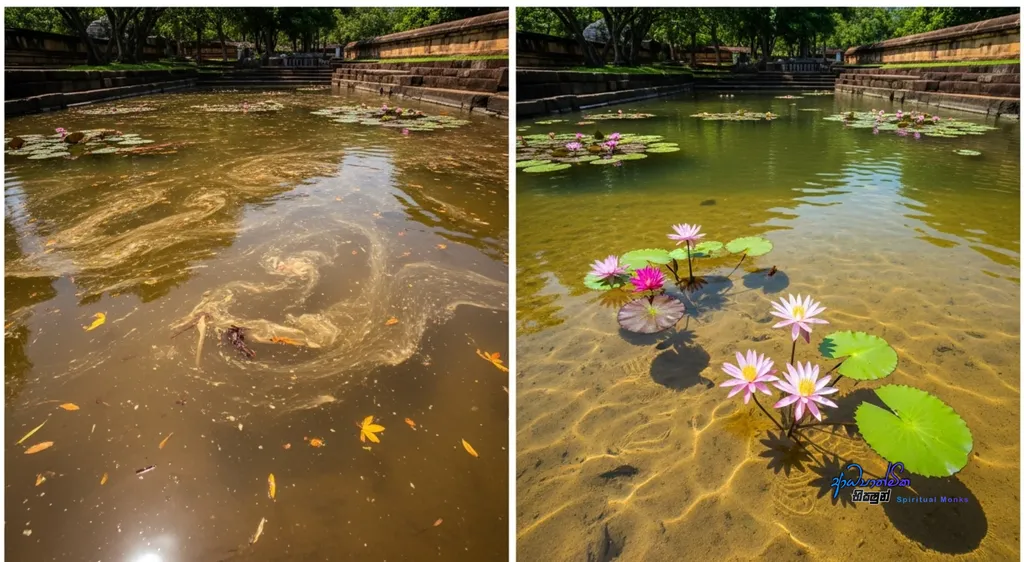
To understand why this happens, we first need to understand what Samatha meditation is. I have explained this in previous teachings, but let’s use a simple analogy. Imagine a pond that is completely stirred up with mud and sediment. The water is murky, cloudy, and you cannot see the bottom. This murky pond represents our mind in its usual, everyday state.
Now, if you leave this pond undisturbed, what happens?
Over time, the mud, silt, and debris naturally begin to settle. They drift down and rest on the bottom of the pond. After a while, the water becomes crystal clear. You can see the beautiful flowers, the sunlight sparkling on the surface, and even the very bottom of the pond. This is what Samatha meditation does for the mind. It is a practice of calming and settling our thoughts, allowing the mental ‘mud’ to settle, leaving the mind clear and tranquil.
The Unawakened Mind: Living in the Murky Waters of Desire
We are what Buddhism calls puthujjana, or ordinary, unenlightened people. As such, we all carry greed, hatred, and delusion or lobha, dosa, and moha within us. In this world, people have diverse bodies and diverse perceptions. Likewise, the intensity of sensual desire, or rāga, varies from person to person. Some may experience it at 100%, others at 80%, 50%, 20%, and so on. This applies to both men and women; everyone has this seed of desire for sensory and sexual pleasure within them. It’s a fundamental part of the unenlightened human experience.
Before we begin a meditation practice, we often live in a state of unmindfulness. Think back to your life before you started to practice seriously. Were you even aware that you had these deep-seated defilements, or kilesas, like rāga?
Likely not. We might act on our desires, but we are not consciously aware of the desire itself as a distinct mental event. In that state, we are like the murky pond. Everything is so stirred up that we can’t distinguish one thing from another. Our minds are in a state of constant agitation, driven by desires we don’t even consciously acknowledge.
We simply think, ‘This is life. This is what we are supposed to enjoy.‘ The Buddha pointed out that in the sensual world (the kāma loka), people perceive sexual pleasure as the highest form of happiness. It becomes the center of life, the reason people work, eat, and build families all to chase this fleeting pleasure.
Why Desire Seems Stronger in a Calm Mind
Now, you have started to practice Samatha meditation. You are cultivating mindfulness, or sati, as the Buddha taught. What has happened? Your mind, which was once a murky pond, has begun to settle. The mud, your anxieties, distractions, and defilements has temporarily settled to the bottom. Your mind is now clear and calm.
Imagine that clear pond again. If you were to toss even a tiny pebble or a single leaf into it, you would see it instantly. You would see the splash, the ripples, the leaf floating on the surface. This is what is happening in your meditation. The ‘leaf’ is the thought of sensual desire. It’s not a new desire; it’s the same rāga that was always there. The difference is that your mind is now so calm and clear that you can finally see it distinctly. Previously, when your mind was a muddy mess, a thousand thoughts of desire could pass through without you noticing. Now, even one is starkly visible.
So, to answer the central question: No, Samatha meditation does not increase desire. It simply reveals the desire that was already present. You are not creating more; you are just becoming aware.

The Mind’s Deception: A Universal Human Experience
When this clarity arises, we often misinterpret it. We think, ‘My desire is getting stronger since I started meditating.‘ This creates a wrong view, a mental framework that can discourage us. But the desire was there all along; you just couldn’t see it before.
This experience is not limited by age. People mistakenly believe that desire fades after 50, but this is not true. As long as our body and senses are functioning, these impulses can arise. They can even arise in the mind of someone bedridden and physically frail. It’s a mental phenomenon.
This has been reported to me by people of all ages, teenagers of 16, young adults, and those over 50. Nor is it limited by status or education; a professor and an uneducated person both experience rāga. Some people may suppress it due to their social standing, education, or upbringing, fearing damage to their reputation, but the underlying tendency remains.
The mind is tricky. When a thought of desire appears on the clear surface of your meditative mind, the mind’s habit is to grab it. It wants to stir up the mud again, to pull you back into unmindfulness and agitation. This is the mind’s deception, its craftiness.
The First Method: Watch the Thought with Mindfulness
So, how do we work with this when it arises?
The most powerful tool, which I mention again and again, is mindfulness (sati). When the thought of desire arises, your job is not to fight it, indulge it, or fear it. Your job is simply to watch it.
Observe it as you would observe a leaf landing on the pond. Recognize it clearly: ‘Ah, a thought of sensual desire has arisen.‘ These thoughts are almost always rooted in the past. It might be a memory of a past romantic encounter, something you saw in a movie, an image from the internet, or a conversation you had.
The mind takes this past object and tries to build a future fantasy around it: ‘Oh, if only I could experience that again.‘ Your task is to stay in the present and simply watch this mental movie without getting caught up in the plot. See it for what it is: a memory, a thought. Just stand back and watch it dance until it fades away on its own. By simply identifying it with mindfulness ‘This is a past thought of desire‘ its power begins to diminish.
The Second Method: Compare Pleasures and Cultivate a Positive Mind
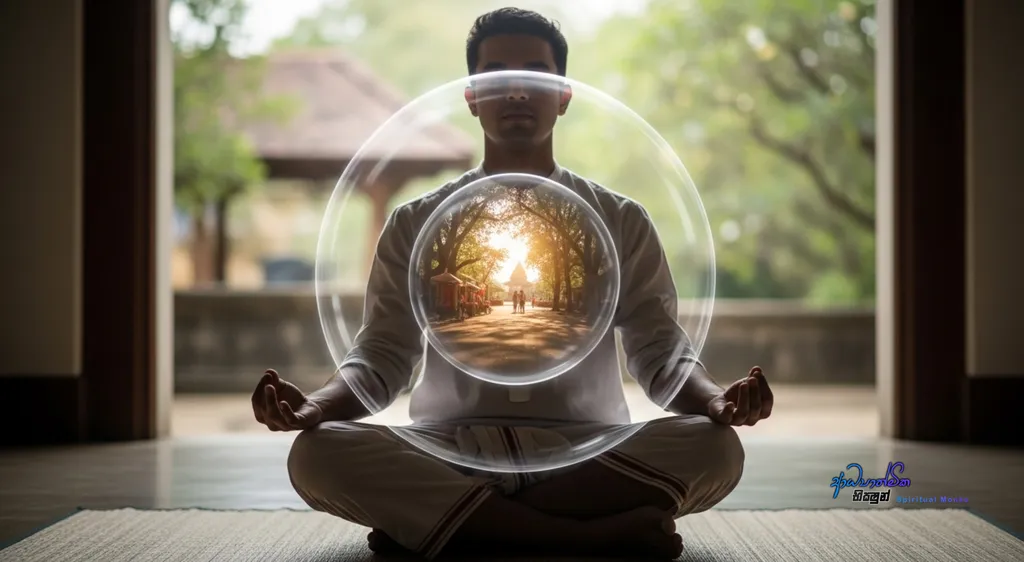
There is a second technique we can use, which involves creating a powerful positive mindset. When the memory of a past sensual pleasure arises, mindfully compare it with the pleasure you have experienced in meditation.
How long does that worldly pleasure last? A few moments? A few seconds? Now, consider the deep peace and joy you’ve felt during your practice, five minutes, ten minutes, or even half an hour of profound physical and mental ease.
Remind yourself: ‘The peace I found in meditation is far superior and more lasting than that fleeting, cheap pleasure. If I continue to develop my practice, the happiness I find will be even greater. Why would I enslave myself to something so trivial and short-lived?‘ By adopting this positive, powerful thought, you rob the desire of its strength. The allure of that old thought pattern withers and disappears.
These are practical methods that we ourselves have tested and found to be effective.
When you practice this, you naturally protect your virtue, your sīla. Your precepts are upheld automatically. But if you do slip, do not fall into despair. Don’t think, ‘Oh, I’ve broken my practice, I’m a failure.‘ That thought of guilt will itself become another obstacle. And don’t give up, thinking, ‘I can’t meditate, desire is too strong.’ Think of it lightly. It is a simple, natural process.

A Normal Challenge on the Path to Freedom
You must understand that this is a universal challenge on the spiritual path. Even the Buddha, before his enlightenment as Prince Siddhartha, faced these thoughts. Every great being aspiring for liberation, whether as a Buddha, a Paccekabuddha, or an Arahant, confronts these energies. Anyone seeking to awaken Kundalini, cosmic energy, or psychic powers faces them too.
Victory lies in facing them without fear and without agitation. When you do, they lose their power and disappear. It is through overcoming these challenges that we can reach higher states. If these defilements didn’t exist, we wouldn’t need to practice meditation. We wouldn’t be stuck in the cycle of rebirth, or saṃsāra. We practice precisely because these things exist, so we can see them with mindful wisdom and transcend them.
It is also important to remember that Samatha meditation, while essential for calming the mind, is not the ultimate goal of achieving Nibbāna (liberation). Practices like developing the ‘third eye’ or attaining meditative absorptions (jhānas) are tools. They create a stable, mindful mind, which is the necessary foundation for insight meditation, or Vipassanā, which truly uproots the defilements.
Conclusion: Seeing Clearly is Progress, Not Failure
So, let these teachings settle in your mind. The desire you see in Samatha meditation is not new; it is the old desire revealed by the clarity of your settled mind, just like the leaf on the clear pond. This awareness is not a setback; it is a sign of progress. Sensual desire is not an obstacle to your progress if you know how to handle it. In fact, seeing it clearly shows you the profound importance of maintaining continuous mindfulness.
With this understanding, continue your practice with confidence. I have shared two practical methods: mindful observation and wise reflection. Use them. Understand the thought, see its nature, and let it go. Do not let it disturb you.
By understanding these principles, you can continue your practical journey. I believe this explanation is sufficient for you to work with this challenge wisely. May you have the wisdom of the Triple Gem to maintain your mindfulness, cultivate a powerful mindset, and see desire for what it is, ultimately freeing yourself from its grasp.

We invite you to walk this path with us. Read our teachings, and most importantly, apply them practically in your own life. as you practice, questions will naturally arise. Please feel free to share your experiences and questions in the comments below, via email or contact form. I will do my best to offer guidance in future talks based on your progress. For now, begin this practice with an open heart and a mind free from expectation. Cultivate it correctly, and may you find the clarity and peace you seek.
Thank you for joining us. We hope this blog will be of great benefit to your spiritual journey.
May the blessings of the Triple Gem be with you all!


