


Categories: Cosmic & Kundalini Energy
May the blessings of the Triple Gem be with you all!
Today, we will explore a deeply important topic for any spiritual practitioner: the nature of different meditation techniques and their potential to awaken profound states like the ‘third eye‘ or Kuṇḍalini energy. Many of you are engaging with our practical teachings, and through your own experiences, you’ve discovered deep shifts within yourselves, both physically and mentally. We see your reflections and hear about your progress, and it is clear that many are having profound experiences.
Interestingly, some of you who practice different meditation methods entirely separate from the ones we guide report having the very same experiences. This has led to an important question: How can different paths lead to similar spiritual phenomena?
The purpose of this article is to bring clarity to this, to help you understand that while many practices can awaken energy and bring peace, they function in a specific way. Our goal is to ensure you understand the role of each practice so you can walk the path with wisdom.
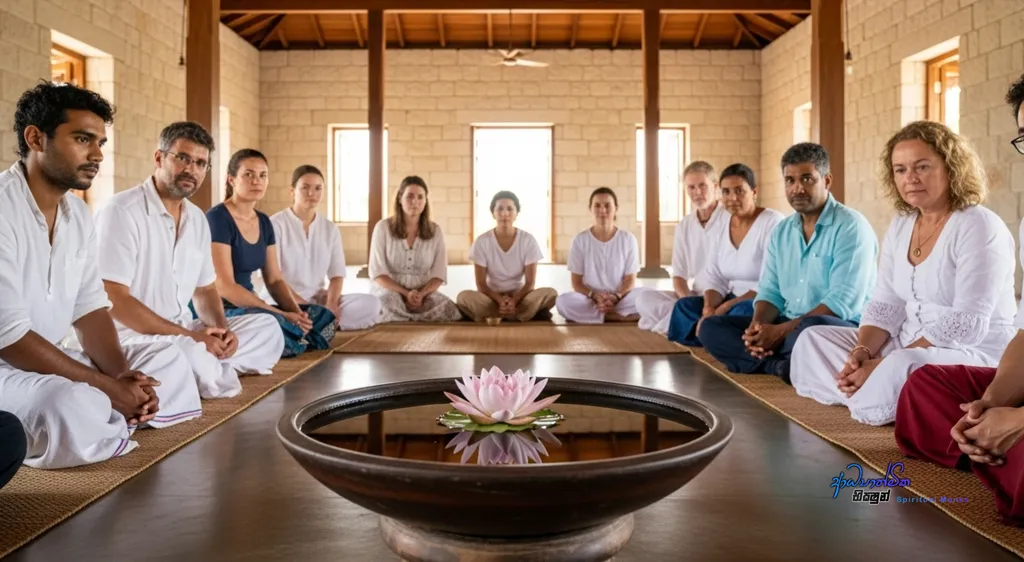
A Spiritual Pharmacy: Different Meditations for Different Minds
To understand how different practices work, we must first look at the vast array of tools the Buddha provided. In the Buddhist teachings, especially within the Abhidhamma (the higher teachings), we find about forty different types of Samatha meditation, or concentration and calmness practices. If you read the works of venerable scholars like Rerukane Chandawimala Thero, you can explore these in detail.
These methods, known as recollections or anussati, were often prescribed based on a person’s temperament. The Buddha, like a skilled physician, gave the right medicine for the right ailment.
- Buddhānussati – Recollection of the Buddha
- Dhammānussati – Recollection of the Dhamma
- Saṅghānussati – Recollection of the Sangha
- Sīlānussati – Recollection of Virtue
- Cāgānussati – Recollection of Generosity
- Devatānussati – Recollection of the Devas
- Maraṇānussati – Recollection of Death
- Kāyagatāsati – Mindfulness of the Body
- Ānāpānasati – Mindfulness of Breathing
- Upasamānussati – Recollection of Peace
Consider these examples:
- For a person with great faith (saddhā), he would recommend Buddhānussati: the recollection of the qualities of the Buddha.
- For a person struggling with anger (dvesha), he would recommend Mettā bhāvanā: the cultivation of loving-kindness.
- For a person dealing with strong lust or desire (rāga), he would recommend Asubha bhāvanā: meditation on the unattractive nature of the body.
While each is unique, we will explore the common thread that runs through most of them and how it relates to our ultimate spiritual goal.
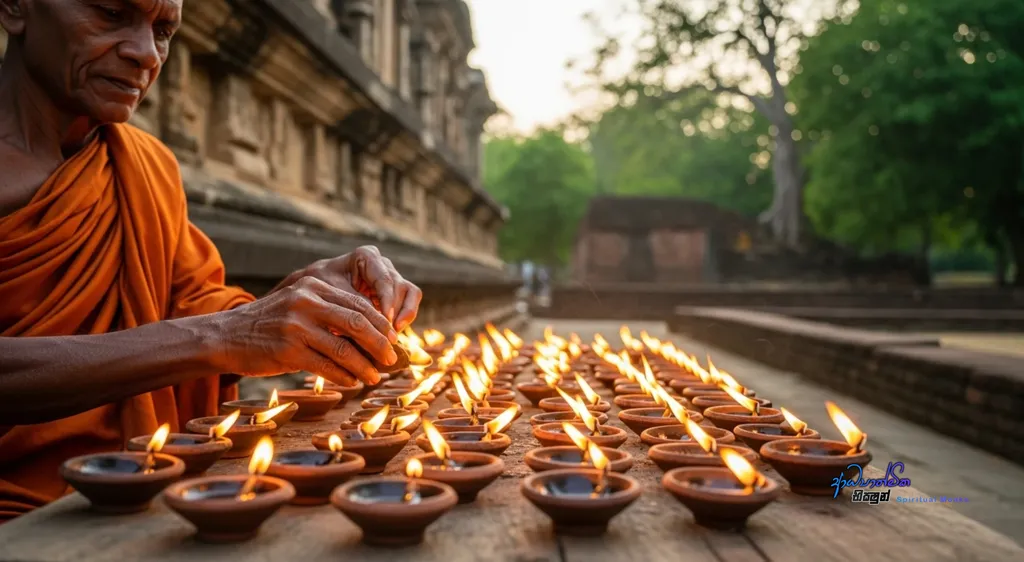
Kundalini Energy and Third Eye: Uncovering the Nature of Samatha Meditation
So, how do these practices actually work?
Let’s take Buddhānussati (recollection of the Buddha). A practitioner might sit and mentally repeat the word ‘Buddho, Buddho…’ This is very similar to our ‘Third Eye’ practice, where one focuses on the word ‘empty.’ Whether you repeat ‘Buddho’ or ’empty,’ the underlying mechanism is the same: you are developing Samatha. This is the practice of developing mental calm, tranquility, and one-pointed concentration.
The same is true for practices where you recite the qualities of the Buddha, such as his purity (Arahaṃ), or contemplate the foulness of the body in Asubha meditation (‘this eye is impure, this liver is impure…’). Any practice that involves the mental repetition of a word, a phrase, or a quality is, at its core, a form of Samatha meditation.
Based on our practical experience, we can say with confidence that these methods primarily cultivate calm. Many believe these practices alone can lead directly to liberation, or Nibbāna, but this is a misunderstanding. They are an essential first step for concentrating the mind, but they do not, by themselves, constitute the complete path to awakening.

The Murky Lake Metaphor: A Temporary Clearing of the Mind
I often use an analogy to explain how Samatha meditation works. Imagine your mind is a lake filled with murky water, clouded by sediment and debris. This sediment represents our mental defilements (klesha): greed, hatred, and delusion.
When you practice Samatha, whether it’s Buddhānussati, Mettā, or any other recollection, you are allowing the water to become still. As the water settles, all the mud, sand, and debris slowly sink to the bottom. The water on the surface becomes crystal clear. Your mind feels peaceful, pure, and concentrated. This is a beautiful and valuable state.
However, the mud has not been removed; it has only been temporarily suppressed. If a stone is thrown into the lake, the mud will be stirred up again, and the water will become murky once more. This is the nature of Samatha: it provides a temporary pacification of our defilements, not their permanent eradication.

The Paradox of Practice: Why Defilements Can Seem to Increase
A common and confusing experience can arise when practicing Samatha meditation. Someone practicing Mettā (loving-kindness) to overcome anger might find, after a while, that they feel even more irritable. A person practicing Asubha (meditation on impurity) to overcome lust might suddenly feel more desire. This seems like a contradiction, but it’s not.
The practice is not making you angrier or more lustful. Rather, your developing mindfulness (sati) is making you more acutely aware of the anger or lust that was already present. Before, your mind was too distracted to notice these subtle flickers. Now, with heightened awareness, you catch them.
The key here is to persevere with patience and equanimity, a quality known as upekkhā. If you continue the practice without reacting, this phase will pass. The mind will settle again, this time at a deeper level. You can reach a state like that of the ancient sages (ṛṣis) or true monastics, where the mind is serene and unmoved, regardless of whether you wear robes or live a lay life. This is the power of sustained Samatha meditation, but it requires enduring these challenging phases with wisdom.
From Calm to Clarity: The Essential Step of Vipassanā (Insight)
This brings us to the most crucial point. All the meditation practices we have discussed, from Buddhānussati to Ānāpānasati, are wonderful tools. They calm the mind, create focus, and can lead to profound states of absorption (jhāna), experiences of light, and bodily stillness. But these are all states born of Samatha. To truly free the mind, we must move on to Vipassanā, or insight meditation.
What is Vipassanā?
It is not the recitation of words or concepts. It is the direct observation of your own mind. As I explained in a previous teaching using the example of a person named ‘Nimal,’ you cannot understand him by just repeating his name. You must associate with him, observe him, and understand his character directly.
Similarly, you cannot understand the mind by repeating ‘Buddho…’ You must turn your awareness inward and observe. You must use your mindfulness (sati) to see the thoughts, feelings, and sensations as they arise and pass away. You must recognize clinging (rāga) and aversion (dwesha) the moment they appear. This direct seeing is what weakens and eventually uproots the defilements. This is the only way to cross the ocean of suffering (saṃsāra).
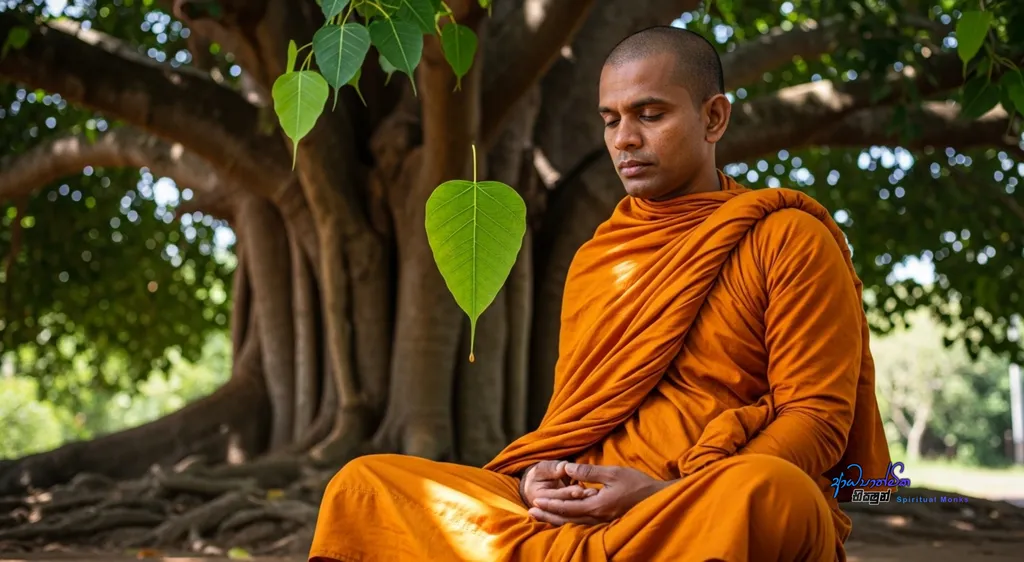
The Crutch of Meditation: A Tool to Stand, not a Place to Stay
Some may challenge this, pointing to scriptures in the Tipiṭaka that suggest practices like Buddhānussati can lead to Nibbāna. It is true, such passages exist, for example, in the Aṅguttara Nikāya.
However, we must remember that these texts have been transmitted over 2,500 years, and interpretations can shift. I am not saying the texts are wrong, but I speak from direct, practical experience. If you doubt this, I invite you to try it. Practice only the repetition of a word or quality for years and see if it alone leads to final liberation. You will eventually realize the truth of what I am saying.
Think of these Samatha practices as a crutch. A small child who is learning to walk might use a crutch or hold onto something to stand up. But does the child crawl forever? No. A day comes when they must let go and walk on their own.
To stay stuck in one meditation practice for your entire life, no matter how peaceful it makes you feel, is like being an adult who insists on crawling. You will never walk. These practices are the crutch that helps you stand up by steadying the mind. Once the mind is steady, you must let go and walk the path of Vipassanā.
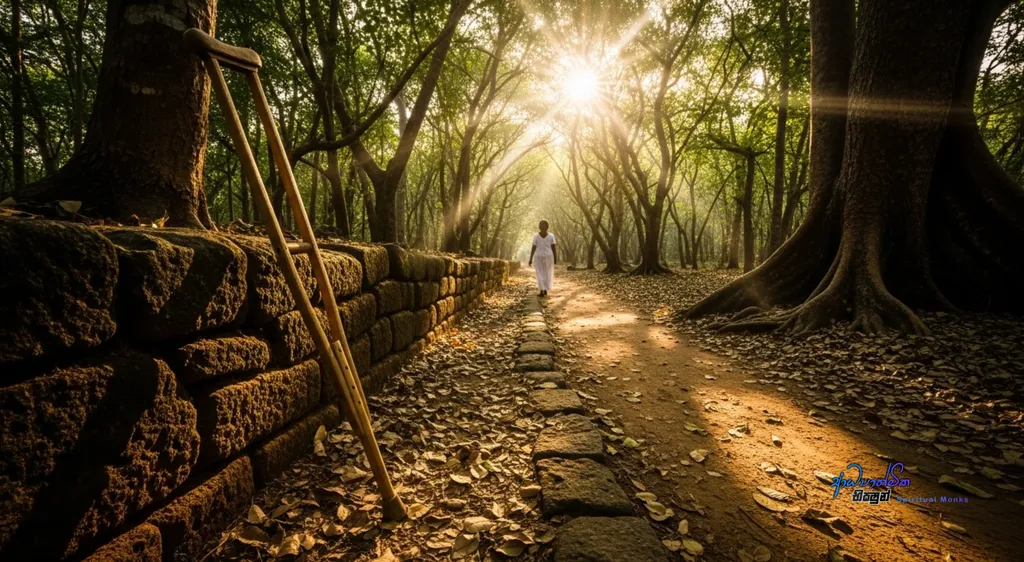
Your Path Forward: Using Every Practice as a Steppingstone
So, what should you do?
Understand the tool you are using. Whether you are practicing a method we teach or another one you’ve found, recognize its function. If your practice brings you to a state of calm, of deep absorption, where you experience physical stillness or see inner lights, recognize that you have successfully used your Samatha crutch.
This is wonderful! At that point, use our teachings as a guide to take the next step. Begin to observe the nature of that very mind. Don’t get stuck in the pleasant state. Don’t stagnate in the mud puddle, no matter how peaceful it seems.
This is the clarity I wished to offer. All these practices, both within and outside of Buddhism, that cultivate one-pointedness are developing Samatha. They can awaken the third eye, Kuṇḍalinī, and all the chakras. They can lead to profound spiritual exercises.
But without the wisdom of Vipassanā, they are incomplete. Understand this, and you can use any practice as a launching pad for true liberation. I hope this explanation helps you navigate your path with greater wisdom and confidence.
May the power of the Buddha, Dhamma, and Sangha bless you with the wisdom to understand all these practices and to walk the path to its very end. May your own profound wisdom awaken.
We invite you to walk this path with us. Read our teachings, and most importantly, apply them practically in your own life. as you practice, questions will naturally arise. Please feel free to share your experiences and questions in the comments below, via email or contact form. I will do my best to offer guidance in future talks based on your progress. For now, begin this practice with an open heart and a mind free from expectation. Cultivate it correctly, and may you find the clarity and peace you seek.
Thank you for joining us. We hope this blog will be of great benefit to your spiritual journey.
May you all be well and happy.
May the blessings of the Triple Gem be with you all!


