


Categories: Maintaining Mindfulness
May the blessings of the Triple Gem be with you all!
On this sacred Vesak full moon Poya day, a time of great significance, let us explore the practical application of the Buddha’s core teaching. While you may already be familiar with the importance of Vesak, celebrating the Buddha’s birth, enlightenment, and passing, and have heard many wonderful teachings, our focus today is on how to bring this wisdom into our lives directly.
A Buddha appears in the world to reveal a profound truth. The journey of Siddhartha Gautama, the Bodhisatta, involved immense human effort. He was born into this world, cultivated profound diligence, developed his mind through meditation, and awakened his innate wisdom. He realized the true nature of the universe, the mind, and the human condition. He saw the reality of Samsara, the endless, unseen cycle of birth and death, and taught that we are often lost in a darkness of ignorance, or Moha, unable to see things as they truly are.
After His enlightenment, the Buddha systematically laid out a path for us to follow. These teachings are preserved today in the Tipitaka, the Pali Canon, which contains eighty-four thousand units of teaching (Dhamma-khandhas). These texts, along with later commentaries by learned masters, provide a complete guide to understanding our minds and our journey through life. However, true understanding of this spiritual path only comes when we move from reading to doing. It is through practice that these teachings come alive.
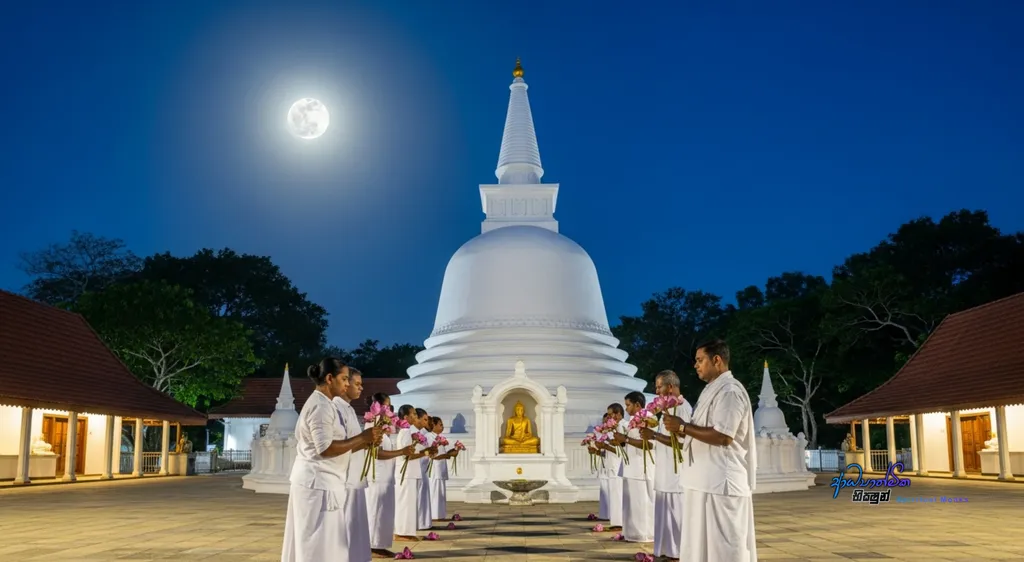
The Hidden Power of the Full Moon: Aligning with Nature’s Rhythms
Have you ever wondered why the Buddha’s most significant life events, his birth, enlightenment, and final passing into Nibbana, all occurred on the Vesak full moon day? This is no coincidence. Nature itself plays a role. On a full moon day, the moon’s gravitational pull affects the great oceans, and its energy subtly influences all living things. You may have noticed how some animals, like jackals or dogs, behave differently, howling at the moon. The natural world is in a state of heightened energy.
This energy also affects our minds. For a person whose mind is filled with mental defilements, known in Buddhism as Kilesas (such as greed, hatred, and delusion), this energy can amplify them, making them harder to control. Recognizing this, ancient Buddhist kings in countries like Sri Lanka made Poya day a holiday, encouraging everyone to visit the temple. By engaging in wholesome activities, people could channel this powerful energy towards peace rather than turmoil.
Conversely, for a spiritual practitioner, this heightened energy is a powerful aid. The rays of the full moon are believed to be uniquely supportive of spiritual development. Meditating on a Poya day, especially during the night or in the pre-dawn hours, can bring a deeper sense of calm and insight.
This is why it is an ideal day to begin or deepen a spiritual practice. The body and mind are more receptive. The Buddha and other great beings attained enlightenment in these early morning hours, a time of great clarity and energy that is often less accessible during the busy day. For a beginner, practicing at these times is especially beneficial, while an advanced practitioner maintains a stable mind throughout all times of the day.

The Buddha’s Core Teaching: The Art of Mindfulness
So, what is the Buddha’s core teaching that we are meant to practice? It is the cultivation of mindfulness, or Sati in Pali. This is the heart of practices like Vipassanā (insight meditation) and the Four Foundations of Mindfulness (Satipaṭṭhāna). A Buddha appears in the world to teach one primary thing: how to understand your own mind. The only way to grasp this is through direct, practical application.
Most of us spend our entire lives focused on the external world, our jobs, relationships, and possessions. We rarely, if ever, turn our attention inward to study the nature of the mind itself. But if you can understand how your mind works, what thoughts arise, how you react to them, and how to gently guide it, you can achieve a state of profound excellence.
The Buddha’s core teaching encourages us to try, little by little, to get to know our own mind. Simply by maintaining mindfulness and observing the mind’s nature, the mind itself begins to develop. This practice is the key to freeing ourselves from suffering and uprooting the mental defilements for good.
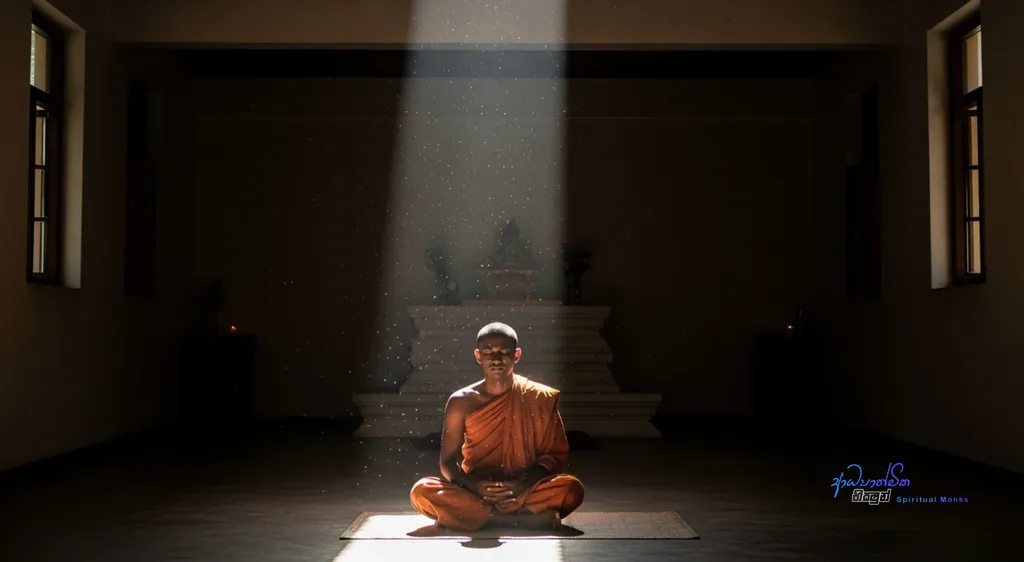
From Theory to Practice: How to Begin Observing Your Mind
Let’s look at how this works in practice. Imagine a person who leaves worldly life and becomes a monk. After ordination, they cannot indulge in sensual pleasures as they did before. When they sit to meditate, what comes up? Thoughts of their past life, memories of their experiences over twenty, thirty, or more years. The instruction is to develop mindfulness and watch these thoughts. This is the starting point.
It is crucial to understand that this is different from intellectualizing the teachings. Some people mistakenly believe that by repeating Pali words like Nāma-rūpa (mind-and-matter) or concepts from Paṭiccasamuppāda (Dependent Origination), they are practicing insight meditation. This is not the case. Merely repeating a word or concept is a form of concentration meditation, or Samatha, which brings calm but not liberating insight. As the Buddha taught, true insight arises from developing mindfulness to see what is actually happening in the mind, moment by moment. Grasping the teachings in the wrong way is like picking up a snake by the tail, it will only bite you.
So, the first practical step is to recognize the thoughts that arise in your mind. Is it a thought of desire (rāga) or a thought free from desire? Is it a thought of aversion (dvesa) or one free from aversion? Is there jealousy? Arrogance? Goodness? Badness? Identify the states where your mind gets stuck in attachment or clashes with resistance.
By patiently training yourself to recognize these mental states, you begin to understand the mind’s patterns. You realize, “This is how my mind works, and the minds of others are likely similar. They also have these defilements of attachment and aversion.” This is the beginning of wisdom, a fundamental part of the Four Foundations of Mindfulness.

Mindfulness in Action: Developing Equanimity in Daily Life
This practice isn’t confined to a meditation cushion; it extends to every moment of life. The Buddha gave us the five senses, eye, ear, nose, tongue, body, as gateways through which the world enters our mind. Let’s take the simple act of eating. When you put food in your mouth, the tongue makes contact with a taste. If it’s your favorite vegetable or curry, what happens? Observe: does attachment arise? If it’s something you dislike, like bitter gourd, do you feel aversion?
The practice is simply to notice this reaction without judgment. As you do this consistently over time, something remarkable happens. The person who once craved a certain dish now eats it and finds their mind in a state of balance. The intense attachment is gone. They recognize, “This is just a form of attachment I used to have. Now I can see it as just food; there is no need to cling to it.” A balanced, neutral mind arises. This state is called Upekkhā, or equanimity.
Similarly, when faced with the disliked food day after day, by observing the aversion repeatedly, “aversion is arising, aversion is arising”, that resistance begins to fade. Eventually, they can eat it with the same balanced mind, recognizing, “This is the food I used to resist. Now I can eat it with neutrality.” You begin to see with your own awareness the difference between your past reactions and your present, more balanced state. This is what it means to start the journey. As the Buddha explained in the Pahārāda Sutta, you must first learn your way around the shore before you can venture into the deep ocean.

Glimpsing Deeper Truths: The Three Marks of Existence
As you establish this foundational mindfulness, you begin to see deeper truths directly. You don’t have to look for complex concepts; you can see the Tilakkhaṇa, or Three Marks of Existence, in your immediate experience.
1. Anicca (Impermanence): When you eat, how long does a taste last? If you are truly mindful, you will notice it is incredibly brief, a fraction of a second. It arises, is known, and vanishes. This is impermanence in action. A thought arises, exists for a moment, and disappears. This is Anicca.
2. Dukkha (Unsatisfactoriness): The constant arising and passing away, the subtle stress of clinging to what is pleasant and pushing away what is unpleasant, reveals a baseline of unsatisfactoriness. This is Dukkha.
3. Anattā (Not-Self): You realize these experiences happen on their own. You don’t command a taste to arise or a thought to vanish. They follow natural laws, not the commands of a central “I” or self. This is a glimpse of Anattā.
When you see a beautiful form that stirs desire, watch that feeling. You will see it arise and pass away. When you hear a pleasant song or feel a pleasant touch, the experience is the same, it is fleeting. This is the practice: staying with the raw data of your senses and observing their transient nature. This is exploring the “seashore” of your experience. We must patiently explore this coastline, the thoughts, the feelings, the attachments, the aversions, and the neutral states, before trying to swim in the deep ocean of profound concepts. This patient, gradual observation is what builds wisdom, or Paññā.
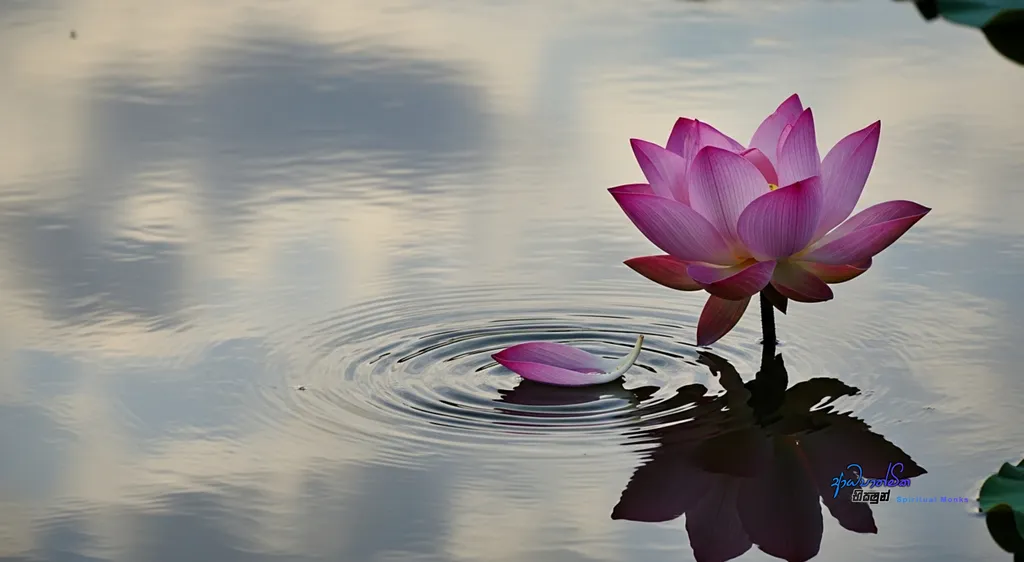
The Inner Landscape: Navigating Challenges on the Path
The path is not without its challenges. For a layperson living a busy life, maintaining continuous mindfulness is difficult. That is why we are taught to practice little by little. If you try to force perfect, unbroken mindfulness from the start, you will grow frustrated and the practice will become a bitter chore. Even a monk is taught to develop this skill gradually.
As you progress, you may notice changes in your disposition. You might feel a natural inclination towards silence and solitude, with less desire for casual conversation. This is a normal stage of development. However, family and friends who don’t understand may misinterpret this as a sign of depression or a mental problem, sometimes even suggesting medical intervention. It is important to be aware of these natural shifts and not see them as a problem. It is the mind turning inward.
At this stage, your awareness expands. You start observing the body (Kāyānupassanā). You see how a mental intention to lift your arm translates instantly into physical movement. Your sensitivity heightens. You may feel your heartbeat, subtle inner vibrations, or even the activity of microorganisms in the body.
You may feel sensations like itching more intensely. Some people get scared at this point, thinking it is a supernatural disturbance or that they are practicing incorrectly, and they stop. Do not make this mistake. The instruction is to remember: “This is just the nature of the mind and body.” Whatever arises, see it as a natural process. Whether it is a lustful thought or a painful sensation, you practice not reacting, remaining equanimous.
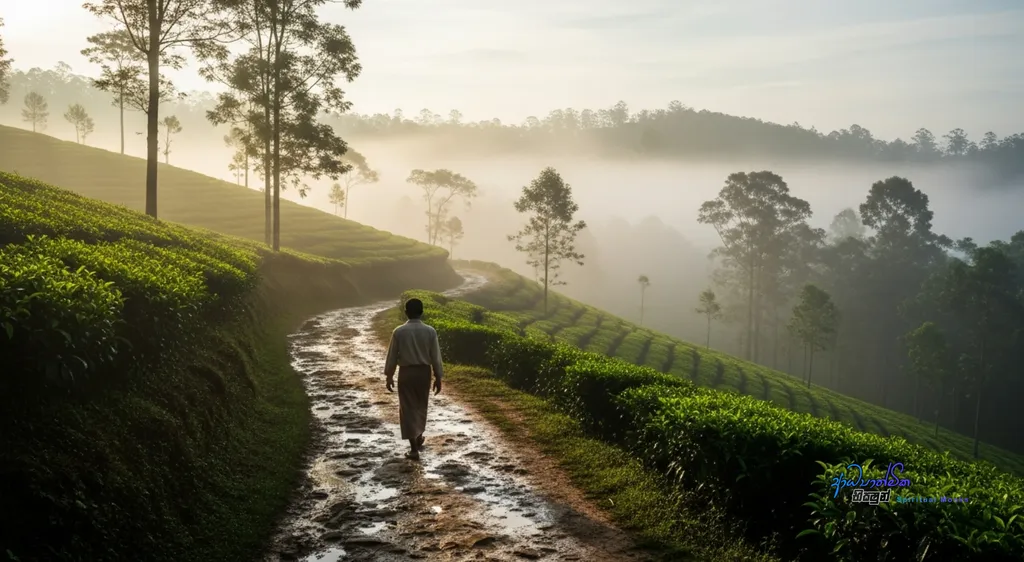
The Subtle Trap: Clinging to Equanimity
Here we come to a very subtle and important point. After developing a state of equanimity (Upekkhā), a new, more refined form of attachment can arise. You may start to think, “This equanimity is so peaceful. What if I lose it?” This thought creates a subtle greed or possessiveness for the peaceful state, and a fear of it ending. This fear is a form of aversion, born from attachment to equanimity itself.
This is an extremely subtle thought. Only a person who has patiently practiced observing the grosser forms of attachment and aversion can detect it. It’s not something a beginner can see just by being told. Trying to jump to this level without building the foundation is like trying to do advanced calculus without learning basic arithmetic.
Those who have a strong karmic predisposition from past lives may progress quickly, but for most of us, the path is gradual. We must start from the beginning and build our practice step-by-step. If you can see this subtle clinging to peace, it means your mindfulness has become very sharp.

The Fruits of the Path: Living with Wisdom and Peace
When your mind reaches this level of stable equanimity, you are a different person. You are operating from a higher level of mental development. You will naturally be quieter and feel less need for external validation or socializing. However, you can still function perfectly well in the world. You can do your job and manage your family life, but you do so from a place of inner balance.
The benefits are immense. Mental stress becomes minimal or nonexistent. Your memory and concentration improve significantly because the mind is no longer cluttered with unnecessary thoughts. You retain what is important and let go of the rest.
will find you have deep, restful sleep because the mind is not churning with anxieties about the past and future. This is especially valuable for older individuals, who often suffer from sleeplessness due to constant rumination. By practicing mindfulness, anyone, regardless of age or occupation, can cultivate a mind that is peaceful and clear, allowing them to live and eventually face death with grace and wisdom.

The Great Letting Go: Beyond Knowledge and Attainment
This state of equanimity leads to a profound letting go. The practitioner begins to release their attachment to everything, even things considered spiritually valuable.
- Knowledge: Even deep knowledge of the scriptures, like the Tipitaka, is seen as just another mental object. It is let go of.
- Virtue (Sīla): The pride in maintaining perfect moral conduct is released.
- Concentration (Samādhi): Attainments like deep meditative states (Jhānas) or psychic powers (Abhiññā) are no longer held as important. The practitioner sees they are impermanent and not the final goal.
The mind simply lets them all go. At this stage, the desire to know “What level am I at?” or “Am I a Sotāpanna (a stream-enterer)?” completely disappears. The very act of wanting to know your attainment level shows that you are not there yet, because a person whose mind is truly balanced sees such labels as meaningless. They have no use for them. If your mind is still concerned with status and labels, it simply means you need to continue practicing with the fundamentals.

Your Vesak Resolution: Practice the Teaching, Don’t Just Venerate It
This is the essence of the Buddha’s core teaching. The true way to honor the Buddha is not to get stuck in a framework of only discussing his life story. To remain trapped in simply saying “Sadhu!” to the stories without ever engaging in the practice he taught is to miss the entire point. For most of your life, you have heard these stories. The one thing you may not have done is to practically apply the path he laid out on the very day he was born, became enlightened, and passed away.
Therefore, on this Vesak day, make a resolution. Decide that you will practice this mindfulness consistently until next year’s Vesak Poya. Renew that commitment on every Poya day. Cultivate the habit of meditating in the quiet of the early morning. Practice mindfulness throughout your daily activities.
This is how real transformation occurs. You will become a different person, calmer, more present, with stronger character. You become more silent, speaking only when necessary, not out of arrogance but out of inner peace. You are still kind and helpful to others, but from a place of stability.
The Essence of the Path: A Final Reflection
To summarize, the practice of Vipassanā, of Satipaṭṭhāna, of the Buddha’s core teaching, is about developing a mind free from attachment and aversion, a mind of equanimity. You do this by patiently observing your physical body, your mind, and the experiences that come through your senses. This is the gradual path. This is how you learn to navigate the “seashore” of your experience so that you may one day swim in the deep ocean of liberation.
This path is open to all, whether you live a monastic or a lay life. The obstacles are greater for a layperson, but the effort itself is a powerful practice that builds spiritual perfections (pāramitā) for your journey. Now you can understand the true depth of Vesak. The energy of the full moon can either fuel your defilements or support your liberation, the choice lies in where you direct your mind. By taking up this practice, you engage with the Buddha’s teaching in the most authentic way possible.
Now, as this teaching concludes, begin the practice. Start to understand your own mind. On this sacred day, I offer this blessing: may you all be able to practice the Buddha’s core teaching and walk this path with diligence and wisdom.
We invite you to walk this path with us. Read our teachings, and most importantly, apply them practically in your own life. as you practice, questions will naturally arise. Please feel free to share your experiences and questions in the comments below, via email or contact form. I will do my best to offer guidance in future talks based on your progress. For now, begin this practice with an open heart and a mind free from expectation. Cultivate it correctly, and may you find the clarity and peace you seek.
Thank you for joining us. We hope this blog will be of great benefit to your spiritual journey.
May you all be well and happy.
May the blessings of the Triple Gem be with you all!.


