


Categories: Can Meditation Drive You Mad?
May the blessings of the Triple Gem be with you all!
Today, through our spiritual exploration, I want to address a question that has become increasingly relevant in our modern world: Is meditation a mental illness? I want to offer some clarity on this topic because of certain destructive trends I see happening in society, especially within my home country of Sri Lanka.
There is a growing tendency to attack the Buddha’s teachings, our philosophy, and the community of monks and nuns, the Sangha. Whenever a teaching is shared, it is often met with criticism and deliberate misunderstanding. Even simple acts of devotion, whether it’s an offering of material things, known as āmisa-pūjā, or the practice of developing virtue, known as paṭipatti-pūjā, can be turned into a joke.
This is the environment we find ourselves in, and it is vital to understand it without letting it weaken our resolve.

The ‘Third Eye’: A Misunderstood Spiritual Gift
A common point of confusion and criticism surrounds the extraordinary experiences that can arise from meditation. For instance, a practitioner might develop what is called Dibba-cakkhu, or the ‘Divine Eye’. In today’s world, many people refer to this as opening the ‘Third Eye’.
Some create confusion by arguing that these are different things that Dibba-cakkhu is found in the ancient texts of the Tipiṭaka, while the ‘Third Eye’ is a separate concept. This is a misunderstanding born of ignorance. They are two different names for the same phenomenon. The Buddha described this faculty with the Pali term Dibba-cakkhu; the modern world uses the term ‘Third Eye’. It is foolish to criticize something based on a difference in labels.
These attacks on spirituality, whether on ancient arts or meditative practices, are happening for several reasons. Sometimes, the fault lies with us, with practitioners who chase after money or are driven by sensual desires. But there are also organized groups, both in Sri Lanka and abroad, who intentionally work to undermine these traditions. Because we discuss deep topics like the nature of the mind, consciousness, meditation states (Dhyāna), energy centers like the Kuṇḍalinī, and psychic abilities, we can expect to face these attacks.

Why This Conversation Matters for Your Practice
Personally, I am not shaken by these criticisms. But you might be. Your courage may falter. Your spiritual energy, or viriya, might diminish. Your faith and confidence in the path of meditation could be damaged. When you face accusations from radical, secular, or extremist voices, you might begin to fall away from your practice.
This is precisely why I feel this teaching is necessary. You might start to doubt yourself, asking: ‘Is the meditation I’m doing correct? Or is it wrong? Are my spiritual pursuits just a form of mental illness, a delusion?‘ These questions can arise. My hope is that by understanding the simple points in this article, you can see these criticisms for what they are, explain them to others, and, most importantly, continue on your journey without listening to those who seek to pull you down.
The Wisdom of Silence: When to Share Your Experiences
Many people have gathered and are practicing meditation with our guidance, yet I see that most do not speak about their inner experiences. There is a widespread belief that one should not talk about what one sees or feels in meditation.
There is a valid reason for this caution. If you tell someone about an experience, they might not be having that experience themselves but may pretend they are, creating a false persona. Others might hear of your experience and wrongly assume they must have the same one, creating a rigid expectation that hinders their own progress.
Another risk is that if you share a profound experience like seeing a distant sacred place like the Ruwanwelisaya stupa through your ‘Third Eye’ with someone who doesn’t believe, they will immediately label you. They will say, ‘You have such-and-such mental disorder. What you’re seeing are symptoms of that illness.‘ These are the main reasons people are advised to stay silent.
However, I do not believe in a total ban on sharing. My view is this: you should speak to the suitable person and remain silent with the unsuitable one. Here, I am sharing these teachings openly, so both suitable and unsuitable people will read them. The suitable ones will recognize the truth in these words based on their own experiences.
The unsuitable ones, the radicals, the secularists, the organized groups with fixed views will immediately attack, because they cannot see or understand it. For them, we should have compassion. They are stuck where they are, unable to meditate, unable to understand their own minds. They think they are important figures, but one day, their own rigid thinking will cause their minds to break down.
Beyond ‘Magic Tricks’: The Real Power of a Concentrated Mind
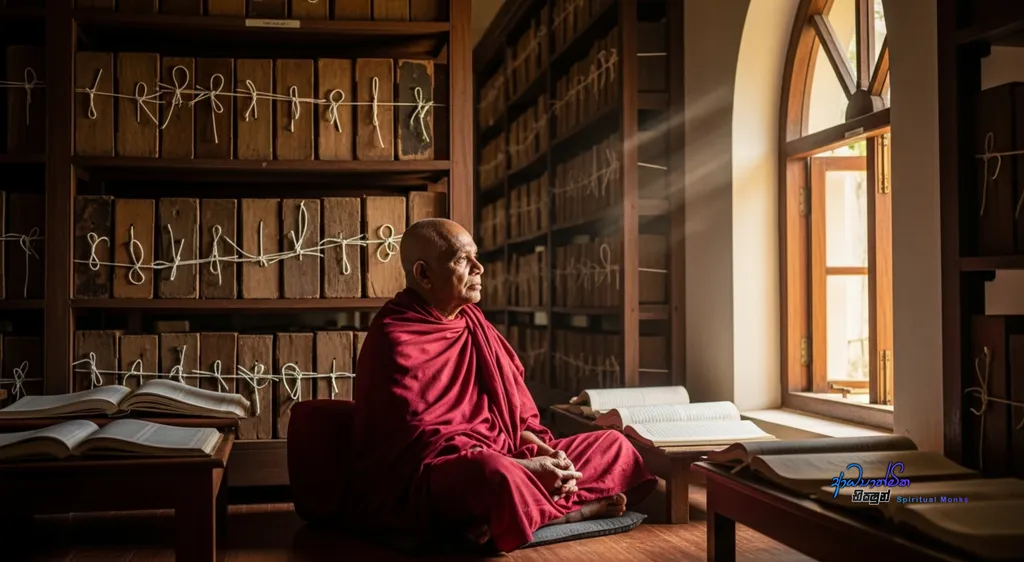
Some skeptics will challenge practitioners with tests, like placing a numbered slip of paper in a sealed container and demanding, ‘If you’re so powerful, tell us the number!‘ They believe it’s impossible. But for a mind that is well-concentrated and established in samādhi, a state of profound mental unification, it is entirely possible to see that number. It is not some great magical feat. You too can develop this ability with practice.
With such a developed mind, you could even see someone’s password or bank account number. But here lies a critical warning: if you start using these abilities driven by greed or craving (taṇhā), your meditative progress will decline. You must never use these skills to cause harm or violate another person’s privacy.
If you do, your spiritual faculties will be destroyed. They can only be sustained by acting with harmlessness and integrity. Truly, a person who has cultivated these abilities has no interest in such things. The spiritual happiness they experience is a hundred thousand times more valuable. Its worth is beyond measure, more precious than billions of dollars. Faced with such inner wealth, why would they bother with childish games?
So do not fall for the taunts of foolish, worldly people (puthujjana). They will challenge you and try to break you down mentally, making you feel frustrated and defeated. Do not be caught in their traps.

Beware the Performer: Spotting Inauthentic Practice
We must also be aware of another type of person who brings harm to the path. These are individuals who talk about meditation constantly, but not in a skillful way. They may not have practiced for long, or at all, but they latch onto certain concepts and speak about them obsessively, as if they were experts.
They go from place to place, talking to anyone who will listen, without any discretion. To outsiders, these people can appear unhinged, like they have a mental illness. It is because of them that many people judge all meditators as being mentally unstable. They put everyone else into the same category.
A true practitioner experiences many physical and mental sensations that are unique to them. But they don’t feel the need to constantly talk about it. They don’t hold the view ‘I must speak,‘ nor do they hold the view ‘I must never speak.‘ They speak when it is appropriate, to the right person. The person who indiscriminately babbles about their meditation to every single person they meet they are the ones who do the real damage. They give ammunition to the critics.

A Guide to Wise Conduct for the Meditator
So, how should you conduct yourself?
The key is simplicity and humility. You don’t need to go around announcing, ‘I am a great meditator,‘ or ‘I am a great keeper of precepts,‘ or ‘I am celibate.‘ Don’t show off that you are wealthy, or that you are poor. Don’t show off that you are educated, or that you are uneducated. Just live with a simple and uncomplicated mind.
When you live this way, what others say won’t bother you. There will be no challenge to your meditation practice, and you can continue your inner work in freedom. When you are on a bus, in a car, or at home, just be present. Engage in normal conversation. If, and only if, the topic naturally and appropriately turns toward spirituality or meditation, then you can speak, but always with wisdom, discerning whether the person you’re speaking with is truly ready to listen.
Otherwise, remain silent. This is how we cultivate wisdom (paññā) and intelligence in our interactions.
If Meditation Is Sickness, What Does That Make the Buddha?
If someone claims that the experiences of meditation are signs of a mental illness, we must ask a fundamental question. The Lord Buddha saw the past and the future. He made prophecies about events thousands of years ago that are coming true today. If seeing what others cannot see is a mental illness, then what does that make the Buddha? Would we have to label him as the greatest mental patient of all?
The question exposes the absurdity of such an argument. Of course, some stubborn people might even agree with that, but their foolish arguments have no ground to stand on when faced with reality.
Recognizing the Obstacles of Māra in the Modern World
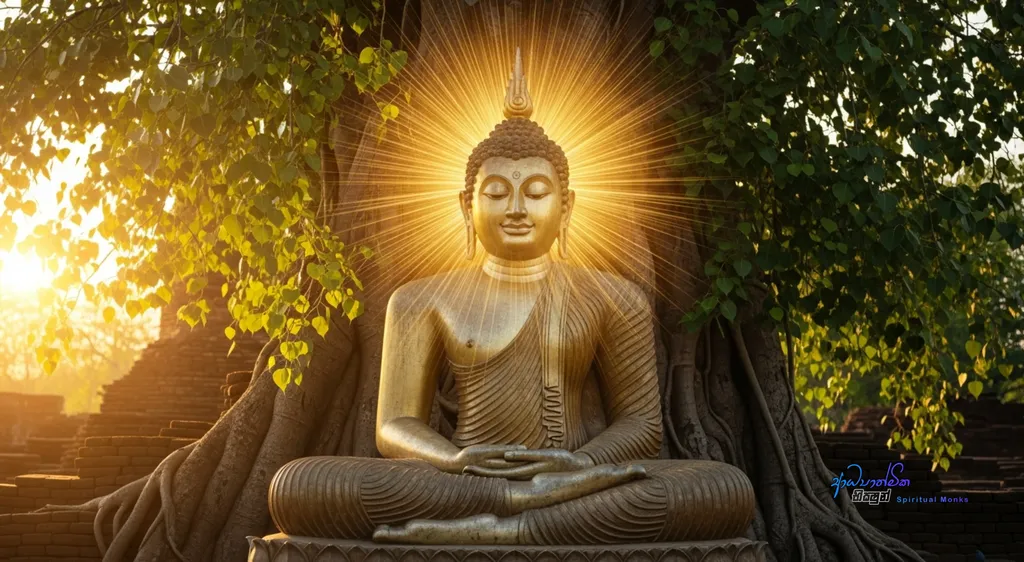
Finally, it is useful to understand these obstacles from a deeper, spiritual perspective. In Buddhism, we speak of Māra, a figure who represents the forces of temptation, distraction, and death that obstruct the path to enlightenment. In this coming spiritual era, Māra has become very active. The attacks against meditation, the claim that it is a mental illness, these are the work of Māra.
This opposition comes in many disguises: through people wearing robes, through fake spiritual gurus, through ordinary laypeople, through radicals and secularists, and through organized groups funded from near and far. When you see these attacks, you should remember that they are all manifestations of Māra trying to stop you.
Those who try to pull you away from the path are more dangerous than Māra himself. They are a truly dangerous group of people. Do not associate with them. Keep them at a distance. Talk to them only about necessary, mundane things, but never about your spiritual life or your meditation.

Your Path, Your Journey: A Final Word of Encouragement
So, I offer this advice to you. Do not engage in arguments unless you see that the person is truly capable of gaining understanding. Otherwise, arguing is just a wearisome effort that brings fatigue and anger, and it can stop your spiritual progress in its tracks. Be silent. Continue your work. You are meditating for your own sake.
So, to answer the question directly: is meditation a mental illness? No, it is not. It is a path to profound sanity and well-being. Understand these points I have shared, and continue your journey with courage. Sooner or later, a time will come when these attacks will cease, and all people will turn toward spirituality. Until then, we must be patient and persevere.
May you have the strength, determination, and protection of the Triple Gem to continue your spiritual work, unshaken by whoever or whatever tries to stand in your way. May you move forward with courage and confidence.

We invite you to walk this path with us. Read our teachings, and most importantly, apply them practically in your own life. as you practice, questions will naturally arise. Please feel free to share your experiences and questions in the comments below, via email or contact form. I will do my best to offer guidance in future talks based on your progress. For now, begin this practice with an open heart and a mind free from expectation. Cultivate it correctly, and may you find the clarity and peace you seek.
Thank you for joining us. We hope this blog will be of great benefit to your spiritual journey.
May you all be well and happy.
May the blessings of the Triple Gem be with you all!


