


Categories: Other Meditation Teachings
May the blessings of the Triple Gem be with you all!
For those of you who are dedicated to your spiritual journey and follow our teachings, you are likely familiar with the practical meditation methods we have been sharing for the past two years. We have focused on a particular practice of tranquility meditation, known in the Buddhist tradition as Samatha. In this practice, we guide you to anchor your mind on specific points in the body to cultivate concentration. From there, we introduce certain words to contemplate.
We have often described these as powerful, universal words foundations that help calm the mind, foster mental development, and elevate your consciousness towards profound states of meditative absorption, known as the Jhanas. These words are the very first step on a transformative path.
How Long Should You Use a Meditation Word?
A common question arises: For how long should we use these words? And why do we use them at all? Today, we will clarify these points. The duration for which you use a specific word is entirely relative to you; it differs for each individual. For example, in our ‘Third Eye’ practical meditation program, we introduce the word ’empty’. How long should you contemplate it?
For one person, it might be a few days. For another, a few weeks, several months, or even a few years. It could even be a few hours or minutes. The time it takes is unique to each person and depends entirely on how quickly you grasp and train yourself in the method.
A Tool for a Purpose: Unifying the Mind
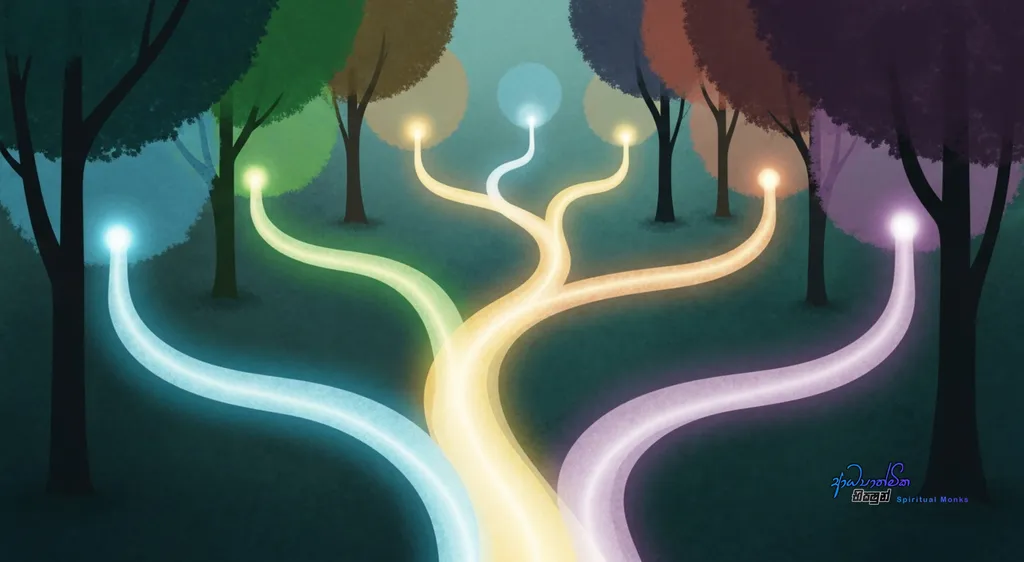
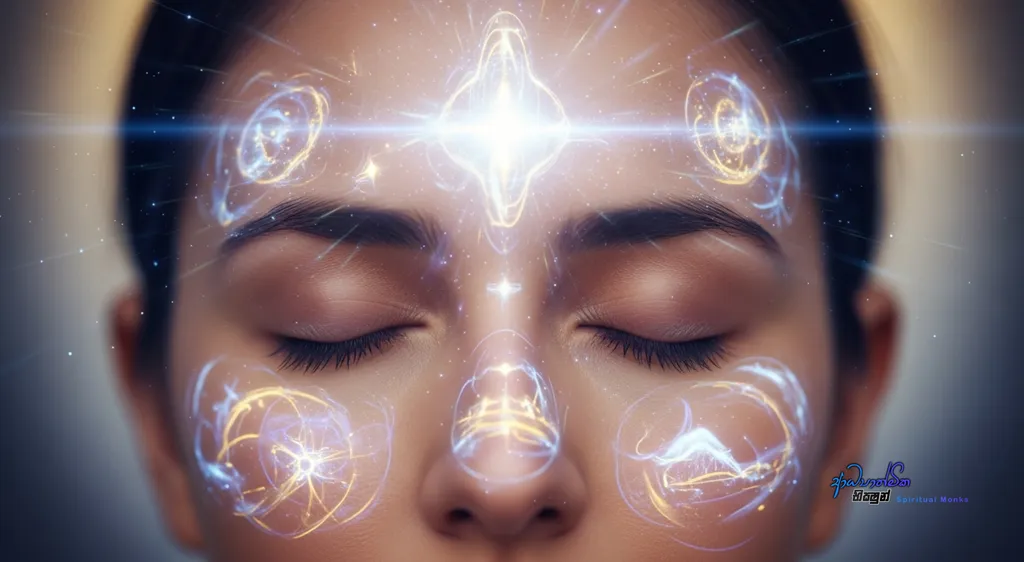
So, how far do we take these words? To what stage must we contemplate them? We have taught that you should continue this contemplation until you begin to perceive what are known as chitta rupa, or mental images. In the ‘Third Eye’ meditation, for instance, we advise you to keep contemplating until you emerge from the ‘black hole’ stage. These words are tools, used while observing the lights and images that arise in your mind. Their purpose is to help you focus and develop your mind.
Whether you have practiced other meditation forms in your past lives a cultivation of virtues known as paramitas or are starting fresh, these words are a crucial beginning. You might be meditating under various teachers, on your own, or with us. Regardless, we provide these words to help you unify the mind and find ease. When you first close your eyes to meditate, the mind doesn’t become still instantly. It takes time, depending on your karmic habits from Samsara, the long cycle of birth and rebirth. These words are an aid, a support to help you build that initial stability. Once you gain a certain understanding, we guide you on how to proceed from there.
Graduating Beyond Words: The Path to Mastery
The function of these words is to bring you to a certain stage of practice, and nothing more. Once you have arrived, these words are no longer needed. The only time you might return to them is if your meditation practice declines and you need to start again from the beginning. Otherwise, there is no need to reuse them.
For example, if one day your ‘Third Eye’ awakens, you enter a Jhana, or you reach the formless absorption of ‘Infinite Space’ in our ‘Third Eye’ meditation program; or if you regularly practice and enter the first and second Jhanas as taught in our ‘Path to Brahma Worlds’ program your mind becomes trained.
Simply put, for someone accustomed to entering these states, whether it’s awakening a spiritual ability or attaining a Jhana, there is absolutely no need to repeat the initial words. Why? Because all they need to do is close their eyes, and the mind will naturally, automatically, proceed to those advanced stages. This happens because they have consistently practiced tranquility, or Samatha meditation.
Effortless Practice: When Meditation Becomes Second Nature
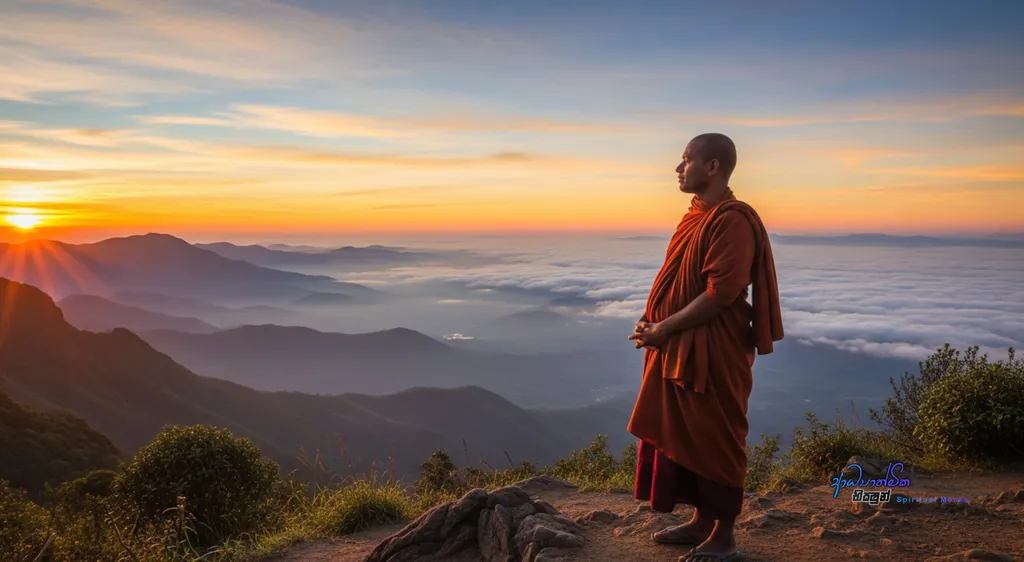
I have heard many share this experience, and we have personal experience with it as well. There are practitioners who, when they close their eyes simply to pay homage to the Buddha in the morning or evening, find themselves automatically entering a Jhana state. It happens on its own, without contemplating a single word.
This occurs because, through dedicated practice over a long or even short period, their karmic habits from past lives have surfaced. Their previous meditation experience merges with their present efforts, and they access these states instantly. In this way, a person can potentially access all eight Jhanas.
This principle applies to any spiritual ability. When the ‘Third Eye’ first awakens, you may need deep concentration to perceive something clearly. But for someone who is well-practiced, they can close their eyes and instantly perceive what they focus on. The same applies to the Jhanas. This is why, if you have read the scriptures, you’ll know that the Buddha and the Arahants (liberated ones) could enter Jhanas instantly. It was due to the meditative merit and other perfections they had cultivated and trained in throughout Samsara.
The Danger of Getting Stuck: Moving Beyond Lifelong Repetition
These abilities, practiced in this life, can be reawakened and accessed instantly. This is true for Pacceka Buddhas (silent Buddhas), Bodhisattvas (those aspiring to Buddhahood), and any noble person aspiring to enlightenment or supporting the work of such beings. For all of them, these foundational tools like meditation words are only necessary until their past spiritual habits are brought to the surface.
This is the help I am offering through these teachings: to provide guidance from every angle until your own latent abilities from Samsara awaken. The primary purpose of our spiritual guidance is to lead you to the point where you can stand on your own, where your past practices re-emerge, allowing you to proceed independently. You might even begin to remember things you practiced in past lives.
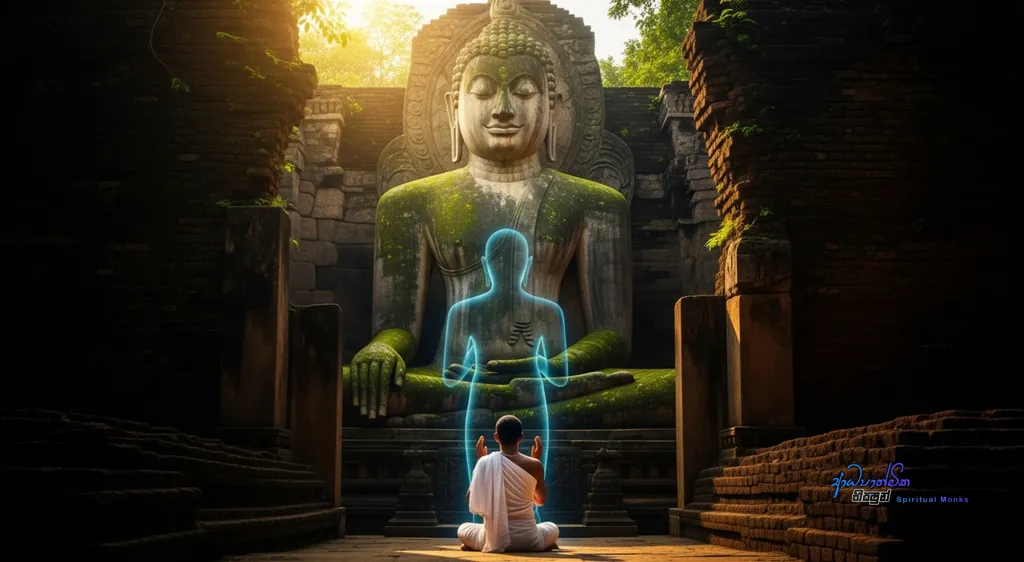
However, my main message for you today is this: you are not meant to contemplate these words forever. I see many elderly practitioners who, without knowing better, spend their entire lives repeating ‘Anicca, Anicca‘ (impermanence), or ‘Dukkha‘ (unsatisfactoriness), or ‘Anatta‘ (not-self). They practice Anapanasati (mindfulness of breathing) by just watching the breath until the day they die.
They practice Buddhanussati (recollection of the Buddha) endlessly. They do the same with loving-kindness meditation or any other Samatha or Vipassana (insight) practice. While this certainly generates merit, they miss the opportunity to go so much further. They remain stuck at the foundational level the ‘kindergarten’ of meditation touching the first step until their last day.
The Ladder of Practice: Using and Releasing the Tools
This is why I encourage you to listen to these teachings again and again if they are not clear at first. A teaching you didn’t understand on the first listen may become clear on the second. This will help you understand the stage you are at in your mental development. You will gain insight into which words you need to contemplate to reach the next step. You will understand these meditation objects, these Samatha words, and more importantly, you will know what to do next.
These words are only for ascending higher. Once you have climbed up, you let go of those words and connect with a new one. Then you let that one go too. Ultimately, a person who has developed through either Samatha or Vipassana has no words left at all. They have discarded all of them, and their mind is simply trained to enter those states. They can access those spiritual abilities or enter the Jhanas at any time, in any situation, because they have mastered the method in this very life.

Conclusion: The Journey to a Mind Unbound
These are the points you need to understand. All these words are merely helpers for developing your mind. There is no need to hold onto them forever. You must grasp this method. Then you can move forward with ease and understanding.
I believe you all have the capacity to understand this simple teaching I have shared. Today, I will conclude this reflection. By the power of the Triple Gem the Buddha, the Dhamma, and the Sangha may you all understand these points well. May you develop your spiritual practice with wisdom. With this blessing, I end this teaching.
We invite you to walk this path with us. Read our teachings, and most importantly, apply them practically in your own life. as you practice, questions will naturally arise. Please feel free to share your experiences and questions in the comments below, via email or contact form. I will do my best to offer guidance in future talks based on your progress. For now, begin this practice with an open heart and a mind free from expectation. Cultivate it correctly, and may you find the clarity and peace you seek.
Thank you for joining us. We hope this blog will be of great benefit to your spiritual journey.
May you all be well and happy.
May the blessings of the Triple Gem be with you all!.


