


Categories: Other Meditation Teachings
May the blessings of the Triple Gem be with you all!
As you engage with these spiritual teachings, you are proving a fundamental truth: Without Practice, Buddhism is Nothing More than Literature! You have already begun to apply these principles to your life, gaining the practical experience and felt sense of understanding that no book alone can provide. For so long, you have been studying your own mind, just as the Buddha taught.
He guided us to cultivate mindfulness, which in the Pali language is called Sati Sampajañña,a state of constant, clear-minded awareness. Through this spiritual practice, you have likely begun to recognize the greed, aversion, and delusion arising in your own mind.
Many venerable monks teach this practical path, following the way the Buddha laid it out for us. To aid you on this journey, we have explored various methods to help you understand and experience these truths directly. We have discussed meditation techniques for developing tranquility, known as Samatha, which can lead to profound states. We have touched upon paths to developing the ‘divine eye‘ and the ‘divine ear,‘ as well as entering deep meditative absorptions called Jhānas. This is all part of the journey.
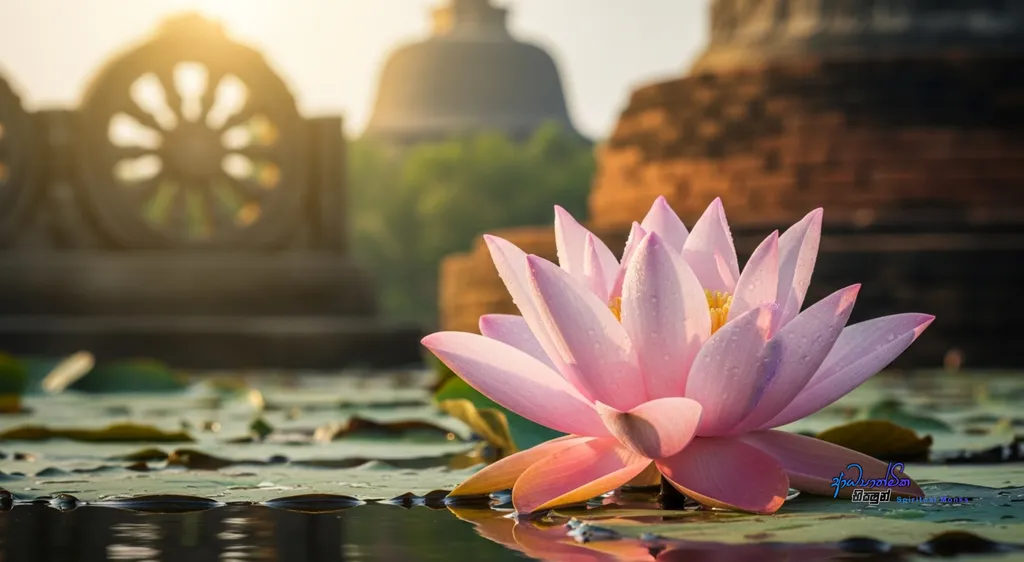
One Truth, Many Names: Understanding Spiritual Experiences Across Cultures
A common point of confusion arises with terms you may have heard, such as ‘Kundalini energy‘ or ‘Universal energy.‘ I have spoken about these concepts, even though they are not found in the Buddhist scriptures, the Tripitaka. This has led some to mistakenly believe these teachings are not aligned with Buddhism.
Let me be clear: the words ‘Kundalini’ and ‘Universal energy’ are not part of the Buddhist lexicon. However, the experiences they point to are not foreign to our path.
Think of it this way: a single physical object can be described with different words in Sinhala, Tamil, English, Chinese, or Japanese. The word changes, but the object remains the same. Similarly, as a person develops their mind through spiritual practice, they will have certain universal experiences.
Whether you are Chinese, European, American, Indian, or Sri Lankan, from any religion or background, the felt sensations that arise from deep meditation are fundamentally similar. It is only the labels we use that differ. I am not saying all religions are the same, they are not.
The Buddha taught a unique path to uncover the ultimate truth of this world for oneself. Other theistic religions have different methods. Anyone who claims all paths are identical is speaking from ignorance. However, while kindness and compassion are common to most faiths, the Buddha taught a much deeper reality that one must experience through personal, practical effort.
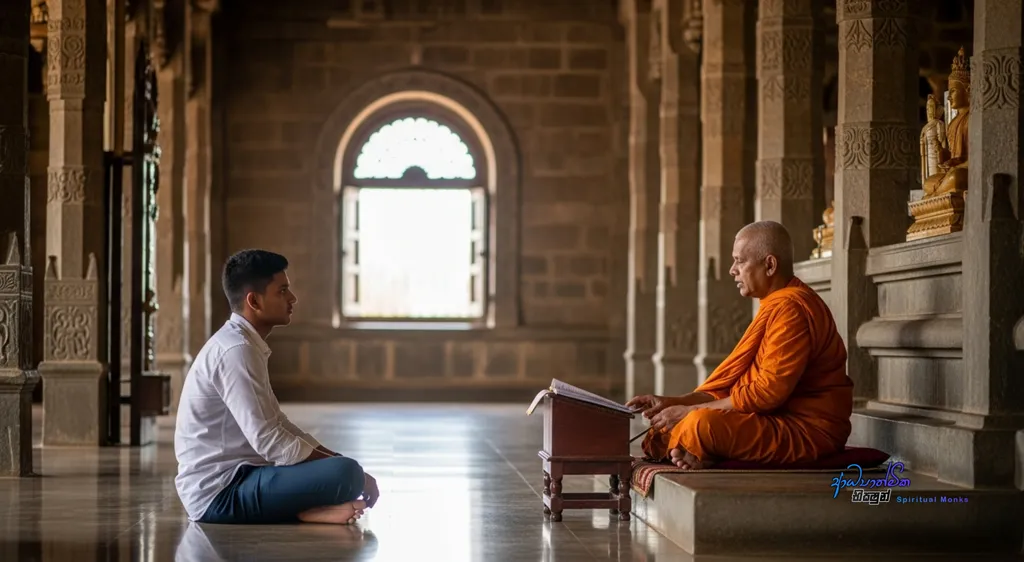
Are the Buddha’s Teachings Just Literature? The Power of Direct Experience
This brings us to a critical question. When you explore the Buddha’s teachings, you might wonder: are these accounts of extraordinary abilities and events merely literature? Is it all just symbolic?
This question arises in the minds of many, especially those from other faiths or cultures. But has it occurred to you that perhaps the ancient authors of these texts were not simply writing fiction?
The Buddha himself spoke of specific kinds of knowledge and vision, known as ñāṇa-dassana, that can be developed. If you read the Abhidhamma,the philosophical texts of the Tripitaka, perhaps in the excellent translations by Ven. Rerukane Chandawimala Thero,you will find detailed explanations. These include:
- Dibba-cakkhu: The Divine Eye, the ability to see beings in other realms.
- Dibba-sota: The Divine Ear, the ability to hear sounds beyond the normal range.
- Paracitta-vijāṇana-ñāṇa: The ability to know the minds of others.
- Pubbenivāsānussati-ñāṇa: The ability to recollect past lives.
- Iddhividha-ñāṇa: The knowledge of various psychic powers.
These five higher knowledges, or Abhiññā, are described not as myths, but as attainable results of dedicated spiritual practice. When someone who has diligently studied the teachings with wisdom looks at these concepts and compares them to experiences described in other traditions (like those of the Rishis or yogis), they can see that only the names are different.
The underlying human potential is the same. The only way to know this is to move beyond books and engage in spiritual practice.
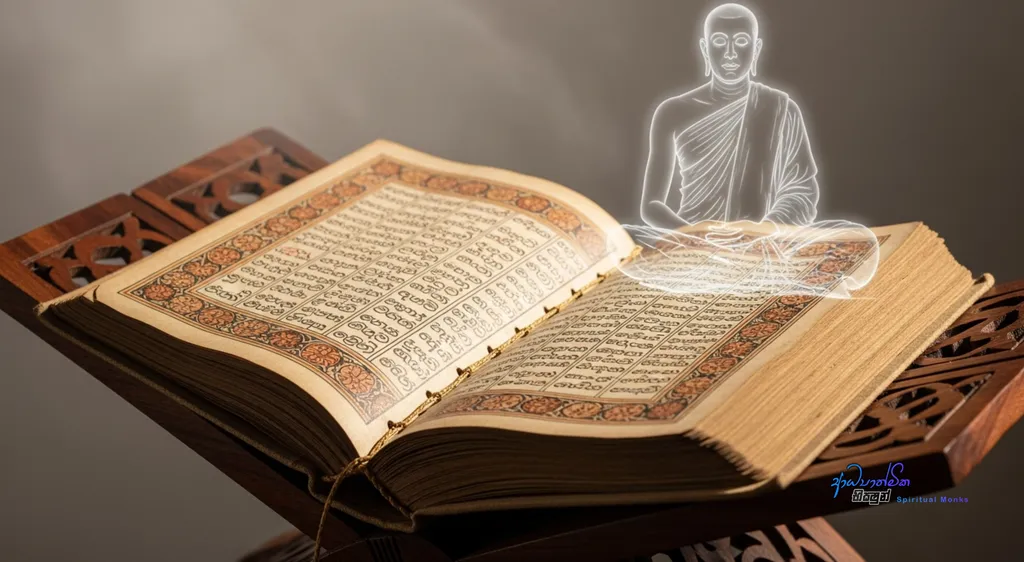
What Makes the Buddha’s Path Unique? The Ultimate Goal of Nibbāna
While these meditative states and abilities are remarkable, they are not the ultimate goal of the Buddha’s path. In fact, concepts like ethical conduct (Sīla) and deep meditation (Jhānas), and even the five higher knowledges (Pañcha Abhiññā), existed in the world even before the birth of Prince Siddhartha. The one truth that was lost to the world, the one that a Buddha rediscovers and teaches, is Nibbāna.
Nibbāna is the ultimate liberation. It can be described with many words: the attainment of profound peace, the complete healing of the mind, the end of the cycle of suffering (Saṃsāra), the extinguishing of the cycle of becoming. To attain the wisdom necessary to teach this path, a being must cultivate certain qualities over countless lifetimes. In Buddhism, we call these the perfections, or Pāramitā.
One who is on the path must fulfill these perfections. An advanced spiritual practitioner can even perceive whether they have fulfilled these perfections from the past. For someone without any spiritual practice, the concept of Pāramitā can seem like a fantasy.
This is why we often advise practitioners to focus on developing their minds now, in this life, without worrying about past perfections. Yet, their fulfillment is essential for the highest attainment. By engaging in practice now, you are completing them.
Don’t Just Read, Plunge In: Why Spiritual Practice is Non-Negotiable
Therefore, is reading books alone what we call Buddhism?
Ask yourself this question again and again. The answer will inevitably be no. There is something more. The Buddha always emphasized the need for practicality. He constantly advised the monks, “Be practical, bhikkhus!”
This doesn’t mean just telling stories or analyzing scriptures. It goes beyond Jataka tales or commentaries. It means taking these teachings and applying them in your life, moment by moment, second by second, through dedicated training. This is how you discover whether the Buddha’s words describe literature or a practical reality.
The Buddha used a powerful analogy in the Pacarana Sutta: to know the ocean, you must step into it. You cannot know its depths by standing on the shore. Likewise, to understand these teachings, you must immerse yourself in them through direct spiritual practice.
Otherwise, you become one of those people shouting opinions from the dry land. Everything in life requires practice. You cannot learn to read, become a doctor, an engineer, or an astronomer just from a book. You must apply the knowledge. It is the same with the mind.

Developing Equanimity: How to Approach Seemingly Unbelievable Teachings
You may find some events in the Jataka tales or other scriptures to be exaggerated or unbelievable. This is because you have not yet encountered such states, nor have you developed your mind to that level. We tend to measure everything against the limited capacity of our own minds. Someone who is developing their mind through spiritual practice must cultivate neutrality and equanimity, known in Pali as Upekkhā.
We must be balanced. When we encounter something, our mind cannot grasp, we should neither blindly believe nor reject it. Adopting this middle way is essential for understanding life, the world, and your own mind. When you act with this balanced perspective and engage in the practical application of the Buddha’s teachings, whether you call it Vipassanā (insight meditation), Sati Sampajañña (mindfulness and clear comprehension), or simply maintaining awareness, you will begin to experience things directly.
Through this spiritual practice, your mind develops, and many things become possible.
Why Don’t Spiritually Developed Beings Show Off Their Powers?
A common question arises: if people have these psychic powers (iddhi), why don’t they show them off to prove they are real? Why not perform ‘tricks’ for everyone to see?
You must not measure the mind of a developed person by the standards of your own. For a true spiritual practitioner, worldly things like money, fame, and sensual pleasures (kāma loka) are seen as base and of little value. They hold no attraction. The peace of their meditative states is infinitely more precious.
Why would they trade that for worldly gain?
They operate under different universal laws and a different value system. There are many such people in the world. If you were to meet a true hermit-sage in a forest or in the Himalayas, you might learn many things. But a truly developed person feels no need to display their abilities for show.
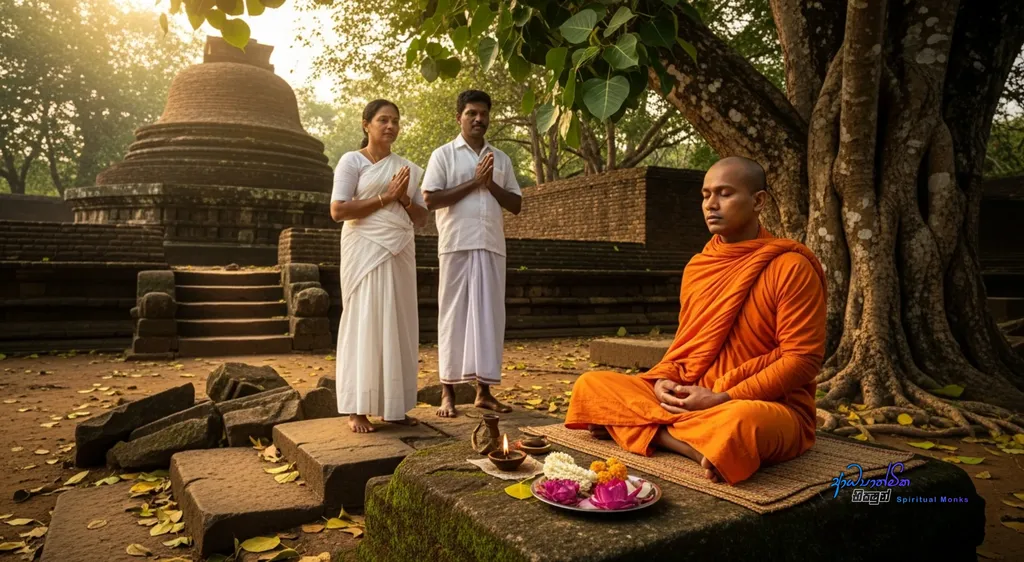
How to Know Who to Trust: Discerning True Spiritual Practice
So, how can you discern who to trust on this path? When you hear someone,even a monk,claim that the Buddha’s teachings are “just literature,” you must investigate their own spiritual practice. Ask yourself:
- Does this person live an ethical life? Do they even observe the Five Precepts (Pañca Sīla)?
- Are they developing their mind through meditation, whether it be for tranquility (Samatha) or insight (Vipassanā)?
- Can they teach a practical technique to help you reduce your own mental defilements? Have they attained any stage of the path, and if not, can they at least show you the way?
Someone who makes such claims is often judging from their own limited level. They are speaking from the perspective of the world of sensual desire (kāma loka). They may be a layperson or even a member of the clergy who is still attached to worldly comforts. If someone without a dedicated spiritual practice dismisses these teachings, you should consider their words more than ten times before accepting them.
Their opinion comes from a mind that has not yet done the work.
Your Invitation: Verify the Truth for Yourself Through Spiritual Practice
My intention in this teaching was not to simply highlight literary points from books. It was to show you that until you become a practitioner, these teachings can easily be dismissed as mere stories by someone who could plant that doubt in your mind. Your children, your parents, or even someone considered ‘educated‘ in your community might tell you this.
But now you know how to assess such claims. Look at their practice. Only a person who has no real spiritual practice would make such definitive, dismissive statements. A true practitioner remains open, knowing the vast potential of a developed mind.
The extraordinary events described in the scriptures, the feats of Arahats, Rishis, and those who have fulfilled their Perfections (Pāramitā), are possible.
They unfold based on one’s accumulated wholesome and unwholesome actions (kamma) and spiritual maturity. For a mind not yet developed, these truths can be difficult to bear.
Therefore, my final message is this: engage in the spiritual practice yourself. Practice Samatha and Vipassanā. Dive into the 84,000 teachings of the Buddha found in the Tripitaka not as a reader, but as an explorer. Confirm for yourself whether these things are mere literature or profound truths. You have the potential to develop these states of knowledge and vision (ñāṇa-dassana).
Depending on your past actions and perfections, these abilities will arise. Then, you can decide for yourself what is true.
May the power of the Buddha, Dhamma, and Sangha, the Triple Gem, give you the strength and energy to develop further and further in your spiritual practice, through both tranquility and insight. May you have the perseverance to walk this path.
We invite you to walk this path with us. Read our teachings, and most importantly, apply them practically in your own life. as you practice, questions will naturally arise. Please feel free to share your experiences and questions in the comments below, via email or contact form. I will do my best to offer guidance in future talks based on your progress. For now, begin this practice with an open heart and a mind free from expectation. Cultivate it correctly, and may you find the clarity and peace you seek.
Thank you for joining us. We hope this blog will be of great benefit to your spiritual journey.
May you all be well and happy.
May the blessings of the Triple Gem be with you all!


