


Categories: Buddhanussati: Practical Meditation
May the blessings of the Triple Gem be with you all!
Welcome. In our spiritual journey together, we have begun to explore a powerful practice known as Buddhānussati meditation, the recollection of the Buddha’s qualities. This path is a way to cultivate profound tranquility, or Samatha, and open the door to deeper meditative states, known as Jhāna. However, sometimes the instructions can feel complex, and you may encounter difficulties. This teaching is dedicated to clarifying those points and offering a simpler, more flexible approach.
Previously, we discussed four key elements for your practice:
- Recalling the qualities of the Blessed One, often using the traditional Pali chant known as the Itipiso Gatha.
- Understanding the meaning of these qualities.
- Focusing your mind on the point between your eyebrows, at the center of your forehead, to aid concentration.
- Visualizing a Buddha image that inspires deep reverence and calm within you.
For some, these four steps together can feel like too much. It might seem overwhelming. Please do not worry. The purpose of this reflection is to show you how to gently adapt the Buddhānussati meditation to fit your unique mind and capacity. Let’s simplify.
The Itipiso Gatha: Must You Contemplate the Meaning?
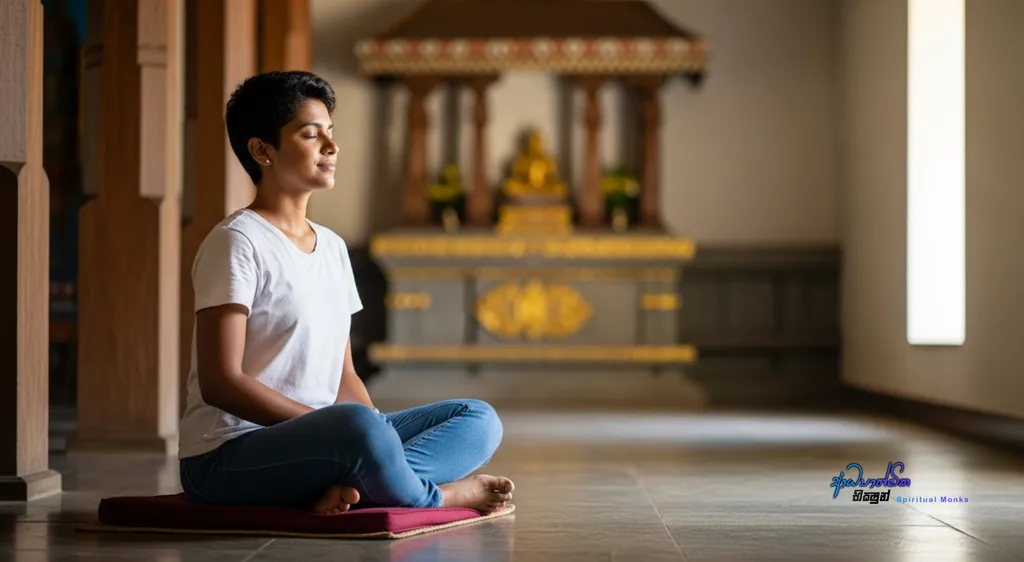
A common question arises: ‘Do I absolutely have to contemplate the meaning of the Itipiso Gatha while I chant it?’ The simple answer is no, it is not a rigid rule. In Samatha practice, the goal is not to force intellectual analysis. If you have listened to teachings or read about the Buddha’s qualities, the meaning may arise naturally in your mind as you chant. That is wonderful, allow it to happen.
Let this process be organic. As you mindfully recite the Itipiso Gatha from memory, the qualities it describes should surface on their own. Do not strain to make it happen. Trying to force the meaning adds another task for the mind, which can hinder the very concentration you are trying to develop. If your mind becomes too busy, it struggles to settle into the calm of Buddhānussati meditation. Therefore, what happens naturally is best.
Some practitioners are able to take one quality at a time, such as ‘Bhagavā’ (the Blessed One), contemplate its meaning in their own language, and then move to the next, like ‘Sammā Sambuddho’ (the Perfectly Enlightened One). This is a valid method if it works for you. Each person’s mind is different. But if you find this difficult, simply let it go. You can just recite the chant with your mind placed on the forehead, allowing any knowledge of the meaning to arise spontaneously. If nothing arises, do not be troubled. The simple act of reciting the sacred words is more than enough to begin.
Visualizing the Buddha: A Help or a Hindrance?
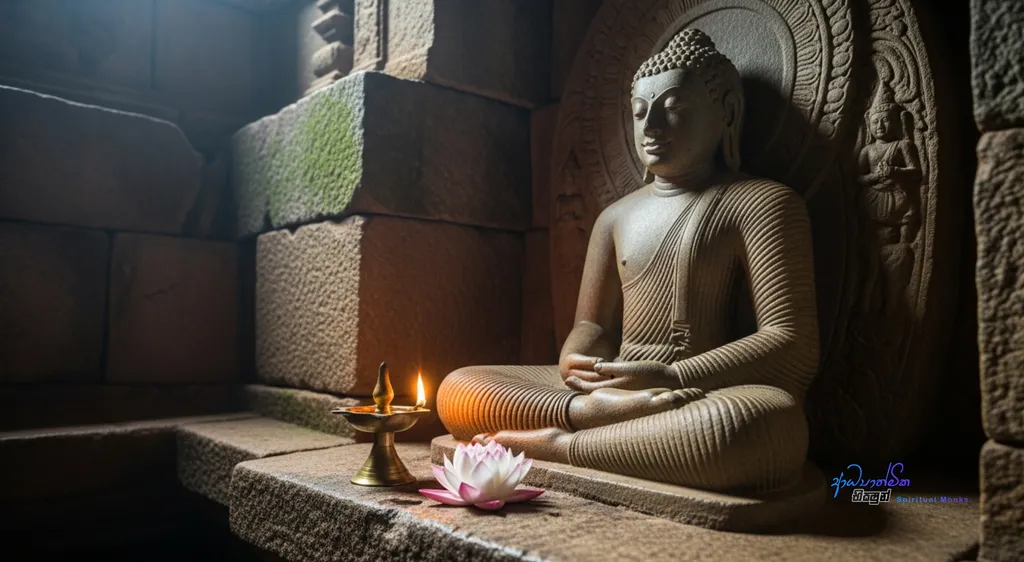
Another point of difficulty can be visualizing a Buddha image. You might feel it is a burden or that the effort makes the practice less peaceful. If visualizing a Buddha image feels difficult, it is perfectly alright not to do it. It is not a mistake. You can practice Buddhānussati meditation without holding an image in your mind. You can also practice without contemplating the meaning. Simply focusing the mind on the center of the forehead and reciting the Itipiso Gatha is a complete and valid practice.
The purpose here is to develop tranquility and enter the path of Jhāna. These techniques are foundational steps. As we progress, the methods evolve. So, if visualizing is a struggle, let it go. Your practice is not weaker for it. There are many paths to calm the mind.
So, let’s review the options so far:
- You can try to contemplate the meaning of the chant, either forcefully or by letting it arise naturally. In either case, you can choose to visualize a Buddha image or not.
- You can choose not to contemplate the meaning at all and not to visualize an image. Simply placing your attention on the forehead and reciting the Itipiso Gatha is a powerful practice.
Some people find that their mind settles very quickly by just reciting the chant. When they try to add a visualization, it feels like an obstacle. This is not a sign of a lack of faith or some spiritual impurity. Please, do not think such things. You may hear people without a deep understanding say, ‘You can’t visualize because your faith is weak or you are sinful.’ These are naive words. Do not be caught by them. The goal for the person who can visualize and the person who cannot is exactly the same: to concentrate and gain control over the mind, to prepare it for the next steps on the path. Do not overthink it; find what works for you.
The Power of a Single Word: Simplifying Further
We can simplify the Buddhānussati meditation even more. Instead of the entire Itipiso Gatha, you can choose a single word that represents a quality of the Buddha. In a previous teaching, I touched upon this. You could take just the word:
- Araham (The Worthy One)
- Sammā Sambuddho (The Perfectly Enlightened One)
- Buddho (The Awakened One)
- Vijjācarana-sampanno (Perfect in Knowledge and Conduct)
The word ‘Buddho’ is a very common meditation object, used even by forest monks in Thailand. They use this simple foundation to build their practice, whether for tranquility (Samatha) or insight (Vipassanā).
You can take one of these words and work with it. You might know its meaning or not. You can try to contemplate the meaning or let it arise naturally. Or you can simply repeat the word mentally while focusing on the center of your forehead. You can add a visualization of the Buddha if you wish, or you can practice without it if that feels easier. Gently repeat ‘Buddho… Buddho…’ or ‘Araham… Araham…’ These Pali words themselves carry a resonance that helps to focus the mind. This is a foundational technique to gather your attention and build concentration.

Your Path Forward: From Foundation to Jhana
Today, we have simplified the method because I understood that for many, the initial instructions felt like they involved too many steps. With these options, you now have several ways to build the foundation of your Buddhānussati meditation. Use the method that feels most comfortable and effective for you.
From this foundation, we can move towards the Jhānas, the deep states of meditative absorption, starting from the first Jhāna and moving higher. For some, as concentration deepens, a sign of light (known in Pali as āloka saññā) may appear. This is not guaranteed for everyone, but if it does, there are ways to work with it to proceed further. We have explored how to cultivate these light signs in another teaching focused on the practical steps of this meditation.
By engaging in this practice, you can gain a practical understanding of how to progress. The key is to practice and see what challenges arise for you, and then we can address them. This short teaching was intended to give you that clarity and confidence.
So, please try these methods and reflect on your experience. See what works to bring your mind to a state of calm and focus.
Closing Blessing
I will conclude this teaching for today. Through the power of the Buddha, the Dhamma, and the Sangha, the Triple Gem, may you all gain the wisdom to understand these points clearly and the ability to put them into practice.
We invite you to walk this path with us. Read our teachings, and most importantly, apply them practically in your own life. as you practice, questions will naturally arise. Please feel free to share your experiences and questions in the comments below, via email or contact form. I will do my best to offer guidance in future talks based on your progress. For now, begin this practice with an open heart and a mind free from expectation. Cultivate it correctly, and may you find the clarity and peace you seek.
Thank you for joining us. We hope this blog will be of great benefit to your spiritual journey.
May you all be well and happy.
May the blessings of the Triple Gem be with you all!.


