


Categories: Dhyana: Practical Training
May the blessings of the Triple Gem be with you all!
Today, as we continue our exploration of the spiritual life, I want to address an experience that many of you who practice meditation will encounter. It is a sensation of peace, a unique feeling that arises as we deepen our practice. This experience of the body feeling as if it is floating during meditation is common, felt at various levels of intensity, and many of you may recognize it as soon as you read these words.
Whether you are developing calmness through practices taught in Buddhism like Anapanasati (mindfulness of breathing), various recollection meditations, or even meditations on impurity, this feeling can arise. It is also familiar to those who follow our practical programs like the ‘Third Eye’ or ‘To the Brahma World’ meditations.
In fact, anyone who engages earnestly in what is known as Samatha meditation, practices aimed at calming the mind, may face this experience. This applies to both those studying within the Buddhist tradition and those exploring from outside of it.
Often, people ask, ‘Venerable Sir, when I meditate, my body feels like it’s floating. It feels incredibly light. Why does this happen? What should I do?’ This article aims to provide a clear understanding of this phenomenon. Once you grasp the principles behind it, you will be able to face this and other, even more profound, spiritual experiences without any confusion or fear.
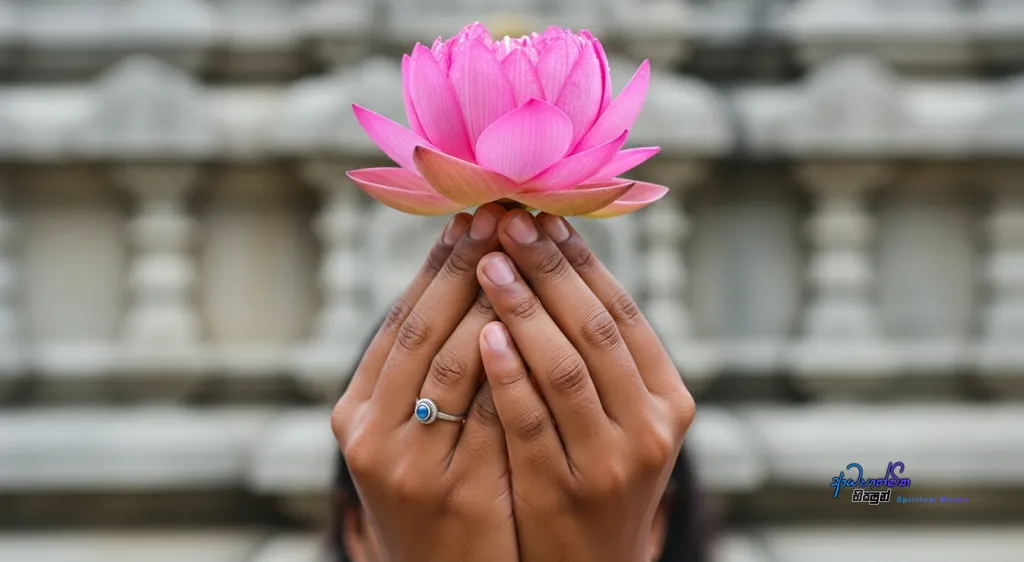
Why Do We Feel Light? Shifting Focus from Body to Mind
This sensation of floating during meditation is not limited by age, race, or religion; it is a near-universal human experience for meditators. While a few may not have felt it, the vast majority have.
The reason is simple. As you develop your mind and it becomes more unified or one-pointed, a state we call citta-ekaggata, your relationship with your physical body changes. When you sit for meditation, perhaps in the full-lotus posture (baddha paryanka) or another stable position, your attention gradually withdraws from the physical form. Normally, your awareness is directed outward through the five senses: seeing, hearing, smelling, tasting, and touching. You are focused on the external world and, to some extent, your own body.
It is worth noting that while the half-lotus posture (ardha paryanka) is common, especially for women, the full-lotus is often more stable and suitable for both men and women. The half-lotus can become uncomfortable. Regardless of the posture, when you dedicate a time and place to sit and cultivate concentration, your focus shifts.
For the first time in a day filled with outward-facing activity, you turn your attention inward, to the mind itself. While physical sensations may still arise, you learn not to give them undue importance, focusing instead on the object of meditation.
Uncovering the Mind’s Natural Freedom
Let’s take an example from our ‘Third Eye’ meditation program, where you focus your attention on the point between the eyebrows. As you hold your mind there, you might notice subtle sensations. More importantly, you will feel the mind trying to stay put, but it will also jump around. This is due to the mind’s habitual restlessness and the presence of mental defilements, known in Buddhism as kilesas. This is a normal part of the process.
Whether your object of focus is the breath in Anapanasati, a point on the body, or even an external object like a flame in a fire kasina meditation, the goal is the same: to achieve mental one-pointedness. As this concentration deepens, you begin to experience a hidden quality of the mind: a profound lightness and freedom. It is a state of ease and comfort, a wonderful sense of well-being.
For so long, this inner peace has been obscured by the constant storm of thoughts and the weight of the kilesas, greed, hatred, and delusion. When your meditation practice temporarily suppresses these defilements, or if you are practicing insight (Vipassanā) alongside calm and they begin to be uprooted, this natural lightness emerges.
This feeling of tranquility is not something created by the body; it is the mind’s own nature being revealed. This is the quality the Buddha referred to as passaddhi, or tranquility, which is mentioned in texts like the Girimananda Sutta.
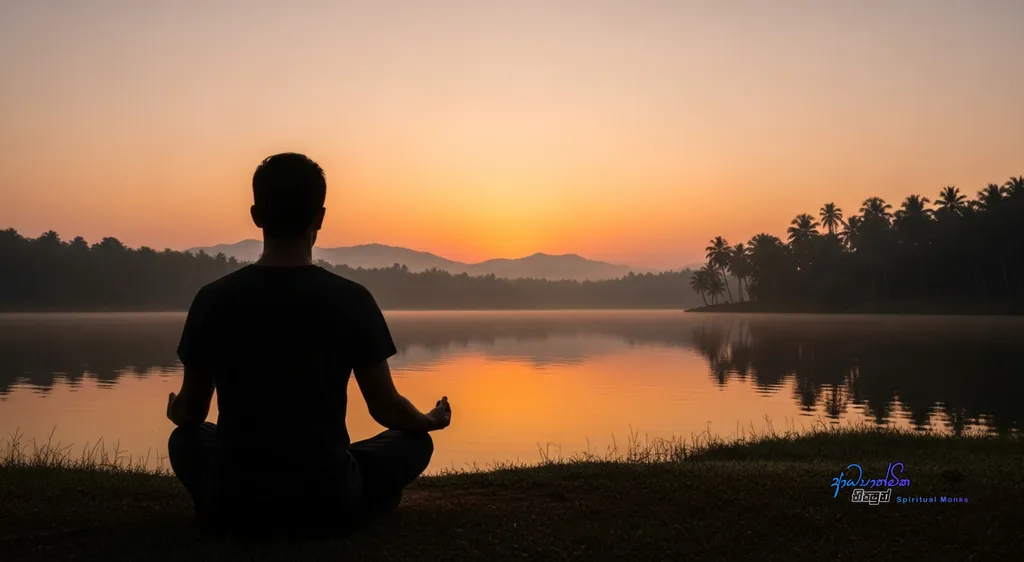
The Dance of Concentration: From Lightness to Attachment
The experience of the body’s weight is perceived by the mind. As you turn your focus inward during meditation, away from the physical form, the sensation of weight diminishes. This is when the freedom of the concentrated mind becomes palpable. You interpret this newfound freedom as ‘my body is floating’ or ‘my body has become light.’
This feeling is not caused by a god, a spirit, the Buddha, or any external force. It is your own mind experiencing its own inherent peace. However, the mind has a habit: it clings to pleasant experiences. As you feel this lightness, an attachment naturally arises. We can call this ‘spiritual craving’ (ādhyātmika taṇhā). The moment you cling, your attention shifts to the feeling of freedom itself. This is a crucial step. The practice is to use this very feeling as the new anchor for your concentration.
At this point, we often advise making a gentle resolution or aspiration (adhiṭṭhāna): ‘May I experience this peace and well-being more and more, free from spiritual craving.’ Repeating this a few times can help deepen your concentration. As your mind settles further into this state of lightness, your attention to the external world and the five senses fades even more.
If this state becomes powerful and stable, it can develop into a state of meditative absorption, known as a jhāna. In the beginning, however, this experience is typically a more basic state of concentration, or samādhi. To understand the difference more deeply, you can explore our previous teachings on the distinction between samādhi and jhāna.
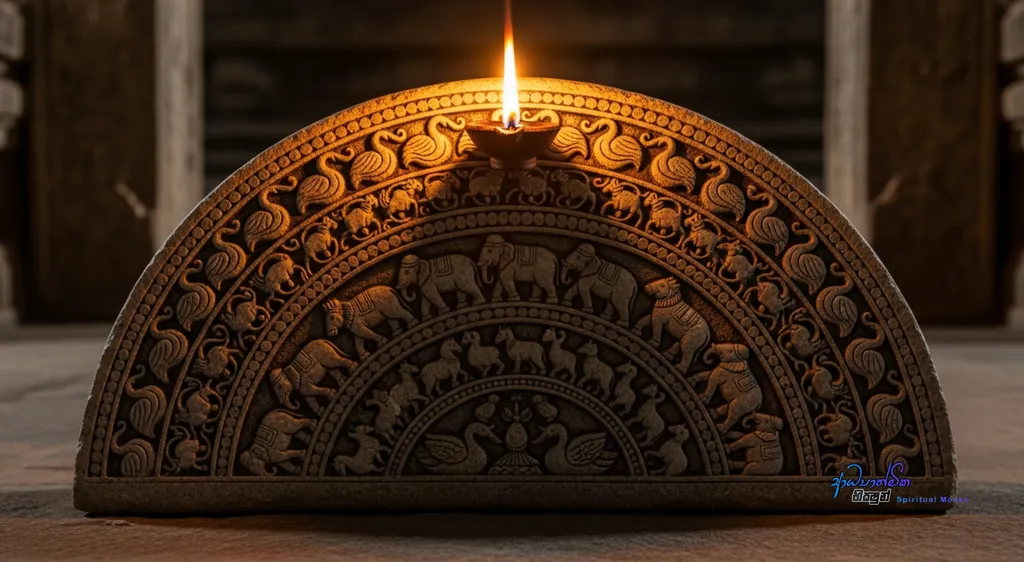
Navigating the Experience: The Oscillation Between Worlds
Once you understand this process, you no longer need to question what is happening. This understanding will help you navigate even deeper experiences of lightness in the future. As concentration strengthens, this feeling of freedom intensifies.
The mind, or consciousness (viññāṇa), is what continues to the next life if craving and defilements remain at the time of death. In deep meditation, the mind becomes very subtle. It can feel as if consciousness is detaching from the body, but it is not actually leaving, as some might mistakenly think of an out-of-body experience (mano kaya). Rather, your attention on the body has diminished because the pleasure of the tranquil mind is far more compelling.
For beginners, this state is often unstable. You might feel the lightness for five minutes in an hour-long session, and then the sensation fades and you become aware of the physical body again. Then, as your concentration returns, the body-sensation disappears, and the lightness comes back.
This oscillation is perfectly normal. It happens because your mind is wavering between two objects of attention: the physical body and the peaceful state. If you have practiced well in recent past lives, you might enter deep concentration very quickly. For most of us, it is a gradual process of wavering back and forth until the mind gains stability.
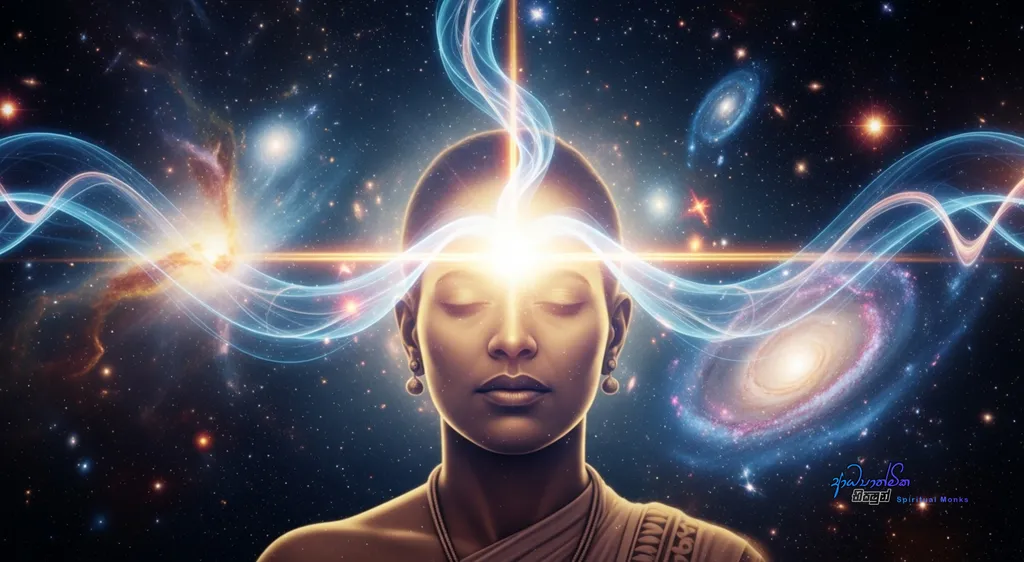
The Science of Serenity: How a Calm Mind Heals the Body
If you were to undergo medical tests while in this meditative state, you would find that your heart rate is normal, and all your internal organs and nervous systems are functioning harmoniously. Every process, including brain activity, is in a state of calm equilibrium. Our brain and body function optimally when we can maintain a state of inner calm.
This is not laziness; it is a poised, serene state. When the mind is calm, our use of the physical senses becomes more restrained and skillful. This sustained inner peace has profound health benefits. Many illnesses can be reduced. Even conditions like cancer, which is a form of uncontrolled growth, can be positively impacted because the body is brought into a state of natural balance.
Conversely, our mental states directly impact our physical health. When you feel lust, your blood flow, nervous system, and brain activity change in one way. When you feel anger, they change in another. These agitations contribute to illness and the weakening of our organs.
Of course, we all get older, even Buddhas and enlightened beings experience aging. But through meditation, we can cultivate a healthy mind and, consequently, a healthier body relative to others. An enlightened being does not collapse mentally when faced with sickness. In contrast, an ordinary person often suffers more from the mental collapse, the fear and despair, than from the physical pain itself. By cultivating a calm mind, we build a strong foundation for our spiritual practice and a healthier physical life to support it.

Beyond the Cushion: The Creative Power of a Tranquil Mind
As the mind becomes more settled and calm, your mental faculties are enhanced. The more you can maintain this state of lightness and tranquility, the more your memory and retention (dhāraṇa shakti) will improve. Your ability to think clearly will be sharpened. When you face problems, even in your worldly life, the correct answer will arise naturally from this clear state of mind.
Many of you have already experienced this, perhaps without fully understanding why. For creative individuals, poets, novelists, artists, songwriters, maintaining this calm, concentrated mind is like opening a floodgate of inspiration. Ideas will flow more freely. Similarly, an innovator or inventor who cultivates this mental state will find that new ideas and solutions emerge effortlessly, combining with their existing knowledge to create truly brilliant work.
What destroys this state? The kilesas, the defilements. Agitation, restlessness, and sensual desire scatter the mind and rob us of this freedom. That is why it is essential to either temporarily suppress the defilements through concentration or eliminate them through wisdom. Practicing mindfulness, such as silently watching the mind as we have taught, is immensely helpful for understanding and maintaining this peaceful state.

The Path Forward: Embracing Your Progress Without Fear
If you can maintain this feeling of floating during meditation and deepen it, your concentration can lead to the state of jhāna. If you were to maintain this state of freedom right up to the moment of death, it could lead to rebirth in a heavenly realm, a Brahma world. Therefore, it is important to cultivate it and not let it decline.
The primary cause of its decline is indulgence in sensual pleasures (kāma). This is something we must understand. The key takeaway is this: the experience of lightness and floating is a result of your defilements being either suppressed or eradicated.
How can you tell the difference? If you stop meditating for some days and the old unwholesome habits and emotions return, it shows the defilements were only suppressed, not permanently removed. This is a valuable insight for accurately understanding your own progress.
Finally, many people become afraid when their attention on the physical world fades. This is a natural reaction to the unknown. But as you have read, there is nothing to fear. It is simply a sign of your own mind becoming concentrated. Understand that the experience will be different for everyone in its intensity and duration. With this practical knowledge, I hope you can continue your journey with confidence, understanding your own experiences as they arise.
I will conclude this teaching for today. May the power of the Buddha, Dhamma, and Sangha, the Triple Gem, bless you to understand these matters well and to develop your own practical spiritual life.
We invite you to walk this path with us. Read our teachings, and most importantly, apply them practically in your own life. as you practice, questions will naturally arise. Please feel free to share your experiences and questions in the comments below, via email or contact form. I will do my best to offer guidance in future talks based on your progress. For now, begin this practice with an open heart and a mind free from expectation. Cultivate it correctly, and may you find the clarity and peace you seek.
Thank you for joining us. We hope this blog will be of great benefit to your spiritual journey.
May you all be well and happy.
May the blessings of the Triple Gem be with you all!.


