


Categories: Dhyana: Practical Training
May the blessings of the Triple Gem be with you all!
In our exploration of the spiritual life, we often encounter practical experiences during meditation that can be confusing. Today, we will delve into one such experience that many of you have likely faced, while some may not have yet. If you haven’t experienced this, please don’t worry. It is not a problem, nor is it a sign that your path is incorrect. It is simply one of many experiences that can arise.
It is crucial to understand this particular state because, without proper insight, many practitioners mistakenly believe that the sensations they feel are hindrances or unsuitable for their meditation practice. This misunderstanding can cause them to disrupt their own spiritual journey. We’ve seen many people think this way, so let’s bring some clarity to the topic.

Embracing Every Experience on the Path
Let me state this clearly and concisely: if you see, feel, or understand something during your practical meditation, none of it is inherently ‘wrong.’ These are natural spiritual phenomena that arise as we travel the path. We must realize they are not things that lead us astray. There is truly no such thing as a ‘wrong’ experience in meditation. This idea is a misconception we have created in our minds and society, one that sabotages our spiritual progress.
The focus of today’s teaching, however, is on a specific state that feels like meditation sleepiness but is, in fact, a form of deep concentration. Many people who begin meditating, whether in their first few weeks or after several months of practice, have told me, ‘Venerable Sir, I experience a state that feels just like sleepiness.’
They ask what it is, how to know if they have truly fallen asleep, and what it means for their practice. I have offered personal guidance to many who have asked, and they have successfully resolved their confusion. Now, I feel it is important to share this understanding with all of you.
What is This ‘Sleepy’ State? Understanding Samādhi
When we meditate, especially practicing calming techniques, we can enter a specific state of concentration. In Pali, the language of the early Buddhist texts, this is called Samādhi. For many, this state of Samādhi feels like falling asleep. Your senses the eye, ear, nose, tongue, and body seem to become imperceptible. Your mind, too, feels as if a switch has been turned off. The closest word to describe it is feeling like you’ve drifted into sleep.
Imagine you are on a long journey in a vehicle, feeling tired. For a few seconds, you suddenly fall asleep and then jolt awake. This is very similar to the state of meditation sleepiness that some practitioners experience. It is crucial to understand that this is not something to fear, nor is it a mistake in your meditation.
This is a natural state of Samādhi that arises during calming meditation, known as Samatha bhāvanā. It is a mental energy that, when understood, actually helps to develop your spiritual journey. As we try to unify the mind, it can enter a subtle state for a few seconds where everything goes quiet. This is the mind’s own power emerging.
A Common Misunderstanding: Repetition vs. True Insight
This state of concentration that feels like meditation sleepiness is a form of mental energy. If it becomes deeply unified, it can lead to even more powerful states of concentration beyond simple Samādhi, such as the meditative absorptions known as the Jhānas, which we have discussed in other teachings. However, in the beginning, most people only experience it for a few seconds.
Interestingly, this also happens to those practicing what they believe to be insight meditation, or Vipassanā. They might take a word from the teachings like nāmarūpa (mind-and-matter) or pañcupādānakkhandhā (the five aggregates of clinging) and repeat it over and over. They might chant ‘Anicca, Anicca, Anicca‘ (impermanence), ‘Dukkha, Dukkha‘ (unsatisfactoriness), or ‘Anattā, Anattā‘ (not-self). They believe this repetition will lead to enlightenment.
However, repeating a word is not insight. Insight, or Vipassanā, is the work of wisdom, of understanding the true meaning behind the words with sustained mindfulness. Merely repeating them cultivates concentration, or Samatha. I mention this because these individuals also experience the ‘jolt’ of Samādhi and often misinterpret it.
The Danger of Mistaking Samādhi for Enlightenment
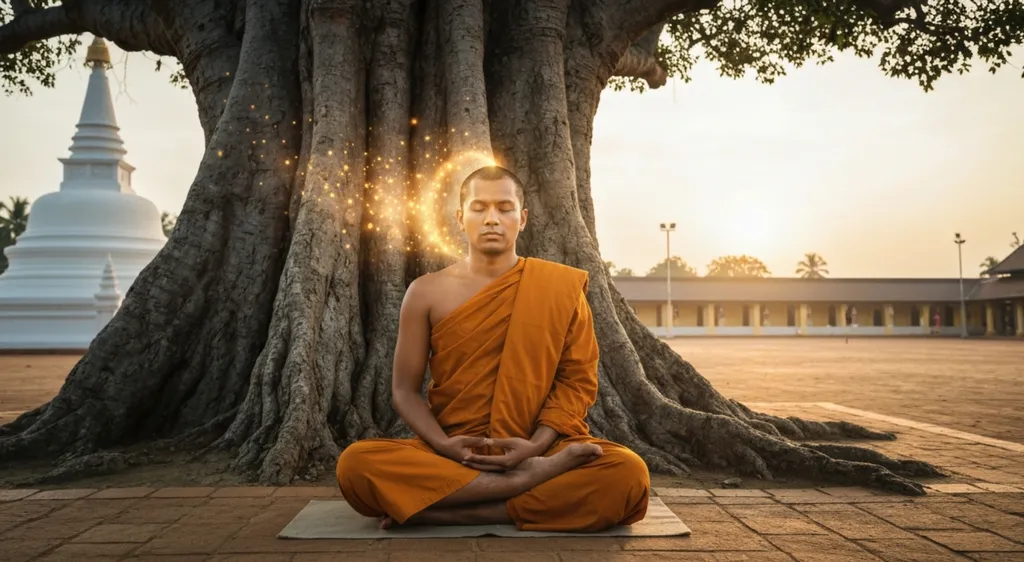
This misinterpretation can be a significant pitfall. When someone experiences that sudden, powerful moment of quiet, like a flash of lightning, they might think, ‘This is it! I have seen a glimpse of Nibbāna! I have entered the path to stream-entry!’ They may believe they have experienced a moment of fruition attainment, called phala samāpatti. This is a form of delusion, or wrong view.
Often, they lack the understanding, or perhaps their teachers lack the practical experience to guide them correctly. They are told, or they convince themselves, they have reached an attainment. If you are someone who has been told you are a stream-enterer (a Sotāpanna, the first stage of enlightenment), I urge you to examine yourself honestly over a long period, a year, or even more.
Ask yourself: Do I break the five precepts? Has my faith wavered, or is it unshakable? Are the qualities of a noble disciple present in me? You must check for yourself, without being deceived by a teacher, by yourself, or by your unwillingness to admit you are not yet there. Don’t let your spiritual journey become lost or shipwrecked by such views. This self-examination is critical.
A Practical Test: Distinguishing Drowsiness from Deep Concentration
So how can you know for sure if you are experiencing real drowsiness or this state of meditation sleepiness which is actually Samādhi? Here are some practical ways to investigate for yourself over a few days:
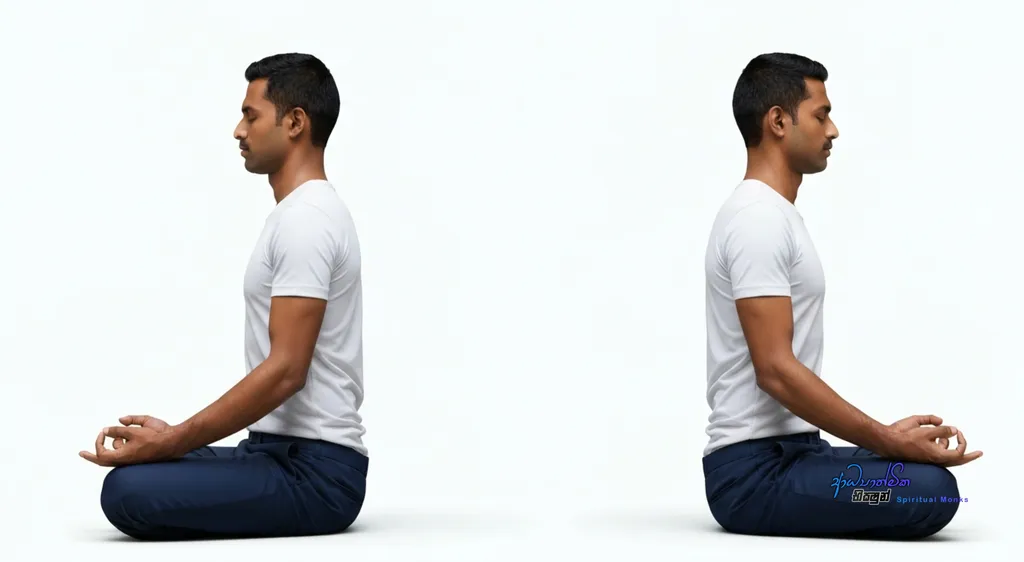
First, pay attention to your posture. We always advise meditating with a straight back. If it becomes uncomfortable, you can lean toward a wall for a moment to rest, but try to maintain a small gap, not slumping against it. Sit in a stable posture, such as the half-lotus or full-lotus. Only those with significant physical ailments or of advanced age should use a chair.
With your neck, head, and spine held erect, observe what happens when the ‘sleepy’ state comes.
- If it is ordinary sleep: Your neck will inevitably droop forward without you realizing it. You will jolt awake and have to straighten your head again. You might even find yourself drooling, a common occurrence during sleep. Or your eyes might fly open as you are startled awake. If these things happen, you can be certain it is not Samādhi. It is genuine drowsiness caused by fatigue, a heavy meal, or simple laziness.
- If it is Samādhi: Despite the senses shutting down, your posture will remain firm and erect. You will not slump. The jolt will be a clean shift of awareness, not a clumsy physical awakening from a slouched position.
By observing these signs, you can understand the nature of your experience.

Using Resolute Intention (Adhiṭṭhāna) for Clarity
Here is another powerful tool you can use: the power of intention, or what we call adhiṭṭhāna in Pali. Before or during your meditation, make a clear resolution in your mind. Say to yourself two or three times:
‘If this state is merely sleepiness, may I be able to understand it as such. If this is a true state of Samādhi, may this concentration deepen and grow.’
Make this dual determination. If what you are experiencing is a developed state of mind the deep concentration that feels like meditation sleepiness you will notice it begins to last longer. What was thirty seconds may become thirty-five, forty, or fifty seconds. It will grow systematically. If it is just ordinary drowsiness, this resolution will not cause it to deepen. Instead, the feeling will likely dissipate or you will simply fall into a normal, slumped sleep. This practice of adhiṭṭhāna can bring great clarity.

Conclusion: A Stepping Stone to Deeper Practice
This explanation should help you develop your spiritual life. You can now better understand the state that feels like meditation sleepiness. It is a preliminary state of Samādhi that we experience for a few seconds because our mind is not yet stable enough to sustain it. By following this guidance, you can work with this experience practically and wisely.
With these words, I will conclude today’s teaching. May the power of the Buddha, the Dhamma, and the Sangha the Triple Gem bless you to understand these matters clearly and continue to practice with wisdom and diligence.
We invite you to walk this path with us. Read our teachings, and most importantly, apply them practically in your own life. as you practice, questions will naturally arise. Please feel free to share your experiences and questions in the comments below, via email or contact form. I will do my best to offer guidance in future talks based on your progress. For now, begin this practice with an open heart and a mind free from expectation. Cultivate it correctly, and may you find the clarity and peace you seek.
Thank you for joining us. We hope this blog will be of great benefit to your spiritual journey.
May you all be well and happy.
May the blessings of the Triple Gem be with you all!.


