


Categories: Be Happy 24 hours
May the blessings of the Triple Gem be with you all!
In our spiritual exploration, we often talk about the practice of mindfulness. Today, we will explore a practical aspect of this journey: understanding the past and the future. What is the nature of the past? What is the future? And what incredible results can we achieve by letting go of our attachment to them?
This is not just a theoretical discussion. If you practice what we explore here until the very end of your life, the rewards will be immense. Every second that passes belongs to the past. In Buddhism, we speak of this in even finer terms, using the word kshana, which refers to a moment far shorter than a second. With every one of these fleeting moments, our experience is added to the past.
If you are fifty years old, you have a fifty-year past filled with connections, relationships, attachments, and aversions. Your life has been a collection of happiness and sorrow, of liking and disliking. Understanding how to relate to this history is the key to freedom.
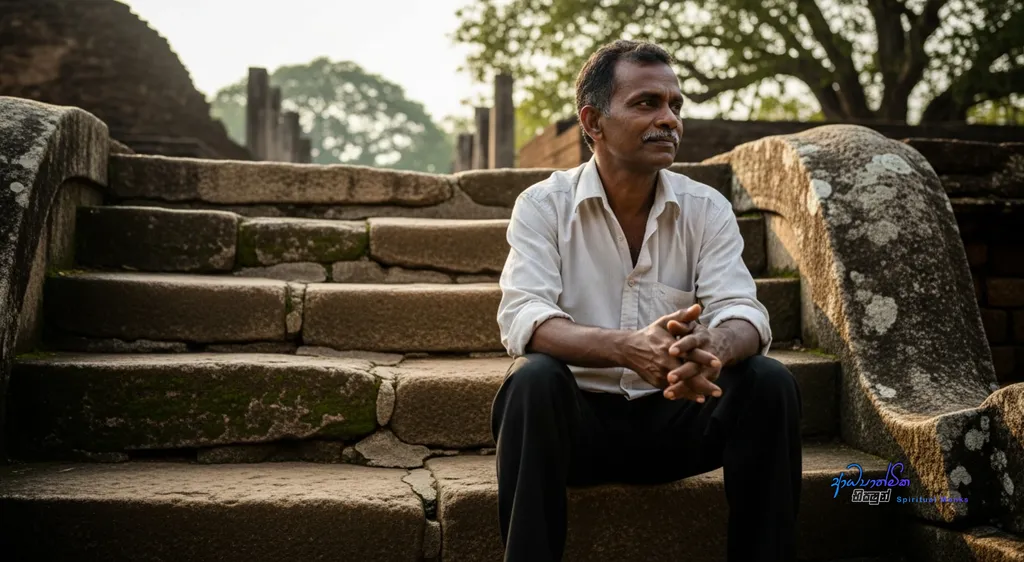
The Haunted Present: How Memories Shape Our Reality
The things that have happened in our past naturally come to mind in the present. If we experienced great joy, that memory can surface again and again. Likewise, if we did something wrong in the past, we might find ourselves filled with regret in the present moment. This is a common form of suffering and a major obstacle to peace. The practice of letting go of the past is essential to overcome this.
But what is the ‘present moment’? If we practice mindfulness deeply, we realize there is no solid ‘present’, not even for a second. The future rushes in and immediately becomes the past. Conventionally, we think of the present as this day, this hour, or these few minutes. But in reality, it’s a continuous flow. This is a practical truth you can discover for yourself through mindfulness practice.
Our past life holds many things we may be attached to or have an aversion to. Perhaps you recall a time you spoke harshly to your mother, using words that were appropriate or inappropriate. Afterward, regret follows. This past experience can confuse the mind, creating pressure and making it difficult to live in the present.
It becomes a barrier to our work, our studies, and our worldly life. The past can feel like a heavy burden, constantly reminding us of our mistakes and causing mental pain. It digs up old wounds and torments us. How much of a torment is your past? How many such memories do you hold onto?

The Escape from Pain: Why We Stay Busy and Distracted
Events from yesterday, last week, or years ago all belong to the past. When a difficult, embarrassing, or sorrowful event occurs, we can find ourselves replaying it endlessly, suffering in the present for something that is already gone. This shows that we haven’t truly understood or made peace with our past.
Some might think, “My past doesn’t bother me. I have no regrets.” This is often the perspective of those who are young, physically strong, and very busy. When the mind is occupied with external tasks, it can temporarily evade the echoes of the past.
However, this is not a permanent solution. The problem arises when we are no longer busy. When we become physically weak, when we retire, when we are alone, when our relationships fall apart, or when our income sources dry up, in these moments, the mind will bring the past back with immense force, creating intense pressure. The practice of letting go of the past becomes crucial in these times.
These memories can come from any angle of your life: your job, your education, your friends, your family, parents, spouse, children, siblings. Anything related to your worldly life can be brought up by the mind to cause you distress. This is a universal experience for all human beings, and even for divine beings, or devas, in other realms.

Two Sides of Past Suffering: Regret and Nostalgia
The suffering from the past isn’t just about regret over negative actions. It can also arise from positive memories. Imagine someone who lived a joyful life, full of fun, friends, and financial success. Now, in the present, perhaps due to retirement or ill health, they can no longer live that way. They remember their happy past and feel sorrow because the present doesn’t match it. They are trapped by nostalgia, which is another form of attachment.
So, whether your past was filled with regretful actions or joyful experiences that are now gone, the result can be the same: unhappiness in the present moment. You might find yourself worrying about your children and grandchildren, your property, or reminiscing about past pleasures. You might be haunted by a serious transgression, or even just a harsh word spoken to a loved one. Simply thinking about these things can become a source of affliction.
If you are not experiencing this now, it is likely because you are busy or physically strong. But when the mind has a free moment, perhaps just before you fall asleep, it will bring these things up and cause you mental distress. This is not caused by an external force; it is the natural functioning of our own minds. It is a process based on cause and effect, what the Buddha called Paticca-samuppāda, or Dependent Origination. The things we have built up ourselves come back to trouble us.
The Time to Prepare Is Now
Understanding the mind’s workings is a profound experience, especially for those who meditate. This re-emergence of the past is guaranteed to happen to everyone, whether you meditate or not. It will happen when you get old, become bedridden, or suffer an accident. The Buddha taught us to begin our training before that happens.
When you start a mindfulness practice, these past memories will begin to surface even while you are still young and healthy. This is part of the process. Starting this practice when you are old and physically weak is much more difficult, though still a great blessing if the opportunity arises.
Many people in the Buddha’s time attained liberation, or Nibbana, even in old age. However, if you don’t learn how to face these memories, they will torment you day and night. Many elderly people can’t sleep at night; their bodies are afflicted with pains, and their minds are plagued by past regrets and sorrows. These physical and mental pains keep them awake.
If you face this difficult time without any training, how will you cope? It will be an incredibly difficult state, and your mind at the moment of death, the cuti-citta, could be filled with turmoil, leading to an uncertain journey in the cycle of rebirth, or samsara. That is why we are encouraged to start training the mind now, regardless of age, caste, religion, or wealth. The practice of letting go of the past is a preparation for life’s greatest challenges.
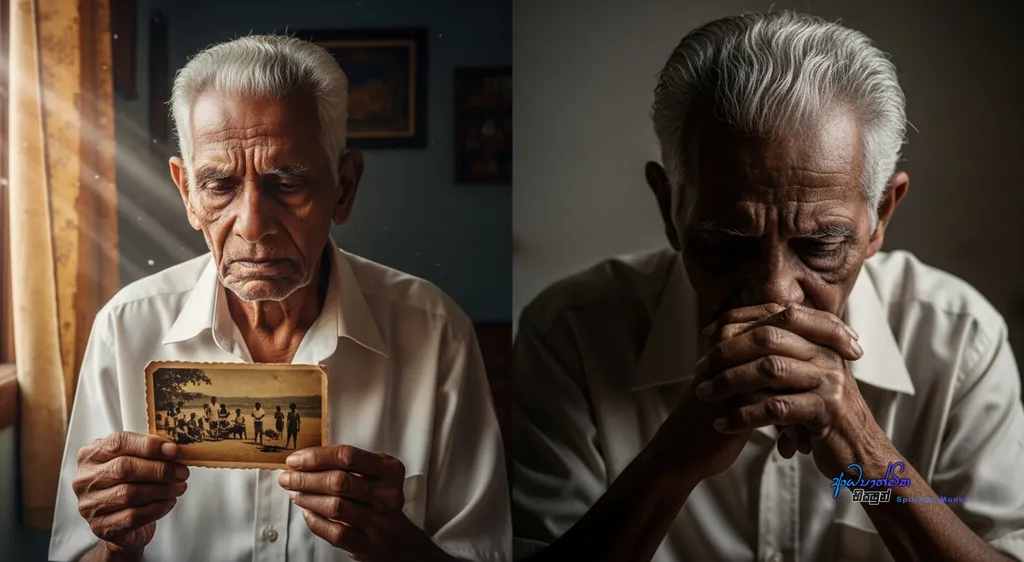
The Buddhist Solution: The Practice of Mindfulness (Sati)
When you begin to practice, all the past issues we’ve discussed will start to flow into your awareness. Our series of teachings on mindfulness is designed to give you the instructions on how to face them. How do you maintain mindfulness, or Sati, in those moments?
Through this practice, you can identify the thoughts coming from the past and gradually release any attachment or aversion you have toward them. Think about it: many people ruminate on the past, like a cow chewing its cud. We replay pleasant memories to feel happy.
At the same time, there are unpleasant memories we desperately try to avoid. But the nature of the mind is to bring up the very things we resist most. You can’t force them away.
Many people use tactics to escape this: they dive into busy work or seek distractions, fearing they will go mad. This is a temporary strategy. It doesn’t solve the root problem, which will follow us through lifetimes if we are reborn as humans. However, if we make an effort in this life, we have the potential to end the cycle of suffering, to reach a state of non-rebirth. By truly letting go of the past, we can live happily in the present. The first step in this Buddhist mindfulness practice is simple: learn to watch your mind in silence.
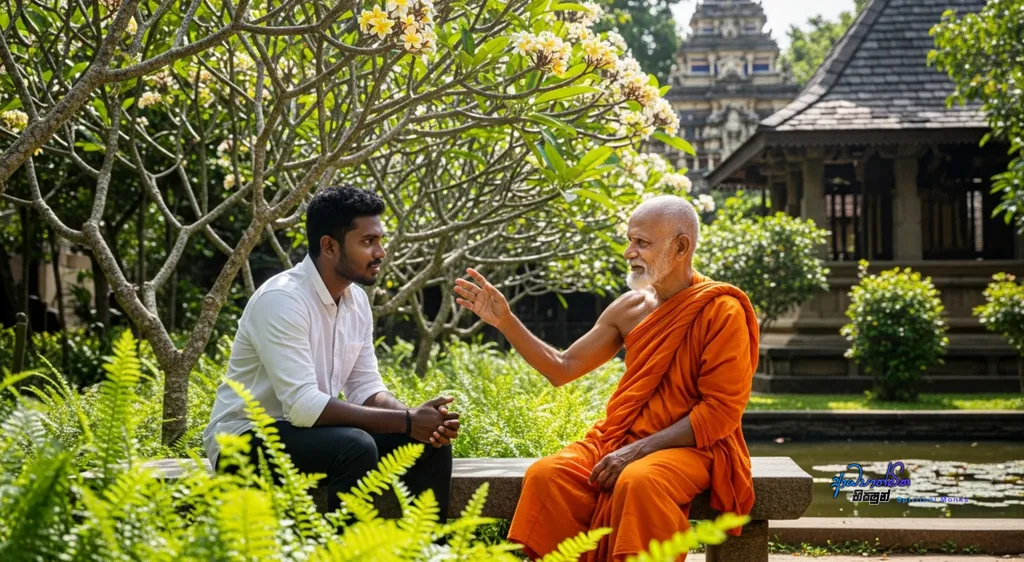
Living in the Past vs. Remembering the Past
As you practice, you will start to see whether you are truly living in the present moment. With mindfulness, which we call sati-sampajañña (mindfulness and clear comprehension), you’ll realize that most of the time, you are living in the past. It’s not the remembering of the past that is the problem. Even enlightened beings like the Buddha and the Arahants can remember the past. The problem is our attachment and aversion to it. We get stuck in it.
This clinging and resisting prevents us from being mentally at ease and smiling in the present. If an event from yesterday, or even a moment ago, is causing you pressure, making you unable to function, it means you are not living in the present; you are living in the past. It could be a past relationship, a conversation, or an event that fills you with aversion right now. Enlightened beings do not have this problem.
They can recall the past when needed, but it does not come back to torment them. Imagine the peace of having such a mind. This is the peace that people seek through distractions like alcohol, drugs, or entertainment. They listen to music, watch movies, and go on trips to find some mental relief and forget the painful past. But these are all temporary fixes. When the trip is over or the intoxication fades, the mind returns to its old state.
How to Practice: Watching Thoughts Without a Fight
Is there a real escape? If we only rely on temporary solutions, we are trapped. Instead of running, we must turn and look. Through the practice of mindfulness, you will begin to feel what a relief it would be if these past thoughts didn’t constantly bother you. But the key is this: you cannot forcefully stop them. I know this for a hundred percent certainty. We cannot forcibly stop thoughts about our past from arising.
The only thing we can do is to recognize them with mindfulness. When a past thought comes, we identify it with clear comprehension: “This is a past thought.” Then, we observe our reaction. Do we enjoy it, or do we dislike it? If we enjoy it, it means we are attached. If we dislike it, feel regret, or sadness, it means we have aversion. We must recognize with clear mindfulness: “I am attached to this thought,” or “I am in conflict with this thought.”
Observe the physical and mental discomfort that this conflict causes. See how it prevents you from performing your daily tasks. By looking at it in this way, again and again, you will begin to see for yourself the truth of what the Buddha taught. You will directly experience its reality within yourself.

Reducing the Weight of the Past
Does this practice truly eradicate the defilements, the attachments and aversions? Yes, it does. It happens when we take a single past thought, whether one we like or dislike, and begin to study it. How does this thought arise? How does it torment me? How long does it stay? How much headache and mental pressure does it cause? By engaging in this practical, continuous study with mindfulness, the defilement slowly begins to be eliminated.
Imagine a thought has a weight of 100 kilograms. As you observe it with wisdom, you will feel that weight begin to decrease, to 90kg, then 85kg. This gradual reduction is the eradication of defilements. For some, especially those who have practiced in past lives, this can happen very quickly.
As you practice, you will find your own unique way of working with the mind, just as a driver learns the rules but then drives according to the specific conditions of the road. But never set a deadline. Thinking, “I will get rid of this thought in a certain amount of time,” is like adding another 5kg to the 100kg burden. It increases the pressure and the time it takes to find release.

The Danger of Forcing the Mind
Remember, every time you cling to a pleasant memory or resist a painful one, you are increasing its weight. When you try to forcibly stop an unpleasant thought, you are creating more aversion, more conflict. The thought feeds on this resistance and grows stronger. Therefore, when observing the mind, never try to forcibly engage with or eliminate any thought. Do not think, “I will stop this, I must stop this.” We are only here to understand the natural process with mindfulness. This understanding is the growth of wisdom, or paññā.
Attempting to forcibly stop thoughts only strengthens them. It makes the complete eradication of defilements impossible. This is a common mistake. People say, “I never used to have these thoughts, but now they are tormenting me. I need to get rid of them quickly.” This very impatience adds more weight to the problem.
This is why in meditation, we advise not to try to stop thoughts. The effort to stop them only causes more to arise, making it impossible for the mind to become settled. Through this practice, you can find a deep happiness in the present moment, even just sitting in a chair with your eyes open.

Freeing Yourself from the Future: Plans Without Chains
Now, let’s talk about the future. For someone deeply engaged in practice, like a monk living a simple life, there is very little thought of the future. There are no grand plans or expectations. For a monk on alms-round, the plan for tomorrow is simple: wake up, go for alms, return, and continue the practice. There is no fear of death; the mind is established in a different state of peace. But for you, living a worldly life, the future is a constant presence.
If you are a student, a professional, or someone hoping to get married, your mind is filled with future plans. You work to save for a wedding, to care for your parents, or to secure your education. You study to get a good job and build a good life. You have hopes for your children, for travel, for a better life. These future thoughts arise just as powerfully as past ones. This is particularly difficult when you try to practice concentration meditation, or samatha bhavana.
Many people say, “Venerable Sir, I can’t concentrate because my future plans keep popping into my head.” They are thinking about the car they want to buy, the house they are building, or how to protect the things they already have, like a relationship. These thoughts prevent the mind from settling. Just as with the past, we cannot forcibly stop future thoughts. The goal is to eliminate the attachment and aversion towards them.
The Sweet Poison of Daydreams
Aversion to the future arises when we fear our plans will fail, causing us sadness and pressure. Attachment arises when we feel impatient for our plans to succeed, like wanting to move into a house that is still under construction. These thoughts can come at any time, even when you’re taking a shower. Are you truly living with ease in the present?
Some may think, “What is this peace without past or future? It sounds lonely.” This feeling of loneliness is itself a form of aversion, a fear measured against a past where we were not alone. Don’t fall into this comparison. The reason you cling to the past and future is that you don’t yet know the profound peace of the present. If you did, you would let them go. This is what the Buddha and the great enlightened masters teach: let go and see what happens.
Many people, especially the young, spend their time daydreaming, ‘mano gahanava’ as we say. They get lost in future fantasies, fueled by the beautiful things they see on social media. They plan their whole future and then wait for a lottery win. They live in these dreams. But the Buddha taught that if you were to die in a moment of greedy daydreaming, your death-consciousness would be rooted in craving, which could lead to an unfortunate rebirth, perhaps in the realm of hungry ghosts, or pretas.
The Mindful Way to Plan: The Mental File
Hearing this, you might ask, “But how can we live without future hopes?” The Buddha never said you should not buy a car or achieve worldly success with your honestly earned money. The path is more subtle. You can have a goal, like passing an exam. You should study diligently for it. The problem is not the goal, but the constant rumination: “I will pass, and then I will do this and that…” This repetitive thinking is attachment. If death were to occur in that state, it would be problematic.
The alternative is not to become lazy or unmotivated. If you believe in karma and the teachings of the Buddha, you have a responsibility to cultivate both your worldly and spiritual life. You can set a goal, a single point of focus. Have the goal, but do not constantly daydream about all the fantasies surrounding it. Make your plan, and then mentally place it in a file and set it aside. A monk with a developed mind does this.
If he has a meeting at 9 a.m. tomorrow, he doesn’t spend all night thinking about it. He plans for five minutes, puts the mental file away, sleeps peacefully, and lives in the present. When it’s time for the meeting, he simply retrieves the file. This is how you should manage your future.
The Ultimate Reward: Living with Unshakeable Peace and Freedom
If you practice this way, you will discover how much happiness and freedom there is in the present moment. You can still build your house, buy your car, travel, and pass your exams. But you will do it from a place of mental peace, enjoying the present while your future plans rest quietly in their file.
When you constantly think about a future goal, its mental weight increases. A plan to buy a car starts at 10kg. Tomorrow you add a modification, and it becomes 15kg. The weight grows and grows. If you achieve the goal, you are happy. But if you fail, the crash is devastating because the mental investment was so huge.
Isn’t it better to keep the file at a light 5kg? Plan it, and then practice mindfulness to see the attachment and aversion that arises, just as you do with the past. Then, whether the plan succeeds or fails, you will not be shattered. The simple teaching of the Buddha is this: plan for the future, and then return to the present to live. Most people plan for the future and then stay there, living in a dream.
When you understand this, you will see how much peace is available right now. This practice is a divine medicine for those who have been battered by the past and anxious about the future. To realize this now, at whatever age you are, is a sign of immense merit. It means you have a great capacity for wisdom and have likely practiced this path before.
I trust that these points have provided you with the practical understanding you need to walk this path. Practice this, and you will find a freedom you never thought possible.

We invite you to walk this path with us. Read our teachings, and most importantly, apply them practically in your own life. as you practice, questions will naturally arise. Please feel free to share your experiences and questions in the comments below, via email or contact form. I will do my best to offer guidance in future talks based on your progress. For now, begin this practice with an open heart and a mind free from expectation. Cultivate it correctly, and may you find the clarity and peace you seek.
Thank you for joining us. We hope this blog will be of great benefit to your spiritual journey.
May you all be well and happy.
May the blessings of the Triple Gem be with you all!.


