


Categories: Eradicate the Fear of Meditation
May the blessings of the Triple Gem be with you all!
Today, through our spiritual teachings, I wish to illuminate a common yet powerful obstacle on the spiritual path: fear. This is a primary challenge many of us encounter when we begin to meditate, a barrier that can hinder our spiritual development. In the journey of Overcoming Fear in Meditation, we come to understand that those who have walked this path and experienced its fruits firsthand know that fear is not conducive to our progress.
In this article, we will explore how fear becomes an obstacle and, more importantly, how we can move beyond it to continue our journey with strength and clarity.
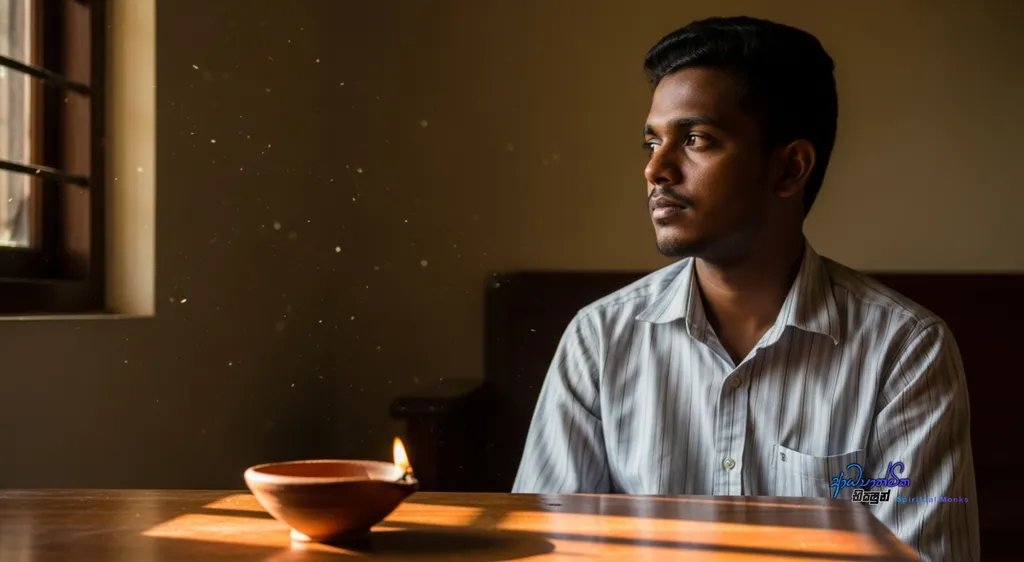
The First Barrier: Fear from the Outside World
When you first embark on your spiritual journey, you will likely encounter fear, not from within, but from the outside world. Society is filled with various opinions and stories about meditation, often presented from a fearful perspective. The most common form of this is discouragement from those closest to us: our parents, friends, partners, and relatives.
The first thing you might hear is a warning: “You’ll go crazy if you meditate.” This is a primary tactic, whether intentional or not, that instills fear about the practice of meditation itself. It frightens people away from both types of Buddhist meditation: Samatha (which develops calm and concentration) and Vipassana (which cultivates insight). If you allow this fear to take root, your practice is halted before it even begins. The motivation to even sit for meditation vanishes.
Some may offer well-meaning advice, like “meditate only under a good teacher,” which can be helpful. However, this can also become a barrier for those who wish to study independently, through spiritual articles, books, or online teachings. A culture of fear creates an obstacle, preventing sincere seekers from exploring the path on their own terms.
When the Guides Themselves Instill Fear
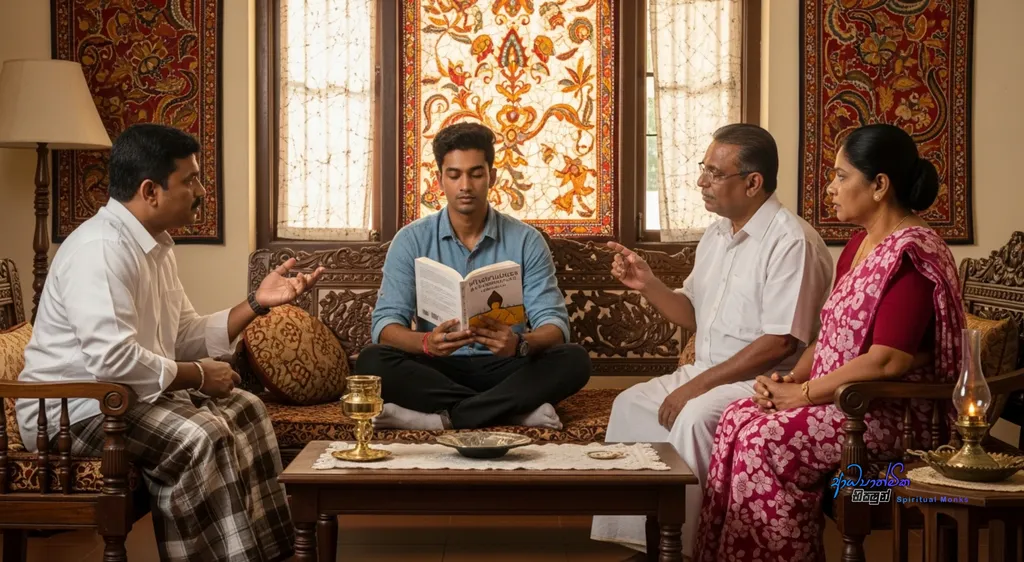
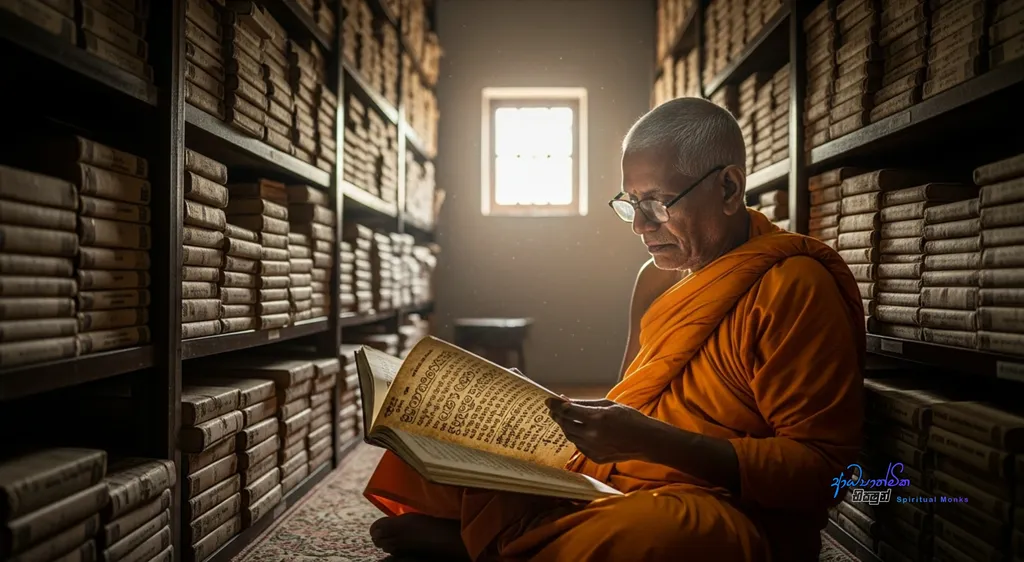
Sadly, this discouragement sometimes comes from within the Buddhist community itself. There are, and I say this with respect, some monks and nuns who, lacking a deep understanding, may ask laypeople, “Are you trying to drive yourself mad by meditating?” When we hear this from ordained individuals, we might question if they have truly taken refuge in the Triple Gem of the Buddha, his teachings (the Dhamma), and the spiritual community (the Sangha).
After all, the Buddha himself realized enlightenment through developing his mind in meditation. The entire collection of his teachings, the Tipitaka, which now fills countless volumes and commentaries, exists because the Buddha meditated. He did not learn it from anyone; he realized it himself.
For a monk or nun to discourage the very practice that lies at the heart of the Buddha’s path is a serious matter. Some may practice for only five minutes, like chewing a piece of gum, without going deeper. While any wholesome thought is beneficial, a monk’s path is meant to lead to deeper states of concentration (Samadhi) and absorption (Jhāna), as prescribed in the teachings.
Anyone who has truly studied the scriptures, even the accessible books of a great scholar like Rerukane Chandawimala Thero, would understand this.
Even teachers from other religions often encourage meditation for mental cultivation and do not spread such fear. It is shameful when representatives of the Buddha’s path do so. One must ask their own heart: are we truly following the way of the Buddha?
The Karmic Consequence of Discouraging Practice
Preventing someone from meditating is not a trivial act. It generates negative kamma,a term for intentional action and its resulting consequences. When you obstruct another person’s spiritual practice, whether you are a monk, a nun, or a layperson, you are creating an unwholesome karmic imprint.
This action can ripen in the future. If a day comes when you yourself wish to meditate in this life or another, you may find an inexplicable barrier rising before you. Another person might obstruct your path, or you might find yourself paralyzed by a deep-seated fear, perhaps even feeling the presence of Mara (the symbolic tempter), blocking your way. The unwholesome act becomes a powerful obstacle for your own future progress.
Of course, this is understood only by those who have confidence in the law of kamma. Those who do not, whether lay or ordained, will likely not accept this and may continue to create such obstacles for others. It is vital to understand this dynamic.
The Second Barrier: Fear of Inner Experience
Let us now consider someone who pushes past these external fears. This person, regardless of their gender, religion, or age, has a strong character and decides to meditate.
They might follow teachings from an online source, a book, or a teacher, beginning a practice of calm or insight. As they proceed, ignoring the warnings of others, they will inevitably encounter various experiences, both physical and mental. This is the next stage where fear arises, this time from within.
In certain practices aimed at awakening spiritual energy, sometimes called Kundalini or activating the ‘third eye’, one might feel intense energies or shifts in the body. In fact, any dedicated meditation practice, even simply recollecting the qualities of the Buddha (Buddhaguna), can lead to these profound experiences. As faith (Saddha) deepens, so does concentration, and this can unlock subtle energies and psychic sensitivities.
All meditation methods, like rivers flowing to the ocean, ultimately lead to a concentrated, unified mind. The initial paths may look different, but they converge. From there, the experiences that arise are common to all practitioners, with minor variations.
Those who have had these experiences know what I am speaking of. You might even feel these shifts during loving-kindness meditation (Mette Bhavani), because as the mind fills with goodwill, it is also developing concentration. Understanding these facets is key. As you meditate for the rest of your life, because meditation is not something you finish, but a practice you resolve to continue until your last breath, you will face these inner phenomena.

How to Face Meditative Phenomena: The Art of Allowing
So, what happens when these experiences arise? Imagine you are meditating and suddenly your body feels as if it’s turning to stone. For a beginner, this is terrifying. The natural, fearful reaction is to stop, to get up and open your eyes. But as I have taught before, this is precisely what you must not do. Do not move. Do not open your eyes. Allow the experience to happen.
Whatever the sensation is, your body feeling solid as a rock, vibrations, or other energies, your task is to observe it with mindfulness, without fear. Witness it. See what is happening. Let the process unfold and complete itself naturally. Only after it has passed should you end your meditation. Why? Because this experience is not a problem; it is a sign of your progress. It is there to help you, to deepen your practice.
If you react with fear and stop, you destroy your own progress. It is a profound act of self-sabotage, a great harm you do to yourself. You must grasp this. The reason I am sharing this is so that you can continue your journey without fear.

Your Experience Is Your Greatest Teacher
Do you see now? If you can eliminate this fear, you no longer need a teacher in the conventional sense. You can meditate alone for the rest of your life. I say this from my own journey.
If you are not afraid of anything, not of what happens in meditation, not of physical sensations, not of mental states, then you can proceed independently. Your own experience becomes your teacher. The insights you gain from directly facing these phenomena become your guide.
This is a crucial point to understand. My experience is my teacher. In the same way, your experience will become your teacher. With its help, you can move forward. At the right moment, wisdom arises. It will ‘click,’ like being hit with a stick, and you will suddenly understand, ‘Ah, this is happening because of that.‘ This is your own insight (Panna) awakening. So, face these things without fear.
Interestingly, young children often have no fear and face these things naturally. It is often adults, with our so-called cleverness, who become frightened. Do not let this happen to you. Let your experience be your guide. Realize that fear is an empty bamboo, there is nothing to it.
The Buddha himself taught this: do not hold onto fear. If you are determined to meditate until the day you die, you must let go of it. It is useless. Identify it, see it with mindfulness, and slowly, it will dissolve.
From Inner Fearlessness to Outer Confidence
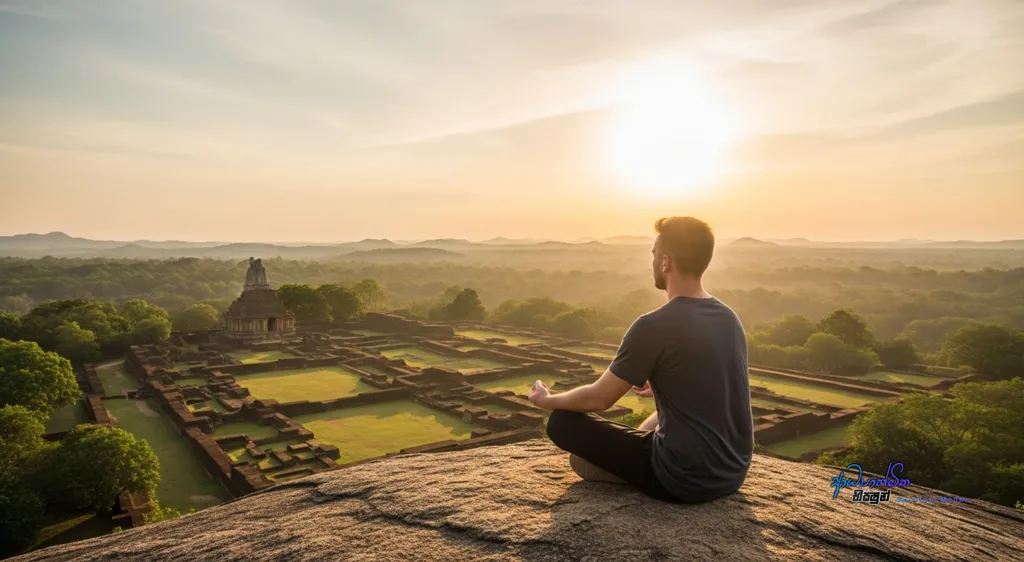
When you master overcoming fear in meditation, you become fearless in all aspects of life. You can develop a mind so strong that you could, as the saying goes, build a house in a graveyard and sleep soundly. You wouldn’t even need a house; you could sleep on a mat among the tombs, and it wouldn’t bother you. Fear weakens our mind and destroys our personality. The opposite of fear is fearlessness. By cultivating this positive quality, you transform your daily life.
Many people, especially the young, send me messages saying they are afraid to speak up or interact with others. They describe what modern psychology calls social anxiety or social phobia. My advice to them is this: work on removing this inner fear through your spiritual practice.
The results may not be instant, for some with past-life tendencies, it can be quick, while for others it takes weeks, months, or even a year of effort. But imagine the freedom! To live the rest of your life without fear is the greatest relief. You can travel at night without worry, walk through any forest, and navigate any place with confidence, because your personality has grown so strong.
This fearlessness extends to your interactions with powerful or important people in the worldly sense. You will be able to speak your truth with poise and confidence in front of anyone. This is how your spiritual development directly benefits your worldly, or physical, life. As you build your inner world, your outer world is automatically put in order. That is the power of meditation.

A Practical Path to a Fearless Life
Therefore, I urge you to take these teachings to heart. Do not let them be confined to books or articles. Do not let them go in one ear and out the other. These are practical instructions, and we share them because we have practiced them ourselves and know their results. By applying them, you can achieve immense spiritual progress and, at the same time, worldly success. You can find mental freedom, reduce stress and pressure, and even improve your memory.
I hope you now have a clearer understanding of fear: the external fears that are projected onto you, and the internal fears that arise during practice. You also know how to face them with courage and what happens if you don’t. Grasp these points, and use them to advance on your path. If you know others who are held back by fear of meditation, please share this teaching with them so they too can practice with understanding.
With the power and blessings of the Triple Gem, the Buddha, the Dhamma, and the Sangha, may you correctly identify and understand fear. May you, with mindful awareness, gradually eliminate it, realizing its true nature. May you have the strength to move forward in your practice and in your life, forever free from fear. May you develop your spiritual path.
We invite you to walk this path with us. Read our teachings, and most importantly, apply them practically in your own life. as you practice, questions will naturally arise. Please feel free to share your experiences and questions in the comments below, via email or contact form. I will do my best to offer guidance in future talks based on your progress. For now, begin this practice with an open heart and a mind free from expectation. Cultivate it correctly, and may you find the clarity and peace you seek.
Thank you for joining us. We hope this blog will be of great benefit to your spiritual journey.
May you all be well and happy.
May the blessings of the Triple Gem be with you all!


