


Categories: Third Eye: Practical Meditation
May the blessings of the Triple Gem be with you all!
Welcome. In this spiritual exploration, we will delve into a practical meditation program focused on awakening the Third Eye. Specifically, we will explore how the practice of Asubha meditation can lead to the development of what is known as Dibba Cakkhu, or the divine eye. We will offer a practical analysis of how you can gain this experience for yourself.
As you read this, some of you who have tried such meditation techniques may have already had these experiences. For those of you who are just beginning your training, there is a strong possibility of attaining these states. However, this is not universal for everyone; some may attain it, while others may not.
If you have had these experiences, this teaching will resonate with you and affirm that you are on the right path. It will bring you the understanding, “I have had such experiences, which means the path I am on is correct.”
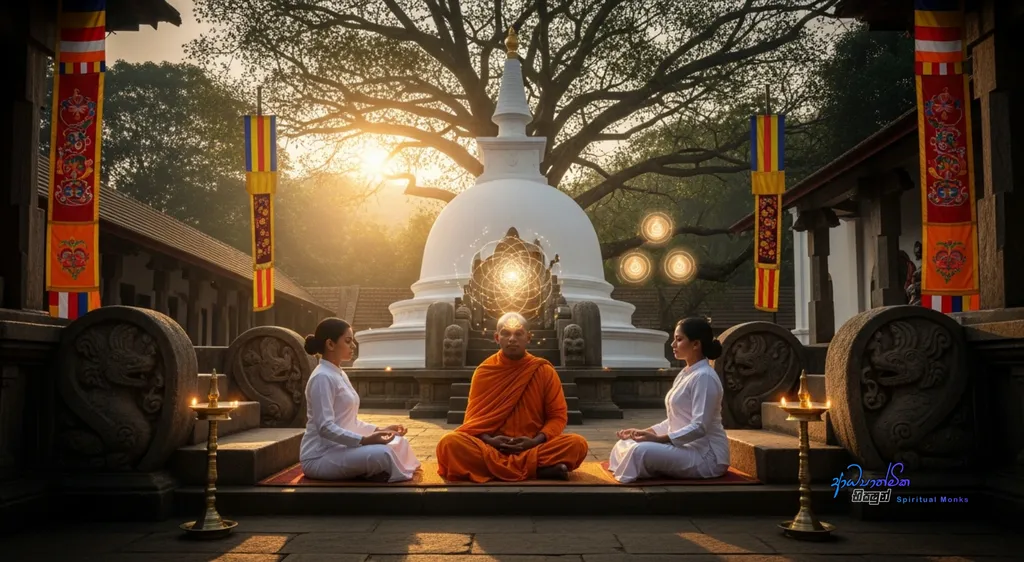
Many Paths, One Goal: The Context of Asubha Meditation
To awaken the Third Eye, we have previously taught various meditation methods. In our early teachings, we introduced certain foundational practices. Later, we explored how meditations like Anapanasati (mindfulness of breath), the Jhanas (deep meditative states), Buddhanussati (recollection of the Buddha), and Kasina meditations can awaken the Third Eye and lead to spiritual abilities. We discussed, one by one, the experiences you might face, the challenges that arise, what the future of the practice looks like, and how to proceed from there.
Those who have explored these teachings will understand that anyone can choose a path that suits them. If you are new to this, I invite you to explore those teachings as well to gain a broader perspective.
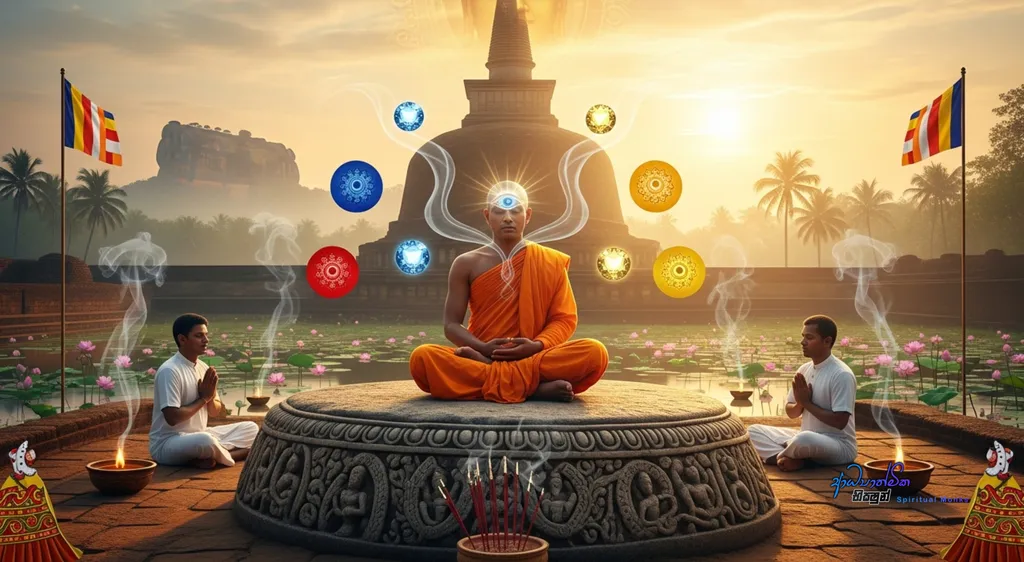
What is Asubha Meditation and Who Is It For?
First, we must understand what Asubha meditation truly is. The Lord Buddha, over two and a half millennia ago, taught this practice primarily for those with a character dominated by lust or passion, a tendency known in Pali as raga charita. Does this mean everyone must practice it? No, not at all. There is no requirement for everyone to practice Asubha meditation.
However, through this practice, we can achieve deep concentration of the mind, enter meditative absorptions or Jhanas, and even progress towards the eight attainments (Ashta Samapatti). The Buddha specifically recommended this for individuals with excessive lustful tendencies, which can be found in both men and women. There are people who, when they try to meditate, find they cannot control their lustful thoughts. I have often received questions about problems related to desire that arise during meditation practice.
Although this practice has a strong element of developing calm (known as Samatha), it is also an immense help for our spiritual journey in developing insight (Vipassana). Therefore, for a person with a strongly lustful nature, there is certainly no harm in cultivating this practice.
The Modern Struggle with Desire: A Universal Challenge
Let’s take the example of someone with an extremely lustful character. You might feel the urge for lustful thoughts or actions constantly. This can manifest as frequent masturbation, an insatiable need for intimacy with a partner, or even seeking satisfaction with others.
Some young people have told me they engage in self-pleasuring five or six times a day. Both men and women have shared that they feel urges towards various mental perversions with their partners, often influenced by what they see online, what we call ‘blue films’ or pornography. They describe becoming addicted to watching these scenes and then feeling compelled to try them.
A common sentiment among all these individuals is the desire to be free from this cycle. They feel addicted and trapped. This becomes a significant obstacle for students in universities or preparing for exams, as well as for professionals in various fields who find their lack of control causing great distress. It becomes a major headache. They may try to abstain, but find they can only last for three days, or at most a week.
Despite this addiction, many have expressed a genuine need to be free. This practice of Asubha meditation can be an answer to all of these struggles.
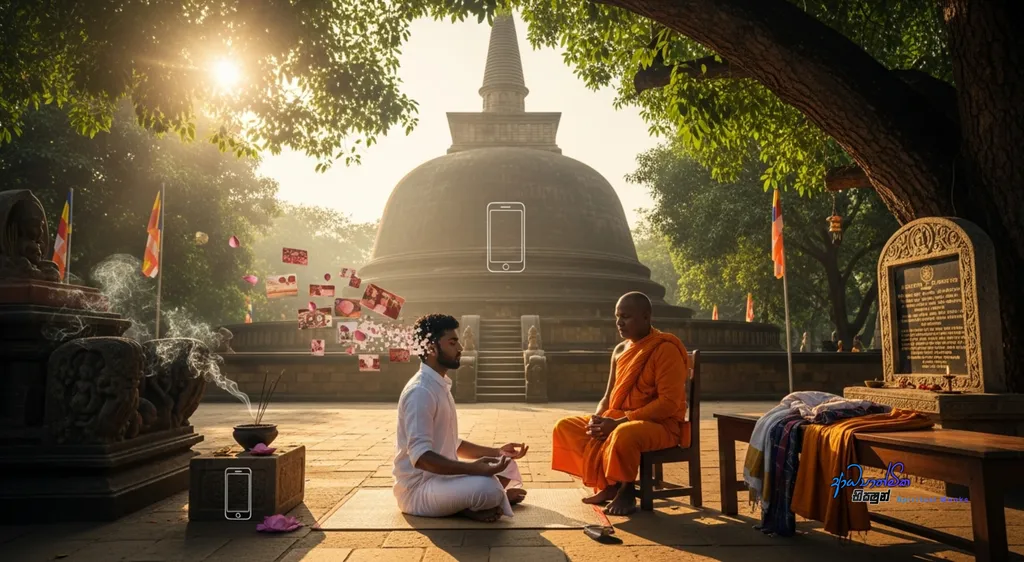
A Paradoxical Start: Why Desire Can Increase at First
Now, here is one of the first experiences you may have when you begin Asubha meditation. For some people, in the initial stages, lust can actually increase. This is a natural characteristic of this practice. Why? Because you are constantly working with the very perception you are trying to overcome. We are trying to transform the mind’s perception, the one that sees things as beautiful, shapely, or ‘sexy’, and this mental habit is deeply ingrained. This is the perception of beauty, or subha sanna.
As we train our minds over time to convert this perception into its opposite, asubha (unattractiveness), we may face a surge of lust. This can happen to anyone, regardless of age, young, old, or middle-aged. It’s not common to everyone, but it happens.
At this point, many people conclude, “This meditation isn’t working for me; it’s making my lust worse,” and they stop. Without a proper teacher to guide them, they feel helpless and abandon the practice. This is similar to what happens in loving-kindness (Metta) meditation; when directing goodwill towards an enemy, intense hatred can arise at first. We are trying to reverse a thought pattern, so the old pattern feels stronger for a moment. This is simply the nature of the mind. If you understand this, it is not a big deal. You can become equanimous (upekkha) towards it and simply continue the practice with a neutral mindset.

Preparing for Practice: Setting Your Intention
So, what should we do at this stage? Whether lust increases or not, we must continue to practice diligently. Now, I will explain my practical method for cultivating Asubha meditation. Remember, there are many methods taught by other venerable monks, based on the Buddha’s teachings. You can explore and find one that you prefer. As I mentioned, all rivers lead to the sea.
No matter which mountain you start from, no matter which technique of Asubha meditation you use, you will face the same set of core experiences. It’s like studying for an exam, everyone has their own unique way of taking notes. It is perfectly fine to choose a method that feels natural to you. Try one method for no less than three months, and you will be able to see for yourself if it bears fruit.
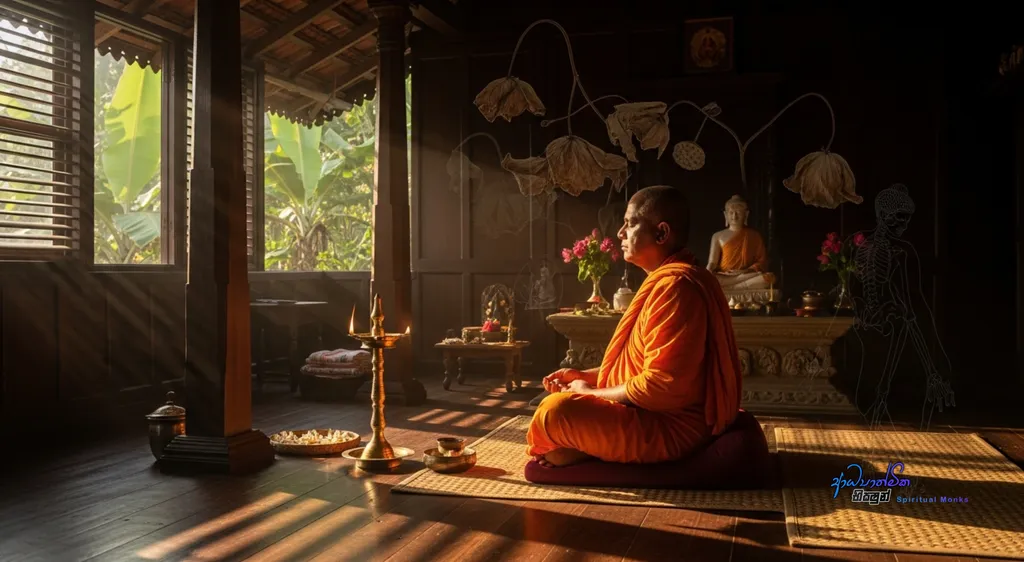
To begin, find a comfortable place for meditation. This could be on your bed, on the floor of your room, or in a chair if you have back problems. A quiet place in your home or your usual place of worship is perfectly fine. It doesn’t matter where in the world you are. Sit comfortably, either cross-legged (baddha paryankasana) or in a lotus posture (padmasana) on a small cushion. You can lean against a wall if you must, but it is better to sit with your back an inch or two away from it, keeping your spine erect.
Once seated, close your eyes. Form a clear intention in your mind: “I am now going to practice Asubha meditation.” Simply contemplate this to set your purpose.
Step-by-Step Guide: Meditating on Your Own Body
Now, I will explain how to cultivate this meditation using my method. You can begin by contemplating your own body; there is no issue with this. Once you have settled, you must create a mental image of your own body. For someone whose Third Eye is already awakened, this image will appear effortlessly as a mental picture (citta rupa). But not everyone has an awakened Third Eye. For others, this is an act of imagination.
If you think of the Ruwanwelisaya stupa or your own mother, an image instantly forms in your mind. In the same way, create an image of your own body. Your beautiful, well-shaped body will appear in your mind’s eye. This is not seeing with your physical eyes, but a mental creation. Hold this image in your mind and observe it.
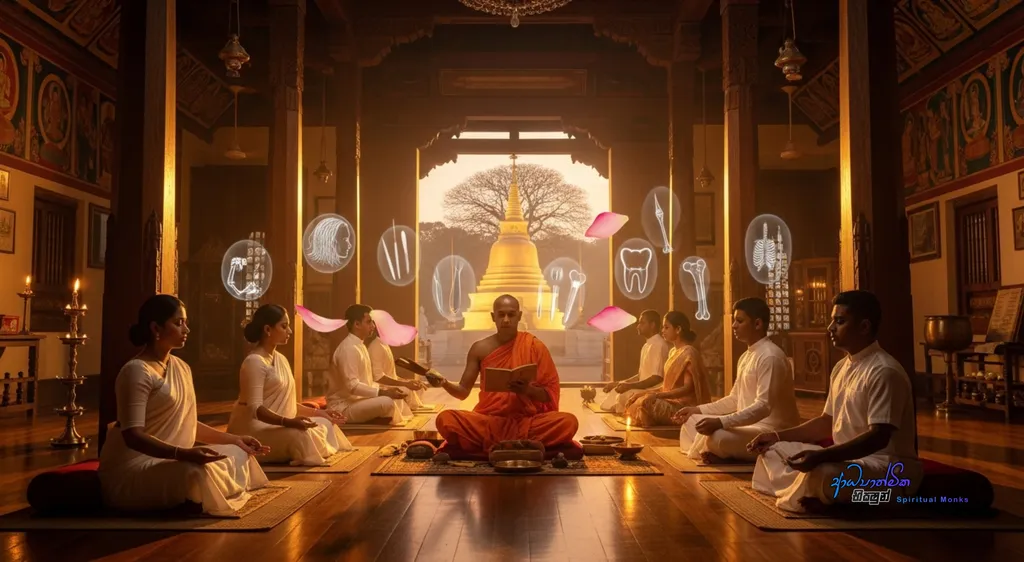
The body is said to have thirty-two parts, known as the Dvattimsakara. In Pali, these begin with Kesa (hair of the head), Loma (hair of the body), Nakha (nails), Danta (teeth), and so on. You don’t need to memorize them, but it helps to be familiar with the parts. You can find lists online, or even watch medical videos of dissections or embalming processes to get a clearer picture. There is nothing wrong with using these resources to aid your meditation.
The Mental Dissection: A Deeper Contemplation
With your eyes closed and the intention set, you see your mental image. The first of the thirty-two parts is the hair on your head (Kesa). Look at your hair closely in your mind’s eye, just as you would in a mirror. Now, take an imaginary pair of scissors or a razor and shave it all off. What remains? A bald head. Do this for all the hair on your body. Mentally pile up all this hair to one side and observe the pile.
Contemplate it. If lust arises for you because of hair, look at this pile. Ask yourself: Is this pile of hair ‘me’? Is this pile what I call ‘Nimal’ or ‘Nimala’? (Use your own name). The lust is not truly for this pile of lifeless hair, is it? Then, move on. Next, mentally peel off your skin. Imagine you are skinning a chicken or see it as a surgeon would. Take an imaginary axe or knife and cut open the body from head to toe. Place the skin in a separate pile.
Now, what is left are the internal organs like the liver. Look at the pile of skin. Ask yourself: Does my lust arise for this skin? Am I, ‘Nimal’, this sheet of skin? After contemplating this, set it aside. Continue this process. Remove your eyes. Take out your brain. You may need an imaginary axe or even a chainsaw, as bones are hard to break. Cut off your fingers and place them separately. Take out the intestines, the feces within them, the undigested food, the kidneys, the set of teeth, the tongue, separate every part and lay them out before you.
Insight Through Analysis: Seeing Impurity and Not-Self
I have explained this part briefly and quickly, but you can take your time with it. As you look at this collection of dismantled parts, an insight from the perspective of Vipassana can arise. Where is ‘Nimal’ now? Is there really a ‘me’ to be found in this physical form? A perception of the truth of not-self (Anatta) can begin to form.
Simultaneously, you can observe which part your lust arises for. Remember, doing this once will not instantly eliminate desire. If you have practiced Asubha meditation in past lives, you might grasp it very quickly. For others, it takes time. The lust doesn’t vanish completely; like in other calmness meditations (Samatha), what happens here is a suppression of lust.
However, if we practice from an insight perspective, contemplating if a real person or self exists here, we can go deeper into Vipassana. But don’t get entangled in deep concepts. Simply practice. The practical training is what matters most.
Do not expect results in a day or two. Practice for a period of time, at least three to six months. The time it takes for lust to subside is relative to each person. So, just practice without expectation. And remember what I said at the beginning: even when contemplating your own body, lust can arise. This is the nature of the mind. Understand it as such.
Advanced Practice: Meditating on the Object of Your Desire
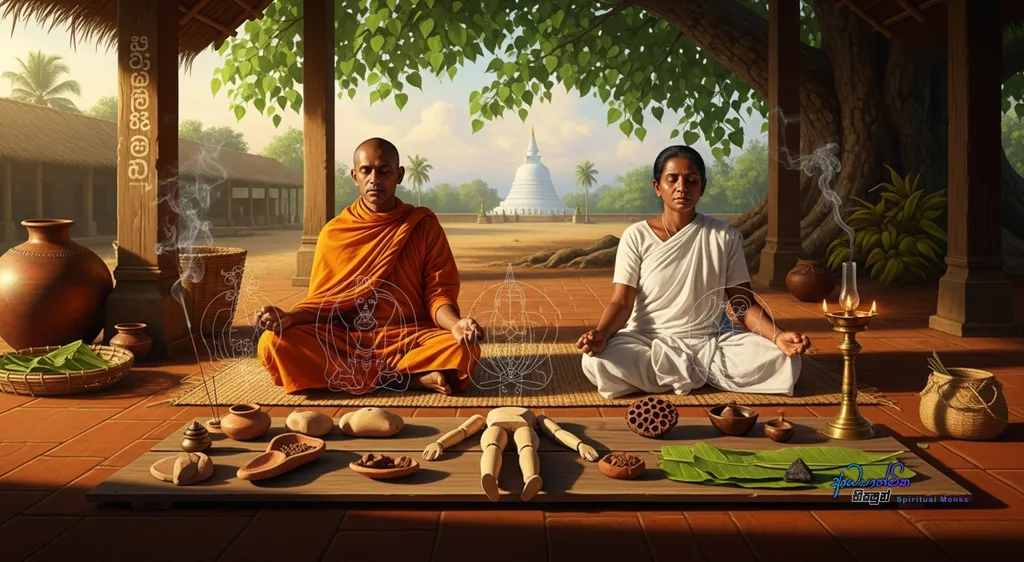
For some people with very strong lust, contemplating their own body may not be enough. For them, the practice is this: you must mentally visualize the person you are most attracted to. If you are a man, visualize the woman with the shape you find most desirable. If you are a woman, visualize the man you are most attracted to.
Then, perform the exact same mental dissection on their body. Cut them up piece by piece. However, be warned: when you do this at first, your lust will increase. You may feel arousal, perhaps even an electric sensation in the body. Despite trying to cultivate the perception of impurity, you might feel the urge to engage in sensual acts. This is how powerful the mind’s conditioning is. This is why we are stuck in the cycle of rebirth (samsara). Understand this as the mind’s nature and persist.
This applies to both men and women. Even if your Third Eye is awakened, you can visualize the person and do this practice. For those without an awakened Third Eye, you can imagine them, as I explained before. I must also mention that even for those in states of concentration like the first Jhana, lust can surface from time to time because the defilements are only suppressed, not eradicated. If your Third Eye has been ‘corrupted’ by sensual desire, practicing Asubha meditation can help purify and strengthen it again.
Reinforcing the Perception: The Five Contemplations
As you observe these dissected body parts, whether your own or another’s, you should mentally repeat a series of reflections. This is a crucial part of the practice. The words of this contemplation are: “Asubhai, asaarai, durgandhai, durwarnai, pilikulai.”
This means:
- Asubhai: It is impure/unattractive.
- Asaarai: It is without substance/essenceless.
- Durgandhai: It is foul-smelling.
- Durwarnai: It is discolored/of a bad color.
- Pilikulai: It is repulsive/disgusting.
Repeat these words continuously while observing the parts. This will deepen the concentration of your mind. If you are contemplating the body of the person you desire, for example, ‘Gayani’, you can also ask yourself: Which part of this is ‘Gayani’? Is it her eyes? Her teeth? Or is the name ‘Gayani’ just a label for this collection of parts with a certain shape? Contemplate this simply, without overthinking.
Signs of Progress: Seeing Beyond the Surface
When you practice Asubha meditation for a long time, something remarkable can happen for some individuals. Lust diminishes to the point where it is almost gone. Then, you may start to see through people’s bodies to their bones. You might see their skeletons. This can happen with your eyes open while walking down the street, or with your eyes closed in meditation. This is a common phenomenon for advanced practitioners.
In ancient times in Sri Lanka, there were monks who cultivated what is called Atthika Sanna, the perception of the skeleton. After practicing Asubha meditation for a long time, the inside of the body becomes transparent to you. You see people’s internal organs or just their skeletons. Do not be afraid. This is a sign that your Asubha meditation has become very well-developed.
The Journey to the Third Eye Through Asubha
As your mind becomes more and more concentrated through Asubha meditation, you may begin to experience the stages that lead to higher spiritual abilities. This happens because the mind is becoming unified and focused.
The stages can unfold in this order for some people:
- Pressure in the Forehead: You may feel a distinct pressure or sensation in the middle of your forehead. This is a normal sign of developing concentration.
- Lights Appear (Aloka Sanna): Following this, you might start seeing lights or colors with your eyes closed.
- Mental Images (Citta Rupa): Next, various mental images can arise. Because you are practicing Asubha meditation, you will likely see images related to it, skeletons, body parts, etc. This is very beneficial and shows your meditation is deepening. You might also see other things, like Buddha images.
- The Third Eye Opens: The final stage is the awakening of the Third Eye. Even though you started with Asubha meditation, you may progress to the point of seeing the vast sky in your mind, then distant places like the Ruwanwelisaya stupa, and even non-human beings like gods or spirits if they are around you.
These four stages can occur, but even if you reach them, if lust is still a significant issue for you, the primary task is to continue with the Asubha meditation until that obstacle is overcome.

When to Change Your Practice: The Art of Skillful Means
Do you need to practice Asubha meditation forever? No, absolutely not. I have seen some practitioners who practice it their entire lives, but this is not necessary. Once your lust is suppressed to the point where it is no longer an obstacle to your meditation, you can and should switch to another practice. It’s like taking a bus to a certain junction; once you reach it, you get off and take the next bus that goes to your final destination.
If your lust is under control, you can stop Asubha meditation and begin a practice like Anapanasati, a Kasina meditation, or the meditations we teach for developing Jhana or awakening the Third Eye through the perception of emptiness. Use your wisdom.
If at a later time in your practice, even if you have attained Jhanas or psychic powers, lust arises again and becomes a problem, you can temporarily return to Asubha meditation to subdue it. Then, once it’s no longer a disturbance, you can resume your primary meditation. This journey is very simple when you understand the principles.
A Vital Warning: Spiritual Experiences vs. Mental Illness
I must emphasize an extremely important point. When you practice for a long time and begin to have experiences like seeing through bodies to the skeleton, some people become incredibly frightened. They think they have developed a mental illness and go to Western doctors for psychiatric medicine. This, in my view, ruins both their spiritual path and their life. They then abandon meditation altogether.
Please do not do this. What you are experiencing is not a mental illness. When you see things that others do not, it is a normal part of spiritual development. These are experiences we must face. The most important advice for your spiritual life is this: if you can face these experiences without getting attached, without fear, with equanimity and a neutral mind, you can navigate this journey with great ease.
Navigating Relationships and a Simpler Life
If you are in a married or family life, practicing Asubha meditation for a long time can naturally reduce your desire for sexual intimacy with your partner. It will become very easy to observe celibacy (brahmacharya). You can discuss this with your partner.
I am not encouraging or discouraging any particular action; some people misinterpret these words to attack us. But with the control gained from this practice, sensual indulgence can become a conscious choice made infrequently, rather than a compulsion. Remember, this practice can lead to concentration, Jhanas, the Third Eye, and other psychic powers like seeing past lives (pubbenivasanussati nana) or divine hearing (dibba sota), but it does not by itself lead to the final goal of Arahantship or Nibbana.
You may also find your mind naturally inclining towards a simple, humble, and frugal life (alpeccha). The desire for a glamorous, extravagant life may diminish. This is a natural outcome, and not a problem. Your usual thought patterns will change. Don’t think too much about it; just continue the practice.
Conclusion: Your Path to Inner Peace and Clarity
I have now given you a broad understanding of Asubha meditation: how to practice it, how to contemplate, what words to use, and when to stop. If you can practice for an hour in the morning and an hour in the evening, you will achieve results quickly. Use your free days to practice for longer periods. You will feel the mind become concentrated, and sensual desire will decrease.
Once desire is no longer the main obstacle that it was for so many, you can gradually reduce the time spent on Asubha meditation while increasing the time for another practice, like Anapanasati. Or you can switch over completely. You will notice your new meditation progresses much faster because the biggest hindrance is gone. Of course, other hindrances like anger might arise, but we must understand these challenges as part of the path.
I believe these explanations are clear and that you will be able to move forward with your practice. I have faith that everyone can understand this. May the power of the Buddha, Dhamma, and Sangha, the Triple Gem, give you the strength to comprehend these matters and put them into practice.
We invite you to walk this path with us. Read our teachings, and most importantly, apply them practically in your own life. as you practice, questions will naturally arise. Please feel free to share your experiences and questions in the comments below, via email or contact form. I will do my best to offer guidance in future talks based on your progress. For now, begin this practice with an open heart and a mind free from expectation. Cultivate it correctly, and may you find the clarity and peace you seek.
Thank you for joining us. We hope this blog will be of great benefit to your spiritual journey.
May you all be well and happy.
May the blessings of the Triple Gem be with you all!


