


Categories: Breath Meditation: Attaining Jhanas
May the blessings of the Triple Gem be with you all! Welcome. In our ongoing exploration of the spiritual life, we have offered teachings on various meditation methods. We began with practices like the ‘Third Eye Practical Meditation Program’ and the ‘Practical Meditation Method to the Brahma Worlds,’ where we shared our direct experiences on developing deep states of concentration, known as Jhāna.
From there, we moved forward, focusing on mindfulness and insight, or Vipassanā, centered on the Four Foundations of Mindfulness (Satipaṭṭhāna). Many of you are following these teachings. We also explored other ways to awaken the third eye, such as through Ānāpānasati (mindfulness of breathing), Buddhānussati (recollection of the Buddha), Asubha Bhāvanā (meditation on impurity), and even Mettā Bhāvanā (loving-kindness meditation).
We have received wonderful feedback from many who have practiced these methods, successfully awakened the third eye, or reached the preliminary stage of ‘light signs.’ Many others continue their journey with our guidance. Our approach has always been based on practical experience, not just books or scriptures like the Tipiṭaka (the Buddhist canon).
We explain these profound concepts in simple, understandable language for everyone, young and old. This path has no barriers of ethnicity, caste, religion, or age. It is accessible to anyone. That is why we avoid deep, technical words and the Pali lexicon, focusing instead on clarity. It doesn’t matter how simply or profoundly we explain it; what matters is that you understand and can practice. Our constant effort is to teach in a language you can connect with.
Today, there are many venerable monks who teach the practical aspects of meditation from a deep, scholarly perspective, often focusing on Vipassanā and the Four Foundations of Mindfulness. However, from our earliest days, many of you have requested that we teach in a simple way, without complex terminology. This is why, for the past two years, we have started from the very basics and continue to teach in the simplest manner possible.
As a result, many people from different nationalities, religions, and age groups, university students, schoolchildren, professionals, are enthusiastically practicing meditation. We are delighted to hear about your experiences. Therefore, we will continue to provide simple, practical meditation training and guidance. We also answer your questions sent via WhatsApp, so you can engage in this training without any fear.
The Journey to Jhana Through Anapanasati Meditation
In a previous teaching, we discussed how to awaken the third eye through Anapanasati meditation. We provided a complete, simple, and clear explanation from beginning to end, detailing the experiences and the necessary steps. This time, we want to explore something different: how does one attain Jhāna (deep meditative absorption) through this same Anapanasati meditation? How do we travel the path from the first Jhāna to the second, third, fourth, and even the fifth?
You may have noticed I mentioned a fifth Jhāna. In the Sutta Piṭaka (the Buddha’s discourses), four Jhānas are typically mentioned. However, in the Abhidhamma Piṭaka (the philosophical and psychological analysis), the mind states are classified into five Jhānas. Whether you call it four or five, the level of attainment is essentially the same, so there is no need to get confused.
Starting today, we will guide you practically on how to attain these states. Here are a few essential things you need to know, especially if you are new to this practice or our teachings. Please follow the instructions in these articles exactly as they are given. If you have a question that isn’t answered here, feel free to send it to our WhatsApp number. For newcomers, it is crucial to review our teachings from the beginning, in order, as they contain all the necessary knowledge drawn from our practical experience.

Are You Ready for This Journey?
Perhaps you have already been practicing another method, such as our ‘Third Eye Meditation’ or ‘Path to the Brahma Worlds’ program, or even a technique from another teacher or on your own, for three to six months, or even a year, without seeing results. We always advise practicing one method for at least three to six months. If you are one of these individuals who has practiced diligently for this duration without results, you are ready. You can set aside your previous practice and begin this journey with Anapanasati meditation today.
There are a couple of foundational practices that are extremely helpful. We have previously shared teachings on what to do during meditation. Two key practices are:
- Chanting (Pirith): Engaging in protective chants can calm the mind.
- Loving-Kindness Meditation (Mettā Bhāvanā): We have a specific teaching titled ‘Third Eye Loving-Kindness Meditation.’ Please listen to it and dedicate some time each day to this practice. It is incredibly powerful for overcoming obstacles in your meditation.
Furthermore, it is vital that you cultivate mindfulness in your daily life by following our ‘Mindfulness Series’ of talks. We provide these in separate playlists for easy access. After establishing these foundations, you, whether you are a newcomer or an experienced practitioner without results, can begin this Anapanasati practice for attaining Jhāna.
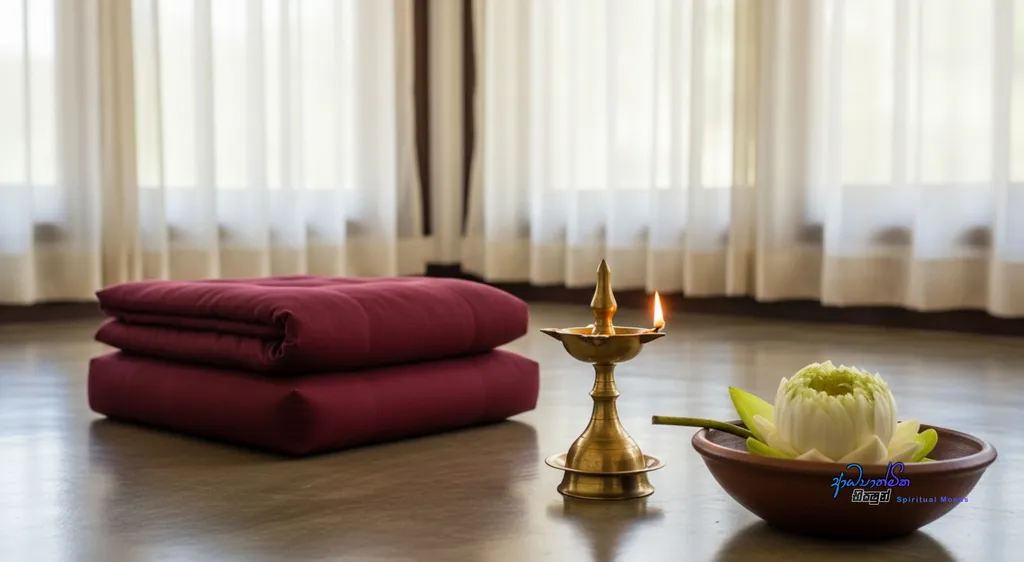
Creating Your Sacred Space and Posture
So, how do we practically begin to cultivate Jhāna through Anapanasati meditation? This is the first practical session in this series, so pay close attention. Feel free to reflect on this teaching two or three times while mindfully observing your own mind.
Choosing Your Space:
If you meditate in the early morning and follow a routine of worship, it is best to meditate in front of a Buddha statue. This environment helps prevent drowsiness. Meditating in a bedroom can be challenging for a beginner because the sight of the bed can trigger sleepiness, leading you to abandon your practice.
However, sitting before an image of the Buddha can inspire wakefulness. If you are from another religious tradition and do not have a Buddha statue, that is perfectly fine. Choose any quiet, peaceful place in your home. A calm spot in nature, surrounded by trees and greenery, is also an excellent choice.
Preparing Your Seat:
Once you find your suitable spot, use a small cushion for sitting, perhaps one inch or half an inch thick, not a large, plush pillow. You can find meditation cushions available for purchase.
Adopting the Posture:
This applies to both men and women. You can sit in one of two main postures:
- Padmāsana (Lotus Pose): If you are unfamiliar with this, you can easily search for it online or find videos explaining it. In this pose, the soles of both feet face upwards.
- Baddha Paryaṅka (Half-Lotus or Burmese style): This is a simpler cross-legged position.
These postures are suitable for those with flexible bodies. However, there is no strict rule that you must sit this way. If you have spinal issues, leg problems, or are elderly and find it difficult to bend your legs, and only in these cases, you may use a chair that allows you to keep your back straight. For everyone else who is able, it is important to sit on a cushion in one of the cross-legged postures. This is a crucial point to remember.
Making a Resolution:
After settling into your posture, make a strong intention or resolution (adhiṭṭhāna). We have discussed the three essential resolutions in our earlier teachings, such as resolving, ‘May the spiritual energies I have practiced in my past lives awaken now.’ Please refer to those initial teachings for details.
Maintaining an Upright Spine:
When you sit, do not lean against a wall. Many people develop this habit, but it is not ideal for proper practice. Sit with your spine straight, about an inch away from the wall. Keep your head and neck aligned with your spine, looking straight ahead. There are many misconceptions, some say you must tilt your head up, others say looking straight is wrong. Ignore these. Simply keep your back, neck, and head comfortably and naturally straight.
Of course, your back might start to hurt. This is normal. That is why I suggest keeping a small gap with the wall. If the pain becomes too much, you can lean back for a short while until the discomfort subsides. Once you feel better, move away from the wall and straighten your back again.
If you can, it is very valuable to endure the discomfort. After practicing for about a month, your body will get used to it, and you will no longer need support. You will be able to meditate with a naturally straight spine. I will clarify this again: lean against the wall only if the pain is severe, not as a default position for the entire session. Regarding leg pain, we have a dedicated teaching called ‘Do Your Legs Hurt During Meditation?’ which provides all the answers.
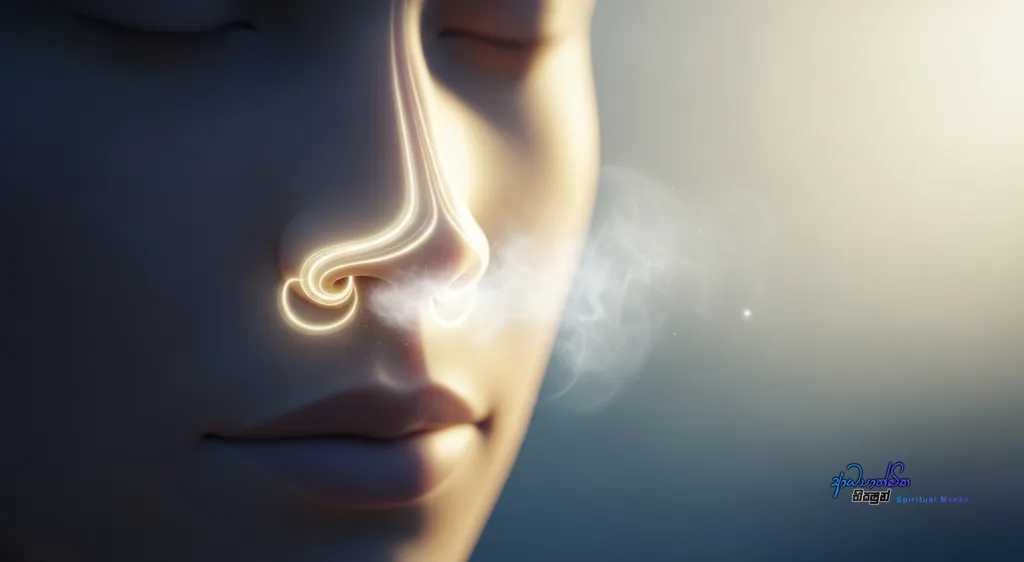
The Gentle Art of Watching the Breath
Once seated, close your eyes. Bring your attention fully to your mind. If you have been practicing our mindfulness series, this will be easier. Now, since we are practicing Anapanasati meditation, gently guide your mind to the tip of your nose. Just think about the tip of your nose, and your mind will naturally and automatically settle there.
Keep your mind at that point and just observe. Ānāpānasati means giving attention to the breath. A common mistake is to try to control or force the breath. This is wrong. In your daily life, you never force your breathing; it happens naturally. You breathe in oxygen and breathe out carbon dioxide without any effort. Yet, when people start Anapanasati, they often begin to breathe forcefully. This is not necessary.
The only time we recommend taking a deliberate, deep breath is when your mind has wandered. To bring it back, you can take one, two, or at most three strong breaths. Do not use forceful breathing to try and concentrate; this will only cause discomfort, strain, and lead you to give up meditation.
So, with your mind resting at the tip of the nose, you will naturally begin to notice the breath. You will feel it moving in and moving out. The Buddha explained this very clearly in the Girimananda Sutta. You can study this text, but as we promised, we are teaching from practical experience in simple terms.
Simply watch this flow of the breath. Feel it being drawn in, and feel it being released. That’s all you have to do. Watch the breath going up, and coming down. As you observe, you will notice that the next breath is not the same as the last one. Sometimes you will take a longer breath in than before.
Simply recognize, ‘This in-breath is longer than the previous one.’ Then, as you breathe out, you might notice, ‘This out-breath is also longer.’ A little later, you may take a shorter breath in and a shorter breath out. This happens naturally. Your only job is to watch this natural process.
At certain times, it might feel as though you have stopped breathing altogether. Many people panic at this stage, wondering, ‘Am I not breathing?’ They might even hold a finger under their nose to check, thinking they might be dying! Please do not be foolish. You will not die.
This is a normal stage where the breath becomes extremely subtle. And even if you were to pass away in such a meditative state, you would undoubtedly be reborn in a heavenly realm. But rest assured, there is no record in history of anyone dying while practicing Anapanasati meditation. So, do not be afraid. After a moment of this stillness, the breath will resume, perhaps feeling even more subtle than before.
This is the essence of the practice. Āna means breathing in. Pāna means breathing out. Sati means being mindful. You are simply being mindful of the in-breath and the out-breath.

Welcoming Your Wandering Mind
Now, do you think you can keep your mind fixed on the breath without it ever straying? Absolutely not. Whether you are new to our teachings or have been practicing another method, you know that in the beginning stages of meditation, the mind does not stay in one place. It is foolish to expect it to. For a deeper understanding of this, you can explore our playlist called ‘How to Concentrate the Mind.’
The truth is, the mind will wander. While you are observing the breath, it will suddenly jump to the past. You will get lost in a train of thought about your school days, what happened yesterday, or what you ate. After some time, you will suddenly realize, ‘Oh, I was meditating on my breath, but now my mind has wandered away!’ This is your moment of mindfulness.
When this happens, do not get upset or agitated. Simply and gently guide your mind back to the breath at the tip of your nose. The mind will not only wander to the past. It will also jump to the future, planning what you will do after the meditation session, or tomorrow.
You might think, ‘I have to do that task soon, I should get up in a little while.’ Your mind runs along with these thoughts. When you realize you have been carried away, you remember, ‘I was practicing Anapanasati meditation; I have lost my mindfulness.’ As soon as that awareness arises, immediately bring your mind back to the breath. Again and again, you will do this. This is the practice.
Navigating the Inner Landscape: Physical Sensations
As you continue this practice, your progress may vary. Some people have practiced in past lives (saṃsāra), so for them, concentration can develop very quickly. Others may be starting fresh in this life. Do not be discouraged if your mind is very scattered; the effort you make in this life will create the merit and foundation for you to attain understanding in a future life, perhaps in the presence of a Buddha. This is a truth our own Buddha taught.
As your mind settles on the breath, it becomes very subtle and refined. You might begin to perceive the entire journey of the breath: drawn in through the nostrils, moving up into the chest and lungs, circling, and then being released. This detailed perception is a sign of deepening mindfulness. For some, this may happen on the first day; for others, it may take weeks. It depends entirely on your past conditioning.
When the mind becomes this subtle, the body begins to reveal various sensations:
- A feeling like ants crawling on your skin.
- A sensation of something moving or wriggling inside you.
- Activations related to what some call Kuṇḍalinī energy or universal energy, such as pressure along the spinal cord, at the crown of the head, or in the area of the third eye (the pineal gland region between the eyebrows or in the middle of the forehead).
- Pressure in the middle of the nose.
These are not magical events. As your mind concentrates, your nervous system is stimulated and changes, causing these feelings. Many people mistake this for something extraordinary, but if you chase these sensations, your meditation will not progress. These are normal experiences on the path. If you are new, you may not know this, but those who follow our teachings on universal energy will understand.
Do not take these sensations seriously. As the mind becomes even more refined, you can feel countless things, even the movement of microorganisms in the body. People often mistakenly think they have a mental or physical illness, or that they are meditating incorrectly. Please do not think in such a narrow, foolish way. We have been explaining these things from the beginning. Gain a proper understanding from our teachings and practice.
Do not ruin your meditation by listening to advice from foolish people, perhaps well-meaning friends or those with book knowledge but no practical experience. If you have a problem that our teachings don’t address, ask us directly. Do not, in simple terms, mess up or destroy your practice by listening to ignorant advice.
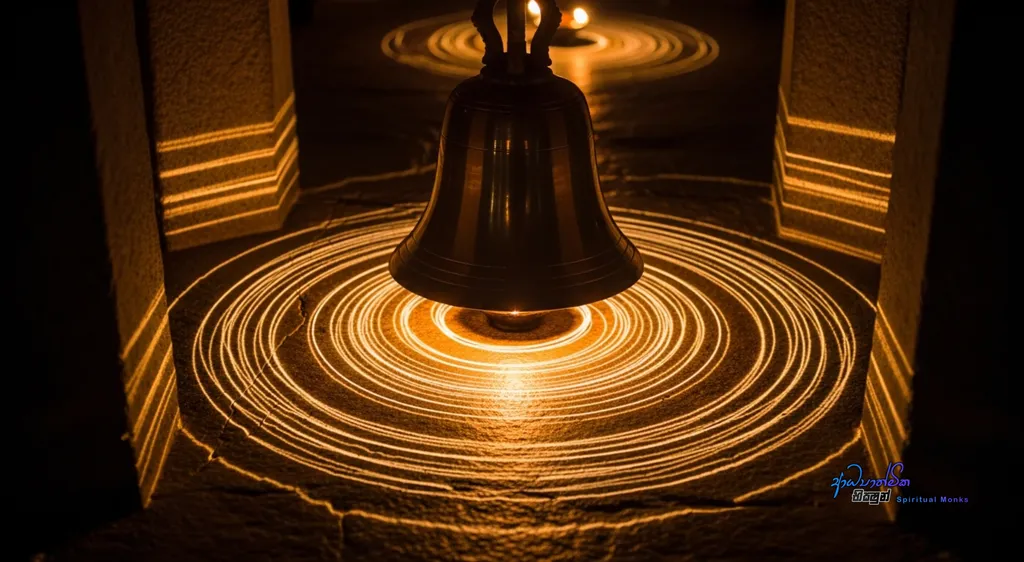
The Dawn of Absorption: Entering the First Jhana
So, what should you do when these sensations arise? Even if you feel strong pressure in your forehead, do not move your mind there. Your focus is the breath. While you are watching the breath moving in and out, the pressure might intensify, let it. If the crown of your head feels tight, let it.
The various energy centers (chakras) may activate. This is natural. Some foolishly believe you must do specific chakra meditations to awaken Kuṇḍalinī energy. This is not true. This energy can awaken through any proper meditation method. Discard that limited idea.
Do not direct your mind to any tightness or blockage. Acknowledge it, ‘Ah, there is pressure in my forehead’, and that is all. Do not keep your mind there. If your leg hurts, your back hurts, or you feel ants crawling, do not fix your mind on it. Whatever you feel in your body, your mind must stay with the breath.
As you practice, ‘light signs’ (āloka saññā) may appear. If your goal is to awaken the third eye, follow our specific instructions for that. But if your goal is to attain Jhāna, you must not get distracted by these lights either. Ignore them and return to the breath. As you persist, your body may start to feel very light, as if floating, or heavy, like stone. Acknowledge this, ‘My body feels light’, and immediately bring your mind back to the breath. Do not linger on the pleasant sensation of floating or lightness.
Remember, Jhāna is a state separate from the sense-sphere world (kāma loka). As long as you are having thoughts about your children, your property, your worldly affairs, you are still in the sense-sphere. And kāma is not just sexual desire; it includes everything that pleases the six senses: eye, ear, nose, tongue, body, and mind. Food, drink, family, work, exams, all of it belongs to the sense-sphere. In the first Jhāna, none of these thoughts arise. As your concentration (samādhi) deepens, these thoughts naturally diminish.
At this stage, your practice is to stay with the breath, no matter what pleasant or unpleasant sensations arise. The mind will still jump away, but you must bring it back. As you do this again and again, the frequency of sense-sphere thoughts will decrease. Your mind will become more unified and stable. You will feel an amazing lightness and freedom. The thoughts that do arise will be rare. You may find that you can sit for longer, 30, 40, 50 minutes, even an hour, whereas before you were stopped by pain or restlessness. This is progress born from experience.
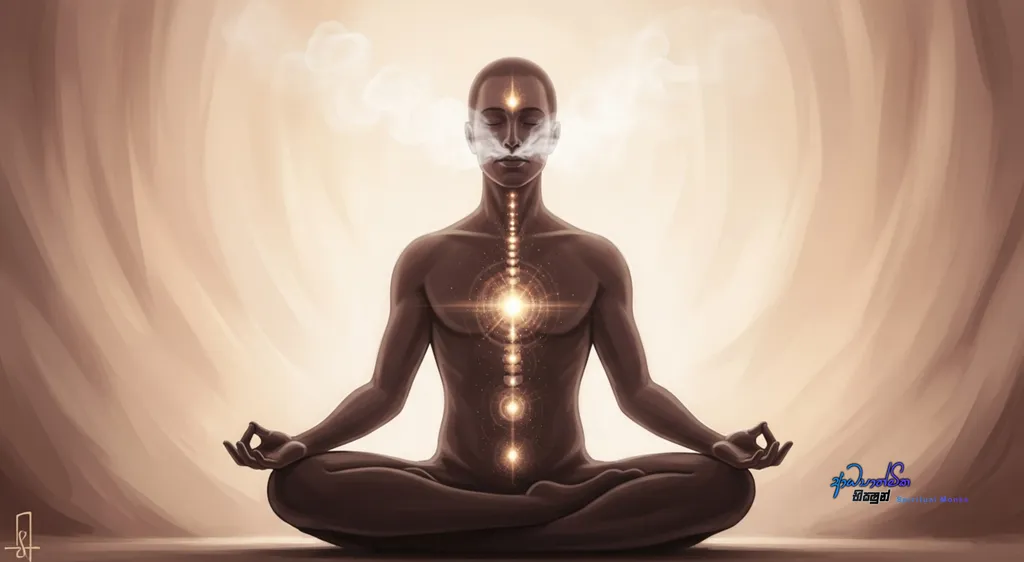
The State of First Jhana
As you continue to hold your attention on the breath, a time will come when the mind becomes completely unified. A state arises where no thoughts of the human world appear. You may still hear external sounds, but your mind remains undisturbed, fixed in one place. Whatever sensations arise in the body, the mind does not run after them. It stays with the breath, completely free.
This is the approach to the first Jhāna, which is characterized by vitakka and vicāra. Simply put, vitakka is the initial application of the mind onto the breath. Vicāra is the sustained examination of the breath as it moves in and out. The ancient texts use an analogy: striking a great bell is like vitakka, and the long, resonating sound that follows is like vicāra.
As you practice, lustful thoughts, love, anger, hatred, jealousy, all of it fades away and is forgotten. You are on the path to the first Jhāna, but you have not yet reached the result, or fruit, of it. In the beginning, thoughts will reduce bit by bit.
Then, you will reach a point where you can sit for a full hour with absolutely no sense-sphere thoughts, no memories of the past or plans for the future. Your mind is unified, the body is comfortable, the mind is light, a state of incredible ease. This is the first Jhāna. A person who can stay for an hour can extend it to one and a half, two, or even three hours.
For someone with strong past-life practice, this can happen suddenly. For others, it is a gradual process. You might experience a minute or two of this stillness, followed by five minutes of wandering thoughts, then another period of stillness. This means you are getting closer, you are practicing on the path.
Once the Jhāna has arisen and you are familiar with it, entering it becomes effortless. You no longer need to struggle to keep the mind on the breath. You simply close your eyes, and the mind settles into that state of unified calm. If you struggle with strong lust, practice meditation on impurity (asubha). If you have excessive anger, practice loving-kindness (mettā). We have separate teachings on these.
Afterglow: Integrating the Peace of Jhana
After you attain the first Jhāna, you can set your intention for a specific duration. After your preliminary rituals like offering light to the Buddha and chanting, you simply close your eyes, and the mind will naturally enter that state. There is no longer a need to force your attention onto the breath.
The key sign of the first Jhāna is this: a state of mental unification free from any sense-sphere thoughts, past or future. It is a level of profound lightness and freedom in both body and mind. Remember, you will still hear external sounds, but unlike now, your mind will not be pulled away by them. It remains unshaken.
When you emerge from the Jhāna, its energy doesn’t vanish immediately. For a while, even in your normal state, you will feel a residue of that peaceful quality. It’s like drinking a cool glass of water, even after you’re done, you still feel the coolness. Or, to use another analogy, like eating a strong mint candy like Hacks, after the candy is gone, the cool, sharp sensation remains in your mouth for some time.
Similarly, after emerging from any Jhāna, you will experience an unusual happiness, freedom, and lightness in your daily life for a period. If you were in Jhāna for two or three hours, you might feel this afterglow for an hour in your normal life. These are not things to be afraid of; they are normal experiences. For more on this, you can explore our playlist ‘Let’s Learn About the Jhanas.’
The body may feel light, as if floating, or it might feel like it has disappeared altogether. The experience varies from person to person. But the mental state is the key: the mind is unified and does not travel out through the senses. Many other experiences may arise on the way to this final result that I have not mentioned in this talk. Do not be afraid or ask unnecessary questions. No matter what you feel in your body or mind, keep practicing with your attention on the breath until you reach the result I have described.
If you practice correctly, you can achieve a result within two to three months. Even when physical pain arises in your legs or back, try to stay with the breath without leaning. Keep your mind on the breath when your body feels light, and keep it there when it feels heavy. Continue until your mind is unified and no sense-sphere thoughts arise. If you do this, you can certainly experience the fruit of the first Jhāna for yourself, a directly visible result (sandiṭṭhika) in this very life. The Buddha taught this method because it uses a process happening right within our own bodies, making it a very accessible way to unify the mind.
If you have experiences, please consider sharing them in the comments section. Even if it’s later, after you have practiced for some time, come back and share your experience. Your comment will help another person confirm our teachings and give them encouragement. Also, send your experiences to our WhatsApp number, and we will guide you on how to proceed based on your practical training.
This has been the first practical teaching on cultivating Jhāna through Anapanasati meditation. It was a long article, but it was necessary to explain all the essential points about reaching the first Jhāna.
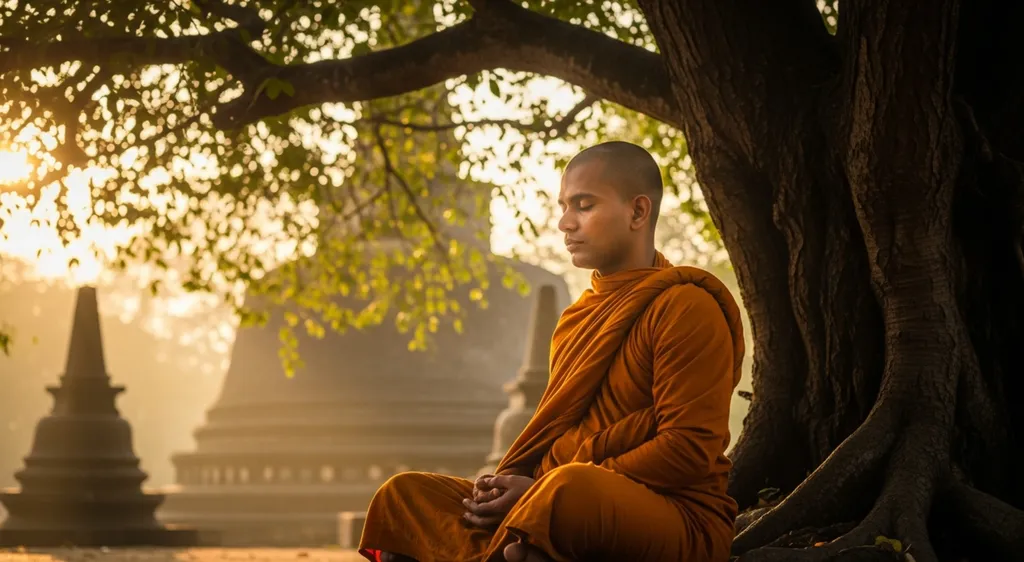
Conclusion and Blessing
We will continue this series in future articles. For today, we conclude here. By the power and energy of the Triple Gem, the Buddha, the Dhamma, and the Sangha, may you be able to understand these points well, realize them, and put them into practice. With this blessing, we end this teaching.
We invite you to walk this path with us. Read our teachings, and most importantly, apply them practically in your own life. as you practice, questions will naturally arise. Please feel free to share your experiences and questions in the comments below, via email or contact form. I will do my best to offer guidance in future talks based on your progress. For now, begin this practice with an open heart and a mind free from expectation. Cultivate it correctly, and may you find the clarity and peace you seek.
Thank you for joining us. We hope this blog will be of great benefit to your spiritual journey.
May you all be well and happy.
May the blessings of the Triple Gem be with you all!.


