


Categories: Maintaining Mindfulness
May the blessings of the Triple Gem be with you all!
Through our spiritual journey together, we have been exploring a very practical program: the cultivation of mindfulness. In Pali, the language of the early Buddhist texts, this is called Sati. It is a state of active, open attention on the present moment. For those who have engaged with this practice, whether you are advanced in meditation, just beginning, or feel you have made no progress at all, you have started on a path to practically understanding your own mind. You have begun the profound work of exploring the vast landscape of your consciousness, step by step.
For those already on this path, the concept of mindfulness may not need a basic introduction. However, this teaching aims to deepen that understanding for everyone. What exactly is this awareness we call mindfulness? Why should we cultivate it? Why is it essential to return to this state of presence again and again? This article will help illuminate these crucial questions.
What is Mindfulness? A Light in the Darkness
Until we encounter this teaching and begin to practice it, mindfulness is something we don’t even know we’re missing. This is a vital point because this practice fundamentally changes us. It helps us look directly at our own mind and see the things that were there all along, hidden in plain sight.
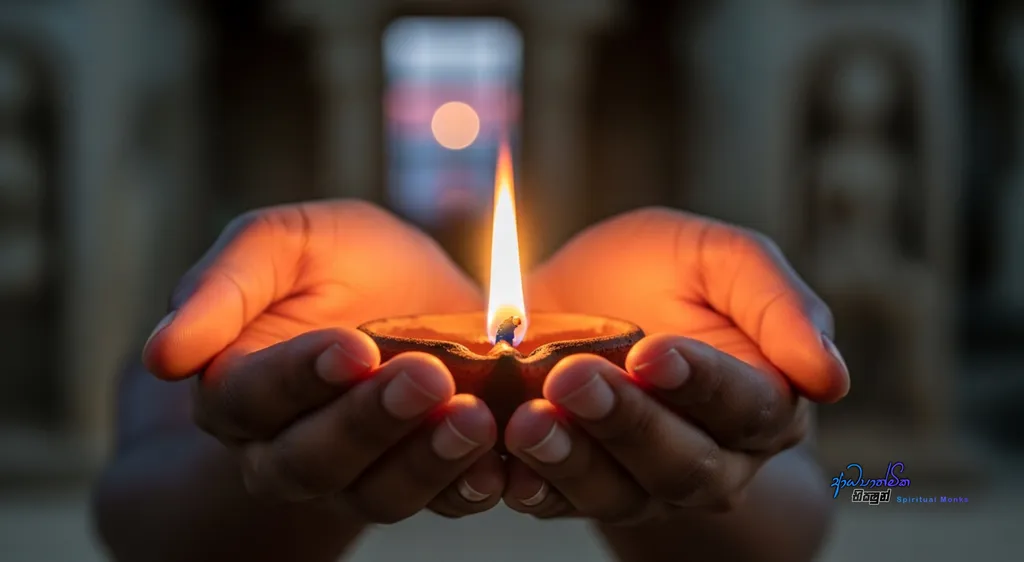
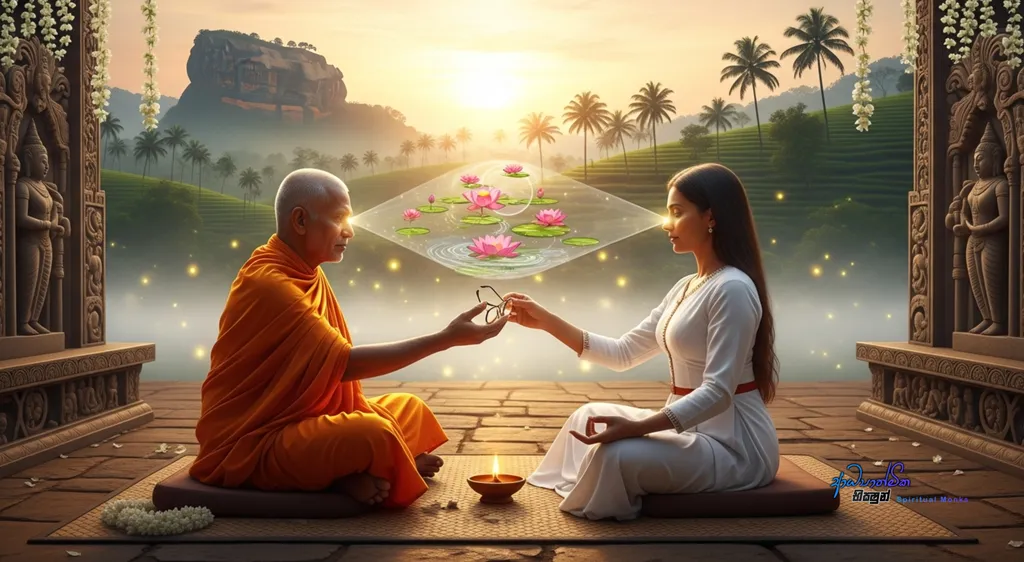
To put it simply, developing mindfulness is like giving eyeglasses to someone who couldn’t see clearly. It’s like placing a powerful lens in their hands. For us, who have been living in darkness, it is like someone lit a candle, handed us a flashlight, or even gifted us a radiant sun. We can use many such metaphors to grasp its value. It is the light that illuminates the inner world.
Uncovering the Hidden Workings of Your Mind
For our entire lives, we’ve been familiar with experiences like anger. Everyone, young or old, knows what it feels like to get angry. We can say, ‘I felt anger.’ But until we practice mindfulness, we are unable to understand *how* that anger arose, or *why*. We couldn’t recognize that it was a conditioned state in our mind, a phenomenon that arises due to specific causes and conditions.
Similarly, as we continue to practice being present with our mind, we begin to clearly identify our sorrows, our joys, and the many states that arise within us. People from all walks of life, of all ages, races, and religions, are beginning to see this for themselves. They share with me how this practice of observing their own thoughts has changed them, how their lives have been transformed. This is the heart of practical Buddhism. This is the timeless truth, the Dhamma, that the Buddha taught over 2,500 years ago.

The Path of Practice: Why Experience Trumps Theory
This practice of mindfulness is a profound and deep path. Our ability to grasp its depth grows as we develop our capacity for sustained attention. Understanding comes only through direct, practical application. Those who walk the path understand what is being said here.
For someone who does not practice, these words will not make sense. They won’t understand what I am saying, nor will they grasp what the Buddha taught. To them, these teachings are just words, and they are like a person fumbling in the dark. Their wisdom, or paññā, is not yet developed enough to see.
Yet, one day, they too will understand. They too will one day cross over the ocean of samsara,the endless cycle of birth, death, and rebirth. But for such individuals, the journey through this cycle may be very long because they couldn’t grasp the tool that was offered. We can apply this to ourselves. We have likely encountered countless Buddhas and enlightened saints, or Arahants, in our past lives.
But perhaps we couldn’t understand their teachings because our wisdom was not yet mature. That is why we are still on this journey, a journey that can seem endless. This is a difficult truth for some to accept, especially those who are skeptical or hold rigid views. It shows how deeply the mind can be veiled by ignorance, or moha. This is something that must be experienced, not just debated. It is like a package that must be untied and looked into, not just squeezed from the outside.

A Universal Tool for Every Mind
I see this tendency to theorize without practicing throughout society today. However, there are so many people who feel a deep urge to transcend this. They exist in every culture, every religion, without regard to skin color or age. But often, they haven’t found the right method, and so they remain in a state of anxiety and helplessness.
Through these teachings, we have consistently emphasized that if you become practical, you can achieve the results. The Gautama Buddha taught this 2,500 years ago, and indeed, all Buddhas have taught this same message: these teachings are for practical application. This is one of the reasons why the Buddha’s teaching, the Buddha Sāsana, is so precious. We must understand this.

The Inner Microscope: Observing Your Thoughts and Feelings
So, what is mindfulness? For those of you who are practicing, you already know from your own experience. We can say it is like a magnifying glass, or even a microscope, that helps us identify the various thoughts that have always been present in our mind. You can call it a light microscope or an electron microscope; you can even call it a telescope for seeing things that are far away. Use whatever metaphor helps you relate to this concept.
Because of this mindfulness, you can begin to understand your past thoughts, your present thoughts, and your future thoughts. As the mind develops, you may even come to see that there is no true ‘present moment’ for a thought,the moment it arises, it has already passed into the past. All of this becomes clear through practice. You start to see the lust, or rāga, within you. You see just how much you burn with this desire, whether you are a man or a woman.
Anyone can burn with desire. However, some people are not honest with themselves. They might say, ‘I don’t really have that much lust,’ either out of a lack of self-honesty or perhaps shame. While they have the right to say this, it is a deception of the self. The Buddha taught that desire can be greater or lesser in different people, as it is relative and dependent on our past conditioning. To understand this, one must investigate one’s own mind with total honesty.
The Unwavering Mind of the Awakened
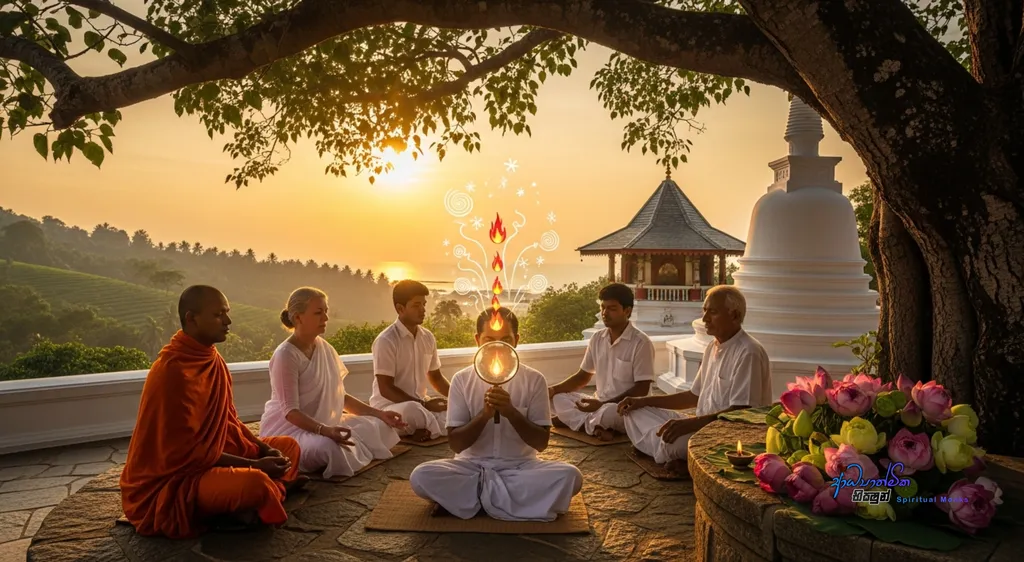
Mindfulness is the tool that helps you, and you alone, understand your own mind. No one else can do it for you. That is why we say that those who have taken this practice to its ultimate perfection are the Buddhas, the Silent Buddhas (Paccekabuddhas), and the Great Enlightened Disciples (Mahā Arahants). Their mindfulness is so complete that we cannot speak of its limits; it is boundless. They exist in a state of perfect, unbroken awareness.
We, however, are not yet at that stage. We do not have a continuous, uninterrupted mindfulness. That is why we must understand the need for long-term training. We must resolve to continue this practice until the moment we die. We should decide to carry on this work until our very last breath. This is why we emphasize this commitment in our teachings.
From Inner Observation to Outer Understanding
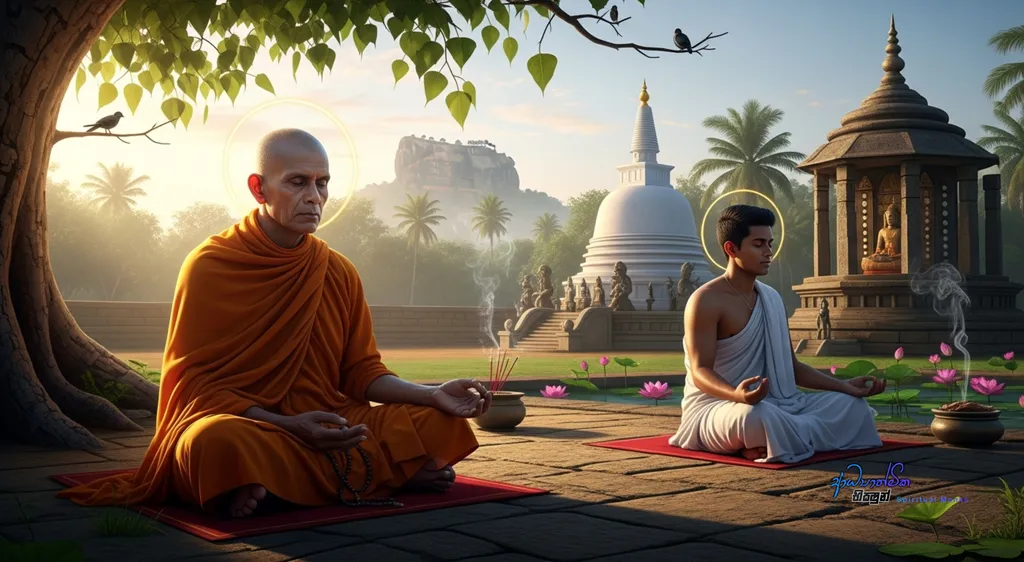
With this tool of mindfulness, you begin to see everything: your thoughts of kindness, compassion, and loving-kindness (mettā),in short, your wholesome thoughts. You also see your unwholesome thoughts: your jealousy, your thoughts of harming another, your thoughts of engaging in sensual misconduct. When mindfulness is established, all of these thoughts, both good and bad, skillful (kusala) and unskillful (akusala), become visible to you.
Even if you were born a Buddhist, you may have heard about ‘the mind’ in Dhamma school or from listening to teachings with your family. But you may not have realized that it is something to be known through direct, practical experience. If, however, you have encountered this teaching, through this channel, from another teacher, or by reading a book, and it sparked your wisdom, you may have started to practice. If so, you will inevitably hear, see, and understand for yourself what I am speaking about.
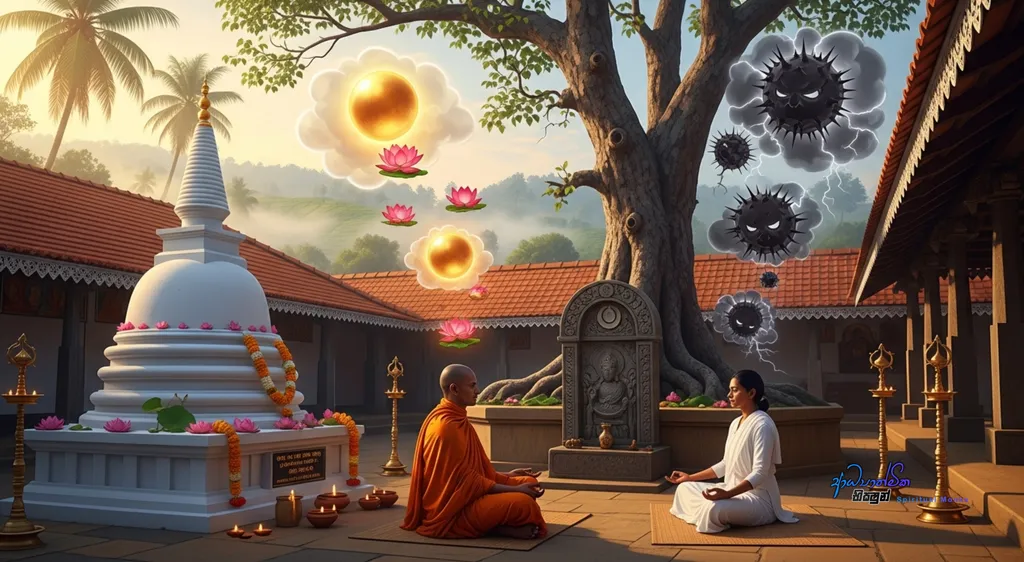
Seeing the World Through a Mindful Lens
This is how vast a tool mindfulness is. We are still trainees; our mindfulness is not yet complete. As you go about your household life, facing various troubles and painful incidents, you use these very experiences in your environment to help you know your mind. This is how mindfulness becomes such a great help. That is why we constantly say: try to watch your mind, try to remain mindful. Your attention may break, you may become unmindful. Whatever happens, you must continue to practice, little by little.
This advice is for anyone, of any religion or nationality. As you begin, do not expect huge results all at once. Do not expect to maintain continuous mindfulness from the start. Practice little by little. As you do, the way to practice will become clear to you, in a way that suits you. The ‘how-to’ reveals itself through the ‘doing.’
A Deeper Empathy: Understanding Others Without Psychic Powers
As you continue this practice of knowing your own mind, something amazing happens: you begin to understand the thoughts and feelings of others. This is not a psychic power, like the supernormal knowledge of reading others’ minds (Paracitta-vijānana ñāṇa). You may or may not have such spiritual abilities. But even without any such powers, the experiences you gain by maintaining mindfulness give you the ability to understand other people. The more you practice, the more you understand them.
Think about it: who understands others better? The practical person, or the theorist? The one who applies the Buddha’s teachings, or the one who only talks about them? The answer becomes clear. In this way, you can understand anyone, whether they are rich, middle-class, or have a low income.
Based on the extent to which you investigate your own mind, you can understand others. You can see: ‘How much desire does this person have? How much anger? How much jealousy? How many good thoughts? How many bad thoughts? What is their behavior like?’ This becomes perfectly clear. This is what I meant by the title of this exploration: mindfulness helps you see the world.
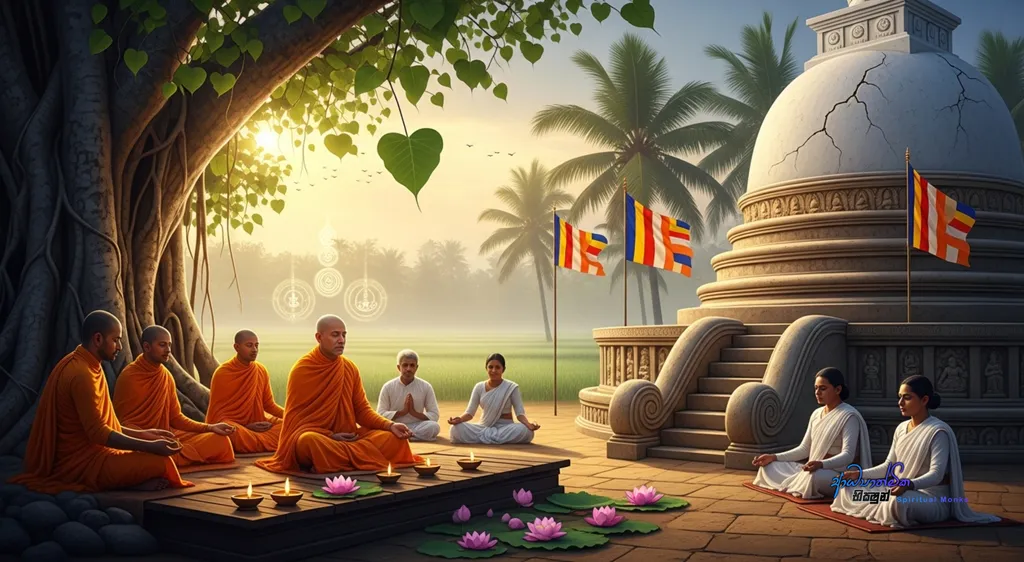
An Expansive Awareness: From Humans to the Unseen World
You are already experiencing this, even as a trainee. As you continue to practice, your ability to understand the world will grow. This understanding will extend beyond just humans. You will begin to understand the minds of the pets you raise and other animals. Furthermore, for one who has developed their meditation and gained abilities like the ‘third eye’ or the divine eye (dibba-cakkhu), they can begin to understand the minds of unseen beings in the spirit realm (preta loka).
Again, this may not be the psychic power to read minds directly. But based on your own experience with defilements (kilesa), you can perceive whether these beings are mentally higher or lower than you, whether they have more or fewer defilements. You gain the ability to understand the minds of all visible and invisible beings in this world, in proportion to your own practice and experience.
You will understand the minds of your children and grandchildren. See how widely this mindfulness applies, to all beings, seen and unseen. Those who have taken this to the highest mental state are the Buddhas. So you can reflect, with practical insight, just how vast the understanding of a Buddha must be.
Consider the deep comprehension of the Silent Buddhas and the Arahants. And even those on the path,the Stream-enterer (Sotāpanna), Once-returner (Sakadāgāmi), and Non-returner (Anāgāmi),though their understanding is not as complete, they too have a significant understanding of the world. Reflect on how broad their awareness is.

The Lifelong Journey to Wisdom and Equanimity
Through this practice, one who understands finally becomes a neutral, equanimous person. This is a law of nature, the Dhammatā. This is what is called liberating insight. That is a topic for another time, but what is essential to grasp now is how mindfulness helps you see the world. If we continue this practice until the day we die, imagine how much understanding we can gain about the people and the unseen beings of this world.
Therefore, let us make a firm resolution to continue cultivating this mindfulness, to keep applying it practically. No matter our duties or how busy we are, we can practice. We have discussed how to maintain mindfulness in all activities. By engaging in this way, you can gain this profound understanding.
Continue to work practically and consistently. We have shown how to look at this mindfulness from different angles, how to recognize it, how to see it. And we will continue to do so. Use these teachings to make your forward journey successful. Engage in the spiritual life practically. Use these things to attain a higher state of mind.
I believe these points have helped you gain some understanding of your own mind. I trust that this is definitely possible. With that, I conclude today’s teaching. By the power of the Triple Gem, the Buddha, the Dhamma, and the Sangha, may you all be able to grasp and understand mindfulness well.
May you be able to practice it for a long time, until the day you die. May it become a perfection (pāramī) for you, and may this very mindfulness, endowed with wisdom and understanding, help you attain the four stages of enlightenment,Sotāpanna, Sakadāgāmi, Anāgāmi, and Arahant,in this very lifetime.
We invite you to walk this path with us. Read our teachings, and most importantly, apply them practically in your own life. as you practice, questions will naturally arise. Please feel free to share your experiences and questions in the comments section below, via email or contact form. I will do my best to offer guidance in future talks based on your progress. For now, begin this practice with an open heart and a mind free from expectation. Cultivate it correctly, and may you find the clarity and peace you seek.
Thank you for joining us. We hope this blog will be of great benefit to your spiritual journey.
May you all be well and happy.
May the blessings of the Triple Gem be with you all!


