Categories: Other Meditation Teachings
May the blessings of the Triple Gem be with you all!
Welcome to this shared reflection on cultivating inner peace and spiritual growth. Today, we want to explore a practical question that touches almost every seeker on the spiritual path: how can we turn our meditation into a natural, unbroken daily routine? Many of us feel a deep yearning for peacefulness and spiritual nourishment. We begin our practice with genuine enthusiasm, but after some time, maintaining a consistent Buddhist meditation practice becomes difficult. The habit slips away, momentum fades, and we wonder why it is so hard to stay committed.
To understand why our meditation slips away, we must look gently at how our minds operate. When we undertake any action in our ordinary daily life, we usually expect a specific benefit or return. If that tangible reward is missing, our interest quickly wanes. Even when we step onto a spiritual path, this underlying human habit remains active, often subtly undermining our efforts.
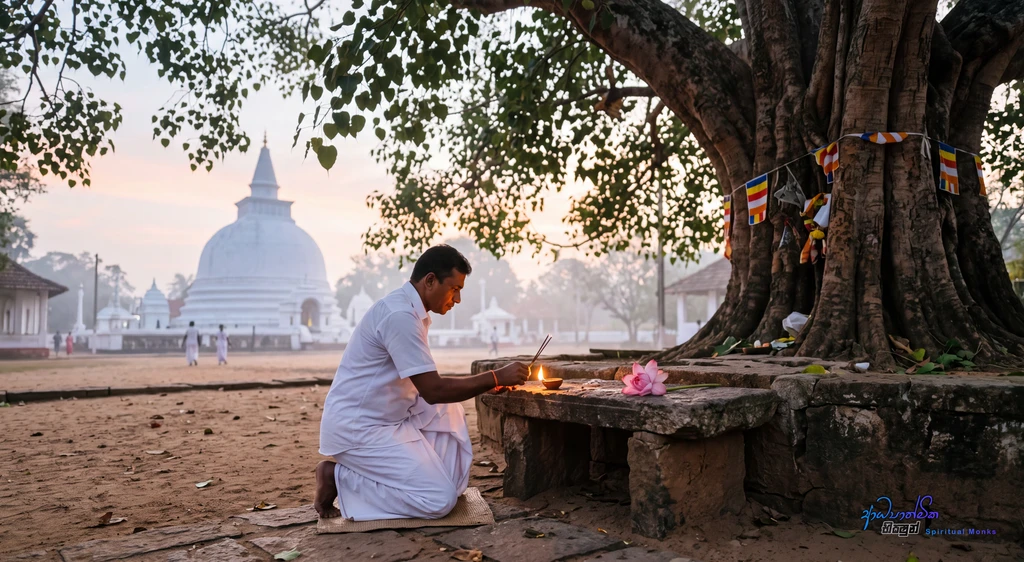
Releasing Heavy Expectations and Finding Joy in Practice
One of the most common reasons people abandon their Buddhist meditation practice is the disappointment that arises when immediate results do not appear. In secular life, we always look for a gain, at the very least a sense of mental happiness. When we turn to spiritual growth, we often carry this exact same consumer mindset into our quiet reflection.
You may have heard teachings reminding us to meditate without expectations. When we cling to rigid outcomes, the mind becomes tightly bound to a goal, which actually prevents quiet stillness from unfolding. If after three or four days, or a single week, those grand results fail to manifest, frustration sets in and we give up.
Many practitioners secretly hold targets for special higher spiritual abilities, known in Theravada tradition as Abhiññā, or direct higher knowledge. They hope to unlock psychic vision, called Dibba-cakkhu or divine eye, or divine hearing, known as Dibba-sota. Others look for the recollection of past lives, termed Pubbenivāsānussati-ñāṇa, the ability to read other minds, known as Paracitta-vijānaṇa-ñāṇa, or psychic powers, called Iddhividha-ñāṇa. Many set strict timelines to reach deep states of meditative absorption, known as Jhāna, working frantically from the first level up to the eighth level.
While these spiritual dimensions exist, striving after them creates a mental obstacle. Does this mean we should have no interest at all? Not quite. There is a vital difference between expecting a profit and having a warm, wholesome affection for the practice itself. Think of how you can love a person deeply without constantly demanding personal returns from them. In the same manner, cultivate a genuine love for your quiet sitting without demanding immediate spiritual rewards.
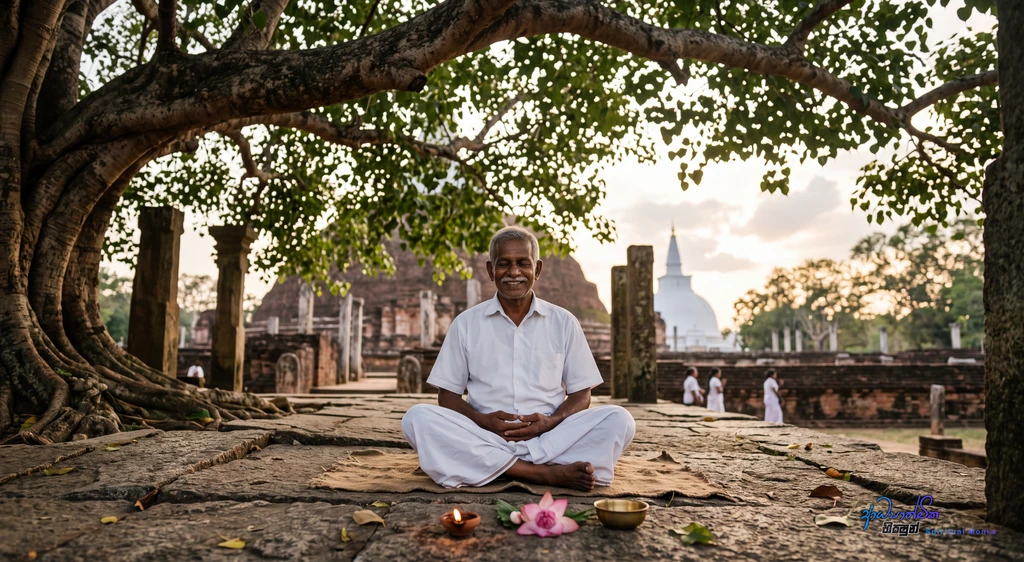
Protecting Morning Clarity from Digital Pollution
To turn your Buddhist meditation practice into an effortless habit, consistency in your daily schedule is essential. The early morning hours offer a sacred opportunity because your mind wakes up clear, fresh, and unpolluted by the turbulence of the world.
When you first wake up, it takes time for complex thoughts, past regrets, future anxieties, and emotional reactions to accumulate. Wise individuals and spiritual seekers consciously protect this early morning clarity. They refrain from immediately reaching for their phones, checking social media, or opening news broadcasts.
In our modern world, morning media is frequently filled with political conflict, senseless arguments, violent news, and disturbing reports. Feeding your mind with this disturbance upon waking distorts your mental state, triggering immediate stress and inner pressure. Regardless of your age, making a firm decision to avoid news and chaotic social media feeds in the early morning and late evening will immediately elevate your mental health and protect your peaceful focus.
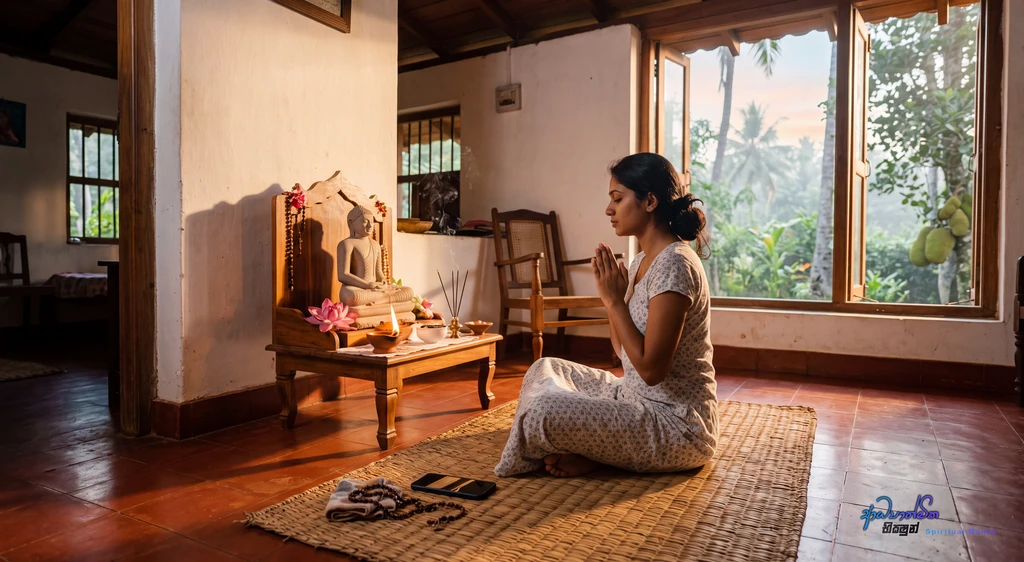
Establishing Sacred Boundaries and Evening Routines
To build a resilient Buddhist meditation practice, reserve a dedicated spiritual time in your daily life. Choose a specific morning time that fits your life, whether it is 3:00 AM, 4:00 AM, 5:00 AM, 5:30 AM, or 6:00 AM, and stick to it consistently.
Equally crucial is your evening routine before rest. No matter how exhausted you feel after a long day, dedicate time to quiet reflection before sleeping. Remove electronic devices entirely from your bed space. The light and radiation emitted by screens put unnecessary strain on your eyes, brain, and nervous system.
As your spiritual awareness develops, you will naturally feel sensitive to the harsh friction of electronic overload. While we use technology mindfully when required, establishing clear boundaries around sleep is essential. If you offer your mind one hour of peaceful reflection before sleeping and another hour upon waking, your mental purity and overall well-being will transform remarkably.
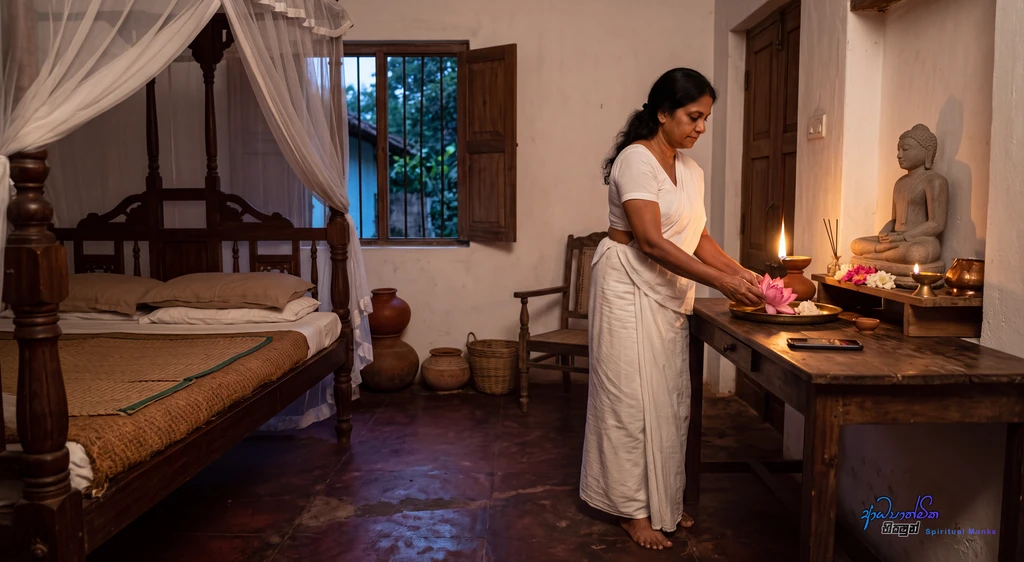
Understanding Consciousness, Sleep, and Subconscious Depth
What you absorb into your mind right before sleeping sinks into the deepest layers of your memory. When you spend your final waking moments engaged in peaceful Buddhist meditation practice, that tranquil energy permeates your rest.
According to the profound psychological teachings of Theravada Buddhist philosophy, known as the Abhidhamma, experiencing active dreams means the mind is not completely at rest. During restless sleep, the mind door, known as Manodvāra, remains active while the physical senses rest.
In deep and truly restorative sleep, consciousness recedes into the passive subconscious flow, known in Pali as Bhavanga. In this state, sensory activity and the mind door temporarily pause, allowing the mind and body to undergo genuine healing. When your mind is thoroughly immersed in daily reflection, even your dreams will begin to mirror your spiritual path, proving how deeply stillness has taken root.

Practical Habit Tracking and Lifelong Commitment
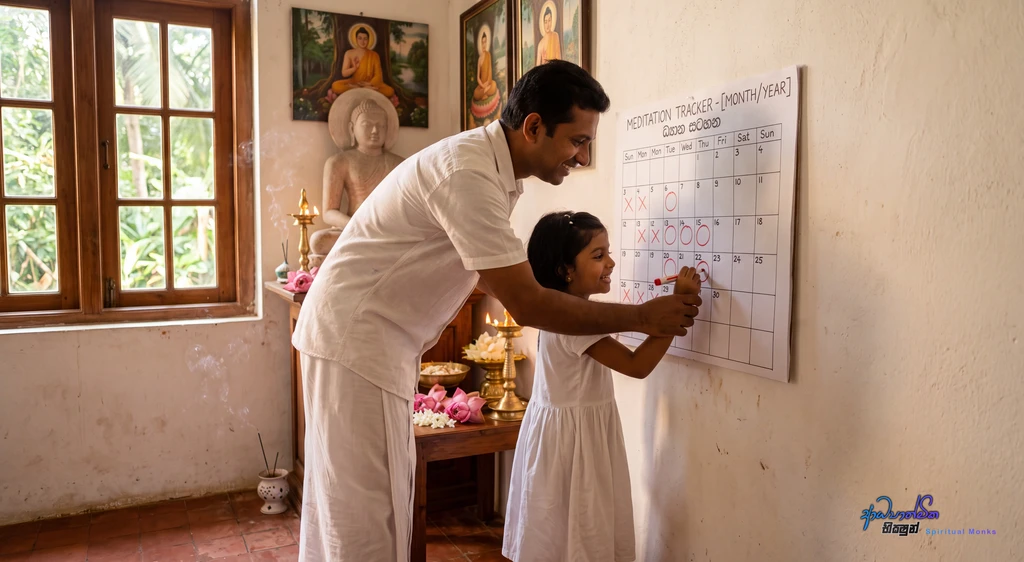
A wonderfully practical method to solidify your Buddhist meditation practice is to track your commitment visually. Keep a physical wall calendar in a spot where you see it every single day. Using a bright marker, mark each day you complete your practice. Watching a visual sequence build across weeks brings a clean, genuine sense of wholesome joy.
Commit to a simple step-by-step timeline:
- Begin with 1 dedicated day of practice.
- Extend your pledge to 3 unbroken days.
- Progress to 7 days, then 10 days, and 14 days.
- Reach the vital milestone of 21 consecutive days.
Once you maintain this momentum for 21 days, the habit takes firm root. After one to three months, meditation becomes an indispensable part of your life, as natural as breathing.
Share this beautiful habit with your family and children. Guiding young minds in loving-kindness reflection, known as Mettā, or recollection of the Buddha, known as Buddhānussati, creates immense wholesome merit, called Kusala. This gives children a firm foundation for their future while enriching your own spiritual storehouse.
Whether you are fully healthy or currently navigating illness in a hospital bed, your age, ethnicity, or background presents no barrier. Make a resolute determination today to nurture your daily stillness and experience the deep liberation of the Dhamma.
We invite you to walk this path with us. Read our teachings, and most importantly, apply them practically in your own life. as you practice, questions will naturally arise. Please feel free to share your experiences and questions in the comments below, via email or contact form. I will do my best to offer guidance in future talks based on your progress. For now, begin this practice with an open heart and a mind free from expectation. Cultivate it correctly, and may you find the clarity and peace you seek.
Thank you for joining us. We hope this blog will be of great benefit to your spiritual journey.
May you all be well and happy.
May the blessings of the Triple Gem be with you all!