


Categories: Other Meditation Teachings
May the blessings of the Triple Gem be with you all!
Welcome. In our ongoing spiritual exploration, we previously discussed how letting go of sensual desires is crucial for progress in meditation. Today, I wish to illuminate another significant obstacle: the anger and hatred that can arise within your mind. We will explore how these powerful emotions hinder your meditation practice and discuss why it is essential to either pacify or completely eliminate them to move forward on the spiritual path. Overcoming anger in meditation is not just a technique; it is a profound step toward liberation.

The Inevitable Friction of Life
In our daily lives, we constantly face friction. Conflicts can arise within your family, with parents, children, or your spouse. They can happen with neighbors, in your village, at your workplace, or place of study. These clashes are an unavoidable part of the human experience. It is the nature of this world, the nature of life itself.
Sometimes, when you experience a great injustice, the inability to bear it leads to conflict. Other times, thoughts of jealousy can give rise to ill will, causing you to secretly wish for another’s downfall. When these feelings become unbearable, we have all seen how they can lead to actions that cause significant harm to others. This, I repeat, is the nature of the world and the nature of our own minds.
It is because of this mental conditioning that we have been wandering for so long in Samsara, the endless cycle of birth, death, and rebirth. This cycle will not end on its own. To break free, we must understand these patterns. If you are developing your meditation through Samatha, or calm-abiding practice, you must learn to suppress these states. Ultimately, for full liberation, they must be completely eradicated. Without doing so, our journey is stalled.

When the Meditative Mind Becomes a Battlefield
Just as I explained in our previous discussion on sensual desires, when you sit for meditation, these unresolved feelings of anger and hatred are precisely what will surface. If you are a person who gets angry easily, or if you hold a grudge against someone, these emotions will arise as soon as you try to quiet your mind.
Perhaps you have suffered a great harm or injustice from another person. Or maybe, as I mentioned, you harbor jealousy and ill will, leading you to wish harm upon someone, either verbally or physically. You may be someone who refrains from acting on these feelings, or perhaps you only engage in verbal conflict. Regardless, it is vital to understand this: once you begin a meditation practice, whether for calm (Samatha) or insight (Vipassanā), any existing anger, hatred, or ill will toward a person or group will make it incredibly difficult to progress.
Why? Because the moment you sit down and close your eyes, instead of peace, your mind will be flooded with hateful thoughts about that person or situation. These malevolent thoughts will try to dominate your mind, appearing relentlessly. Imagine you are currently angry about a series of events where you feel wronged. You sit to meditate, perhaps using a method we have discussed like the ‘Third Eye’ or ‘To the Brahma Worlds’ practice. You assume the posture, close your eyes, and attempt to build concentration, or Samādhi. But it feels impossible. The hateful thoughts surge forward. The anger returns. The injustice you suffered replays over and over in your mind. This is the nature of the mind. I repeat, the mind is like this, and we must understand it thoroughly.

The Ghosts of Past and Present Grievances
Perhaps nothing is making you angry in the present moment. But as you meditate, your mind may pull up a memory from years ago—an injustice you suffered, a dispute over land or property. Suddenly, that old anger comes rushing back, and a continuous stream of resentful thoughts begins.
Let me give you a powerful example. Imagine your father was murdered. In the time since, you have listened to the Buddha’s teachings and learned from monks, telling yourself, ‘I should not hold onto hatred; I should not be angry.’ You have managed to restrain these thoughts in your daily life.
But now, you sit for a session of calm or insight meditation. You may not be a person prone to sensual desire, so that is not what arises. Instead, you suddenly remember the person who killed your father. A powerful hatred begins to bloom in your mind. Thoughts that were dormant for days now surface: ‘I should have taken revenge.’ ‘I should have done this to him.’ ‘I should have stabbed him.’ ‘By doing so, I could have brought justice for the wrong done to my father.’ These kinds of thoughts begin to operate in your mind, and this is how ill will turns into deep-seated hatred.
This is a natural tendency of the mind. It can happen to anyone, regardless of race, caste, religion, or age. It is a universal human potential. A person with well-developed mindfulness can recognize this as just a thought and learn to subdue or eliminate it. This is what we must understand. Devadatta’s hatred for the Buddha was just like this, a pattern repeated across many lifetimes in Samsara, which he was never able to overcome.
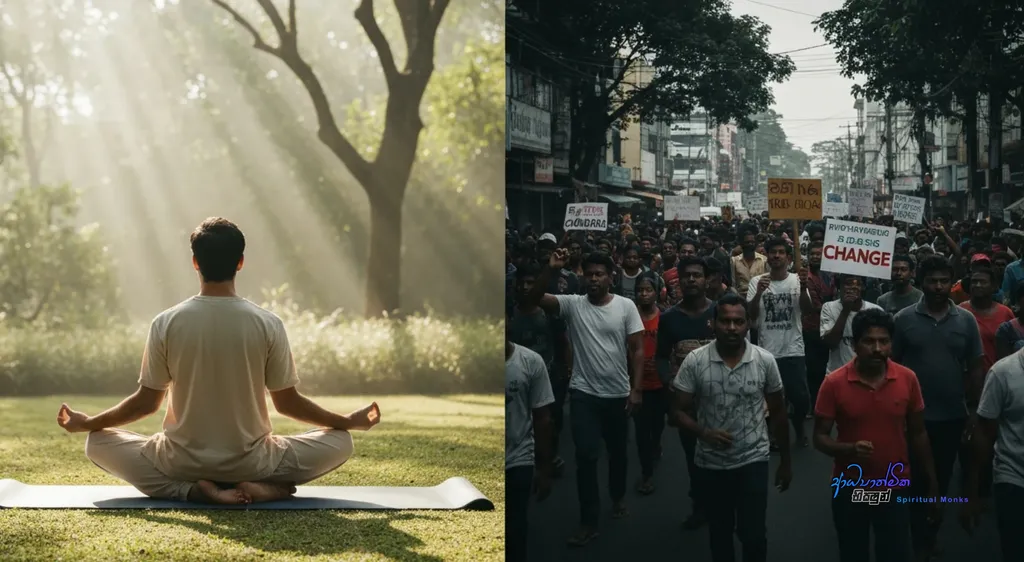
See how dangerous hatred is. The Buddha once taught that if you truly knew the harm caused by anger and rage, you would not even scowl at another person. That is how destructive it is. Therefore, if you seek spiritual progress, it is absolutely essential that you either suppress this anger, hatred, and rage through calm-abiding meditation or eradicate it completely.
The Compulsion for the Last Word
Anger doesn’t only manifest as a desire for physical revenge. Consider this common scenario: someone says something hurtful to you at work, or a neighbor, family member, or friend offends you. In that moment, you are unable to reply. You come home and sit down to meditate. As you try to calm your mind, the incident replays. ‘Oh, I should have said this to them! It didn’t occur to me then.’ The mind starts planning: ‘Tomorrow I will say this,’ or ‘I’ll say it right now.’ You might even pick up your phone to send a WhatsApp message, a voice note, or some subtle hint to get your point across. You plan exactly how you will handle it tomorrow. Your mind is no longer able to concentrate; it is consumed with this recurring thought.
When anger enters our mind, notice how it mentally drags us down and takes complete control. I have observed that many women, in particular, feel an unbearable urge to have the last word verbally. From our experience speaking with many people, we see this often. They feel they cannot rest until they ‘tell her off.’ The event may be planned for tomorrow, but the mind is already rehearsing the planned words, the subtle hints, over and over again. This is the mind’s nature.
You might be at home, washing clothes, cooking, or doing chores, but the thought keeps returning: ‘I didn’t get to say what I needed to say. I must say it.’ For many, peace only comes after they have said it. It becomes a form of stress, a pressure that builds until it is released. It can even prevent sleep. Many people dream about the confrontation they are planning for the next day at the office, school, or workplace. It’s the first thing they remember upon waking. As you open your eyes or put your feet on the floor, that thought is there.
See how powerfully anger operates in our minds? Many people only think of anger in its most extreme, hateful form, but this relentless urge to verbally crush another person is also its expression. It is the mind’s nature to want to assert itself by putting others down. Even for me, the monk delivering this teaching, my mind has this same nature. The difference is that through understanding, we are in the process of eliminating it. We share this with you because it is possible for you to do so as well.

The Physical and Mental Toll of Anger
When we are caught in anger, some people may not resort to physical violence, but instead use their words to crush others. This is how they release the pressure of their anger. If this pressure is not released, it can be incredibly difficult to bear. Your head feels tight, constricted, an immense pressure.
Some people can’t even eat. Pay close attention the next time you feel angry. Observe with mindfulness how your blood circulation speeds up, how your body begins to operate in a strange way. If you study this, you can witness it for yourself. Many have already experienced this directly.
This is the nature of the mind, a truth we must understand. We seek release by retaliating verbally. However, from a spiritual perspective, both physical and verbal aggression are detrimental. If you have started meditating but have not yet attained any stage of enlightenment, any deep state of absorption (Jhāna), or even stable concentration (Samādhi), these recurring memories will make it impossible to unify the mind.
The mind will simply follow the train of angry thoughts. We have previously discussed how a concentrated mind can be used to solve problems effectively, because it is focused on a single object. You can explore this topic in our other articles. But in this case, the mind of the meditator fixates on the hateful incident, and instead of finding a solution, it amplifies the anger. That becomes its single object of focus.

The Wise Response to Anger During Meditation
The nature of the mind is to empower what it focuses on. So when you sit with your eyes closed, trying to concentrate, that hateful memory will keep recurring and growing stronger. What should we do in this situation? We must watch it with mindfulness.
An unskilled reaction is to give in to the anger. Some people, overwhelmed by hateful thoughts during meditation, will abruptly get up. This demonstrates a lack of mindfulness and self-control. They will grab their phone, call the person, and yell at them or send an angry message. Or they will call someone else to complain about that person. If it’s someone prone to physical action, they will immediately start planning how to strike back. This is how anger can lead to harmful situations in the present moment, as we often see in the news and on social media. Think about what has happened when you have let your anger take over.
Even small things can trigger it. You might be meditating, and a noise from outside disturbs you. A thought of anger arises: ‘Damn, I can’t meditate!’ A neighbor might be playing loud music. This is socially inconsiderate, of course, but what if this happens every day? If you go somewhere else, a similar disturbance might occur. Will you fight with them every single time? You won’t be able to meditate at all.
The skillful approach is to see the noise as an obstacle to work with. If you can eliminate the anger that arises and continue your meditation for your usual forty minutes, hour, or two hours, that is true practice. After your session is over, you can calmly inform the person to lower the volume. But during the meditation, the disturbance is a test for your practice. Similarly, many people forget to silence their phones and are interrupted by calls. They get up, answer it, and their concentration is gone. The meditation session is over. This is why I always advise silencing your phone before you begin.

Embracing Discomfort with Mindfulness
Think of all the times things like this have happened to you. Even a mosquito bite can feel intensely irritating during meditation, sparking a surprising amount of anger. This is not because the bite is worse; it’s because your mind is focused on a single object, so any sensation becomes magnified and clear. In daily life, your mind is scattered across many thoughts and objects, so you don’t notice the anger as clearly. When you meditate, you might think, ‘My anger is getting worse!’ but it’s not. You are simply becoming more aware of what was already there. I have mentioned this before, particularly when discussing sensual desire.
So, what is the correct practice? If anger or hatred towards a person or group arises in your mind during meditation, you must see it clearly: ‘This is something arising in my mind. This anger, this hatred, I must either pacify it or eliminate it. If I do not, the only person I am harming is myself.’ Understand that it directly prevents your own spiritual progress in this very life. Maybe you are a young person whose partner doesn’t understand your practice and disturbs you when you try to meditate. This can cause immense anger. This happens due to their lack of understanding.
I often advise people in this situation to find a way to meditate without the other person knowing. There is no need to feel hatred or anger toward them. Their interference comes from ignorance. One day, when they understand, they too might begin to practice. And on that day, they will face their own obstacles, perhaps as a result of the obstacles they created for you. This is the nature of the Dhamma.
So, here is the crucial point. When you sit to meditate, and a thought of hatred or anger arises, do not get up and react verbally or physically. As much as you can, remain still and watch that thought with mindfulness. Use the principles from our teachings on mindfulness, especially the one about silently watching the mind. You must look at these things with a clear, mindful attention. Otherwise, you cannot move forward on this path. As long as there is hatred in your heart, developing your meditation will be difficult.

A Common Misconception: ‘I Can’t Meditate Because I’m Angry’
Please do not misunderstand this teaching. Do not think, ‘My mind is full of anger and hatred, so I cannot meditate.’ This is an ignorant, foolish thought. People with anger and hatred are precisely the ones who must meditate! They are the ones who can make progress. You don’t become an Arahant, a fully enlightened being, before you start meditating. We are trying to reach such a state by identifying these defilements (known as Kilesas), suppressing them, and systematically eliminating them. So please, do not fall into such a foolish trap.
Some people say, ‘Venerable Sir, I experience too much anger, so I can’t meditate.’ I have given them this very answer. Those who experience anger and hatred are the ones who need the practice most. Everyone has thoughts; you can never wait until all thoughts disappear to begin meditating. You must meditate *with* the thoughts. That is the point we have to understand.

The Path to Freedom: Observing Anger Until It Dissolves
According to the Buddha’s teachings on Sati Sampajañña (mindfulness and clear comprehension) and the Satipaṭṭhāna (the Four Foundations of Mindfulness), this is what you must do: when anger comes, observe that thought with sharp mindfulness while keeping the mind as concentrated as you can. If you haven’t yet developed concentration, simply watch the mind with clear awareness.
It can feel like immense pressure, a huge problem. Your head might feel tight, as if your skull or brain is being squeezed. There is nothing to do but to continue watching these sensations with mindfulness. When you watch them, you begin to understand them. You gain the ability to see clearly. Try to understand what is happening: ‘It is only because of this anger that I feel this pressure.
It is because of this conflict that I feel this pain, this harm.’ You will be able to realize this for yourself. When you understand this, you become free. You are released from those hateful, angry thoughts. The anger and hatred in your heart subside. The thoughts become normalized, simplified, just ordinary mental events, no longer charged with malevolent energy toward that person or group. That is the state that arises.
Our goal during meditation is to eliminate these thoughts. If you manage to do this, then perhaps the next day at work, you can address the injustice without hatred. Though I do not endorse retaliating at all, as even a little residue of ill will can disturb your practice. But some people find it impossible to hold it in. I say this only to encourage a sense of control.
However, after you have sat in meditation and mindfully dissolved the anger, you may find that the next day you have no desire to say anything at all. You might see it as useless. And sometimes, an opportunity will arise to explain things clearly to that person, or you might even witness with your own eyes how they face similar situations themselves.

Anger as a Hindrance and the Path Forward
You must understand that the hatred in your mind is an obstacle to attaining deep meditative states (Jhānas) or higher knowledges (Abhiññā). In the Buddha’s teachings, you know there are Five Hindrances, or Nīvaraṇas: sensual desire (kāmacchanda), ill will (vyāpāda), sloth and torpor (thīna-middha), restlessness and worry (uddhacca-kukkucca), and skeptical doubt (vicikicchā). This anger operates through the second hindrance, Vyāpāda, or ill will. It is a direct barrier, and we must understand it as such.
This aversion can even be directed at yourself. Some people sit to meditate and feel pain in their legs. They develop an intense, hateful thought towards the pain: ‘What is this damn thing? I can’t stand this leg pain!’ The Buddha’s instruction, especially within the Contemplation of Feelings (Vedanānupassanā) of the Four Foundations of Mindfulness, is to observe such pain with equanimity and understand its nature. Getting angry at the pain is pointless. It doesn’t help you understand it. Hitting or blaming someone else is useless. Even cutting or crushing your own legs would be meaningless. These are all ignorant, foolish actions.
So, remember this: if a thought of anger arises during meditation, and it returns again and again, and you find it impossible to concentrate or recite your meditation phrases, then turn your attention directly to that tormenting, conflicting, hateful, angry thought. Make it your object of meditation. Try to understand it completely. Strive to understand what is happening. If you make this effort, you can most certainly overcome it.
This doesn’t mean you will become fully enlightened from that one thought, though for some, that is a possibility. If someone truly understands such a thought, they could realize Nibbāna (liberation). This is relative to each individual’s journey. But do not run away from it. You cannot evade it anyway; the thought will surely return again and again.
Try your best not to let anger or hatred control you. Instead, use your developed mindfulness to bring that anger and hatred under your control. When you do, you will feel a great sense of relief. You will be able to reduce these defilements and move forward with your life and practice. In this article, I have explained how anger arises, how it affects your meditation, and the ways to suppress or eliminate it, providing the fundamental understanding you need.
With that, I conclude this teaching on ‘Moving Away from Hatred is Progress in Meditation.’ May the power and blessings of the Buddha, Dhamma, and Sangha, the Triple Gem, give you all the ability to understand these matters well and act upon them.

We invite you to walk this path with us. Read our teachings, and most importantly, apply them practically in your own life. as you practice, questions will naturally arise. Please feel free to share your experiences and questions in the comments below, via email or contact form. I will do my best to offer guidance in future talks based on your progress. For now, begin this practice with an open heart and a mind free from expectation. Cultivate it correctly, and may you find the clarity and peace you seek.
Thank you for joining us. We hope this blog will be of great benefit to your spiritual journey.
May you all be well and happy.
May the blessings of the Triple Gem be with you all!.


