


Categories: Other Meditation Teachings
May the blessings of the Triple Gem be with you all.
Welcome. In our spiritual community, we are dedicated to helping you develop your meditation practice, balancing both tranquility (Samatha) and insight (Vipassanā). Ouar goal is to offer practical guidance to help you cultivate your mind, your heart, and your spiritual well-being. Many who have engaged with these teachings and applied them have experienced profound results. They know within their own hearts the progress they have made, and they also know what areas still need work. Our teachings aim to provide answers and support for every step of this journey.
The path we explore is not one of mere words; it is a path of direct, practical experience. We only share what is possible to achieve. The Buddha’s teachings are meant to be realized within yourself. He never limited his message to just words or sermons, because a teaching is only useful if it can be put into practice. Our purpose is not to trap you in stories or illusions, but to help you genuinely develop your inner life.
People of all ages and from various religious backgrounds join us on this path, and they are seeing real results. They share their experiences of mental development with us, and it brings great joy to see this growth. We do this without any worldly or narrow-minded goals. Our sole aim is to support the development of your spirituality.
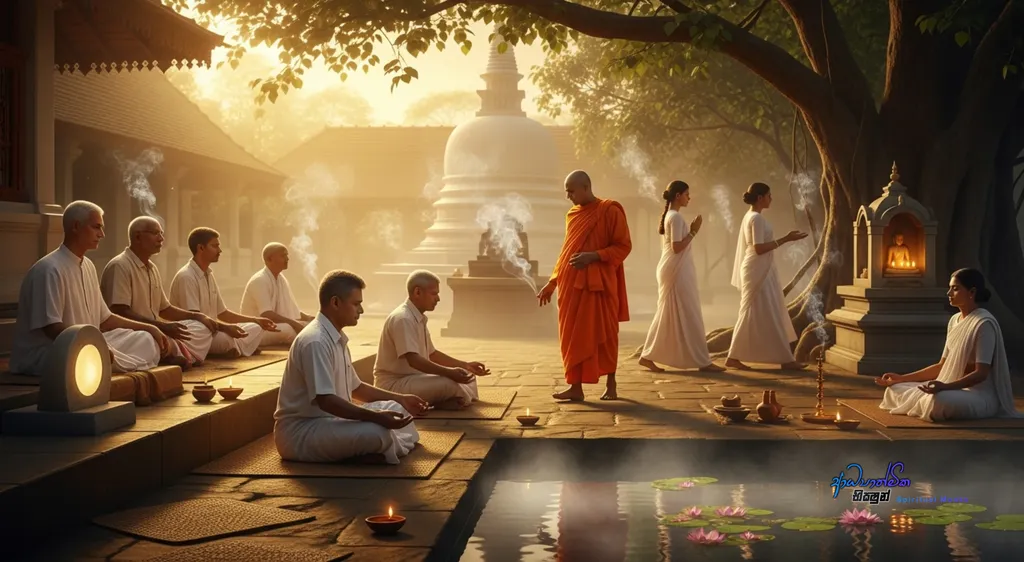
The Greatest Obstacle: Understanding Sensual Desire (Kāma)
As we walk this path of spiritual development, we encounter obstacles. Today, I want to shed light on one of the most significant barriers, especially for those of us living a lay life in the world. Many who follow these teachings live ordinary lives, and the most common challenge they report, and the one we see most clearly, is the obstacle of what we call kāma.
In Buddhism, kāma refers to sensual desire, the craving for pleasure through our senses. You may have seen this as the topic of our article, and for many, this has become a major hindrance. We will explore how to overcome sensual desire and what it truly means for your practice.
You Don’t Need to Be a Monk to Begin
From the very beginning, we have always emphasized this: do not worry about your external circumstances. It doesn’t matter if you are a layperson or ordained, what your family background is, or what responsibilities you hold. You are entangled in duties, relationships, and bonds. You may feel that you cannot escape them, perhaps even to the point where thinking about an ordained life is impossible.
This is precisely why we say: don’t let your situation stop you. Do not worry about your age, your social standing, your race, or your religion. Don’t think about whether you are poor or rich, or even about your illnesses. Simply focus on your meditation. Focus on your spiritual growth. Do not let these external matters enter your mind. If you think, ‘I will develop spiritually only after I become a monk,’ you may never get the chance. You could pass away before then. You could become bedridden or fall ill. Life is full of such uncertainties.
That is why we urge you to cultivate your inner life right now, whether you are a layperson or ordained. Obstacles arise for everyone. A monk faces troubles, though perhaps fewer than a layperson. A nun faces them as well. They overcome these challenges and continue on the path. In lay life, you will face more, but you must still engage with the practice. We never know when or where our life will end. Death does not care about our responsibilities or our plans; it comes at its appointed time. You have seen this in your own life experiences.

What Is Sensual Desire, Really? It’s More Than You Think
Many people have asked me, ‘Is it appropriate to meditate while living a lay life? Can we truly develop spiritually?’ I have answered this in many ways, particularly in a teaching on whether celibacy is required for meditation. Today, I want to talk about moving away from sensual desires.
When we speak of kāma, or sensual desire, we are talking about things that please our five senses: the eye, ear, nose, tongue, and body. These are the things we derive the most pleasure from. The first thing that comes to most people’s minds is sexuality. But this is a misunderstanding. Kāma is not just sexuality. It is anything that intensely pleases your senses. For example:
- If you are obsessed with food, that is a form of kāma related to the sense of taste.
- If you are addicted to listening to music, that is a form of kāma related to the sense of hearing.
- If you are fixated on reading useless things, like romance novels that offer no real benefit, that is also a form of kāma. While reading is good in a worldly sense, from a spiritual perspective, such material often fuels sensual fantasy.
- If you love to travel constantly, to go on pleasure trips to please your eyes, this too falls under kāma.
These are just a few examples. One person’s strongest attachment might not be sexuality, but food. They are most interested in pleasing their tongue. Another person might need to listen to music all the time; that is where they find their greatest pleasure. Yet another might be restless, constantly wanting to travel and wander. This is how we can begin to see our own patterns and understand how to overcome sensual desire in all its forms.

How Sensual Desire Hijacks Your Meditation
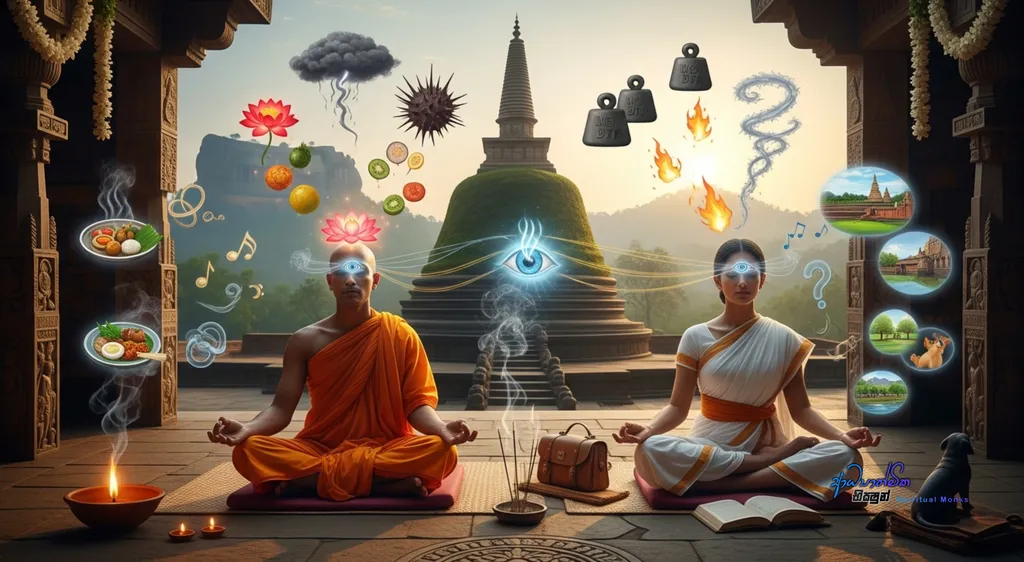
This is not about saying ‘don’t eat,’ ‘don’t listen to music,’ or ‘don’t travel.’ Please remember this. The issue arises when you sit down to meditate. Whether you are practicing a tranquility meditation like focusing on the breath (Ānāpānasati), a loving-kindness (Mettā) practice, an insight meditation like the Four Foundations of Mindfulness (Satipaṭṭhāna), or a specific technique like the ‘Third Eye’ or ‘Path to the Brahma World’ methods we have shared, something will inevitably come up to disturb your mind.
What comes up is your strongest attachment. For some, when they sit to meditate and focus their mind, for example, between the eyebrows, sexual desire becomes overwhelming. Thoughts of past encounters may arise, or fantasies about new ones. This is the first of the Five Hindrances, known in Pali as Kāmacchanda (sensual desire). The five are:Kāmacchanda (sensual desire), Vyāpāda (ill will), Thīna-middha (sloth and torpor), Uddhacca-kukkucca (restlessness and remorse), and Vicikicchā (doubt).
At that moment, Kāmacchanda takes over. The thought repeats, disturbs your focus, and makes it impossible to stay with the meditation object. Many people, especially women, have told me, ‘Venerable Sir, when I practice tranquility meditation, my sensual feelings become more intense.’ This is a natural tendency of the mind. As you try to quiet it, it brings forth its deepest cravings. The desire can become so strong that it compels you to stop meditating and seek gratification. This is the fierce nature of kāma. It can be very powerful.
If your attachment is to food, you will close your eyes and immediately start thinking about a special rice dish or, as is popular in Sri Lanka, kottu. The thought ‘Oh, if only I had that now’ takes over, and concentration is lost. If you love music, a song will start playing in your head on a loop. If you are a traveler, your mind will wander to places you want to visit, like Sigiriya or Anuradhapura. The same applies to computer games, novels, politics, a romantic partner, or even a beloved pet. Whatever you are most attached to in life will surface and demand your attention, making it impossible to unify the mind. This is the nature of the challenge we face.
The Gentle Path of Gradual Release
When you recognize this, you might think, ‘Then it’s impossible for me to meditate as a layperson!’ Please, do not ever think this way. If you do, you may never ordain, and if you are waiting to ordain before you practice, you may never start at all. However, if you understand these dynamics and work on your meditation in your lay life, through tranquility or insight, your spirituality will begin to develop significantly. You have the ability to do this.
The key is to begin distancing yourself from these sensual attachments. This is how you can truly overcome sensual desire.
- If your strongest tendency is sexual desire, work on gradually reducing it. (I have discussed practical ways to do this in the previous teaching about the necessity of celibacy, so I won’t repeat them here, but I encourage you to explore that teaching).
- If you are attached to food or music, begin to reduce that attachment little by little.
The goal is to lessen the mental clinging. When you reduce the importance of these things in your mind, your physical reliance on them will naturally decrease. Your mind will stop giving them priority.
You might notice that if you are fixated on one desire, like sexuality, you may not care much for music. If you are obsessed with music, you may not have strong sexual urges. Or perhaps your strongest attachment is to the idea of love itself. To go deep into the spiritual world, to attain meditative absorptions known as dhyānas, and the special abilities known as abhiññā, you must systematically and gradually let go of these sensual attachments. Only then can you explore the profound depths of the path.
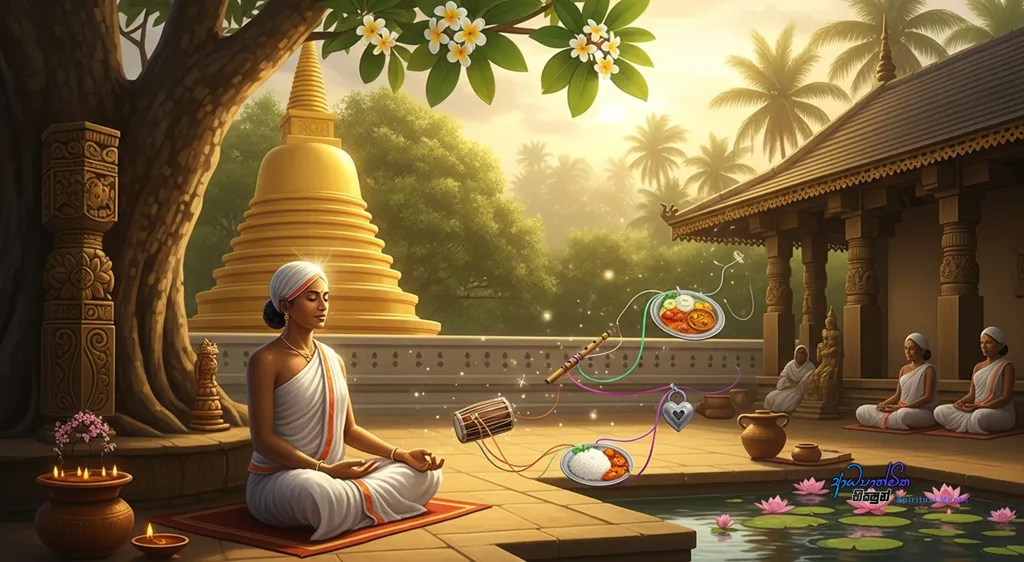
Seeing the Danger: The Wisdom in Disenchantment
Please do not misunderstand this to mean you cannot make progress in lay life. To think that way is to sabotage yourself in this life and for the future. Don’t do that. Continue to live your life, fulfill your work, your responsibilities, your studies at school or university, but set aside time for your meditation. Fulfill your duties to your spouse, children, parents, and neighbors, and practice with a free mind. Otherwise, you will never find the time.
You will be caught in these duties until you die, and when you are old and your body is weak, this practice becomes very difficult. Not impossible, but very, very difficult. The elderly know the challenge of trying to meditate with physical pain.
As your attachment to sensual pleasures lessens, the world starts to feel tasteless. You see that it lacks real substance. This is the truth of the matter. A Buddha would not appear in the world and teach this if it were not so. Whether you attain enlightenment or not, whether you achieve high meditative states or not, this is the understanding that dawns: this worldly chase is meaningless.
Those who have been hurt by sensual desires, who have suffered mentally, endured heartbreak, or faced ruin because of their attachments, understand this very well. They have seen the beginning (the pleasure), the middle (the experience), and the end (the painful consequences). For them, letting go is easier because the mind naturally rejects what has caused it pain.
For those who haven’t experienced such pain, especially the young, it can be hard to grasp. But you don’t have to get burned to understand the fire. Learn from these teachings. And remember, in the long journey of saṃsāra, the cycle of birth and death, you have indulged in sensual pleasures endlessly in past lives. Even if you haven’t experienced them much in this life, you can recall this fact and realize their ultimate nature.

The Impermanence of All Worldly Pleasure
Think about it logically. Can you eat your favorite food every single day? At some point, you will get tired of it and want something else. After a while, that new food will also become tiresome. This is the nature of all sensual pleasure.
A beautiful song you love becomes boring after you hear it too many times. A person you embrace with love, your partner, can become a source of irritation after some time. Children, who are brought into the world with joy, can sometimes feel like a burden. Yet when these things are gone, we feel sorrow. The mind is fickle. It swings back and forth. This is its nature. It is never stable in one place; it is constantly changing. In Buddhism, this is called Anicca, or impermanence.
Reflect on your own mind. Doesn’t it change like this? The pleasure you seek in a sexual embrace fades as soon as the act is over. The delicious food you enjoy only satisfies you for a short time. Everything that pleases the senses is temporary. By contemplating this constant change, even someone young who has not experienced the depths of worldly suffering can begin to understand the true nature of sensual pleasures and start the journey to overcome sensual desire.
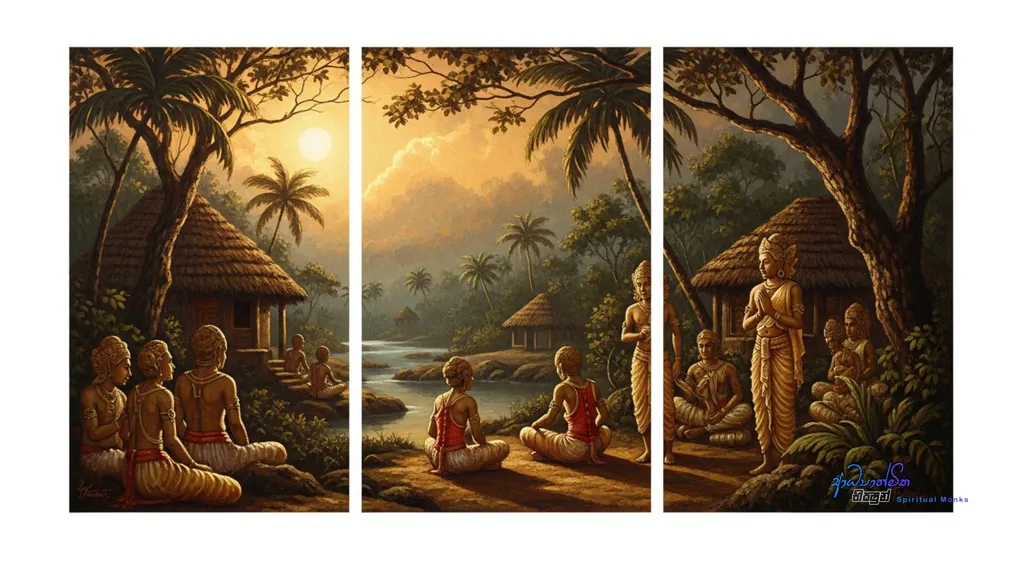
Ancient Stories, Timeless Lessons: The Jātaka Tales
Even great beings like our Bodhisatta, the Buddha in his previous lives, made mistakes. If you read his life stories, known as the Jātaka tales, you will see that he also fell into the traps of sensual desire. There are stories where he was deceived by women, not just one or two, but many. However, because of his accumulated wisdom, he would quickly realize the suffering inherent in these pursuits and renounce them with great determination. He often learned the hard way, through painful experience, and that experience strengthened his resolve to attain deep meditative states.
There are also tales of the Bodhisatta existing as a powerful ascetic with psychic powers, able to fly through the air. In one such story, he saw a woman, became infatuated, engaged in a sexual relationship, and lost all his hard-won abilities. After some time, he remembered the peace he once had and, knowing the path, he practiced diligently to regain his meditative absorptions (aṭṭha-samāpatti) and psychic powers (pañca-abhiññā).
Having learned his lesson, he would then condemn sensual pleasures, declaring them forever unwelcome, and return to the Himalayas to live in meditative bliss. I encourage you to read these stories, found in collections like the ‘Pansiya Panas Jātaka Potha’ or in the Tripitaka itself. They offer profound wisdom.

Modern Attachments and Their Hidden Costs
The intensity of sensual desire is different for everyone. It varies by person, age, and gender. In today’s world, technology has made it much easier to access sensual stimuli. A smartphone can deliver in an instant what once required much more effort. The Buddha spoke of a time when adhamma-rāga, unrighteous, obsessive lust, would increase, leading to ruin. This happens when technology is misused. As these things become more prevalent, you can see where society is heading, and this understanding can also help you see the dangers of sensual desire.
Some people never get tired of it, even in old age. Their desire remains strong. You, however, may be someone who is ready to understand this in middle age and turn towards a spiritual path. In doing so, you become far nobler than one who remains entangled, because you are making an effort to understand. Sensual indulgence also leads to physical illness. Eating too much sugar can lead to diabetes, where even a small wound won’t heal. Unsafe sexual practices can lead to devastating diseases like AIDS. If you visit the hospital wards for these illnesses, you can see the suffering firsthand.
One day, you might look back on a life spent chasing pleasures and feel that you wasted your time. When this truth dawns, you might feel regret. But even if you feel you’ve wasted time, the moment you decide to change is the most important one. That is a noble intention.

Finding the Unshakeable Happiness Within
Many people tell us they regret getting married. Not because their marriage is bad, but because they now feel trapped by bonds and responsibilities. Our advice is always: don’t dwell on what’s past. The reality is what it is. Try to walk the path correctly from where you are now. Some face immense problems in their families, with a spouse, with children, with finances, to the point where thinking about spirituality feels impossible.
Everyone wants to be happy, but no one can be happy all the time. According to the Buddha, happiness is also impermanent (anicca). It changes. If you are unhappy now, you may be happy in the next moment. If you are happy now, you may be unhappy later. Sometimes you might feel neutral, neither happy nor sad. This too will change.
True happiness lies within you, in your own spiritual development. This is what the Buddha taught. He renounced the greatest worldly pleasures, palaces named Ramya, Suramya, and Subha, a beautiful wife, a kingdom, because he saw their inherent unsatisfactoriness and chose the path to liberation, or Nibbāna.
I invite you to conduct an experiment. Compare the happiness you get from sensual things with the peace you feel in meditation. When you are spiritually engaged, even for just five or ten minutes, and your mind is calm, ask yourself: Is there any sensual desire in my mind at this moment? Is this peace and joy I feel born from sensuality, or from my own inner cultivation? You will realize that the happiness from sensual pleasures is brief and fleeting, while the peace from within is a profound and satisfying nourishment. This is especially clear to those who have suffered much from worldly desires.

Your Path, Your Pace: Embracing the Journey
Everyone’s path is different. Some, like the Buddha’s own son, Rahula, entered the spiritual life young, without much experience of worldly pleasures. Others, like the great disciples Sāriputta and Moggallāna, experienced lay life first before finding true happiness in the teachings. Both paths are valid. We cannot force this understanding onto others, especially the young who wish to experience the world. They have their own journey and will have their own ‘turning point.’ You likely had your own turning point, a moment when you realized you needed to change. Therefore, never try to force others to be like you. Let them find their own way.
This has been a long discussion, but it is essential. Understand these principles and act on them. If you do, your spiritual life will develop significantly.
A Final Encouragement: The Path Is Open to You
I will say it again: do not worry about your life situation. Don’t think about your religion, your race, or your social status. Simply practice your meditation. Gradually, little by little, reduce your craving for sensual pleasures. This is how you will be able to concentrate your mind and reach even the first level of meditative absorption (dhyāna). This is how you will make progress with any true meditation method.
You might wonder, ‘If I reduce my sexual desire, will it cause problems in my family life?’ As I mentioned, I have given a detailed answer to this in a previous teaching on whether one must be celibate to meditate. I encourage you to seek it out for guidance on this practical matter.
Please understand these points. The one thing in your life that you have likely neglected is your own spirituality. You are constantly engaged with the world through your five senses. This is the one thing you may not be doing. But you can. If it were impossible, we would not teach it. A Buddha would not appear in this human world and point the way. You are capable of this task.
See the dangers of sensual pleasures. Recall the harm they may have caused you. Gently turn away from them and cultivate your spiritual heart. This will undoubtedly help you on your journey. By putting these teachings into practice, you will see the results of moving away from sensual desire for yourself. You will know the progress of your meditation from your own direct experience.
May the power and blessings of the Buddha, the Dhamma, and the Sangha, the Triple Gem, help you to understand these matters well and to develop your own spirituality.
We invite you to walk this path with us. Read our teachings, and most importantly, apply them practically in your own life. as you practice, questions will naturally arise. Please feel free to share your experiences and questions in the comments below, via email or contact form. I will do my best to offer guidance in future talks based on your progress. For now, begin this practice with an open heart and a mind free from expectation. Cultivate it correctly, and may you find the clarity and peace you seek.
Thank you for joining us. We hope this blog will be of great benefit to your spiritual journey.
May you all be well and happy.
May the blessings of the Triple Gem be with you all!.


