


Categories: Be Happy 24 hours
May the blessings of the Triple Gem be with you all!
Welcome. In our ongoing spiritual exploration, we aim to illuminate the paths that help you deepen your spiritual life. We focus on the practical application of these teachings. Today, let’s explore a topic that touches every one of us: the search for happiness. In this world, we have countless ways to experience what we call happiness.
You know this well. We find pleasure in food and drink, in the feeling of love, in new clothes, cars, and property. We celebrate marriage, the birth of children, and the thrill of travel to foreign lands. We seek excitement in adventurous experiences, lose ourselves in music, and get captivated by movies. This worldly life offers an endless buffet of pleasures.

The Cycle of Craving and Fleeting Satisfaction
Some seek even more intense forms of this pleasure, turning to intoxicants like alcohol or drugs. Sexual intimacy is another powerful source of worldly happiness, and at times, people pursue it to an extreme degree. We are conditioned to constantly seek and experience pleasure; it’s a fundamental drive. Alongside happiness, we also crave freedom, which brings its own sense of satisfaction.
This search extends into our professional lives. A teacher, for instance, feels a deep satisfaction seeing their students succeed and achieve high positions in life. We feel pride in our work and in our service to society. We find joy in nature, swimming in a pool or a lake, wandering through serene landscapes. As I mention these things, you can probably recall the moments and ways you have personally sought and found happiness.
In today’s world, many are attached to their phones, finding a kind of happiness by watching the lives of actors, influencers, and others on platforms like YouTube and Facebook. Whether seeking knowledge or entertainment, it all comes down to one thing: experiencing. This is what we all desire. This drive to experience, however, is rooted in a desire and clinging, a form of craving, which in Buddhist philosophy is called Taṇhā.

The Inevitable Drawback: When Pleasure Leads to Pain
This relentless pursuit of experience can lead to devastating consequences. Some lose their lives in this chase. Many are left with deep regret. There are those who suffer from not being able to attain the pleasures they crave, and then there are those who suffer from the consequences of over-indulgence. This negative outcome, the inherent danger or drawback in sensual pleasures, is known as Ādīnava. Think about your own life, your age, and your experiences. You can see how these truths apply to you.
We keep searching for happiness, again and again. It has become essential to us. Why do we work so hard? Why do we earn money? It’s all to live happily during our time here. There are even songs about it: “Live well for the short time you are here,” they say, because “we don’t know if we will die tomorrow.” This desire to enjoy life to the fullest, right up to the day we die, is a powerful force.

The Turning Point: When the World is No Longer Enough
However, there is a group of people who begin to see the Ādīnava, the inherent unsatisfactoriness of this life. They perceive an unimaginable level of stress and suffering, a feeling known as Dukkha, that seems to have no end. They see this from many different angles. For example, someone experiences a passionate love affair, but when it cannot be fulfilled, they are left with weeping and sorrow. This leads to immense emotional pain and, in some cases, even self-harm.
Others indulge excessively in sensuality and end up with social diseases, experiencing the painful fallout. Those who have tasted the peak of worldly pleasure and suffered its consequences often start searching for a different way, a change in their lives. Then there are others who, even without a major catastrophe, simply grow weary. Imagine eating the same meal every single day, rice and sambol, for instance.
At first it’s enjoyable, but eventually, you get tired of it. In the same way, some people experience all the worldly pleasures, especially the affluent, such as those in wealthy Western countries who often gain independence at a young age, and by their thirties, they find that life feels empty. They ask, “Is this all there is?” This disenchantment can lead some down darker paths, towards stronger drugs, because they are searching for something more. This deep-seated weariness creates a desire for a real change.
Discovering a Deeper Path: The Promise of Mindfulness
For those who have seen the drawbacks, for those who have suffered, and for those who are simply weary of the chase, the teachings of the Buddha can feel like a profound relief. When they encounter this path, they begin to study it and realize its practicality.
The core of the Buddha’s teaching, a foundational system, is called Sati, or mindfulness. When people practice this, they begin to see clearly. They understand how much time and energy they spend suffering and striving just to gain a fleeting moment of pleasure. Even if you haven’t formally practiced mindfulness yet, just by wisely reflecting on what has been shared so far, you can begin to ask yourself: “How much do I truly enjoy life? And for how long does that enjoyment last?”
The true nature of the world becomes clearer as we mature. This maturity isn’t just about age; it can come at seven, sixteen, or in one’s twenties. It is a kind of wisdom that can dawn at any point, often based on our accumulated experiences over many lifetimes, what we call Saṃsāra. In the Buddha’s time, there were many who became enlightened, fully liberated beings known as Arahants, at the tender age of seven.
This shows the profound depth of practical and doctrinal knowledge they possessed. We see parallels today, with young prodigies mastering complex fields far beyond their years. This maturity, this understanding of the world’s true nature, can arrive at any age.
The Buddha’s Journey: From Royal Pleasure to Ultimate Truth
So people from all walks of life, kings, merchants, the rich, the poor, beautiful men and women, those of high and low caste, came to the Buddha. They all came seeking one thing: a path to peace, to a lasting relief or cessation of suffering. They asked, “Is there a state of calm, of extinguishment? What is the path to it?” This ultimate peace they sought is called Nibbāna.
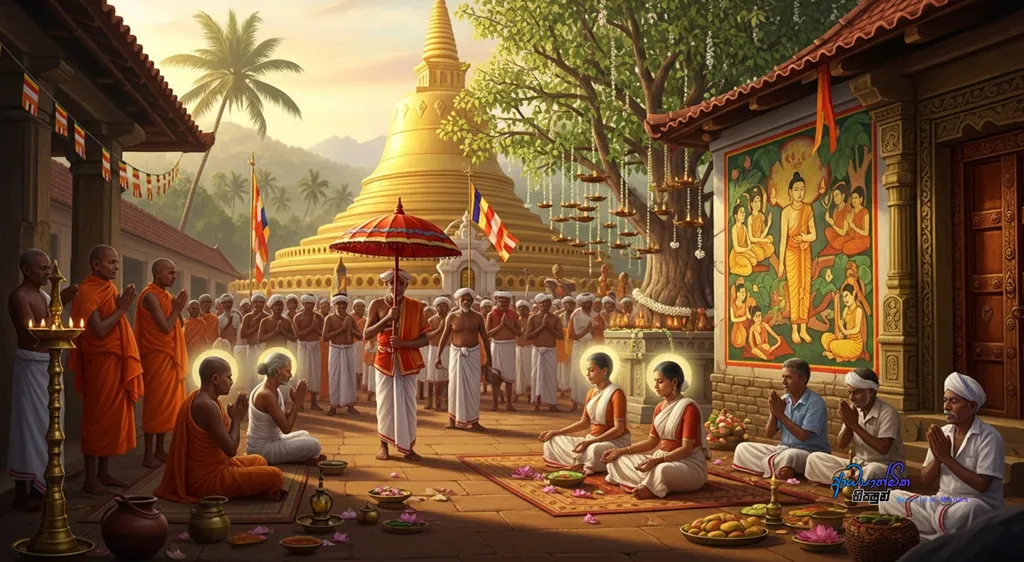
Ask your own heart: after all the experiences you’ve had, the pleasures you’re still chasing, the suffering you’ve endured, don’t you also search for something more, a true release? We have all looked for it. The one who pursued this question to its ultimate conclusion was Prince Siddhartha. He had experienced the pinnacle of royal luxury, the company of beautiful women, and every sensual pleasure imaginable.
Yet, he realized it was not enough and sought something more. He renounced his worldly life, leaving behind even his cherished love, because he saw its ultimate meaninglessness in the grand scheme of liberation. He studied under great teachers like Ālāra Kālāma and Uddaka Rāmaputta, mastering deep meditative states called Jhānas.
But even these blissful states, these powerful psychic abilities, eventually felt insufficient. Like eating the same meal over and over, the mind’s craving for something more, for ultimate truth, remained. His heart knew even these states were not the final answer to achieving true happiness.
The Middle Path: Finding True Happiness Beyond Extremes
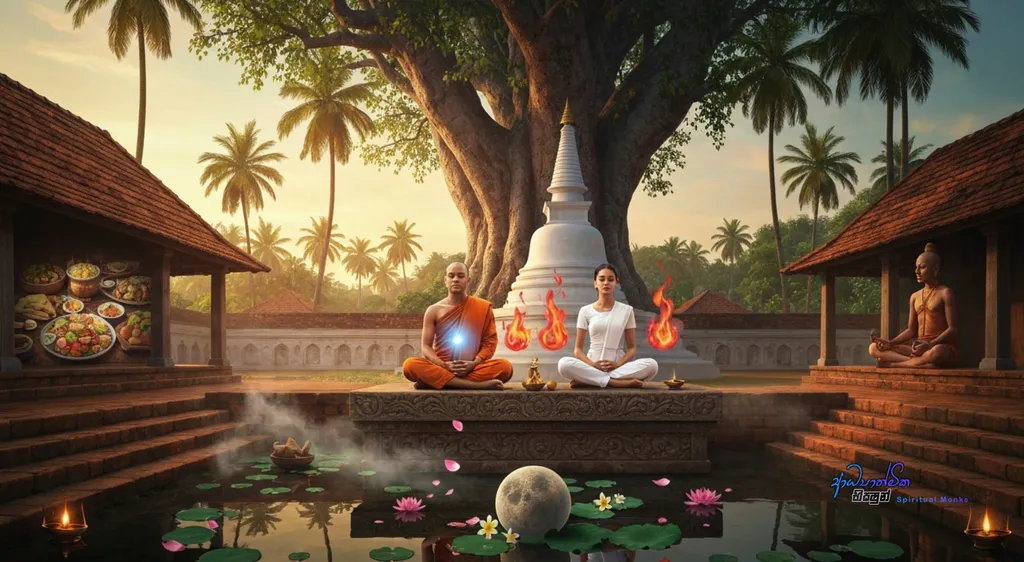
Siddhartha then undertook severe ascetic practices, what is called Attakilamathānuyoga, or self-mortification. But he realized this too was a dead end. He had already rejected the path of sensual indulgence, or Kāmasukhallikānuyoga. By abandoning both these extremes, he discovered the Majjhimā Paṭipadā, the Middle Path. By keeping his mind balanced and centered, he embarked on a unique journey and finally attained supreme enlightenment, becoming a Buddha.
What he found was a happiness so profound it cannot be compared to worldly joy or even the bliss of deep meditation. It is a unique kind of peace, a cooling, an extinguishment of the fires of greed, hatred, and delusion. And this ultimate state of true happiness is found right within your own mind. You can attain this by practically training in what the Buddha taught: the Four Foundations of Mindfulness, or Satipaṭṭhāna. It is through this practice that you can personally verify the truth of these teachings.
More Than a Philosophy: A Practical Path to Liberation
When you practice, you can prove to yourself whether the Buddha’s teaching, the Dhamma, is merely a philosophy, like those of other Western thinkers, or something more. Is it just a collection of profound-sounding words for intellectual enjoyment, or is there a practical reality beyond them? Once you experience it, you will understand whether it is appropriate to label the Fully Enlightened Buddha as a mere “philosopher.” You will see directly through your own mind the true meaning of the words in the scriptures. Compare this to other philosophies; can you achieve the same profound peace by practicing what they teach? Ask your heart honestly.
The importance of practice cannot be overstated. As a person engages in this practice over time, their mind begins to experience freedom. Freedom from what? When people meditate, whether it’s calming meditation (Samatha) or insight meditation (Vipassanā), they often mistakenly aim to reduce their thoughts.
While thoughts do naturally subside as the mind becomes concentrated and lets go of sensual desires, that is not the primary goal. The true aim of mindfulness practice is to reduce our attachment and aversion to our thoughts and experiences.
Observing the Mind: How Mindfulness Frees Us from Suffering
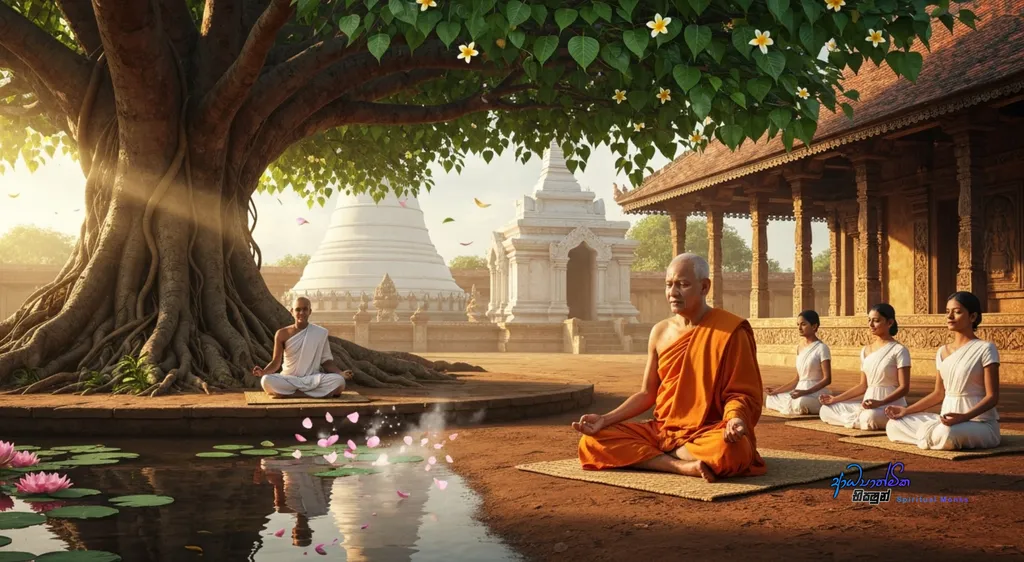
We constantly gather information through our five senses, the eye, ear, nose, tongue, and body. These five rivers of experience flow into the ocean of the mind, bringing with them all sorts of debris. Some experiences we are attached to, some we have aversion to, and some we are neutral about. This influx constantly stirs the mind and has the power to control us. Our work is to recognize this process, and the tool that helps us is Sati, or mindfulness.
Using mindfulness, we observe the activity of the mind. To which thought am I attached? With which person or object am I entangled in aversion? The more you are attached, the more your inner peace is destroyed. The more you experience aversion, the more your peace is destroyed. You can realize this directly for yourself. As this becomes clear, the things you are most attached to will begin to fall away from your mind.
This is the purification from defilements, or Kilesa Pahāna. For example, if you are suffering immensely from a thought of love or attachment to a person, and you apply mindfulness as taught by the Buddha, you begin to see the extent of your clinging. You realize, “I am 100% or even 1000% attached to this person!” As you recognize this day after day, that obsessive thought begins to weaken.
Breaking Free: Applying Mindfulness to All Attachments
As the attachment diminishes, the pain it caused also subsides. As you continue to practice mindfulness consistently, your mind reaches a state where those kinds of thoughts about that love no longer arise. Then, even if the most handsome or beautiful person in the world were to approach you, you would not be swayed.
You wouldn’t be fooled again, because you have understood the nature of that experience from the inside out. You would see that any new attachment is just like the old one, with minor superficial differences. You are no longer naive. You have chosen your path and you continue on it.
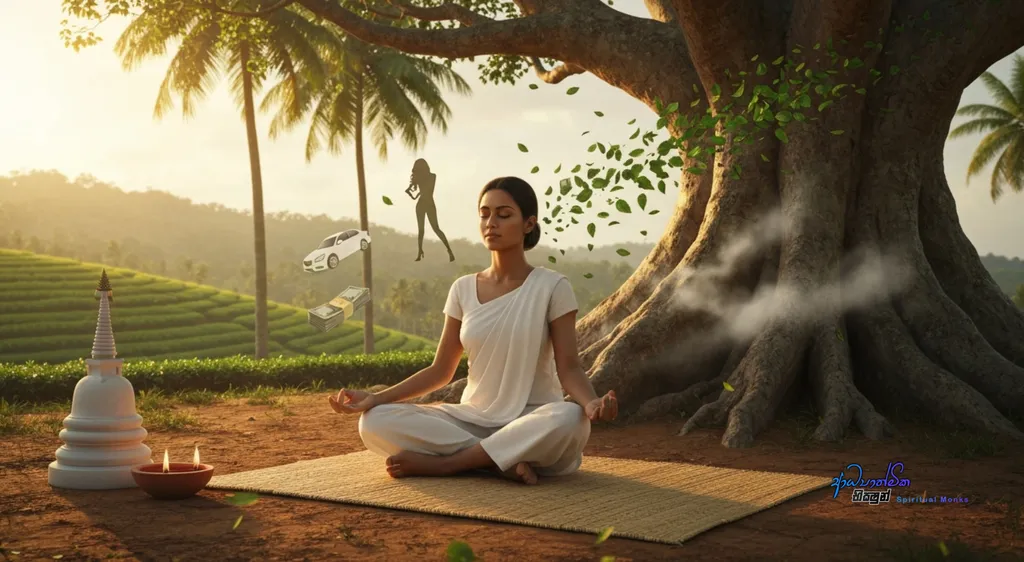
This principle applies to everything in the sensual world, not just love. It applies to your cravings for cars, land, money, and sex. Apply this observation to whatever you are most attached to or have the most aversion towards. As you practice mindfulness and understand the reality of these thoughts, the true process of the world will be revealed within you. This is the path to achieving true happiness.
The Inner Peace of a Liberated Mind
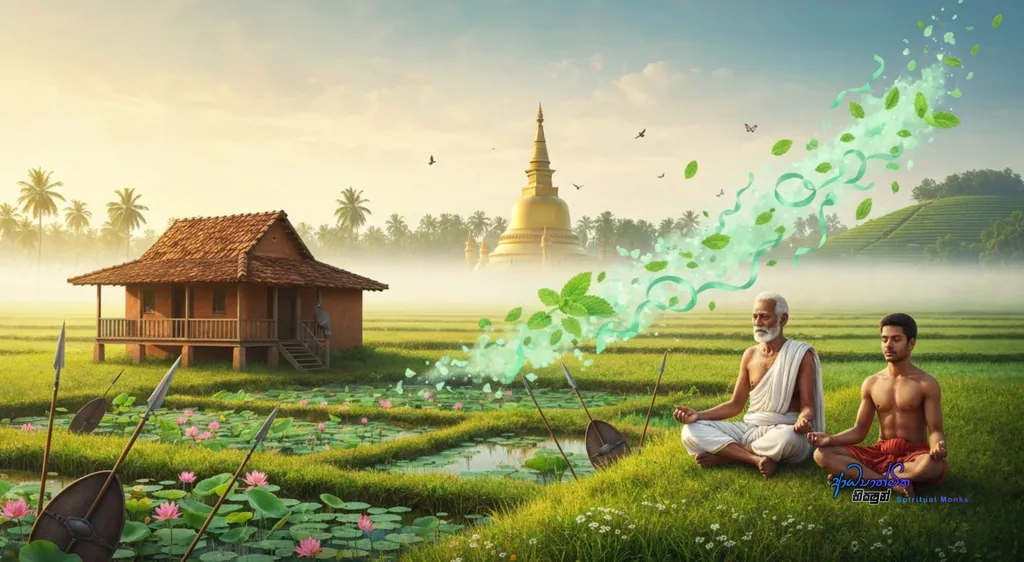
When the inner war between attachment and aversion subsides, peace dawns in the mind. Imagine a battlefield after a war ends; when the soldiers from both sides are gone, the land becomes beautiful and peaceful again. The same happens in your mind. Think of the arguments you’ve had in your home.
Remember the pressure, sadness, anger, and pain you felt? Everyone, regardless of age, has felt this. Now, recall the feeling after the argument is over and there is peace and quiet. Remember the relief and freedom you feel in that moment? That is the kind of peace, the kind of true happiness, that grows in the mind as you lessen attachment and aversion.
You cannot force this reduction; you must recognize it with mindfulness. The more you see how you are bound by these forces, the more your mind experiences a profound and amazing peace and true happiness. For now, you can imagine it’s like the cooling sensation of a mint, though no worldly simile can truly capture it. It is a peace beyond compare. If you practice this consistently, imagine the profound serenity that will grow within you. Everything depends on your practical application.
Your Path, Your Practice, Your Inward-Found Happiness
This truth, taught by the Buddha over 2,500 years ago and realized by all enlightened beings, is something you too can realize through practice. I constantly repeat this word, practice, because it is essential. Through this teaching, I hope you are beginning to understand that everything you need is right here, within you.
True happiness, peace, and liberation are things you must realize for yourself, and the tools are already within your grasp. This understanding is the beginning of wisdom, or Paññā. To make this wisdom mature, you must train. I will not extend this teaching further, as the goal was to give you an understanding of the topic: that true happiness is found within yourself.
May the power of the Buddha, the Dhamma, and the Sangha, the Triple Gem, bless you to practice these teachings and realize this unshakable true happiness and peace within yourselves.
We invite you to walk this path with us. Read our teachings, and most importantly, apply them practically in your own life. as you practice, questions will naturally arise. Please feel free to share your experiences and questions in the comments below, via email or contact form. I will do my best to offer guidance in future talks based on your progress. For now, begin this practice with an open heart and a mind free from expectation. Cultivate it correctly, and may you find the clarity and peace you seek.
Thank you for joining us. We hope this blog will be of great benefit to your spiritual journey.
May you all be well and happy.
May the blessings of the Triple Gem be with you all!


