


Categories: Buddhanussati: Practical Meditation
May the blessings of the Triple Gem be with you all!
Today, for all of you who are part of our spiritual community, I wish to share a teaching on another meditation method that we must practically train in as we develop our spirituality. This practice is a powerful next step on the path.
Who Is This Meditation For?
This teaching is offered with a specific purpose. We have previously introduced two practical meditation methods from the path of tranquility, or Samatha: the “Third Eye Practical Meditation Method” and the “Practical Meditation Method for Reaching the Brahma Worlds.”
This new technique is especially for those who have practiced those methods for a considerable time, perhaps three months, a year, or even longer, but have not yet achieved the results they hoped for. The Buddhanussati meditation I will explain today can bring significant, tangible results. It is also perfectly suited for those who have never attempted any meditation before. You can begin your practice today.
However, I have a request for newcomers: while you can begin with this Buddhanussati meditation as your foundational practice, I encourage you to explore our earlier teachings from the beginning. Doing so will provide you with a deep understanding and offer answers to many practical questions that arise on the path.
This method is also highly beneficial for those who feel stuck. If your third eye has not awakened, or if you have reached the level of light signs (āloka saññā) and find yourself unable to progress further, this practice can help. Similarly, if you have been practicing the method for reaching the Brahma worlds but have not yet been able to generate the states of deep meditative absorption known as jhāna, or even reach the first jhāna, this technique is for you.
Finally, if you have tried any other meditation method continuously for at least three months without success, this practice is perfectly suited for you as well. As I mentioned, it has the potential to yield excellent results.
The Essential Mindset: Practicing with Effort, Not Expectation
It is crucial to approach this Buddhanussati meditation without any specific expectations, as we’ve discussed in our teachings on “Spiritual Hopes.” Your practice should be fueled by genuine interest, dedication, effort, and energy, a quality known in Pali as viriya. When we cultivate our practice with this mindset, the ability to achieve results is definitely within our reach.
From this point on, I will explain how to practice this method and in what manner it should be done. Please listen with great clarity, understand the key points, and begin your practical training today. In our upcoming articles in this series, we will certainly provide answers to any questions that may arise as you engage with this practical teaching.
Buddhanussati: A Universal Practice for Everyone
The foundation for this technique is a method called Buddhanussati, which means “recollection of the Buddha.” We have previously shared a teaching on how to open the third eye using this very practice, which you can find in our series of practical meditation programs. Understanding that can also help you see how to proceed after light signs or mental images appear.
Before we begin, I want to address an important point. When you hear the word Buddhanussati, you will understand that this meditation is centered on the teacher, the Buddha. A person of Catholic, Muslim, Hindu, or another faith might wonder if it is appropriate to meditate on a teacher who is not from their own tradition. This is a natural question.
From our perspective as spiritual monks, your race or religion is not a problem for this training. And for our teacher, the Buddha, it is not a problem either. You might be someone who practices these things secretly from your
You have the right to practice this. Therefore, without thinking about race, caste, religion, education level, whether you are rich or poor, your skin color, or even your age, this can be practiced by anyone. A child over six years old, a young person, an adult, an elderly person, someone near death, or even a person who is sick in bed has the right to practice this. Someone in a wheelchair or a foreigner can also practice this. If you can translate these teachings accurately for them, they can train in any way that is consistent with our guidance.
Preparing Your Space, Posture, and Timing
So, please do not let the fact that this is Buddhanussati meditation, which focuses on the Buddha, become a problem for you. Now, let us discuss how to do the meditation itself.
Finding Your Space
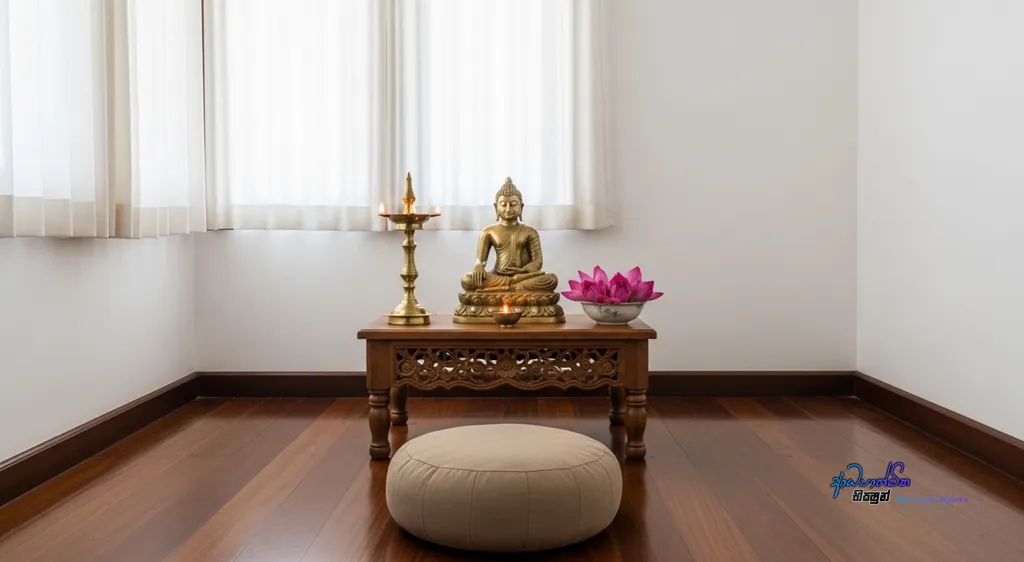
As always, the most suitable place in your home to cultivate this meditation is your shrine room, the place where you pay homage. It is essential to come to this space. However, many people, especially young people, practice in secret because their parents may not understand spirituality or meditation, seeing it as strange. There are many such situations: a wife hiding her practice from her husband, a husband from his wife, or children from their parents.
Those in foreign countries, particularly in the Middle East like Saudi Arabia where even keeping a Buddha statue is difficult, may also need to practice in secret. If you are in such a situation, it is perfectly fine to meditate in your own room. If you can, meditating on the floor is preferable to sitting on the bed.
For everyone else without these challenges, it is best to meditate in front of your home shrine. If your shrine is outside, that is also suitable. If you practice outdoors in nature, under a tree, that is not a problem either. Do not make your location an issue; you can train according to your circumstances.
Choosing Your Posture
For those living in group settings, it may be difficult to even sit up in bed to meditate without others making comments. In that case, you can practice this method while lying down in bed. If you are not concerned about what others think, you can also sit on your bed to meditate. But please don’t take this to mean that lying down is the ideal way. The most suitable method is to sit in front of a shrine. If that’s not possible, sitting on the floor in your room is the next best option.
The most effective posture for both men and women is the full lotus (paryankasana) or half-lotus (padmāsana). Sit with your spine straight, without leaning against a wall. There should be an inch or two of space. If you maintain a straight spine, you often won’t feel the need to lean. This upright posture helps you get results from meditation more quickly due to various effects on our physical body, which we have discussed in past teachings and will explore again. You can use a thin cushion, about an inch thick, to sit on.
When to Practice
You can practice this meditation at a time that suits you, morning, noon, or night. We have previously mentioned practicing loving-kindness meditation (Mettā Bhāvanā) in the morning. If you do that, you can practice this Buddhanussati meditation during the day or at night.
The Core Technique: A Step-by-Step Guide to Buddhanussati Meditation
Now, let us learn how the meditation is done. Through this practice, we are aiming to cultivate the states of deep meditative absorption known as jhāna. Here is how you practice:
- Sit in your chosen meditation posture and gently close your eyes.
- Bring your attention to the middle of your forehead or to the point between your eyebrows. Choose one of these two points and hold your mind there, just as in the “Third Eye” and “Brahma Worlds” meditation methods.
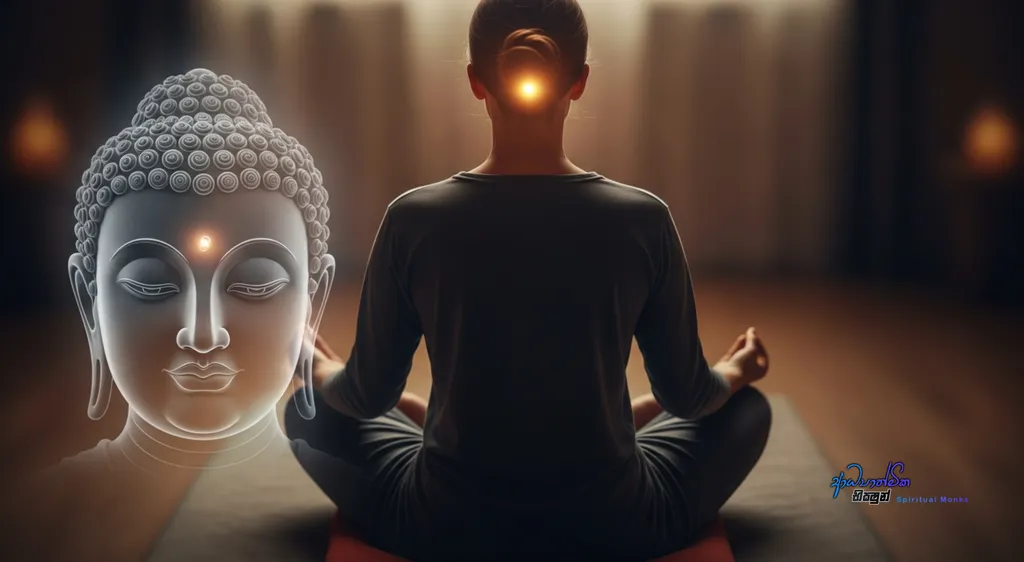
- Once your mind is focused, visualize an image of the Buddha that you find most pleasing, beautiful, and inspiring of faith (saddhā) and respect. It could be a statue you have seen, a photograph, or a painting. Create this image in your mind’s eye at your point of focus.
- While holding this mental image, you must contemplate a specific Pali text that contains the Nine Qualities of the Buddha. Mentally recite the following:
“Itipiso bhagavā araham sammā-sambuddho,
vijjā-carana-sampanno sugato lokavidū,
anuttaro purisa-damma-sārathi satthā deva-manussānam buddho bhagavāti.” - Contemplate this passage at the same pace I recited it—not too fast and not too slow, but at a moderate speed. Do not murmur the words aloud; the recitation should be done entirely in your mind while holding the Buddha image at your point of focus. Let me recite it once more for you to catch the rhythm:
“Itipiso bhagavā araham sammā-sambuddho,
vijjā-carana-sampanno sugato lokavidū,
anuttaro purisa-damma-sārathi satthā deva-manussānam buddho bhagavāti.”
Working with the Mind: Distractions, Meanings, and Consistency
As you practice this Buddhanussati meditation, you are contemplating the nine supreme qualities common to all Buddhas, though our minds will naturally incline towards the Gautama Buddha of our present world system. If you have read books or heard teachings and know the meanings of these Pali terms, for example, that Sammā-sambuddho means “the perfectly self-enlightened one” or that Vijjā-carana-sampanno means “perfect in knowledge and conduct”, those meanings might arise in your mind. This is not a problem. Let them arise naturally.
It is also not a problem if you do not know the meanings at all. Simply continue to recite the Pali verse until the end. Then, after a pause of a second or two, begin again.
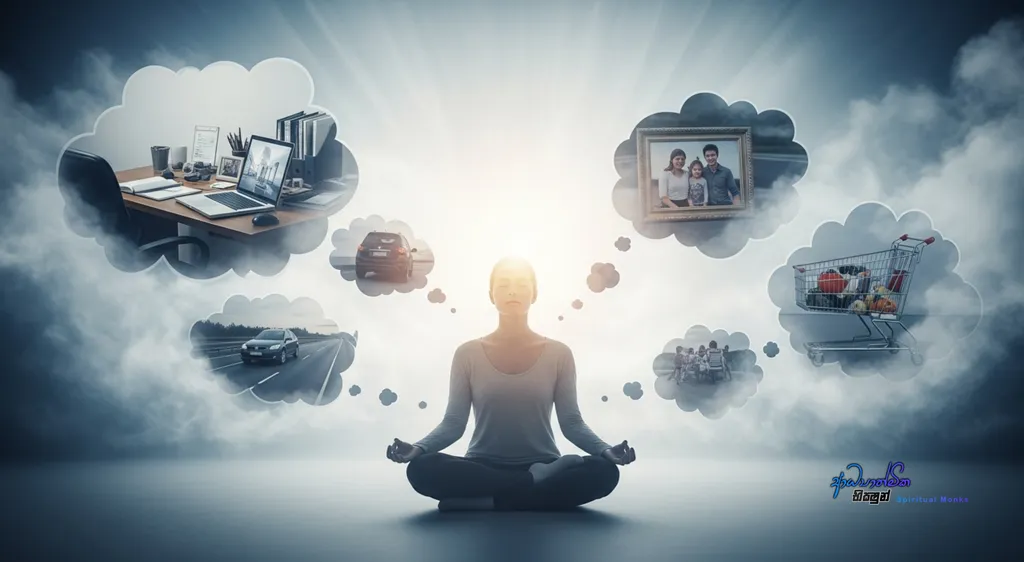
In the beginning, your mind will start to wander. This is normal. Your mind will travel to the past, to things you have done since birth, to your school days, your job, or what you ate yesterday. This is to be expected. Your mind will also travel to the future, to what you need to do after meditation, your plans for tomorrow or next week. If you have strong hopes for the future, like buying a phone, a house, or a car, moving to another country, or pursuing your education, these thoughts will begin to surface.
Even as you are mentally reciting the verse, your mind might drift away, forgetting the chant entirely. After some time, mindfulness will return, and you will realize, “Ah, my mind has wandered.” From that point, gently bring your mind back to the middle of the forehead or the point between the eyebrows. Re-establish your focus there and begin contemplating the verse again. Continue this process of recitation, one repetition after another.
What to Expect: Initial Experiences and Deepening Your Practice
Try to practice at a consistent time each day, such as 8, 9, or 10 PM, after you have finished your work and household duties. Practicing early in the morning after Mettā meditation is also fine. In the first ten to twenty minutes, your thoughts will likely be scattered. However, after that, you will begin to feel them gradually subsiding as your mind settles into a good state of concentration, or samādhi.
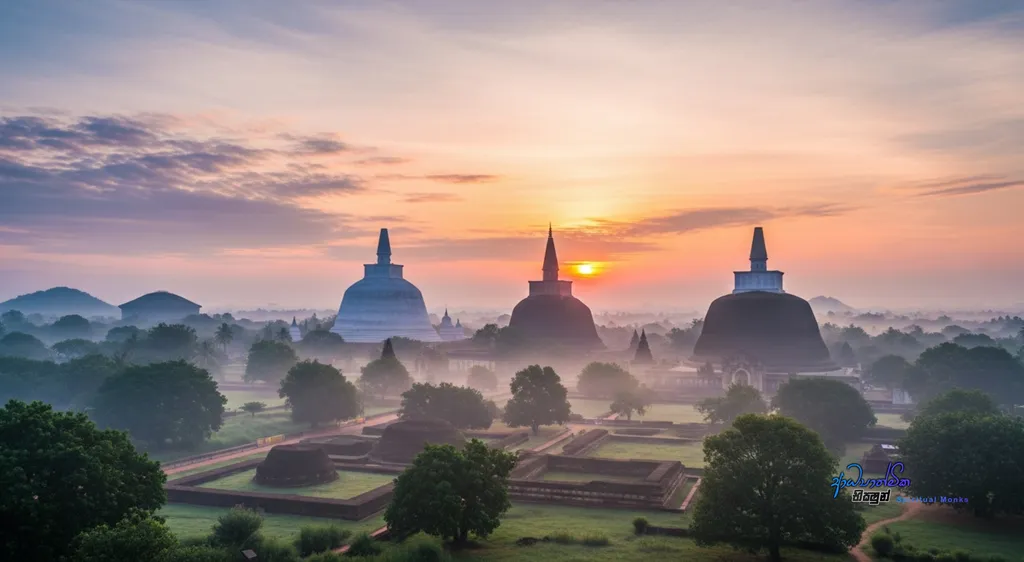
Remember, the Buddha image you visualize is a mental creation. It is not something you see with the third eye. It’s just like when you think of your mother, father, spouse, or children, or a sacred place like the Ruwanwelisaya stupa, an image naturally appears in your mind. In the same way, you create the Buddha image mentally and hold it at your point of focus while you recite.
As you do this, especially if you have some understanding of the qualities you are reciting, your faith (saddhā) and reverence for the Buddha as a teacher will gradually increase. This happens over time, not instantly. This is true whether you are a Buddhist or not. For someone who has practiced Buddhanussati meditation in past lives, this feeling may arise very quickly, as it is a familiar practice. For others, it may take some time, which is not a problem.
For a person of another faith, developing reverence for the Buddha is not a wrong thing. It is a powerful aid for your meditation, helping your spiritual development and your journey toward the jhānas.
As you progress, you may wish to learn the brief meanings of the nine qualities. You can search online or use AI tools. Reading books by great masters, such as “Suvisi Maha Guna” by the venerable Rerukane Chandawimala Nayaka Thero, can also provide beautiful and profound explanations. However, remember that our core practice here is the repetition of the Pali words. As you do this, the meanings will naturally start to come to mind as a supportive background awareness, but it is the Pali verse itself, not the meaning, that we are contemplating.
The Goal and the Broader Benefits of Practice
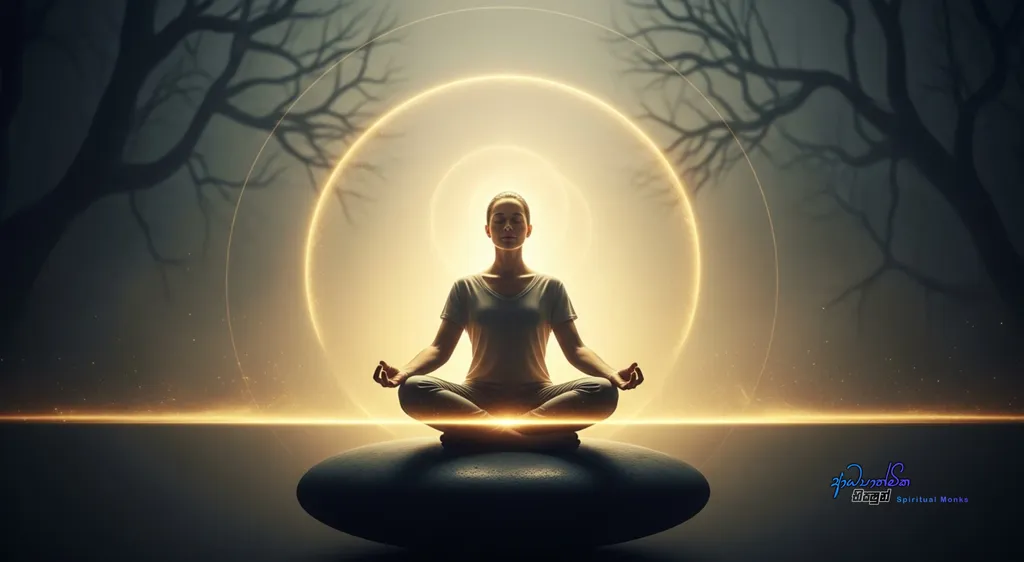
Please remember, we are practicing this Buddhanussati meditation as a method of tranquility (samatha). Our goal is to journey towards the first jhāna. Along the way, some people may experience results similar to the Third Eye practice, like light signs, while others may not. This is not a problem. Some may attain the first jhāna, while others may not yet. We must practice this method for at least three months without a break to truly know. In future teachings, I will explain how to proceed if light signs appear, and how to continue the practice if they do not.
Therefore, without any agitation, practice continuously for half an hour, forty-five minutes, or up to an hour each day. This is how you will achieve results. Practice every day without fail. If you miss a day or two, just be sure to practice the next day. I say with confidence that this is a meditation method that will surely bring results, and through it, we have an excellent opportunity to progress towards the jhānas.
This Buddhanussati meditation also brings other benefits. Your mental strength will increase. If there are negative or non-human energies (amanussa) in your home, they will be unable to act against you or attack you. The effects of negative influences or curses (anavina, kodivina) will also be significantly reduced. As your practice deepens, from thirty minutes to eventually two hours, these protective effects become very strong.
You may also experience various physical sensations, such as the body feeling light, as if it is floating, or a feeling of being pulled upwards. These are similar to sensations in other meditation practices. Simply acknowledge them and continue your training without interruption.
Your Journey Forward and Final Blessings
So, let us proceed according to this guidance. As I have said, I will certainly provide further teachings on how to move forward from here. With the essential points for beginning this practice now covered, I will conclude this practical instruction.
You are welcome to share the results of your practice in the comments below. We often receive many messages and questions. When many people ask about the same issue, we will offer a teaching in a future article to address it for the benefit of all.
Now, I conclude today’s teaching. May the power and blessings of the Triple Gem, the Buddha, the Dhamma, and the Sangha, give you all the ability to understand these matters well and to put them into practice.
We invite you to walk this path with us. Read our teachings, and most importantly, apply them practically in your own life. as you practice, questions will naturally arise. Please feel free to share your experiences and questions in the comments below, via email or contact form. I will do my best to offer guidance in future talks based on your progress. For now, begin this practice with an open heart and a mind free from expectation. Cultivate it correctly, and may you find the clarity and peace you seek.
Thank you for joining us. We hope this blog will be of great benefit to your spiritual journey.
May you all be well and happy.
May the blessings of the Triple Gem be with you all!.


