


Categories: Eradicate the Fear of Meditation
May the blessings of the Triple Gem be with you all!
Today, we wish to offer you a deeper understanding of a particular topic that arises on the spiritual path. We have touched upon this from time to time, but this teaching is intended to give you more clarity and confidence to face your practical experience without fear. To do this, we must have the right understanding and a proper grasp of what is happening.
When we develop our spirituality, what we are truly cultivating is our mind, or citta. On this spiritual journey, the mind enters various states and levels. We begin to face situations and have experiences that are completely new to our ordinary lives. These can feel novel within this human existence. Of course, from the perspective of our long journey through countless lives, known as samsara, these experiences may not be new, as we may have meditated in past lives.
However, having been born into this current human life, when we begin meditation anew, these phenomena feel unfamiliar. True spiritual development is not about limiting ourselves to a word or simply engaging in what some call ‘positive thinking.’ The spiritual path is not so narrow or confined; it is a gradual training of the mind, developing it and taking it to different levels, step-by-step. It is through this process that we can truly know and understand these things.
Two Paths of Practice: Calm and Insight
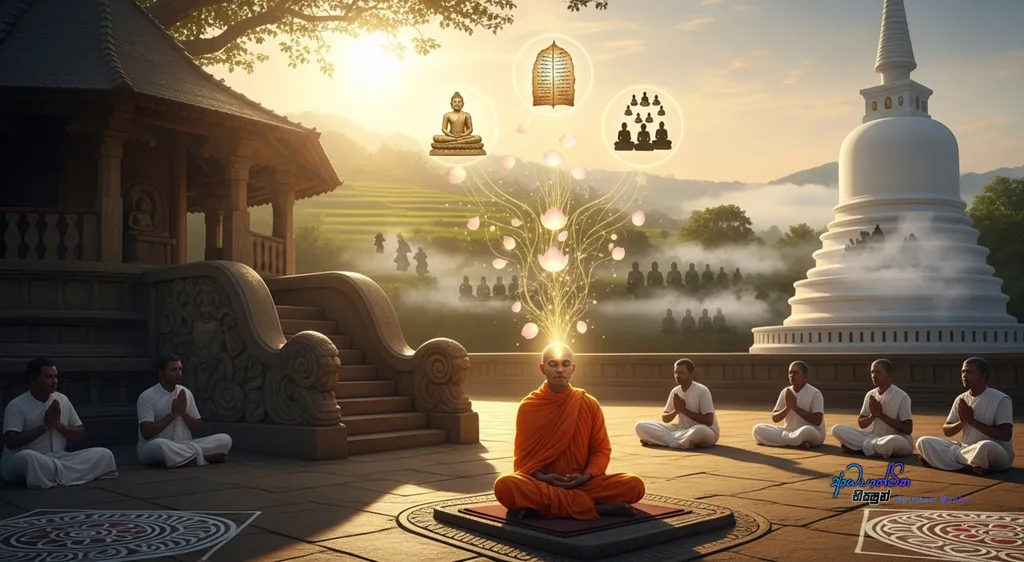
In our teachings, we explain how to develop the mind and spirituality through two interconnected paths. One is the path of tranquility or calm, known as Samatha meditation. The other is the path of insight, or Vipassanā, which is grounded in mindfulness. In both approaches, we describe how the mind progresses through different levels.
Every teaching we provide is practical. We never limit our guidance to books or give you something you cannot do. We do not use confusing language or overly deep, inaccessible words. For example, some may find Pali words unfamiliar; you might be able to read them but not grasp their meaning.
Therefore, we explain everything very simply, using plain language so that anyone, of any ethnicity, religion, age, or color, can understand and apply these teachings. Many of you are already engaging in this practical application, and you let us know about your progress. You share your experiences, your insights, and your questions in your reflections. We have provided answers to every question because this is a living, interactive path.
When the Mind Becomes Subtle: The Dawn of New Perceptions
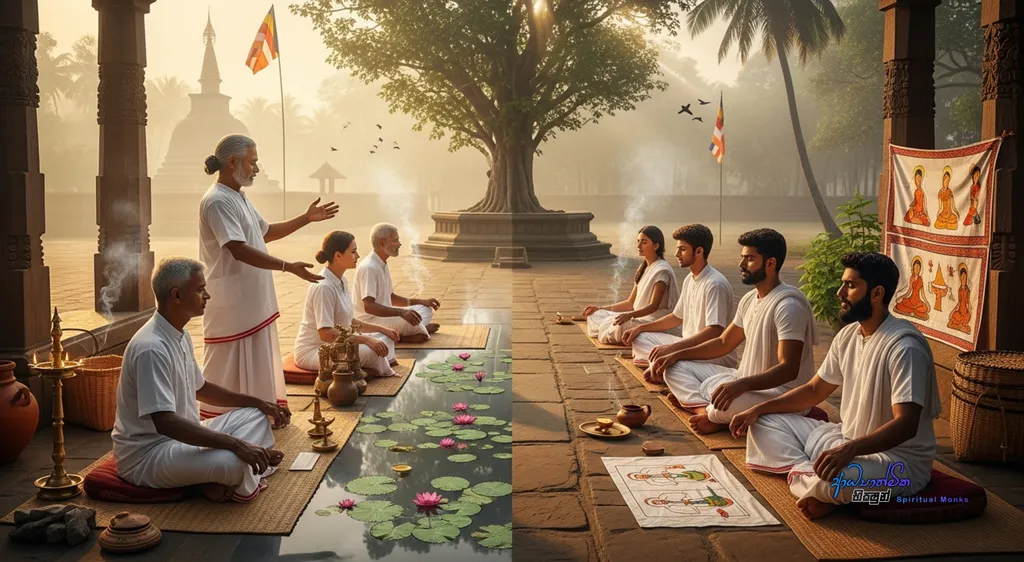
Today’s topic focuses on what happens when the mind becomes subtle. Whether you follow a method of maintaining mindfulness, the insight path of Vipassanā, or the tranquility path of Samatha, perhaps sitting in a cross-legged posture like the full or half-lotus, when you begin to meditate, you are dealing directly with your mind. The mind is our primary focus, not the physical body. We begin to practically train this mind: to concentrate it, to study it, to investigate it, and to gradually develop it, recognizing its inherent nature.
As we undertake this effort through either meditation method, we start to notice things that were previously absent, or rather, previously unfelt and unperceived. Things we never knew existed become apparent. They become visible to our wisdom (paññā) and are caught by our mindfulness (sati). Many of you have already realized that a great number of things begin to happen. Among these is a refinement of perception.
The Inner Universe: Why You Start Feeling Everything
Let’s take an example from the Samatha path, such as the ‘Third Eye’ meditation or the ‘To the Brahma Worlds’ practice we have taught. When a person tries to concentrate the mind as we instruct, for instance, between the eyebrows, something remarkable happens. Even if we are not consciously practicing insight meditation, a subtle form of mindfulness arises from the very act of concentration.
It’s not the full, comprehensive mindfulness of Vipassanā, but through this concentration, we begin to see things we never saw before and understand things we never understood before, simply because we are maintaining a degree of mindfulness at that moment. This happens with great subtlety.
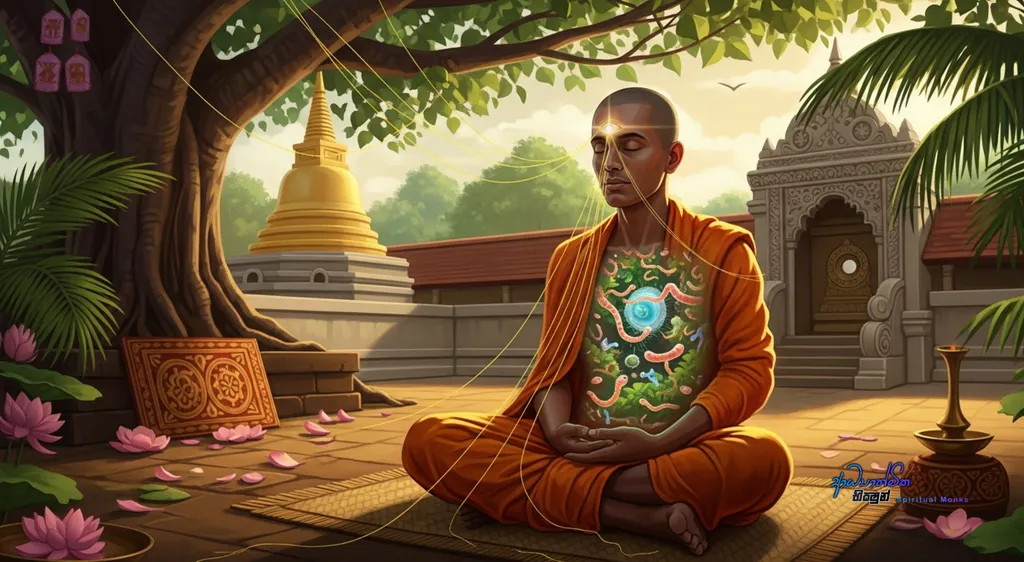
As this concentration deepens, we begin to notice various changes, or ‘vicissitudes,’ in our physical body. We start to feel and understand things about our body that we were completely oblivious to before. For example, the Buddha taught in the scriptures (the Tripitaka) that a vast number of beings live within this very body. He even used the term ‘eighty crores of life-forms.’
Modern Western science confirms this, acknowledging the presence of microorganisms. We know about intestinal worms and even take medicine to eliminate them. This body can contain viruses, bacteria, and countless other microscopic organisms. These are all sentient beings, life-forms that dwell in our body.
As the subtlety of mind increases, we may even begin to perceive the activities of these beings. This is not something we felt before, not because it wasn’t happening, but because we lacked the necessary mindfulness and attention to our inner world.
Ants Crawling and Heartbeats Ticking: Don’t Let Fear Stop You
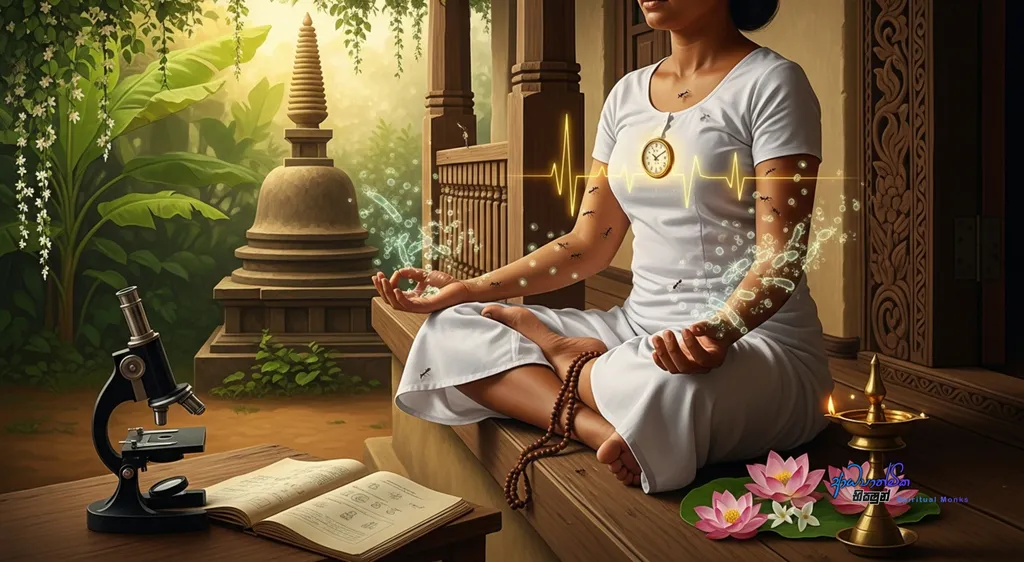
As a result, many common experiences arise during meditation. You might feel an itching sensation on your skin or a feeling like ants crawling over your body. These are often the sensations of these microscopic beings, the bacteria and other subtle creatures that inhabit our physical form.
You can verify their existence through scientific laboratory reports and see them with a microscope. When we meditate, we begin to feel these things directly. This is a normal occurrence, not some strange magic. Unfortunately, due to a lack of understanding, many people get scared when these sensations arise and stop their meditation altogether.
If you have been exploring our teachings from the beginning, especially those that address fear and encourage you not to stop meditating because of what you see, feel, or hear, you will have a foundation for understanding this. These sensations arise because, in this particular human life, you have never meditated this deeply before.
Even if you have meditative experience from past lives, this is the first time for *this* body and mind. So when you start, whether with a teacher or alone, you begin to perceive these things.
Consider your own heartbeat. Ordinarily, we pay it no attention. But when you meditate, you might start to hear it clearly, like the ticking of a clock: ‘tak, tak, tak.’ The probability of feeling and understanding these subtle events increases dramatically. Why? Because at that moment, your mind is highly mindful. When you are unmindful, you have no idea what is happening in your body.
The Science of Spirit: How a Subtle Mind Interacts with Reality
This principle extends to the external environment as well. When we are unmindful, we cannot comprehend what is happening in nature, in the universe, in the minds of other beings, or even within our own minds. This is why humans need technological instruments to perceive these things.
However, if our mind is developed through the paths of Samatha and Vipassanā, we gain the ability to understand these things very quickly and directly. We can understand the workings of the mind, the universe, nature, and all beings. We can even grasp the workings of universal laws like Kamma (the law of intentional action) and phenomena that occur at frequencies beyond our normal perception.
When a person develops their mind to this level, they realize there is no magic involved. Everything operates according to a natural law, a principle of cause and effect known as Paticcasamuppāda. They understand that a result arises from a cause.
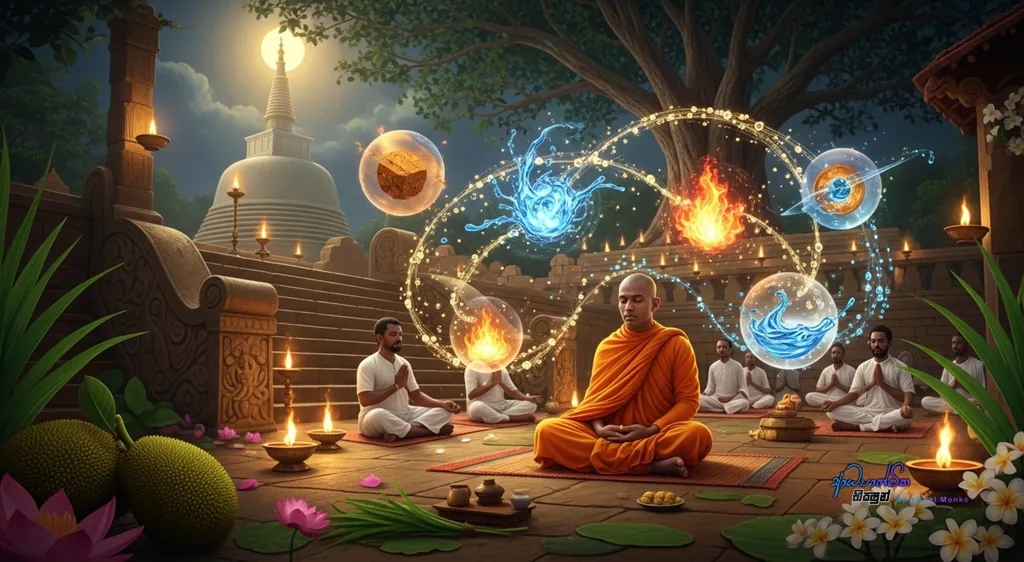
For example, let’s consider psychic abilities, known as siddhi. For those who practice, this is a science. A person who has developed their mind understands the fundamental building blocks of reality. Western science speaks of atoms, electrons, and protons. In Buddhism, we talk about the suddhāṣṭaka, the ‘pure-octad’ or the smallest unit of matter, composed of eight elements, including the four primary ones: pathavi (earth/solidity), āpo (water/cohesion), tejo (fire/temperature), and vāyo (air/motion), along with color, smell, taste, and nutritive essence. The Buddha taught that these four great elements are present in everything, in varying proportions.
A person with siddhi learns to manipulate these elements. To fly through the air, they develop mastery over certain meditative objects, known as the ten kasiṇas (like the earth-kasina, water-kasina, etc.). They learn to solidify the empty space around them, making the air firm enough to walk on.
To walk on water, they perceive the nature of water and generate the quality of solidity (pathavi) over its surface. This is not magic; it’s the application of a deep, natural law by a highly developed mind. A mind with true subtlety of mind can rearrange these fundamental elements at will.
From Meditation Cushion to Daily Life: Maintaining Your Sensitivity
This has a scientific basis. A true scholar of Western science who studies deeply, not someone with superficial knowledge who might mock these ideas, can understand that there is a profound system at work here, one that is accessed by developing the mind. You can experiment with these things yourself.
This knowledge has been taught by the Buddha for over 2,500 years; these Pali terms come from ancient Buddhist teachings. The ‘third eye’ and all such phenomena are based on this law of cause and effect. As you refine the subtlety of mind, certain results naturally follow from that cause.
So, understand this: as you make your mind more and more subtle, you will feel and understand the activities and sensations within your body more and more. At first, you may only notice these things during your formal meditation session. Afterwards, when you re-engage with the sensual world, with family arguments, romantic attachments, worldly desires, watching dramas, or using social media, your mind becomes coarse again.
You go back to feeling only the grossest pains and pleasures, and the subtle sensations fade because your mind is filled with other things. The communication from your subtle body becomes weak. We must understand this.
Universal Energy, Self-Healing, and Spontaneous Movements
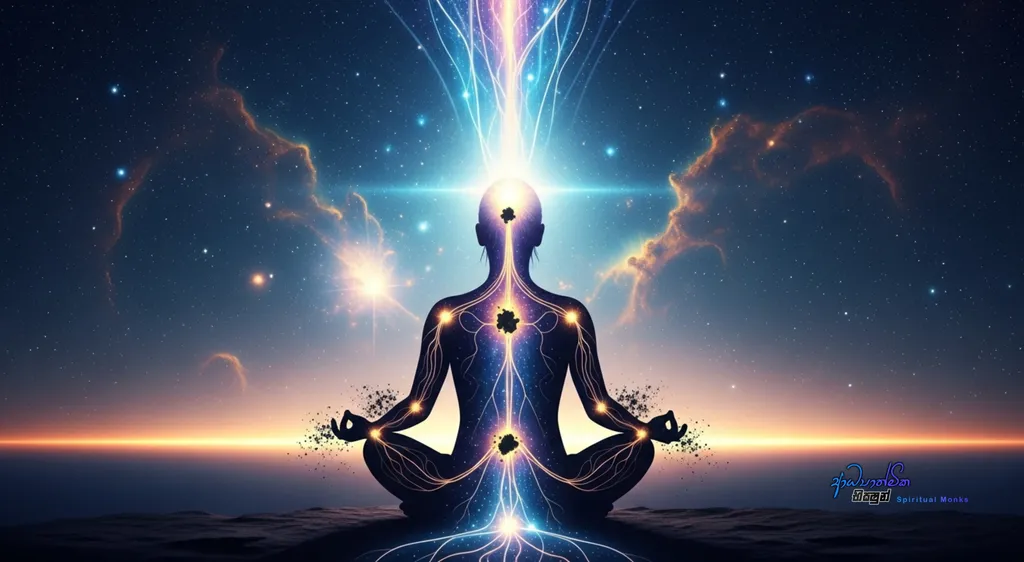
These sensations we feel are connected to the universe. As we taught in our discussions on Universal Energy and Kundalini, energy flows into our body, like an ‘earth current.’ This universal energy is drawn into our system as we concentrate our mind. This is a beneficial energy.
It enters our body and begins to clear out unwholesome elements, negative energies, or any blockages that hinder meditation. If there are obstructions in the blood or the nervous system, this external energy comes in and helps to correct them. It works primarily in conjunction with the brain, repairing and regulating the neural pathways to support your practice. This is why you might sometimes feel an electric current running through your body.
This can lead to spontaneous physical movements, which we call ‘spiritual exercises.’ In line with ancient practices of Nadi Shastra (the science of energy channels), the body may instinctively begin to adjust itself. One might feel compelled to press on certain points where the energy channels (nāḍī) or nerves are located. If there is a blockage, you find yourself spontaneously clearing it. This doesn’t happen to everyone, and we have always advised never to force or imitate these movements.
Your Practical Guide: Responding to Sensations with Mindfulness
So, what is the message for you to take away? As the subtlety of mind develops, your sensitivity to your body, to nature, and to the universe increases. Your third eye may open, enhancing your inner sight. Your hearing may become clairaudient. You may begin to understand the thoughts of others.
The key is not to be frightened by any of this. It’s not something you need to repeatedly ask others about. The goal is to understand it for yourself. If you can understand it, you become intelligent, and beyond that, you become a wise person (paññāvanta). This very understanding is the development of your mindfulness, your sati. This grasp of reality is incredibly valuable for your spiritual growth.
I mentioned the heartbeat earlier. Some people get scared when they feel their heartbeat becoming very fast or prominent. But sometimes it feels fast, and other times it feels beautifully rhythmic. The fear itself can make it beat faster! This lack of understanding, even among some who call themselves teachers, can cause problems. Some teachers who lack this direct experience might tell their students to stop meditating when these things happen.
If you have encountered such a teacher, what I am saying now will likely resonate with you. Therefore, remember this: do not stop your meditation because of any of these experiences. As you develop through both Samatha and Vipassanā, it is natural that you will understand, feel, and perceive these things. The subtle phenomena of the body will become more apparent.

Becoming Your Own Teacher: The Ultimate Goal of Practice
When you feel something, if you focus your mind on it, you can understand it even more deeply, you can see its range and how it extends. Even if you have no special spiritual abilities or have not yet attained any meditative absorptions (jhāna), you have mindfulness (sati). If you feel a crawling sensation, place your mind on it. Watch it. What is happening? Why is it happening? How long does it last? How far does it spread? Observe its arising, its persistence, and its passing away.
You may be a complete beginner, but if you watch with mindfulness, you will understand. After the sensation passes, you can return to your chosen meditation object, whether it’s the space between the eyebrows, the recollection of the Buddha (Buddhānussati), mindfulness of breathing (Ānāpānasati), or a kasiṇa practice. By investigating the ‘problem’ yourself, you resolve it through direct understanding.
If you give mindful attention to whatever you feel and perceive, you can receive the answer from the experience itself. Don’t expect this on the first day or in the first minute; it may take a few days. But through this process, you gain understanding. You become your own teacher. Use this method for everything: for physical sensations, for spiritual abilities, for anything you perceive in nature, and for any problem or question in your own mind. The ability to understand is definitely there within you.
This is what we needed to explain to you, based on what we have understood ourselves. We have shared this so you can use these insights to further your own spiritual development. Practice with this understanding.
May the blessings of the Triple Gem, the Buddha, the Dhamma, and the Sangha, give you the strength to understand these matters clearly and continue to engage in this practice. May you all find peace.
We invite you to walk this path with us. Read our teachings, and most importantly, apply them practically in your own life. as you practice, questions will naturally arise. Please feel free to share your experiences and questions in the comments below, via email or contact form. I will do my best to offer guidance in future talks based on your progress. For now, begin this practice with an open heart and a mind free from expectation. Cultivate it correctly, and may you find the clarity and peace you seek.
Thank you for joining us. We hope this blog will be of great benefit to your spiritual journey.
May you all be well and happy.
May the blessings of the Triple Gem be with you all!


