


Categories: Other Meditation Teachings
May the blessings of the Triple Gem, the Buddha, the Dhamma (His teachings), and the Sangha (the community), be with you all!
Today, we gather to explore a question that touches so many of us on the spiritual path: ‘Why I forget to meditate?’ It’s a common experience. We commit to our practice, but then days, or even weeks, slip by. Several factors contribute to this, and by understanding them, we can find our way back to our practice. This teaching is an offering to bring clarity to this challenge.
Reason 1: The Crushing Weight of a Busy Life
The first and most common reason we forget to meditate is the busyness of our worldly life. Whether you are working a job, pursuing your education, or managing a household, life demands so much of our time and energy. Especially in today’s world, with economic pressures and the constant struggle to make a living, our days become consumed by obligations.
We spend our time working for our livelihood and caring for our families, and in doing so, our spiritual world can get pushed aside for days at a time. This isn’t a moral failing; it is a reality of the physical and mental exhaustion we face. After a long, hard day, the body is tired, and the mind feels weak.
Trying to sit for meditation can feel impossible. The mind, burdened by physical fatigue, becomes prone to drowsiness and finds it difficult to focus. This state of exhaustion is a significant barrier that can easily lead us to a point where meditation stops altogether. This is a shared experience for anyone navigating the demands of secular life.

Reason 2: The Inner Storm of Family and Personal Problems
The second reason is the turmoil that arises from our personal lives and family background. Life is filled with challenges: conflicts in relationships, worries about our children, or disputes with relatives and friends. When we are caught in the middle of such a problem, our mind becomes completely preoccupied with it. We forget we were ever people who meditated.
The mental energy of a spiritual practitioner becomes entirely devoted to one question: ‘How can I solve this problem?’ We can spend days, even a week, consumed by a single issue, replaying it over and over in our minds. In this state, there is no time or mental space for meditation.
Some of us fall into the trap of thinking, ‘I will meditate after I solve my problems.’ This is a profound misunderstanding. In this worldly life, problems never truly end. They are a constant feature of our existence, from youth until our deathbed. Issues with children, grandchildren, or regrets from the past will always arise. Therefore, the wisest course of action is to continue your meditation practice no matter what challenges you face. Do not stop. It is your only true refuge, your only source of genuine mental peace.
This peace cannot be found in temporary escapes like substances, alcohol, or even vacations, those are all fleeting. Meditation, however, allows you to cultivate a stable mental well-being that becomes your strength. You learn that whatever problem arises, the best response is to meditate, to temporarily release the pressure and find clarity. You may not always have the money for a trip or other distractions, but the path of meditation is always available to you, free of charge.
Reason 3: The Alluring Pull of Sensual Pleasures (Kāma)
The third reason we forget to meditate is our tendency to become absorbed in sensual pleasures. In Buddhism, this is known as Kāma, which refers to the gratification of the senses through sights, sounds, smells, tastes, and touch. In our modern world, this pull is stronger than ever.
Think of technology. Many, especially the young, become addicted to their smartphones, social media, and the endless stream of content. They seek mental freedom in these things, but ironically, these very tools often lead to more mental distress, suffering, and in tragic cases, even self-harm. People form relationships with strangers online without any real basis for trust, leading to profound problems.
This world of *Kāma* extends to sexual desire, a craving for intoxicants, and an excessive need for entertainment. If you are someone who is heavily inclined towards a life of amusement, attending parties, going to clubs, spending all your time with friends, or absorbed in social media, your spiritual life will inevitably fade away. You will forget to meditate.
We are naturally drawn to what gives us instant gratification. We often prefer not to exert effort for a deeper, more lasting reward. The satisfaction gained from developing the mind through meditation is immeasurable, priceless. But because it requires effort, many shy away from it, even if they have the desire to practice. This teaching does not say you should not enjoy life or go on trips.
But we must be mindful of addiction. These worldly pleasures are designed to obscure our understanding of skillful and unskillful actions. When we are immersed in *Kāma*, a kind of delusion, known as Moha, arises. This delusion veils our wisdom, making it impossible to see the truth of our lives: that we are aging, getting sick, and will one day die. Sensual craving doesn’t allow us the space to even think about these realities.

The Untrained Mind: A Magnet for Distraction
Why is the pull of *Kāma* so powerful? The unenlightened human mind, wandering through countless lives in the cycle of rebirth, or Samsara, has been conditioned to cling to this sensual world. It acts like a magnet, constantly drawn to immediate, easy pleasures. Even though many worldly goals require effort, they often seem more accessible than spiritual cultivation.
The pleasure from the sensual world is fleeting. The peace from the spiritual world can last for hours, and for advanced practitioners, can deepen into profound meditative states called Jhānas. Yet, the mind gravitates towards the familiar.
Imagine you are a dedicated meditator, and you meet someone and fall in love. This is a part of worldly life, and we are not saying you shouldn’t love. But we must see how it affects our practice. You start with phone calls, then meetings. This new experience is exciting for the mind. An attachment, a clinging, begins to form. Slowly, subtly, the thought, ‘I am a person who meditates,’ starts to fade. Your practice is forgotten for days, weeks, or even months.
Later, when the initial excitement of the relationship wanes and it becomes more routine, you might remember, ‘Oh, I used to meditate.’ You might try to sit again, but the mind, now heavily inclined towards the sensual world, will quickly wander back. Or perhaps the relationship ends.
In that moment of suffering, the memory returns with force: ‘I used to be a person who was developing my spiritual life.’ Realizing that it was attachment to sensual pleasure that led to this pain, many return to their practice with renewed conviction. We have received countless messages from people who have had this very experience.

Your Path Forward: A Resolute Practice
So, what is the solution? All three of these challenges can happen to any of us. As we have discussed, no matter the problem, no matter the addiction to sensual pleasure, the path forward is the same: you must set aside time for your meditation. Free your body, free your mind, and commit to developing your inner world. Spiritual development is the cultivation of your own mind, not anyone else’s. You alone must make the effort to reach this state.
As you listen to this teaching, try to identify where you are stuck. Once you recognize the obstacle, be patient. The answer to your problem will come when it is time. Every problem has a solution, whether we like the outcome or not. Our task is to accept it. While waiting for that resolution, we must continue with our spiritual work. If you understand this correctly, you will see exactly why you forget to meditate.
It is a curious truth that we often forget our spiritual practice when we are happy. We feel we don’t need it. Many people only turn to the Dhamma after a major life collapse, a heartbreak, a failure, a deep mental crisis. While this can be a powerful catalyst, there are also many who practice out of wisdom and past habit, continuing to develop their spirituality every day, regardless of their wealth or comfort. They are a testament to the power of consistent practice.
The Ultimate Motivation: Turning to the Truth
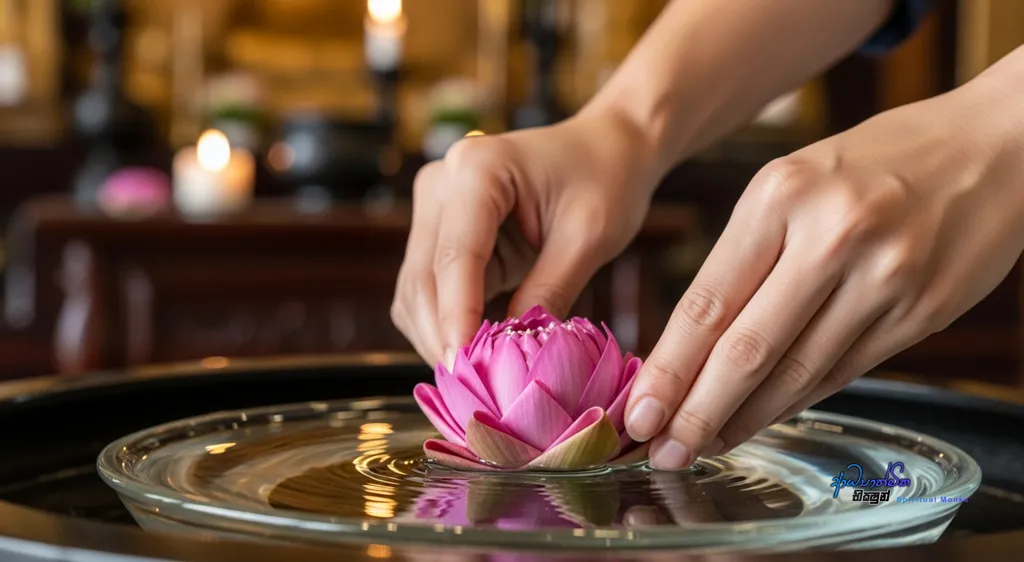
When faced with hardship, bad luck or the results of past unskillful actions, what we call kamma, many people rush to astrologers. They might be told to perform a ritual, like a Bōdhi Pūjā (an offering to a sacred Bodhi tree) for 21 days. Suddenly, the person who ‘had no time’ for spiritual practice carves out time for this ritual. This isn’t to say such offerings are wrong; they are a form of meritorious action. The point is this: in our suffering, we find the motivation to do what we once thought impossible.
If you can make that same sacrifice and commitment for your meditation practice, your spiritual life will transform. You will build an unshakable foundation.
To help, some people use practical reminders. They put a note on their wall: ‘I must meditate today.’ Others set an alarm on their phone with a reminder: ‘Time to meditate.’ Find what works for you and create a structure for your practice.
Remember the Buddha’s constant advice: do not waste your time. Live with a clear understanding that you are subject to old age (jarā), illness (vyādhi), and death (maraṇa). We all grow old. We all get sick. Life is fragile. We could become bedridden at any moment. Contemplating this truth is the ultimate motivation. Find the reason you forget to meditate, create your solution, and practice diligently.
This is the heart of the teaching we wished to share with you today. There is no need to say more.
A Final Blessing
By the power and blessings of the Triple Gem, the Buddha, the Dhamma, and the Sangha, may you all gain the wisdom to understand these matters clearly and act upon them in your lives. This concludes our teaching.
We invite you to walk this path with us. Read our teachings, and most importantly, apply them practically in your own life. as you practice, questions will naturally arise. Please feel free to share your experiences and questions in the comments below, via email or contact form. I will do my best to offer guidance in future talks based on your progress. For now, begin this practice with an open heart and a mind free from expectation. Cultivate it correctly, and may you find the clarity and peace you seek.
Thank you for joining us. We hope this blog will be of great benefit to your spiritual journey.
May you all be well and happy.
May the blessings of the Triple Gem be with you all!.


