


Categories: Maintaining Mindfulness
May the blessings of the Triple Gem be with you all!
Many of us who begin a spiritual journey have experienced something puzzling. We make a firm decision, a powerful resolution, to change. We say, “From this day on, I will not get angry.” And yet, what happens? It seems the universe conspires to test us, bringing forth the very situations that trigger our anger. Today, we will explore this profound process and understand why this challenge is not a sign of failure, but a fundamental part of our growth.
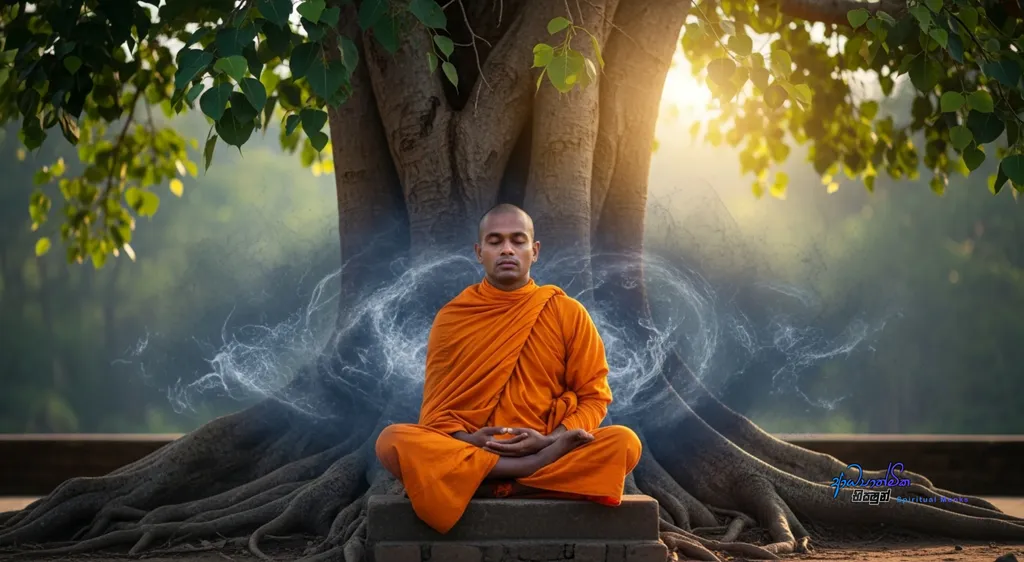
The Paradox: Why Your Mind Rebels When You Make a Vow
When you make a strong determination, known in Buddhism as an adhiṭṭhāna, to overcome a particular mental habit, you may notice a strange rebound effect. The moment you resolve to control anger, you face more provocations. The moment you decide to tame desire, temptations seem to multiply. This is because the path to inner freedom and purity of mind isn’t about forcefully suppressing our thoughts and emotions. True progress comes from understanding and working with them naturally.
If our minds are clouded by what we call kilesas, mental defilements like anger, greed, and ignorance, we cannot ascend to higher states of consciousness. To reach these higher levels, we must learn to manage these defilements. This isn’t something we can achieve through sheer force; it is a gentle, gradual process of allowing a natural transformation to occur within us.
Understanding Anger on the Buddhist Path: From Control to Eradication
Let’s take the example of anger. In the Buddhist path, the complete eradication of anger only occurs at a very advanced stage of awakening, known as Anāgāmi, or the ‘Non-Returner’. However, the journey begins much earlier. At the initial stages, like Sotāpanna (‘Stream-Enterer’) or Sakadāgāmi (‘Once-Returner’), one develops the profound ability to control anger and prevent it from escalating into harmful actions, like violence or hateful speech. Even for someone who hasn’t reached these formal stages, it is possible to cultivate a mind that does not act on its anger.
The common mistake we make is expecting the world to change for us. We think, “Now that I’ve decided to be peaceful, I should only encounter peaceful situations.” We wish for our eyes, ears, and other senses to be shielded from anything that might provoke us. But the spiritual journey doesn’t work by changing the world outside; it works by changing our response from within. This expectation that the world will conform to our resolution is a fundamental misunderstanding of the practice.

Nature’s Training Ground: The Universe Gives You What You Need to Practice
This phenomenon of facing what you are trying to overcome is a gift from nature. The rhythm of the universe is designed to provide you with a training ground. Think of learning to drive a car. You can’t become a skilled driver by reading books or watching others. You must sit in the driver’s seat, put up the ‘L-Board’ (Learner’s sign), and practice on the road. Only after practical experience do you become a confident, permanent driver.
This principle applies to every aspect of your life. You didn’t become a professional, an academic, or a business owner by just wishing for it. You engaged in a practical process of learning and doing. You didn’t just get a job; you studied, earned qualifications, and then applied them. You didn’t build a business without effort. Even to earn a daily living and support a family requires action. The spiritual path is no different. To overcome anger, you must engage in the process of dealing with anger when it arises. The universe provides the curriculum.
Where Spiritual Resistance Appears: In Your Daily Life
So, where do these tests come from? They arise in the most ordinary places: from your family, your workplace, your friends, and your neighbors. If you are a driver, it may be the actions of other drivers on the road. If you are a monk in a temple, it may arise from interactions with other monks or lay supporters. When you resolve to be patient, you may find your parents, spouse, or children test that patience more than ever before.
This is what it means to swim upstream. The Buddha, before his enlightenment, demonstrated this by making a vow that his alms bowl should float upstream as a sign of his impending success. The nature of a river is to flow downstream; everyone and everything is carried by the current.
The spiritual practitioner, however, makes a resolution to go against this current of habitual reaction. This is your spiritual resistance. Even the Bodhisatta, in past lives, faced the ultimate test. One story tells of how a king, jealous of his peace, cut off his limbs one by one, yet the Bodhisatta remained full of forgiveness and peace. This is the pinnacle of the practice.

Your Toolkit for Spiritual Resistance: Mindfulness and Wise Observation
So how do we navigate this challenge? We must adopt a positive mindset. When a situation arises that triggers your anger, see it as an opportunity. This is your ‘L-Board’ moment. Instead of reacting, you must apply the tools taught by the Buddha: mindfulness and clear comprehension, or Sati Sampajañña.
Here is the practice: as soon as you feel anger arising from a harsh word or frustrating event, bring your full attention to it. With unwavering resolve, look directly at the feeling of anger within your mind. Initially, you won’t be able to eliminate it instantly. The first step is to gain a practical understanding of it. Notice the raw physical sensations: the burning feeling, the tightness in your chest, the way your head hurts, the clenching of your fists and teeth. Your body feels constricted, and there’s an overwhelming urge to lash out. Simply watch this pressure building inside you without expressing it.
Breaking the Habit Loop: Why Venting Reinforces the Problem
When you feel that intense pressure, you have a choice. You can release it by yelling at the person who caused it. This might give you temporary relief, but it reinforces a destructive habit. Your mind learns that shouting is the solution to this pressure, so the next time it arises, the urge to vent will be even stronger. This is how the cycle of anger continues endlessly.
The spiritual practice is to hold that pressure within your body and mind and simply observe it with mindfulness. It is incredibly uncomfortable. The pressure can feel unbearable for five minutes, ten minutes, or even an hour. But if you stay with it, you begin to see its nature, its arising, its peak, and its passing away.
After some time, it will naturally subside, and you will feel a sense of coolness. However, the mind will try again. It will remind you, “You didn’t say anything back!” and try to reignite the anger. It might come and go in waves. This is the nature of anger. By observing this entire process without acting, you are gaining a profound insight into its mechanics. You are learning for yourself, a quality of the Dhamma called Paccattaṃ veditabbo viññūhi, to be realized by the wise for themselves.
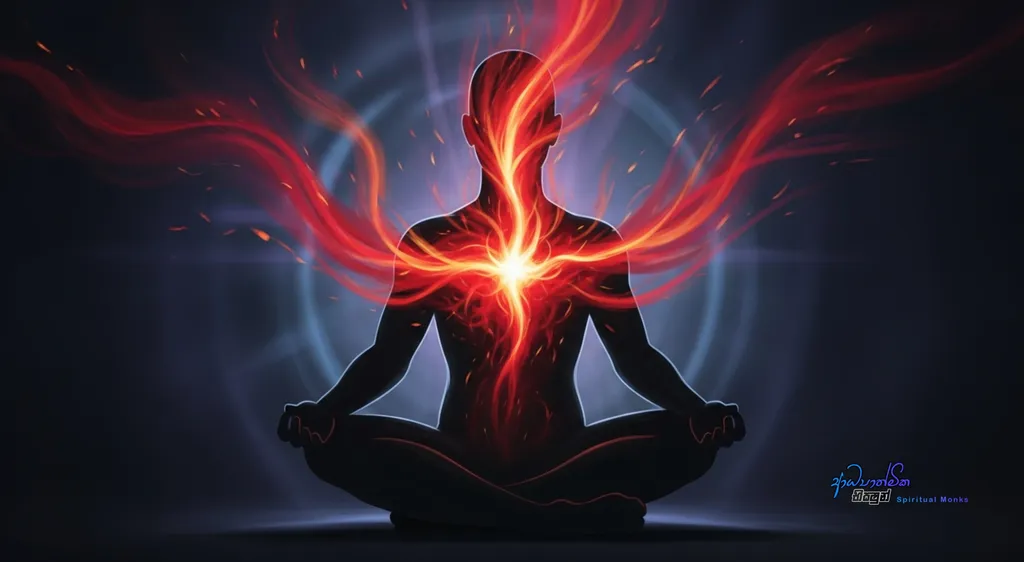
Beyond Anger: The Same Principle Applies to All Defilements
This principle of spiritual resistance is not limited to anger. It applies to all the kilesas (defilements). Let’s consider lust, or rāga. When you resolve to practice restraint, perhaps by abstaining from sexual activity, masturbation, or watching pornography, you will find that lustful thoughts and external temptations increase. You may meet someone who is interested in you, or feel stronger desires towards your partner. The environment will seem to present more sensual triggers.
This is the same universal test. On one hand, you could say this is Māra, the tempter, presenting his armies. On the other, it is simply nature testing your resolve. The practice remains the same: do not give in to the act. Instead, turn your mindfulness inward.
Watch the arising of lustful thoughts. Observe the physical sensations, the restlessness, the tingling, the burning desire. It can be very intense and difficult to bear, but by watching it without judgment or action, you learn its nature. The same holds true for jealousy (issā), greed (lobha), and holding wrong views (micchā diṭṭhi). The defilements we try hardest to eliminate are the ones that will fight back the most fiercely.
The Path from Practice to Liberation
What happens when you continue this practice diligently? The power of these defilements begins to weaken. If the pressure of anger or lust used to last for an hour, through mindful observation, it might reduce to forty-five minutes, then thirty, and eventually just a few moments. The triggers that once had a strong hold over you will lose their power. You are not suppressing the feeling; you are dissolving it with understanding. This is how you pass the test.
Through this process, you may find that you have naturally attained a stage of awakening. Or, even without a formal attainment, you will have developed a powerful ability to control your mind. You must be your own judge. No one can give you a certificate of enlightenment. You have to test yourself in the real world to know if anger and hatred still arise. This practical, honest self-assessment is the only true measure of progress. This challenge, this spiritual resistance, is a gift from nature to help you do just that.
It’s Not Personal, It’s Universal: The Law of Cause and Effect
It is crucial to understand that this process is not personal. It is not a god testing you or a demon punishing you. This is the impartial, universal law of cause and effect, which the Buddha called Paṭiccasamuppāda, or Dependent Origination. This law governs everything in the cosmos.
No being is above it. The gods (devas), Brahmas, and deities from any religion, whether Vishnu, Shiva, Jesus, or any other, are all subject to this same law of cause and effect. They are not its creators. They too will one day fall from their heavenly realms and may be reborn as humans, where they will have to face these same challenges if they wish to achieve true liberation.
When you understand this, you stop blaming external forces and take full responsibility for your own mind. Curses, spells, and spirits become irrelevant to a practitioner of the Noble Eightfold Path who uses mindfulness and insight. You see that all phenomena arise from causes and conditions, and you work on cultivating the causes for peace and freedom within yourself.

Turning Knowledge into Lived Experience
These teachings are offered with great compassion to help you take the next step on your spiritual journey. But knowledge alone is not enough. You must transform this understanding into a living, practical experience. When you do, the stable, peaceful state of mind you cultivate becomes a perfection, a pāramitā, that will carry you forward through many lives. This inner stability is what allows a Buddha or an enlightened being to help you, as you will already have the foundation to quickly grasp the final truth and free yourself from wherever you are stuck.
Take the core lesson from this teaching: whatever defilement you try to control, eliminate, or destroy will rise up to challenge you. Your task is not to fight it with aggression but to meet it with the weapons of mindfulness (sati) and wisdom (paññā). Understand its nature, observe it without reaction, and it will lose its power over you. This is a truth you can see for yourself, here and now. It is sandiṭṭhiko, directly visible and immediately effective. Start today.
May the powerful blessings of the Buddha, the Dhamma, and the Sangha help you to understand these points well and to practice them for your own well-being and liberation.
We invite you to walk this path with us. Read our teachings, and most importantly, apply them practically in your own life. as you practice, questions will naturally arise. Please feel free to share your experiences and questions in the comments below, via email or contact form. I will do my best to offer guidance in future talks based on your progress. For now, begin this practice with an open heart and a mind free from expectation. Cultivate it correctly, and may you find the clarity and peace you seek.
Thank you for joining us. We hope this blog will be of great benefit to your spiritual journey.
May you all be well and happy.
May the blessings of the Triple Gem be with you all!.


