Categories: Other Meditation Teachings
May the blessings of the Triple Gem be with you all!
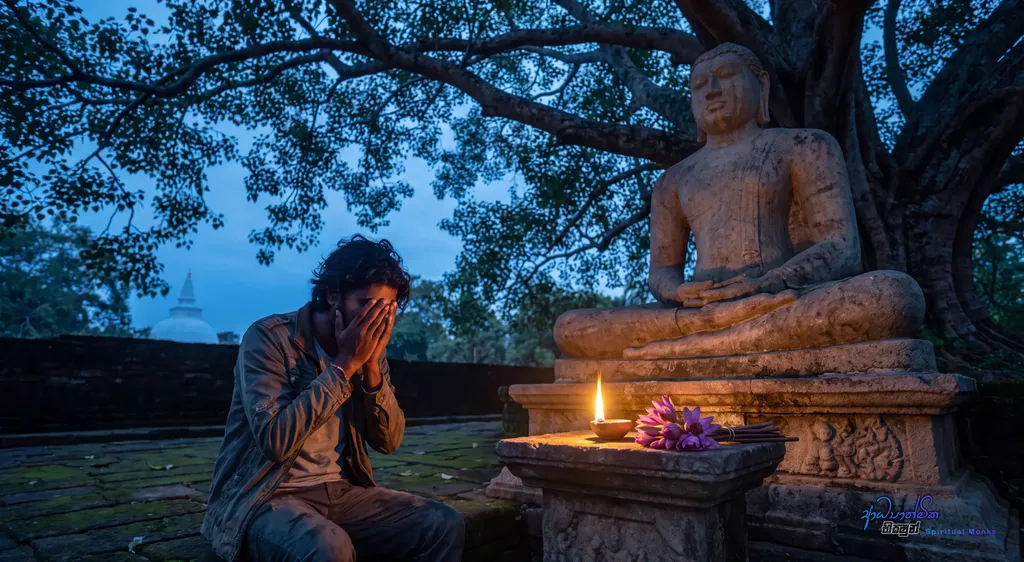
Today, we explore a deeply sensitive yet crucial aspect of human existence: navigating dark moments of emotional distress, severe heartbreak, and thoughts of self-harm. While Western psychiatry approaches these challenges through medical and clinical frameworks, ancient spiritual teachings allow us to examine what happens directly within the mind. By exploring these internal processes, we can find real solutions for overcoming emotional suffering.
Across the world, people face severe emotional distress. In many Asian societies, romantic heartbreak and deep personal betrayal are leading triggers for severe mental breakdowns. When someone faces extreme betrayal from a loved one, the pain can feel completely overwhelming. However, by looking gently at how the mind clings to feelings and experiences, we can begin to heal and regain our inner strength.

The Roots of Heartbreak: Attachment, Technology, and the Senses
To understand emotional collapse, we must ask what romantic love actually represents from a spiritual perspective. What we call romantic attraction is rooted in Lobha, a Buddhist term for attachment, greed, or unwholesome clinging. Over time, attachment can transform into Raga, intense passion or sensual craving. When passion deepens, we feel as though we cannot survive without the other person.
Throughout our long journey in Samsara, the continuous cycle of rebirth and existing, our mind has formed a strong habit of attaching quickly. Clinging is as easy as floating down a swift river. In contrast, letting go feels like swimming against a strong current. It requires patient effort. We attach to others through our six sense doors, known as Salayatana, which include the eyes, ears, nose, tongue, body, and mind. We fall in love with someone's voice, physical appearance, touch, or personality.
In our modern era, technology often magnifies this attachment. People constantly check their phones, demand live location sharing, and track their partner's movements. Beneath this modern behavior lies deep underlying suspicion, which builds intense emotional pressure. Yet, despite all modern tracking tools, betrayal still happens because impermanence and deceit are part of the natural world.

What Happens to the Mind During Betrayal and Loss
When a person uncovers sudden betrayal, evidence of cheating, or unexpected loss, the mental impact is immediate and devastating. The state of neat, comfortable attachment is abruptly shattered. The mind quickly loses its present moment awareness, slipping into a state of unmindfulness.
Without strong spiritual grounding, the mind loses Sati, which is the quality of clear mindfulness and presence. When attachment is severely damaged, intense mental pressure overwhelms the individual. People going through this experience find it nearly impossible to concentrate. University students cannot focus on their studies, working adults cannot perform their jobs, and spouses cannot manage their household duties. The mind becomes caught in an exhausting loop.
Even individuals who practice basic meditation find their concentration broken. Because attachment was so strong, the painful event repeatedly invades their thoughts. For those without spiritual tools, engaging in active physical work can help distract the mind temporarily, easing the immediate pressure.

Social Pressure, Ego, and False Accusation
Heartbreak is not the only trigger for emotional distress. Many people suffer immense pressure due to financial hardship, severe family conflict, workplace stress, or social harassment. If a person is not deeply attached to these external structures, the stress remains manageable. However, when an issue threatens their ego, severe emotional crises can occur.
Spiritual wisdom highlights Mamathva, the deep sense of self-importance or ego-clinging. Consider a respected person falsely accused of dishonesty or theft at work. Even though they are completely innocent, the damage to their public reputation and family honor can feel unbearable. When someone clings powerfully to their identity and social standing, public shame can push them toward thoughts of self-harm.
Fear of exposure, deep embarrassment, and sudden loss of status all stem from ego attachment. Recognizing how ego operates is a major step toward overcoming emotional suffering.
The Psychological and Karmic Consequences of Mental Ruin
When emotional pressure becomes too great, individuals who do not end their lives may slip into severe psychological breakdown, entering a state known as Unmattaka, or severe mental instability and psychosis. In this condition, the mind loses touch with reality. A person stops eating, neglects personal hygiene, and loses awareness of their surroundings. Mental health wards are filled with individuals whose breakdown was triggered by heartbreak, intense academic hazing, or professional betrayal.
There are tragic real-world examples of students inventing brilliant academic solutions, only to have their teachers steal credit for their work. The sheer shock of injustice can shatter an unprepared mind. From a Buddhist perspective, these outcomes are governed by Kamma Niyama, the universal law of cause and effect. If someone inflicts severe mental torture on others in this life or past lives, that intentional action generates painful karmic consequences that eventually return to them.
Unresolved mental stress also destroys the physical body. It causes severe weight loss, darkens the physical complexion, and can trigger fatal heart conditions or paralysis. Karma cannot be bribed, avoided with wealth, or delayed through power. Understanding this truth reminds us never to cause mental anguish to any living being.

The Spectral Reality: Karmic Aftermath of Self-Harm
It is essential to understand the karmic results of taking one's own life. According to Theravada teachings, self-harm never leads to a peaceful rebirth. At the moment of death, the final mental moment, known as Cuti Citta, becomes submerged in intense Dosa, which means anger, aversion, or self-hatred. Dying with a mind full of hatred creates immediate rebirth in realms of intense distress.
Those who possess the divine eye, known as Dibbacakkhu, can perceive that individuals who commit self-harm are frequently reborn as a Peta, a distressed spirit or hungry ghost, or as a restless lower spirit. In these lower states, spirits continuously experience the exact painful trauma of their death, such as suffering from severe physical pain or endless mental distress. They often wander in dark corners, crying out in agony.
In Buddhist texts such as the Abhidhamma, twelve categories of spirits are described, but only one category, the Tirokuddha spirits, can successfully receive merit shared by living relatives. Most remain stuck in suffering for immense periods. Human birth is exceptionally rare, described by the Buddha as Dullabho Manussatta Patilabo. He compared the rarity of human rebirth to a blind sea turtle surfacing once every century and placing its neck precisely through a single wooden yoke floating on a vast ocean. Destroying a rare human life leads to tremendous karmic loss.
Practical Dhamma Remedies: Training the Mind Before Crisis
Why does a person in deep distress consider self-harm? When experiencing unbearable mental agony, the untrained mind incorrectly assumes that ending physical life will bring ultimate relief. Human beings naturally seek Sukha, which means ease and happiness. If a lost partner suddenly returns, the mental distress instantly cools down. However, relying on external conditions for happiness leaves us completely vulnerable.
To achieve lasting strength for overcoming emotional suffering, we must train our minds before severe crises strike. One powerful practice taught by the Buddha is Marananussati, the contemplation of impermanence and death. This is not a gloomy practice; it is a highly positive contemplation that brings clarity to life. When an unfamiliar neighbor passes away, we feel mild sympathy, but when a close relative dies, we feel intense grief because of deep attachment. By practicing mindfulness of death, we mentally prepare for the natural truth that all conditioned things must eventually separate.
We can apply this exact mind training to our relationships. While loving your partner dearly, cultivate inner awareness: 'People change, circumstances shift, and separation is always possible.' If you train your mind using Sati, or clear mindfulness, for months or years, then if betrayal or loss occurs, your trained mind automatically steps forward. Instead of collapsing into panic, your mind stays calm, recognizes the impermanent nature of life, and protects you from mental ruin.

Living with Wisdom and Helping Others
Life does not guarantee constant pleasure. However, every mental crisis carries a solution. Over time, problems either find a resolution or naturally dissolve. The classical Buddhist text reminds us: 'Dhammo have rakkhati dhammacari', which means the Dhamma protects those who live in accordance with truth.
When you cultivate spiritual understanding, you shield your mind from severe collapse. If you have friends or loved ones suffering from deep emotional distress, offer them a compassionate ear. Listen to their grief without judgment, and gently guide them toward timeless spiritual wisdom. Helping someone overcome mental suffering creates powerful wholesome karma, known as Ditthadhamma Vedaniya Kamma, which yields protective results in this very lifetime and brings deep peace to your own mind.
May you turn toward the Dhamma, train your mind with patient awareness, and face life's uncertainties with unwavering inner peace.

We invite you to walk this path with us. Read our teachings, and most importantly, apply them practically in your own life. as you practice, questions will naturally arise. Please feel free to share your experiences and questions in the comments below, via email or contact form. I will do my best to offer guidance in future talks based on your progress. For now, begin this practice with an open heart and a mind free from expectation. Cultivate it correctly, and may you find the clarity and peace you seek.
Thank you for joining us. We hope this blog will be of great benefit to your spiritual journey.
May you all be well and happy.
May the blessings of the Triple Gem be with you all!