
Categories: Other Meditation Teachings
May the blessings of the Triple Gem be with you all!
In our journey of spiritual growth, we continue to explore the practical application of Satipatthana meditation, the Four Foundations of Mindfulness taught by the Buddha. To cultivate the mind effectively, we begin with a foundational practice: establishing a strong mental determination, known in Theravada tradition as Adhisthana.
When we repeatedly bring forth the quiet intent, 'May my present mind be fully understood,' we activate present-moment awareness, or Sati. This clear mindfulness does not instantly eliminate our mental defilements, known as Kilesa, such as greed or anger. However, through continuous determination, our mindfulness becomes steady and powerful. Step by step, we develop the ability to weaken and ultimately abandon these unwholesome mind states, replacing reaction with serene wisdom, or Panna.
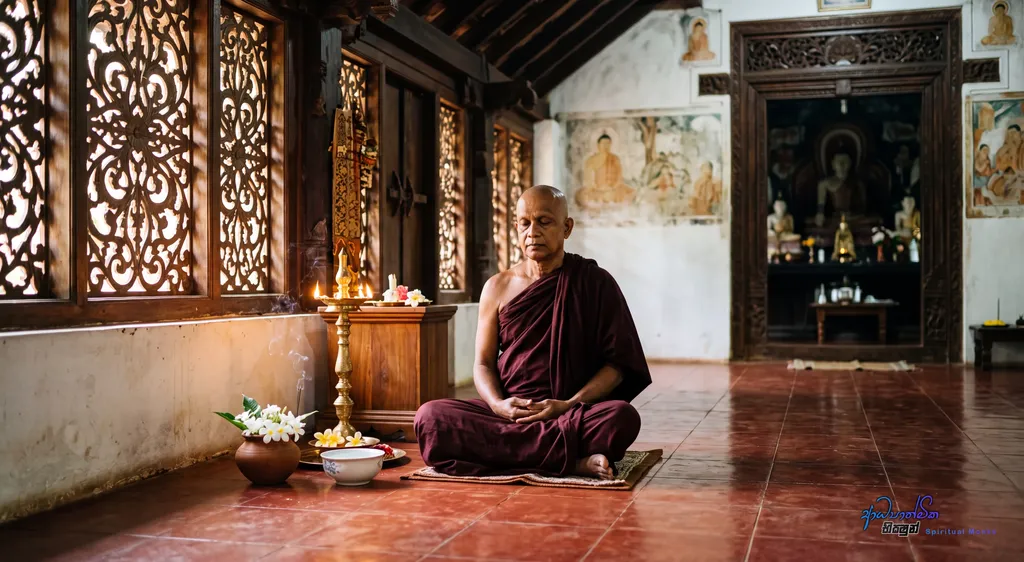
Mindfulness of Mind: Observing How Thoughts Arise and Pass
When we apply Satipatthana meditation to the contemplation of the mind, a practice known as Cittanupassana, we turn our attention directly to the nature of our thoughts. As you observe your quiet mind, you will notice thoughts appearing, lingering for a short moment, and then completely dissolving.
Some thoughts flash by so rapidly that they are barely recognizable before they disappear. Others, such as a sudden surge of irritation, seem to remain for a longer period before fading away. According to the deeper teachings of the Abhidhamma, every single thought undergoes three quick stages: arising, existing, and vanishing. Because our initial mindfulness may not yet be ultra-sharp, we perceive this process in broader phases.
This direct mental observation differs significantly from tranquility or concentration practices, known as Samatha. In Samatha meditation, a seeker focuses single-pointedly on an object, such as the breath, a recited word, or a visual mental light sign, called Aloka Sanna. When a visual light or mental image arises in Samatha, the practitioner merges into it to deepen concentration. However, in Satipatthana meditation, even if a luminous light or image appears, we do not plunge into it. Instead, we observe it objectively from the outside, noting its changing, impermanent nature without attachment.
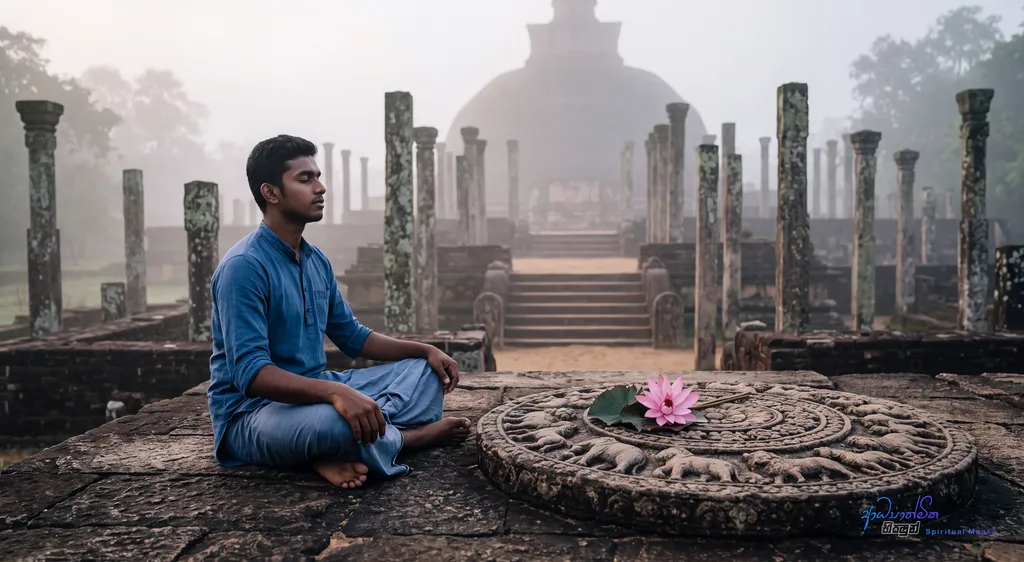
Understanding Impermanence (Anicca) and Conditioned Reality
As you deepen your practice of Satipatthana meditation, the fundamental truth revealed by the Buddha becomes vivid: the universal law of impermanence, referred to in Pali as Anicca. This concept refers to the deep sense that nothing in our experience remains static or permanent.
The Buddha explained that all conditioned phenomena, known as Sankhata, are born of causes and conditions, and therefore must constantly change. Thoughts, bodily sensations, feelings, and external events are all conditioned. The only unconditioned reality, free from causes and constant flux, is liberation itself, known as Nibbana or Asankhata.
You do not need complex academic theories to realize this truth. Simply maintain your determination to understand the present mind. Observe your thoughts repeatedly. Notice how every idea, mood, or mental image continuously shifts and disappears.
 and Conditioned Reality - Satipatthana Meditation Practical Guide to Mindful Awakening - 365 - 969661 - 03-1024x562.webp)
Transforming Desire and Anger Through Mindful Observation
A crucial test in Satipatthana meditation occurs when powerful emotions arise, particularly sensual desire, known as Raga, and anger or ill-will, known as Dosa. When you actively refrain from acting on desire, its inner fire can feel intense, burning like a physical heat within the body.
Instead of running away from desire or resorting to habitual distractions like watching mindless digital content or engaging in compulsive behaviors, sit quietly and observe the emotion directly. Spend ten to fifteen minutes simply watching the rise, peak, and decay of these intense sensations. Observe how Raga burns, stays for a short time, and eventually dissolves on its own.
Understanding Raga directly is essential if we wish to attain spiritual milestones such as Stream-entry, known as Sotapanna, or higher stages of liberation like Sakadagami, Anagami, and ultimate liberation, Arahant. We cannot master the mind by escaping it. Just as a trainer must study a wild animal's subtle pressure points to tame it safely, we must mindfully understand the sensitive physical and mental pressure points of desire and anger to bring true balance to the mind.

Mindfulness of Body: Seeing Impermanence in Physical Movement
The insights gained through observing thoughts must also be applied to physical existence through Kayanupassana, or Mindfulness of the Body. As part of your Satipatthana meditation practice, bring this bright awareness into your everyday physical actions.
During walking meditation, known as Cankamana, carefully observe each component of movement: lifting the foot, moving it forward, and placing it down. Notice that physical movement is not a single solid continuous block, but a series of rapidly changing events directed by the mind.
Extend this observation to all physical activities: eating a meal, moving your limbs, bathing, driving, or feeling your body sweat and clean itself. Notice how the body continually ages, becomes unclean, and changes from moment to moment. This deep realization of physical impermanence must strike your awareness with solid clarity, making it impossible to hold onto the illusion of a permanent body.

Mindfulness of Feelings: Turning Physical Pain into Insight
Another essential pillar of Satipatthana meditation is Vedananupassana, or Mindfulness of Feelings. Feelings are categorized into physical sensations, such as physical pain, Kayika Dukkha, and physical pleasure, Kayika Sukha, as well as mental states of joy, Somanassa, and grief or distress, Domanassa.
When sitting in cross-legged meditation, physical leg pain or numbness frequently arises. Unaware practitioners view this pain as a frustrating obstacle. However, in Satipatthana meditation, physical discomfort is a powerful teacher. When pain arises, make a quiet mental determination: 'May the true nature of this sensation be fully understood.'
Observe the pain closely with mindfulness. You will notice that pain is not a static block, it arises, fluctuates in intensity, and eventually passes away. Similarly, observe pleasant sensations, such as the cool feeling of water on warm skin or the comfort of resting. Recognize that physical ease, too, arises, stays briefly, and disappears. Likewise, when facing emotional loss, such as an argument or broken friendship, do not waste energy searching for external fault. Observe the emotional distress, Domanassa, directly, watching it change and fade over time.

Mindfulness of Phenomena and the Eight Worldly Winds
In Dhammanupassana, the mindfulness of mental phenomena, we observe the subtle operational qualities of our spiritual practice. When sloth, mental laziness, or doubts arise, telling you to give up meditation, do not blindly surrender to them. Recognize these unwholesome states as transient mental occurrences.
Notice when spiritual effort, concentration, and faith, known as Saddha, are present, and notice when they are absent. Through Satipatthana meditation, we also examine our reactions to the Eight Worldly Winds, known as the Atthaloka Dhamma:
- Gain and loss
- Pleasure and pain
- Praise and blame
- Fame and disrepute
Whether facing high praise or unexpected criticism, maintain mindful observation. See that every worldly condition comes, stays temporarily, and dissolves, leaving no trace behind.
Cultivating Unshakeable Wisdom and Natural Practice
When you consistently apply Satipatthana meditation across all six sense doors, the eye, ear, nose, tongue, body, and mind, your perception shifts permanently. You transition from forcefully pushing yourself to practice toward a state of natural, effortless wisdom.
This unshakeable realization is the hallmark of entering the stream of awakening, becoming a Sotapanna. You no longer rely on external validation, titles, or ritual guarantees. You know your own mind directly. Even if someone claims that life is permanent or fixed, your direct personal experience confirms the truth of Anicca.
Train consistently at a balanced, moderate pace, neither forcing the mind too rigidly nor becoming lazy. Allow this mindful observation to become as effortless as waking up naturally at dawn. Test your mental stability over months and years, observing how calm and free your heart remains amidst life's inevitable changes.

We invite you to walk this path with us. Read our teachings, and most importantly, apply them practically in your own life. as you practice, questions will naturally arise. Please feel free to share your experiences and questions in the comments below, via email or contact form. I will do my best to offer guidance in future talks based on your progress. For now, begin this practice with an open heart and a mind free from expectation. Cultivate it correctly, and may you find the clarity and peace you seek.
Thank you for joining us. We hope this blog will be of great benefit to your spiritual journey.
May you all be well and happy.
May the blessings of the Triple Gem be with you all!