


Categories: Cosmic Messengers
May the blessings of the Triple Gem be with you all!
Welcome. For those of you who are on a practical spiritual journey, exploring your inner life, we have previously discussed topics like the fulfillment of pāramitā the spiritual perfections and the concept of “Universal Representatives.” As we journey through this cycle of rebirth, known as saṃsāra, and as we strive to develop our spiritual lives in this human existence, we find practical guidance left by the Buddha.
Today, we will explore a question that arises from these teachings: “Why do gods protect the Buddha’s Dispensation (the Buddha Sāsana)?” My aim is to offer a clear and settled understanding of this profound topic, accessible to everyone, regardless of age, background, or belief. For this reason, I kindly ask you to read this teaching in its entirety before forming your conclusions.
This article is best approached by those who can maintain a neutral and equanimous mind. In a previous teaching, we discussed how to cultivate a balanced perspective when encountering concepts in Buddhism that may seem difficult to believe. It is with this spirit of open-minded inquiry that we can best understand the practical truths presented here. These are not abstract theories; they are realities you can observe in society and reflect upon through your own life experiences. Whether you are advanced on a spiritual path or just beginning, you have the capacity to grasp these truths.
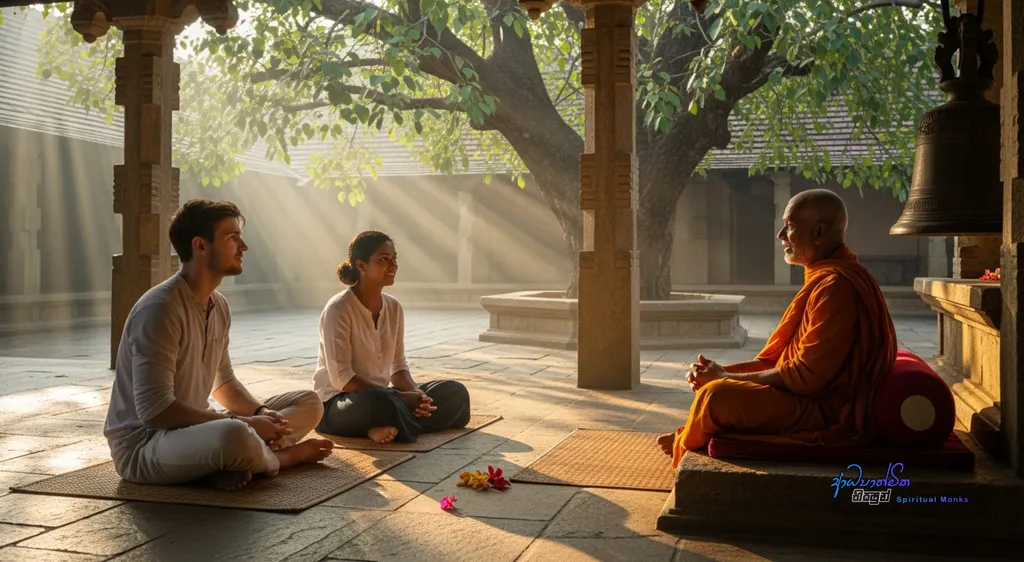
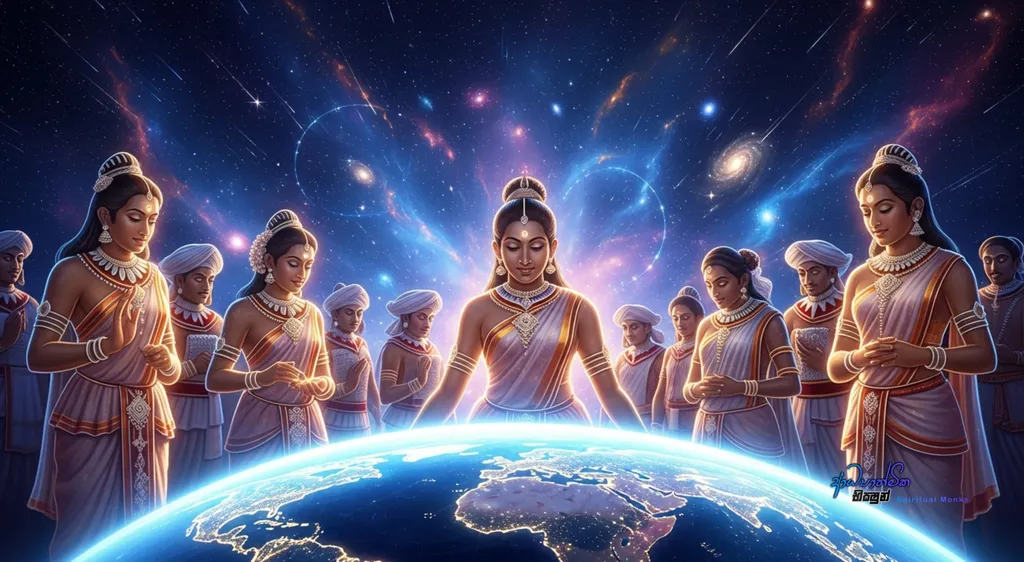
The Universal Governing Council: Guardians of Cosmic Order
In a prior teaching on “Representatives from the Universe,” I introduced a special cosmic assembly: the Universal Governing Council. This council is comprised of about forty highly powerful deities, or devas, who share a unified purpose. I also mentioned that this council is advised by righteous Brahmās beings from even higher celestial realms who possess Right View (Sammā Diṭṭhi), meaning they understand the true nature of reality as taught by the Buddha.
The insights I share come from the collective spiritual experiences of myself and other practitioners who have developed their inner faculties. We offer this knowledge with great compassion, hoping it will help you elevate your own mind to a state of equanimity and understanding, providing support for your spiritual journey.
You might wonder why this Universal Governing Council would be concerned with the divine protection of Buddhism. The reason lies in their immense foresight. This council doesn’t just react to present events; they see eons, or kalpas, into the future. They are a vast, interconnected network that operates with long-term, strategic plans. Seeing the potential harm that could befall the teachings over millennia, they implement countermeasures. This long-range planning is central to understanding the active, divine protection of Buddhism.
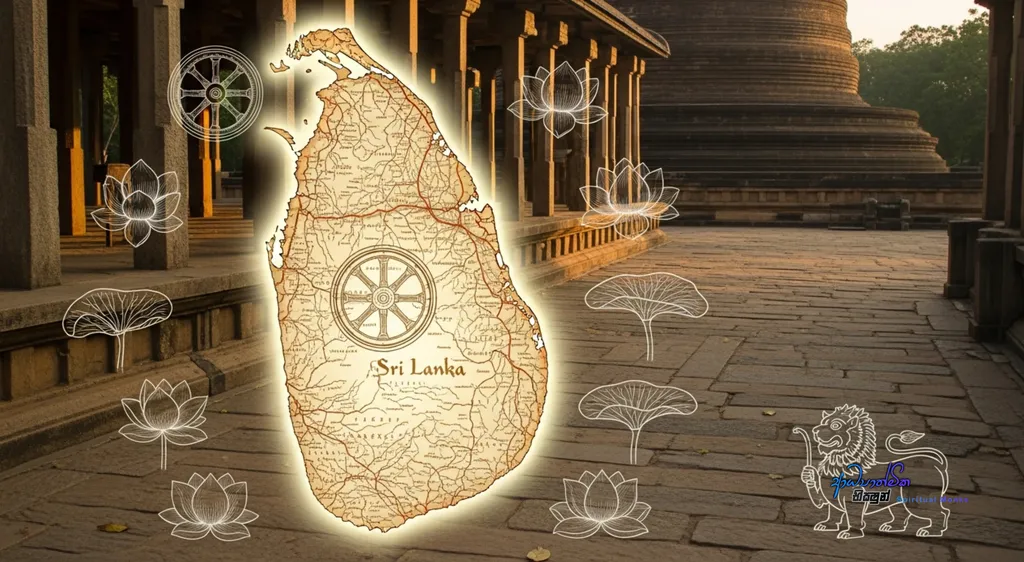
Sri Lanka: The Last Bastion of Pure Theravāda Buddhism
To understand their plan, we must start here: the island of Sri Lanka is the only country where the pure, unadulterated Theravāda tradition of Buddhism has been preserved as the main practice. You all know this. Elsewhere in the world, you find Mahāyāna Buddhism, Tantrayāna Buddhism, and other fragmented schools. But the pristine teachings of the Elders, the Theravāda path, exists in its most complete form right here. While some monks from Sri Lanka make noble efforts to spread Theravāda globally, its heartland remains this small island.
Consider this: there are about two hundred countries in the world. In how many of them is Buddhism whether Theravāda, Mahāyāna, or Tantrayāna a significant practice? It is primarily rooted in Asian nations. And within that small subset, pure Theravāda is practiced by the twenty to twenty-five million people on this tiny island.
This makes Sri Lanka incredibly vulnerable. As I have explained in a teaching titled “How Mara Destroys the Human World,” there are organized forces, which we can call the forces of Māra (the Tempter), that are actively trying to destroy Sri Lanka. They use politics, religion, and social divisions pitting the uneducated against the educated, the poor against the rich to sow chaos. Māra’s methods are subtle and systematic.
The Forces of Decay: Māra’s Subtle Attack on Society
Look at the decay in modern society. Think about the injustices and suffering you face today. Even within the Buddha Sāsana (the Buddha’s Dispensation) in Sri Lanka, there is a visible decline. You can see this deterioration socially, within the monastic order, and in the distortion of the Dhamma itself. You see it on television, on the radio, and across social media.
This is where the plan of Māra becomes clear. Nefarious groups are instigated to create ethnic and religious conflict. They launch smear campaigns against the main religion. They infiltrate the monastic order with puppet-monks individuals wearing robes but lacking discipline. They identify the weaknesses of genuine monks from a young age, using temptations like women, homosexuality, alcohol, drugs, or money to corrupt them. If a monk desires any worldly pleasure, it is offered to him as a trap.
If this destruction continues, what will happen to the Buddha’s prophecy that his teachings will last for 5,000 years? We are 2,500 years in. At the current rate of decay, will it survive another 2,500? This is the very future that the gods foresee.
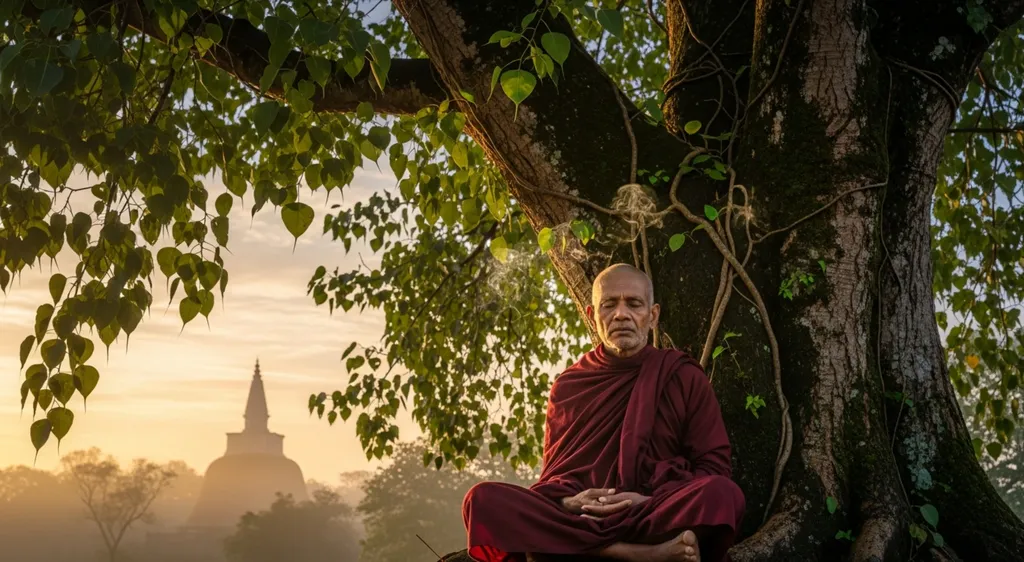
A Vision of a World Without the Dhamma
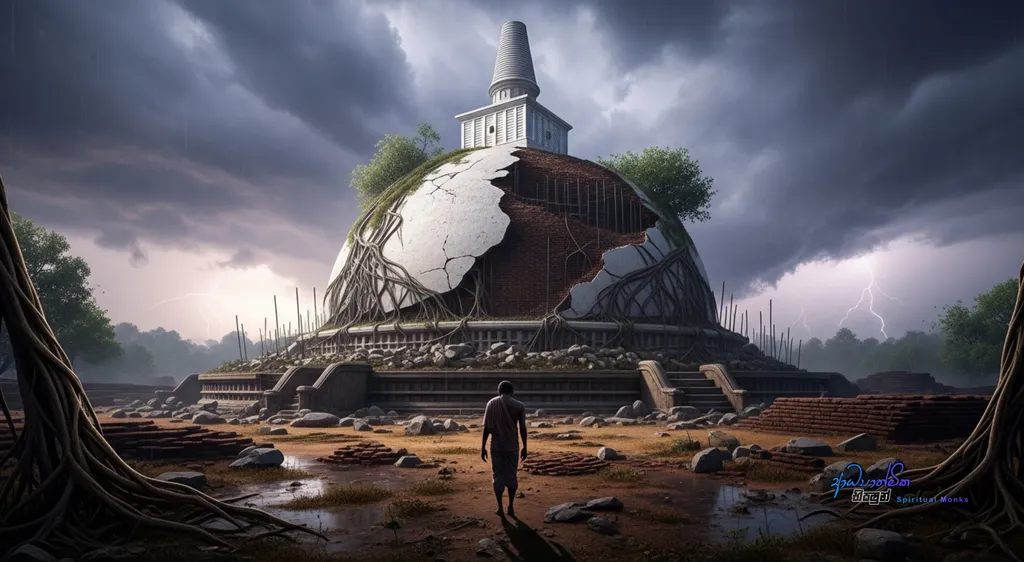
Let’s engage in a thought experiment. Imagine these destructive forces succeed. Imagine radical, anti-religious ideologies take over, and the youth of society are completely swayed. Imagine a Sri Lanka where the sacred sites like the eight holy places in Anuradhapura (Atamasthana), the great Ruwanwelisāya stupa, and the sacred Sri Mahā Bodhi tree are all destroyed. Imagine a future with no temples, no stupas, not a single person wearing monk’s robes.
Now, consider the divine realms. These heavenly worlds are inhabited by gods of varying power, by great Bodhisattvas (beings aspiring to Buddhahood), and by countless others who are practicing to attain one of the three types of enlightenment.
There are also Brahmās, who have reached their state through deep meditation (jhāna). As the scriptures tell us, these beings are not eternal. Their heavenly lifespan depends on their accumulated merit (puñña). When their good kamma runs out, they pass away from that realm and are reborn elsewhere.
Many of them aspire to be reborn in the human world. Why? Because the human realm is the most fertile ground for spiritual practice and accumulating new merit. But what happens if they are reborn into the world we just imagined a world devoid of the Dhamma, overrun by hedonism and materialism? It would be like a billionaire who has everything mansions, luxury cars, limitless travel, every pleasure imaginable suddenly losing it all and waking up in a mud hut.
The mental shock would be unbearable. Without a mind trained through meditation, such a person would likely go mad. Similarly, a deva reborn into a world without spiritual guidance would be utterly lost.
The Divine Self-Interest: Why the Gods Must Intervene
When these divine beings are reborn as humans, their deep-seated desire is to accumulate merit to return to the heavens or, for the wisest among them, to continue on the path to Nibbāna (liberation). But in a world without the Buddha’s teachings, how could they do this? There would be no opportunities for meritorious deeds like offering alms to the Sangha, participating in sacred ceremonies, or even listening to the Dhamma. The path to liberation, the Four Foundations of Mindfulness (Satara Satipaṭṭhāna), would be completely unknown.
Instead, they would be born into a hyper-sensual world, perhaps like a modern-day Las Vegas. As children, they might retain faint memories of their past lives, as some children do, due to the purity of their young minds. But as they grow, the defilements of society from parents, friends, and the culture at large would erase those memories.
They would become consumed by the radical, sensualist ideologies of the time. They would fall into a world where even the most basic morality is gone a world where people engage in sexual relations with their own parents and siblings, a world drowning in intoxicants.
Living such a life, breaking the Five Precepts without a second thought, their next destination after death would be certain: the lower realms of suffering (the four apāyas). They would be reborn as animals, ghosts, or in hell realms, trapped in a cycle of immense suffering. This is the great fear that the gods see.
They see that if the Sāsana disappears from the human world, their own path to liberation will be cut off. Their future well-being is at stake. This is the ultimate motivation for the divine protection of Buddhism. They are not just protecting a religion; they are protecting their own escape route from saṃsāra.
Cosmic Agents and the Battle Against Māra
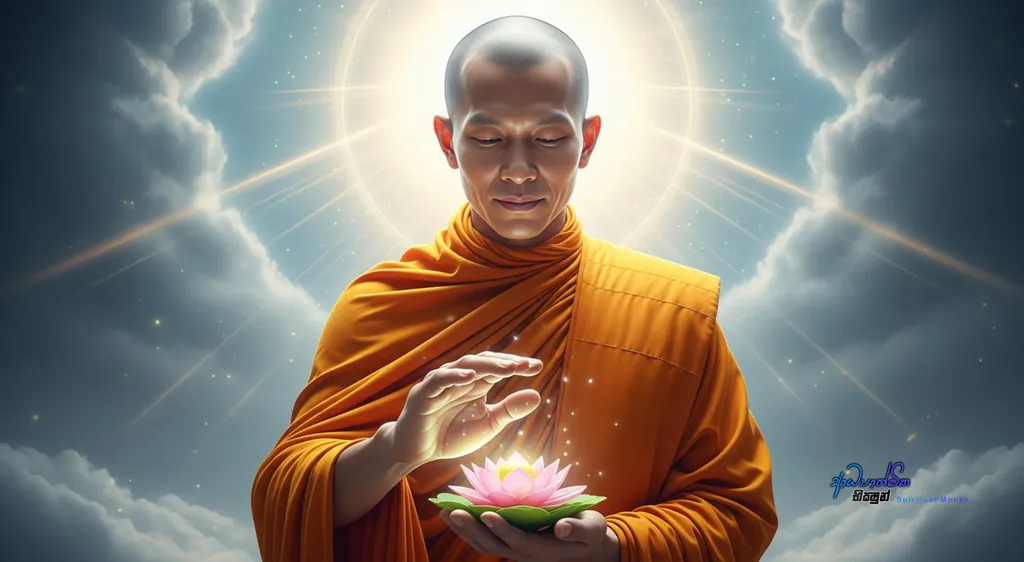
The Buddha himself foresaw this danger 2,500 years ago. He understood the harm Māra would inflict. It is said he entrusted the protection of his teachings to Sakka, king of the gods, and by extension, to the Universal Governing Council. Because of this cosmic fear, these divine beings plan and execute countermeasures against Māra’s schemes.
This is why they send “Universal Representatives” to the human world beings like the great monk Balangoda Ānanda Maitreya or the reformer Anagārika Dharmapāla. These individuals are sent to protect and revitalize the teachings.
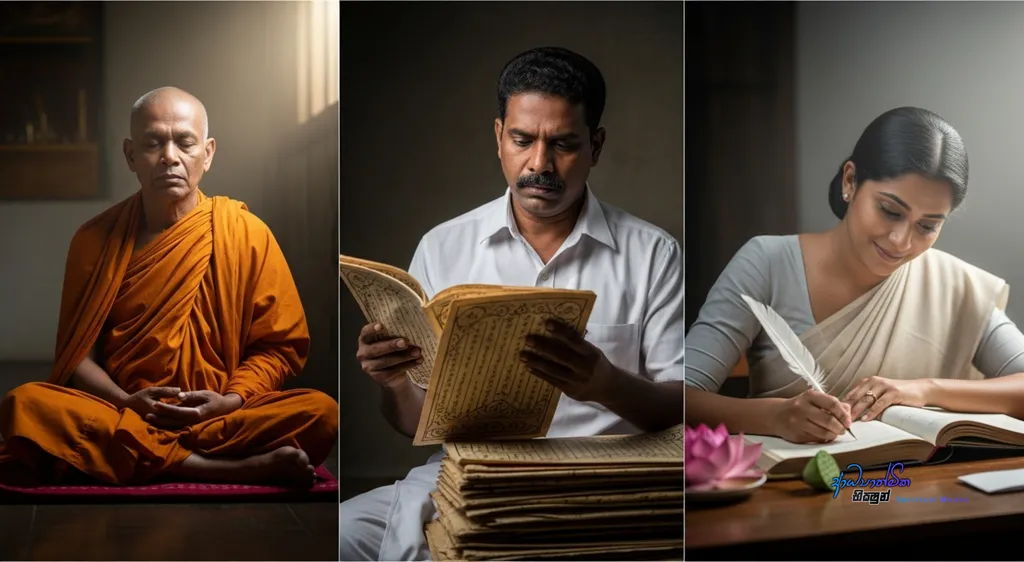
This is not limited to monks or famous figures. The council sends agents into all sectors of society. They may be born as scientists, educators, politicians, or artists. They may be born rich or poor, educated or uneducated. Their mission is to uphold the Dhamma from within the system, providing the necessary divine protection of Buddhism at a grassroots level. Māra’s strategy is long-term, planning 30, 40, or 50 years ahead. The Universal Governing Council must do the same.
The Modern Assault on Mind and Culture
Māra’s attack is multifaceted. It targets the youth, brainwashing them to lose respect for monks, to see the scriptures as exaggerated myths, and to abandon their culture. They are taught that concepts like rebirth, heaven, and hell are false. This erodes the very foundation of morality: hiri-ottappa, the shame and fear of wrongdoing, known as the “Guardians of the World.” Without this, society collapses. Before foreign invasions, the people of Sri Lanka were so virtuous they barely knew what killing an animal was. The invaders introduced widespread slaughter and normalized it. Today, that same process of normalization is happening with all forms of immorality.
They introduce destructive drugs like ‘ice’ to corrupt the youth. They legalize prostitution under the guise of economic necessity. They create such economic hardship that people feel they have no choice but to act unethically to survive. The media amplifies this decay, constantly broadcasting news of accidents, murders, and corruption, which normalizes violence and depresses the human spirit.
This is a stark contrast to many foreign countries where media outlets consciously avoid glorifying such events. Here, it is used as a tool to create a population that is stressed, hopeless, and easy to control. The goal is to create a generation of mindless, unethical beings perfect servants for Māra.
Your Path in a World of Turmoil
Understanding this cosmic backdrop, what should you do? Do not get entangled in the chaos. If society is heading for destruction, let it be. If it improves, we can live accordingly. But do not participate in the conflict. The message from the divine protectors is to save yourself by living righteously. Stand up against injustice only when you are certain you can make a real difference without being destroyed yourself. In a time of such pervasive corruption, it is often wise to protect your own peace.
Your practice should be a progressive journey:
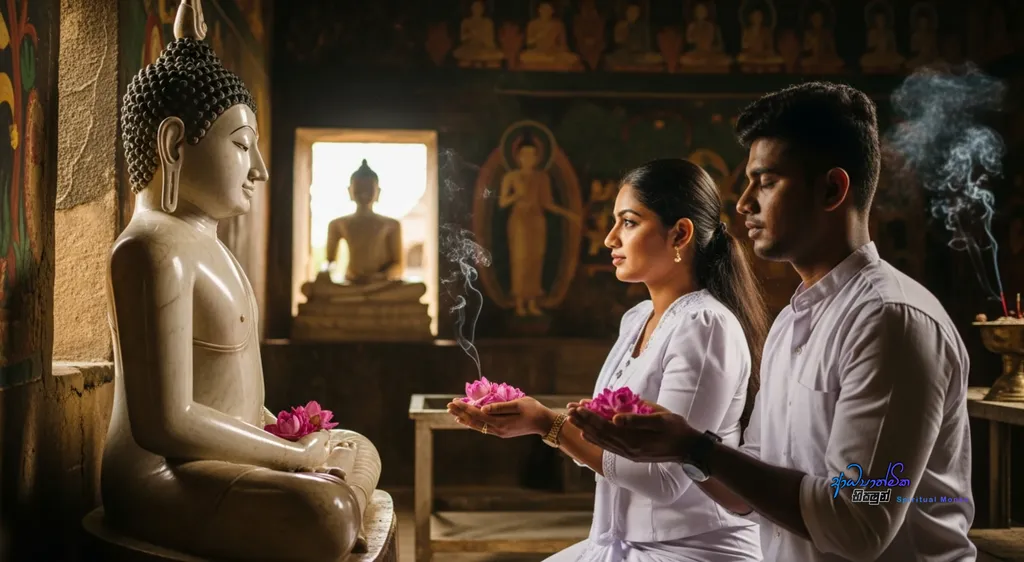
- Practice Generosity (Dāna) and Uphold Morality (Sīla): Start by observing the Five Precepts. Engage in meritorious acts like making offerings and visiting sacred places like the Atamasthana and Solosmasthana.
- Develop Concentration (Samādhi): Do not stop at rituals. Cultivate the mind through meditation, such as loving-kindness (mettā bhāvanā). Develop this into deeper states of absorption (jhāna).
- Cultivate Wisdom (Paññā): Do not stop at concentration. Use your developed mind to explore higher spiritual abilities, like awakening dormant energies. But do not stop there either. Strive for stream-entry and the higher stages of enlightenment. Aim for the final goal: Nibbāna.
Your busy life is no excuse. Saṃsāra does not care if you were too busy for the Dhamma. Your job, your family these are temporary conditions. Your spiritual progress is what truly matters. We teach these things with great compassion because now, more than ever, you must protect your own mind and your own journey through saṃsāra. By staying on the path, you align yourself with the forces of light and contribute to the divine protection of Buddhism in the most personal and powerful way possible.
We invite you to walk this path with us. Read our teachings, and most importantly, apply them practically in your own life. as you practice, questions will naturally arise. Please feel free to share your experiences and questions in the comments section below, via email or contact form. I will do my best to offer guidance in future talks based on your progress. For now, begin this practice with an open heart and a mind free from expectation. Cultivate it correctly, and may you find the clarity and peace you seek.
Thank you for joining us. We hope this blog will be of great benefit to your spiritual journey.
May you all be well and happy.
May the blessings of the Triple Gem be with you all!


