


Categories: Lost Your Meditation Spark?
May the blessings of the Triple Gem be with you all!
Today, through our spiritual teachings, I wish to clarify a common obstacle many people face: The Spiritual Trap of Impatience, a sense of urgency or hurry. I want to explain how this hurry in meditation can be harmful, leading to frustration, causing you to become disheartened with your practice, and even making you want to stop altogether. The very title of this reflection asks the question:
Why are you in such a hurry to develop in meditation? This impatience is a significant roadblock and understanding it is the first step toward genuine progress.
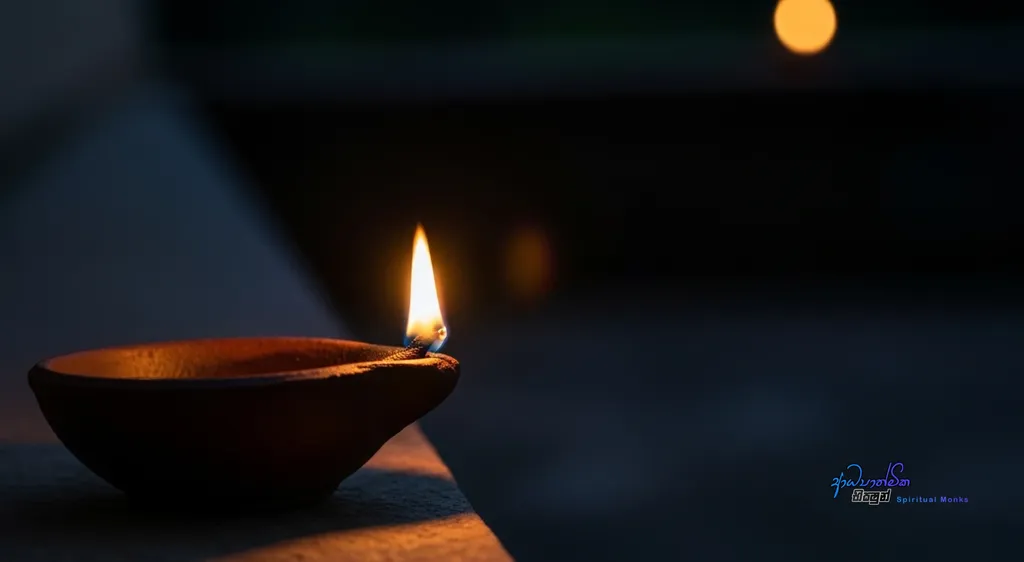
The Cycle of Expectation and Disappointment
Many of you listen to our practical teachings and, inspired, begin to meditate. But soon after starting, a tremendous hurry can arise.
In our guidance, we describe the potential results and experiences one might encounter. For instance, in our practical program on the ‘third eye,’ we mention that after the initial stages, you might feel pressure between the eyebrows, followed by the appearance of light signs, known in Buddhist texts as āloka saññā.
This knowledge can turn into an expectation. We constantly advise against holding expectations, because doing so is a form of spiritual craving. This craving, or tanhā as it is called in Pali, is a thirst that must be mentally abandoned. If you do not let go of this desire, these experiences will not arise. Many people start the practice and begin to feel the pressure between their eyebrows, just as described. But then what happens? They immediately begin expecting the next stage. Having heard our teachings about what comes next, they eagerly anticipate the light signs. This creates an intense hurry in meditation to get those lights.
Some people even contact me, saying, ‘I’ve been meditating for a month, but I haven’t seen any light signs!‘ Within that statement lies the core of the problem: the need for the next result. This is a spiritual craving. It also contains distress and sadness, a form of dissatisfaction or suffering known as dukkha. The thought, ‘I haven’t received the next result, the light sign,‘ is a sorrowful one.
When this is present, your mind is caught between two extremes: attachment to the desired outcome and aversion or frustration that it hasn’t arrived. Ask yourself: Is my mind in a state of balance or equanimity upekkhā? No. There is no balance, no equanimity, and certainly no patience.

The Universal Law: Spiritual Progress Cannot Be Forced
I have said before that in worldly, material life, some things can be acquired with money. Some things can even be taken by force. And of course, there are things that cannot. People know that in the secular world, you can sometimes offer a bribe to get things done quickly.
If it were possible to bribe the spiritual world, people would do it to obtain light signs or advance to the next meditative step. If they could steal these experiences or seize them by force, they would try. This is the kind of mentality we must avoid.
If you hold onto this mindset, you will never receive what you seek. The universe, this natural order, what we call the law of kamma (intentional action), is the same for everyone. It does not distinguish between rich and poor, black and white, or different nationalities and religions.
Wherever you are in the world, the consequences of your actions will come to you according to how you perform them. This law is the same for a president, the world’s wealthiest person, the poorest person, the most powerful, and the least powerful. The natural laws are equal for all.
Therefore, never be in a hurry in meditation to progress. If you have a desire to advance, let it go. See that thought with mindfulness, release the desire, and simply continue with the meditation itself. Just keep practicing mindfulness, following the practical instructions, without interruption.

The Sitar String Analogy: Finding the Middle Path
The Lord Buddha gave a powerful analogy, one you may have learned in school, using a stringed instrument like a sitar. He asked, what happens if you tighten the strings too much? They break. And what happens if the strings are too loose? They produce no sound. To create beautiful music, the strings must be tuned to a moderate tension. This journey of meditation is the same.
If you try to go too fast, if you are in a hurry, you will not only fail to get results, but you will also become disheartened. At the same time, if you practice too loosely, that is, with an ‘I don’t care‘ attitude, without interest or enthusiasm, you also won’t get results. What we need is a moderate pace, the Middle Path or Majjhimā Paṭipadā.
This means practicing consistently, perhaps at the same time each day, whether results come or not. The key is to continue without expectation. Some people become lazy in their practice because results don’t appear, while others start with such ferocious speed that this very speed is what pulls them down and causes them to crash.
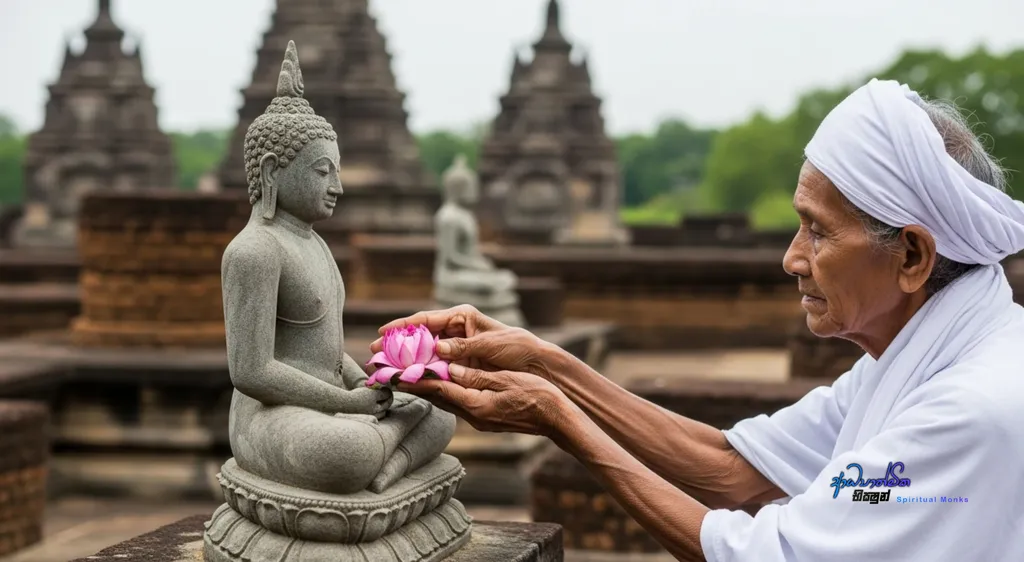
Your ‘Hurry’ is Your Inner Saboteur (Māra)
The impatience itself becomes your inner saboteur.
In Buddhism, we speak of Māra, often translated as a tempter or demon. But here, the real Māra is a thought in your own mind. This feeling of hurry is a Māra. As you sit with your eyes closed, focusing between the eyebrows, having heard about the next steps, the mind begins to churn. The thought repeatedly arises, ‘Oh, I don’t have the light sign yet!‘ This is the only thought that comes. From the moment you sit down to meditate, you are distracted by this expectation.
Even for someone who has seen a flicker of light, the thought changes to, ‘Oh, my light sign doesn’t last! It appears and disappears so quickly!‘ If you watch your mind with mindfulness sati as we have taught, you will see the sadness and sorrow over the light not remaining. This is the hurry. This inner saboteur, born from impatience, is what will destroy your practice.
The enthusiasm you have today, practicing three times a day, will be eroded by this hurry. Tomorrow, you might only practice twice. The next day, once. And soon, you may stop meditating altogether. This is the nature of the undisciplined mind. The reason I constantly emphasize mindfulness is so you can understand your own mind. When you are not mindful, you fail to recognize how your own thoughts become your enemy.
A Spiritual Roadmap: Guidance, Not a Goal
So why do we give these teachings about future stages at all?
We share them publicly to educate you, to remove fear, and to show you that such things happen as you move to the next step. It is not to create a checklist for you to chase. Learning about the path is not a problem. The problem arises when you grasp onto that knowledge, when it becomes an expectation and a desire. This grasping is what causes harm, not physical harm, but spiritual harm: becoming discouraged and abandoning the practice.
Imagine someone gives you a map of the city of Colombo, describing it in great detail. They point out the landmarks, tell you about the kinds of people you might meet, and eliminate your uncertainties. Because of this guidance, you can enter the city without fear. You can recognize potential problems or wrong characters, and you can also identify good people.
You have more than a 50% better chance of navigating the city without being deceived because someone with experience has guided you. This is what I am doing for you. The teachings are a map to help you travel without fear, not a treasure to be seized.
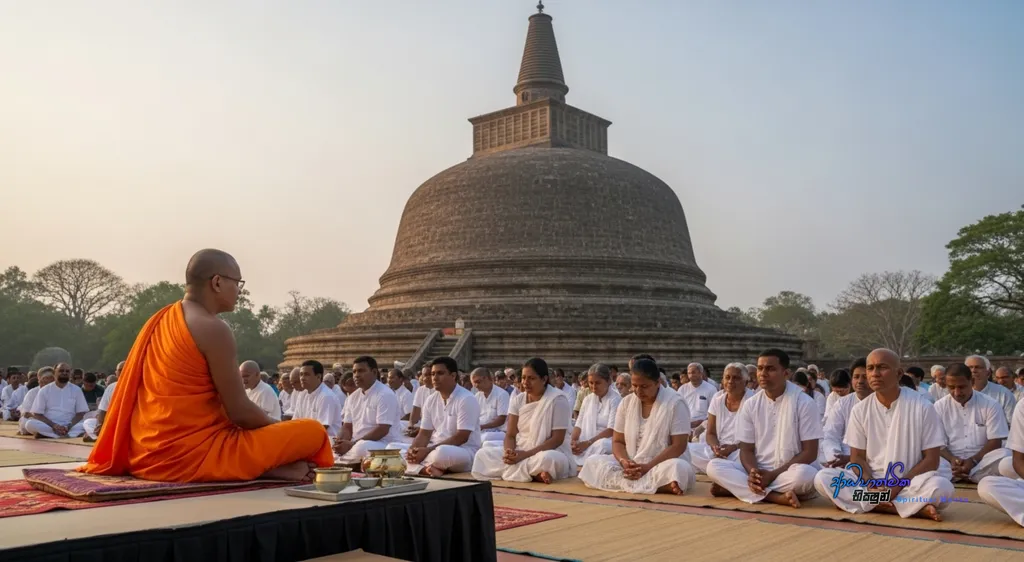
Cultivating Equanimity (Upekkhā) in Meditation and Life
The goal is to cultivate a balanced mind, a state of equanimity known as upekkhā. A person in this state might meditate for a year or two and receive no obvious results yet feel no particular sadness. Why? Because, as we teach, they are simply practicing mindfulness and watching their thoughts.
Conversely, if they attain many profound results, they feel no particular elation. Their mind reaches a state where it is unmoved by gain or loss. This is what should happen.
This inner balance will transform your outer life. I have often seen that people, especially men, who are in a lot of hurry in meditation also have a lot of hurry in their worldly lives. When you cultivate equanimity in your practice, letting go of both desperate hurry and lazy indifference, you will find that same balance in your material life.
You will no longer make rushed decisions. You will handle problems in your family life, your finances, or your social interactions with a calm, steady mind, because you are no longer driven by impulse.
A Call to Patient Practice: Be Like a Child on the Path
So, I urge you to let go of the hurry in meditation. Recognize that this impatience is just a thought, a powerful thought that acts as your Māra. This hurry is a cancer for your spiritual life, causing you to become discouraged and eventually give up. Don’t carry it like a burden on your head. Put it aside.
Try to become like a small child. Does a small child know what will happen next?
No. They simply do what they are told. They go about their business peacefully. Adopt this attitude. We should never desire the next result, fear it, or even expect it. Think about it: we have wandered through an immeasurable number of lives in samsāra, the cycle of birth and death.
If, after all that time, we were to achieve a result even at the moment of death in this lifetime, wouldn’t that be an incredible thing? Think like that, but you don’t even need to hold onto that thought. Simply think, ‘Results will come when they come.‘ It is not our concern. Remove the concept of ‘results‘ entirely and just continue your spiritual work.
When you practice with dedication and enthusiasm, but without spiritual expectations, without craving, without hurry, the universe and the laws of nature will provide you with the energy and the results needed to develop your practice. The path is here. The destination, even Nibbāna (liberation), is already within your potential. You are the one who pushes it away with your hurry, and you are the one who can draw it closer by letting go.
May the blessings of the Buddha, the Dhamma, and the Sangha give you the strength to identify the thought of ‘hurry,’ to overcome any obstacles to your continuous practice, and to move forward by understanding your own mind.
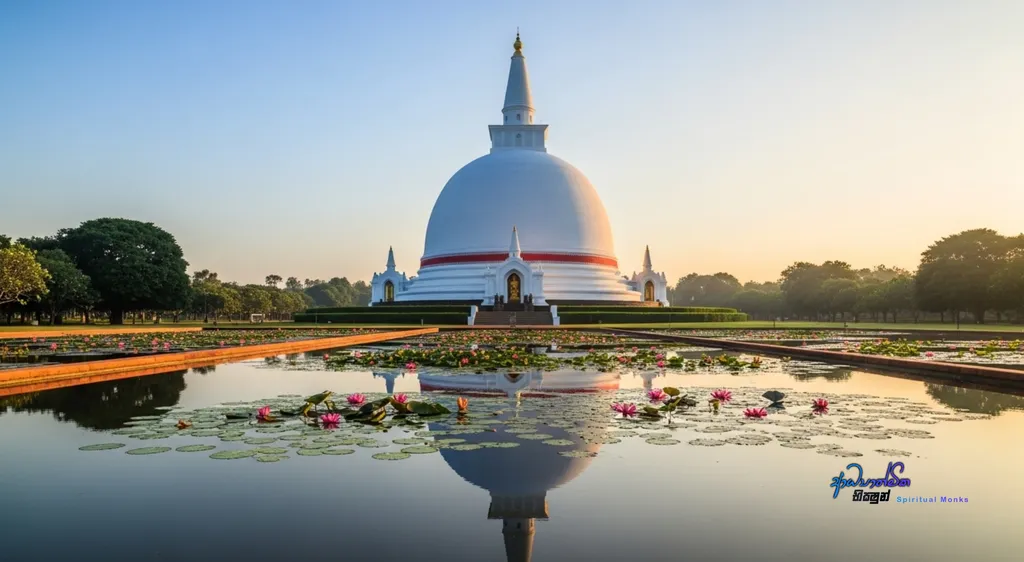
We invite you to walk this path with us. Read our teachings, and most importantly, apply them practically in your own life. We sincerely encourage you to share your experiences and ask questions in the comments section below our article. Your questions will help us create future content that directly addresses your needs. You can also contact us through the contact form.
Thank you for joining us. We hope this blog will be of great benefit to your spiritual journey.
May you all be well and happy.
May the blessings of the Triple Gem be with you all!


