


Categories: Other Meditation Teachings
May the blessings of the Triple Gem be with you all!
This teaching is for those of you who are practically developing your spiritual life. Whether you practice calming meditation, known as Samatha, or insight meditation, called Vipassana, this exploration will shed light on a key characteristic that arises from dedicated practice. When we consistently and continuously train the mind every day, a time comes when a deep interest and desire to continue this practice grows within us. A genuine need to carry on this work becomes a part of who we are.
As this training continues, a natural curiosity arises to explore the depths of our own spirituality. We feel an inner calling to develop it further. This blossoming of spiritual qualities is a direct result of our practical, hands-on training. The more you engage in this daily, uninterrupted practice, the more you will experience these profound results. Here, we will explore one of the most significant of these results: the natural pull toward spiritual solitude.

The Shift from External Chasing to Internal Contentment
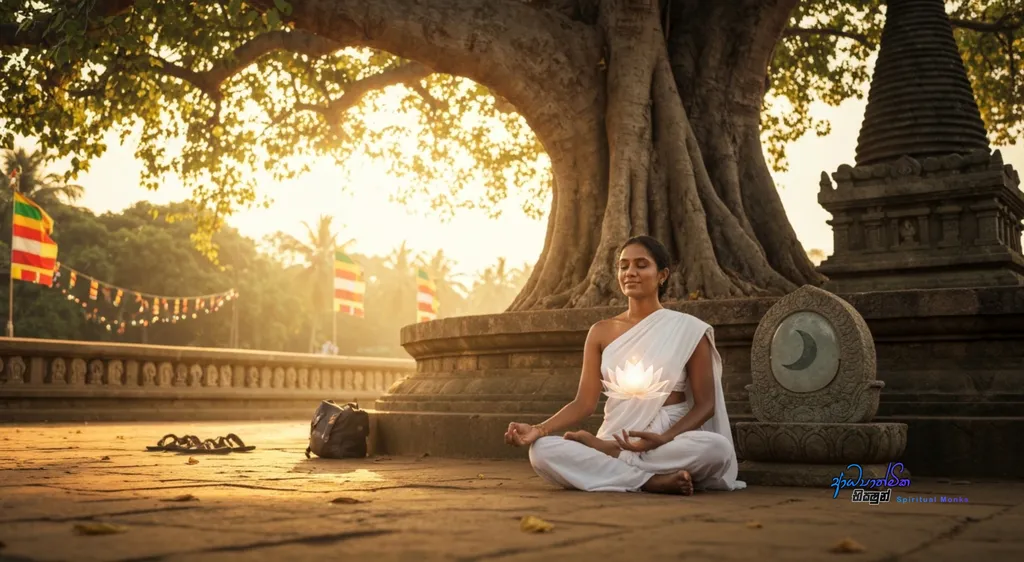
As your spiritual life deepens, you will notice a significant shift: a growing desire to be alone. This isn’t a negative withdrawal but a positive inclination towards what we can call spiritual solitude or seclusion. This happens because as we advance on the path, our craving for various external pleasures naturally diminishes.
In a previous series of teachings on developing mindfulness, or Sati, I explained that as mindfulness strengthens, the urge to chase after physical, worldly things fades away. The same principle applies here. For so long, we have neglected the profound pleasure and contentment available within our own minds.
We have always tried to find enjoyment in the external world, pleasing the senses of sight, hearing, smell, taste, and touch by using external objects, people, or places. We have tried to make ourselves happy and find peace through these external means.
Consider this common example: after a stressful period at work, you might feel a strong desire to go on a vacation to experience a sense of freedom. On that trip, some might turn to intoxicants or alcohol. Some might engage in sensual misconduct. Others might sing loudly and party. And some might simply try to enjoy the natural environment.
In all these different ways, you are trying to relieve your stress and find freedom, happiness, and joy. However, as the Buddha taught, particularly through the practice of the Four Foundations of Mindfulness, or Satipatthana, you will come to understand that this kind of relief is always temporary. You realize that true freedom is already within you. You don’t need to go anywhere, not even on a holiday, if you cultivate this freedom from within. This realization of inherent contentment marks a powerful turning point.
Losing the Taste for Worldly Chatter
To truly experience this inner freedom, we must engage in practical training, either Samatha (calm meditation), Vipassana (insight meditation), or both. As this training progresses, our mind undergoes various new experiences. A time will come when you genuinely feel no desire to engage with most people in the world, especially on topics that don’t relate to mental well-being, freedom from pressure, or inner peace. You will find yourself naturally avoiding such conversations.
The Buddha spoke of this, mentioning what are called the ‘thirty-two types of worldly talk’, discussions about politics, the state of the country, and other unnecessary topics. A person developing their spiritual path naturally loses interest in this kind of chatter. It’s a natural characteristic that arises.
The topics that others discuss simply no longer resonate. For instance, I have been told by women on the spiritual path that when they meet with old friends, the conversation often turns to gossip and talking about others.
These women, who are now developing their minds through meditation, have shared with me: ‘I used to be like that, too. At the office, at work, wherever I went, I would talk about others. But now, as I develop my practice, I have no desire to join those conversations. In those moments, I feel the urge to step aside and meditate, or to practice the Four Foundations of Mindfulness as the Buddha taught.’ This experience is a common and natural sign of progress.

The Natural Purification of Speech
This disinterest in worldly talk is deeply connected to purifying our speech. In society, much conversation revolves around what the Buddha called unskillful speech. This includes what is known in Pali as Samphappalāpa, or idle chatter, frivolous talk that is pointless. It also includes gossip, slander, lying, and harsh words. These four verbal wrongs are often committed together in casual conversations.
This isn’t limited to one gender. I mentioned the example of women, but the same is true for men. Men on the spiritual path also find themselves feeling isolated or ‘cornered’ in social situations. When their friends start conversations that are unwholesome, they find their minds are simply not prepared to engage. They might participate for a very short time, perhaps five or ten minutes, out of politeness.
But someone who used to chat for half an hour will find they can no longer sustain it. This is a spiritual fruit, a sign that the mind is developing. The impulse to engage in conversations that promote craving and lengthen our journey in Samsara, the endless cycle of birth and rebirth, naturally fades away. This is one of the beautiful qualities that grows within us through mindfulness: the natural abandonment of false speech, slanderous speech, harsh speech, and idle chatter.
Misunderstanding and Facing Social Pressure
Unfortunately, some people misunderstand this change. They may mistake this natural inclination for spiritual solitude as a sign of illness. They might even seek advice from psychiatrists. But most psychiatrists are trained in Western medicine; they don’t understand the spiritual dimension of the mind’s development.
They only know to prescribe medication based on their training. Only those who are spiritually developed themselves can recognize these experiences as positive results of meditation practice. Others simply do not know.
It is crucial that you understand this. I have been told by practitioners that when they get a free moment at work, they seek out the shrine room to sit quietly. Others listen to a Dhamma talk, offer flowers and lamps, or even practice meditation. I’ve heard from men who, during a lull at the office, pretend to be resting at their desks but are actually closing their eyes to practice meditation or cultivate mindfulness. This withdrawal from meaningless talk is a sign of your growth.
You might face accusations from others. ‘You’re not like you used to be,’ they’ll say, sometimes isolating you. They might mock you, saying things like, ‘Look at this one trying to attain Nibbana (liberation)!’ Please know that making such discouraging remarks is a serious unwholesome action, or Akusala Kamma. If those people ever try to develop their own minds, they will face the same obstacles.
Some people may act as if possessed by Mara, the tempter in Buddhism, trying to break you down mentally with subtle insults and discouraging comments. They may even withdraw help and support because you no longer participate in their social circles.

The Wisdom to Persevere: Why You Must Not Quit
We have had countless discussions with people facing these challenges. When confronted with this pressure, the fear of losing friends, society, or even a spouse, some people give up their practice. They abandon their meditation and return to their former, unenlightened lay life.
I have been told directly, ‘Venerable Sir, I stopped my meditation because of this pressure.’ This comes from a lack of wisdom, or what we call Paññā. Think about it: how ignorant have we become if we cannot even develop our meditation, let alone realize Nibbana, because of what others think?
Those ‘friends’ at your office, university, or school, none of them will be with you on your journey through Samsara. You may be heading towards a lower realm while they are there with you, and you may not even realize it. Understand this. Whether you have friends or not, whether you have society’s approval or not, do not be ignorant.
You must make the effort to develop your spiritual life. Never be afraid of losing this society. The effort and sacrifice you make in your practical training will never go to waste. If you practice with dedication, you can achieve results very quickly, realize liberation, and cross the ocean of Samsara.

Finding Your True Company and the Ultimate Solitude
Through dedicated practice, great spiritual attainments are possible. This includes deep meditative states known as Jhanas, supernormal knowledge called Abhiññā, and developing spiritual energy, which some traditions call Kundalini. You can even develop faculties like the ‘divine eye,’ or dibba-cakkhu. Both calming and insight meditation yield profound results, so never think of these changes in yourself in a negative way. The desire for spiritual solitude is a sign of your development.
There’s another way to understand this. When you are developing spiritually, you naturally don’t feel like talking about topics that don’t align with your practice. Let’s look at the opposite. Think of people who constantly engage in gossip. When they meet someone who wants to talk about the Dhamma (the Buddha’s teachings), it doesn’t resonate with them.
They don’t want to have that conversation. They are always seeking someone who enjoys the same ‘filthy tastes’, the gossip of others. They are drawn to that kind of society.
The Buddha gave a simple but powerful simile for this: people with similar thoughts gather in groups. He said that urine collects with urine, and excrement collects with excrement. On the other hand, when it comes to gathering with righteous spiritual friends (Kalyana-mitta), he said that milk mixes with milk, and honey mixes with honey. People with similar ideas and thoughts naturally come together. This makes it easier to walk the path.
However, as your spiritual solitude deepens, a time will come when you realize you don’t even need the constant company of spiritual friends. They are essential in the beginning, but later on, you will feel the pull to be completely alone, developing your spirituality, whether you are a layperson or a monastic. This is not laziness; it is a profound result of your inner work.

Embracing Solitude as a Virtue
So, if you are a person who is currently meditating and these thoughts are arising in you, the disinterest in gossip, lies, slander, harsh speech, and empty words, understand that these are virtues growing within you. These are the signs of a developing spiritual life. We must learn to recognize them for what they are.
If you have a friend who is also developing their spiritual life, please let them read this teaching. And for yourself, seek out such friends to help your own practice grow. Today, I will conclude this teaching on the theme of ‘liking to be alone.’ May the power and blessings of the Buddha, Dhamma, and Sangha, the Triple Gem, give you the strength to understand these matters clearly and develop your spiritual path.
We invite you to walk this path with us. Read our teachings, and most importantly, apply them practically in your own life. as you practice, questions will naturally arise. Please feel free to share your experiences and questions in the comments below, via email or contact form. I will do my best to offer guidance in future talks based on your progress. For now, begin this practice with an open heart and a mind free from expectation. Cultivate it correctly, and may you find the clarity and peace you seek.
Thank you for joining us. We hope this blog will be of great benefit to your spiritual journey.
May you all be well and happy.
May the blessings of the Triple Gem be with you all!.


