


Categories: Maintaining Mindfulness
May the blessings of the Triple Gem be with you all!
In our ongoing exploration of the spiritual life, we consistently return to a foundational principle: mindfulness. This practice, known in the Pali language as Sati Sampajañña or mindfulness with clear comprehension is the key to understanding everything. It allows us to investigate our own mind, ourselves, and the world. Through this practice, we come to a profound realization: the entire world, as we experience it, exists within us.
The Buddha delivered 84,000 teachings, a collection known as the Tipitaka, to illuminate this truth. How can you, regardless of your background, religion, or age, verify these ancient teachings for yourself? How can you know if they are true or false? The only way is through direct, practical application. By establishing mindfulness, or Sati, and training yourself in a practical way, you can begin to see the true nature of reality.
Without this hands-on approach, this truth will remain inaccessible. Many of you who have followed these teachings and applied them have already experienced the immense value of practice. Through our own experiences, we share these insights with you, and in turn, by putting them into practice, you discover their power for yourself.

An Invitation to Practical Spiritual Experience
Therefore, we encourage everyone who explores these teachings to be practical. This practical application is what will change your life. It is the very beginning of your spiritual journey and the engine of its progress. Today, I want to guide you through another practical exercise to help you maintain and develop your mindfulness.
It is an experience you have likely had many times, perhaps without realizing its full significance or it registering in your wisdom faculty, known as Paññā. For those who have already gained this insight, this will be a valuable reinforcement. For those who have not, I feel it is essential to point it out.
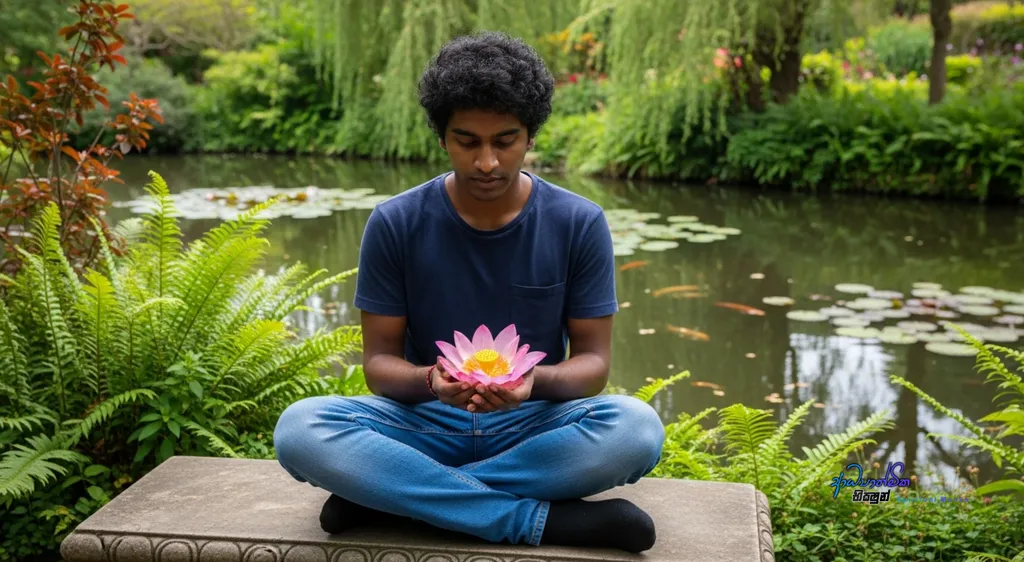
An Experiment in Taste: Understanding Mind, Brain, and Sensation
Let’s consider the things we experience temporarily. Imagine you are about to eat some ice cream. We know that we take in food through the mouth, and the sensation of taste is perceived by the tongue. The nerves in our tongue send signals that allow us to perceive different flavors bitter, sour, spicy, sweet. But does any other part of your body feel this taste? No, the sensation is confined entirely to the tongue. In the higher Buddhist teachings, or Abhidhamma, this is understood through the sensitive faculty of the tongue (jivhā pasāda).
The moment the ice cream touches your tongue, you perceive its sweetness or its unique flavor. Almost instantly, a message arises. According to Western medicine, this message goes to the brain. However, we know from direct experience that we have a mind, or consciousness what we call Sitta which is something beyond the physical brain. The brain is an organ that helps manage the physical body, but it is not the ultimate controller.
If it were, then even a deceased person, who still has a brain, should be controlled by it. The truth is, everything is governed by the mind. The mind is primary, and it operates through the brain, which is the body’s main control system. This is a process in itself.
So, as soon as the taste registers on the tongue, a message arrives in your mind: “This ice cream is delicious.” The contact is fleeting, yet the recognition is instantaneous. Consider how sensitive the tongue is to perceive this so quickly. The mind immediately recognizes, “This tastes good, it has a wonderful flavor.” This entire process is what I invite you to observe with mindfulness the next time you eat.

A Mindful Eating Guide: Observing the Beginning, Middle, and End
When you eat, whether it’s a meal from a plate at home, be mindful. As you mix your food and lift it to your mouth, pay close attention to the moment it touches your tongue. You will begin to notice how the flavors register. You will see how much your mind clings to this pleasant sensation and how much you crave it. Simply watch this with mindfulness.
As you observe, ask yourself two questions. First, how long does your mind stay with the taste? Second, even though you desire it, can you hold onto that pleasant sensation for as long as you want? Notice how long the taste actually lasts on your tongue. Observe the entire arc of this experience: its beginning (the arising of the taste), its middle (how long it persists), and its end (when it disappears). This is how you investigate the nature of pleasant feeling, or vedanā.
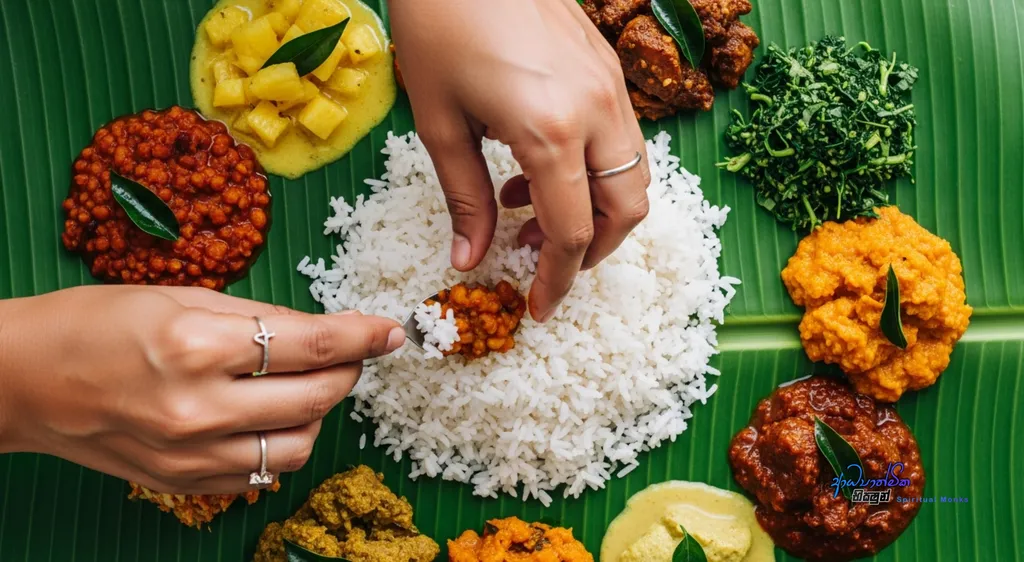
Discovering Impermanence in a Spoonful of Yogurt
Watch the sensation of taste with sustained mindfulness. As you practice this again and again, you will begin to notice something profound. Even on the very first try, if you are truly mindful, it will become clear to your mindfulness and wisdom (Sati–Paññā) that the taste is incredibly brief. It feels as if it barely exists it just touches the tongue and vanishes. There is a clear beginning when it makes contact, a fleeting moment of existence, and then it is gone. This is its impermanent nature.
Next time you eat a cup of yogurt or ice cream, something you might have spent a hundred rupees on, try this. Normally, we rush to finish it, quickly consuming it to get to the next spoonful of flavor. This time, do it differently. Eat the entire portion with unbroken mindfulness. Don’t just do it once; make it a continuous practice. You are used to simply indulging in the taste. But when you apply mindfulness, something extraordinary happens.

Who Truly Tastes the World? A Deeper Experience through Mindful Eating
You may have heard it said that the ones who truly experience and enjoy the world are the enlightened beings the Buddhas, the Pacceka Buddhas, and the Arahants. We, on the other hand, do not. The truth is, we don’t even know what taste really is. Only those who have perfectly developed mindfulness (Sati) can truly experience a sensation in its fullness.
The rest of us are just attempting to. The fact that we have not truly experienced life is a truth taught by the Buddha over 2,500 years ago, and it is something you can verify for yourself through this practice.
So, continue to watch the food as it touches your tongue. See how long your mind stays with the taste. Notice how much it desires the pleasant feeling. Where does the flavor exist? Where is the part you enjoy the most? As you look deeper, you will see the pleasure (assāda) and the inherent danger or unsatisfactoriness (ādīnava) in clinging to that fleeting sensation. You will understand for yourself just how much you are attached. Keep watching with mindfulness.

A Final Reflection: The Path of Continuous Practice
(The final part of the teaching reinforces the core message, looping back to the central theme of continuous practice. It is a reminder to consistently apply this mindful investigation to every meal, transforming an everyday act into a profound spiritual discipline.)
We invite you to walk this path with us. Read our teachings, and most importantly, apply them practically in your own life. as you practice, questions will naturally arise. Please feel free to share your experiences and questions in the comments below, via email or contact form. I will do my best to offer guidance in future talks based on your progress. For now, begin this practice with an open heart and a mind free from expectation. Cultivate it correctly, and may you find the clarity and peace you seek.
Thank you for joining us. We hope this blog will be of great benefit to your spiritual journey.
May you all be well and happy.
May the blessings of the Triple Gem be with you all!


