


Categories: Third Eye: Practical Meditation
May the blessings of the Triple Gem be with you all!
Welcome. Many of you are walking a spiritual path, engaging with life practically from both an insight perspective, known as Vipassanā, and a tranquility perspective, called Samatha. Within our series on practical Third Eye meditation, we know there are individuals who have successfully awakened this spiritual faculty, either through our guidance, other meditation systems, or as a natural result of past wholesome actions (puñña). This teaching is for you.
We have previously discussed how to use the Third Eye, or what is called Dibbacakkhu (the Divine Eye), to perceive various spiritual places and realities. Today, we will focus our spiritual lens on a specific, well-known celestial being within Sri Lanka: the Gambhāra Siddha Sūniyam deity.
The information shared here is born from direct spiritual interaction and experience, offered to you so that you may also verify it for yourselves. As the Buddha himself engaged in dialogue with celestial beings, as documented in the Devatā Saṃyutta of the Connected Discourses, we too can explore these subtle realms with a developed mind.
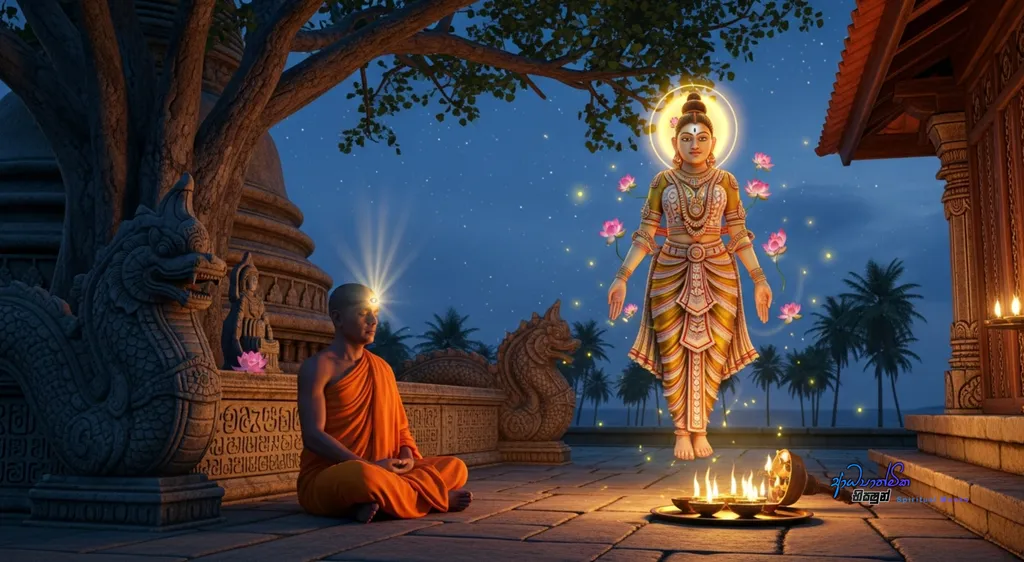
The Cultural Presence of the Gambhāra Siddha Sūniyam Deity
In Sri Lanka today, the Gambhāra Siddha Sūniyam deity is a significant figure in the cultural landscape, with many shrines (devalas) dedicated to him. These shrines are managed in vastly different ways. Some custodians uphold the Five Precepts (Pañcasīla) with great sincerity, abstaining even from meat and maintaining a pure environment.
Others, unfortunately, do not maintain such ethical standards, sometimes even consuming meat and alcohol, essentially ‘selling’ the deity’s name for profit. We also see individuals on social media boasting of a special connection or protection from the deity.
This article aims to cut through the noise. The insights presented here are from direct spiritual investigation and communication. If your mind is developed through Samatha meditation and your Third Eye is open, you have the ability to gain this experience for yourself and understand the truth directly.
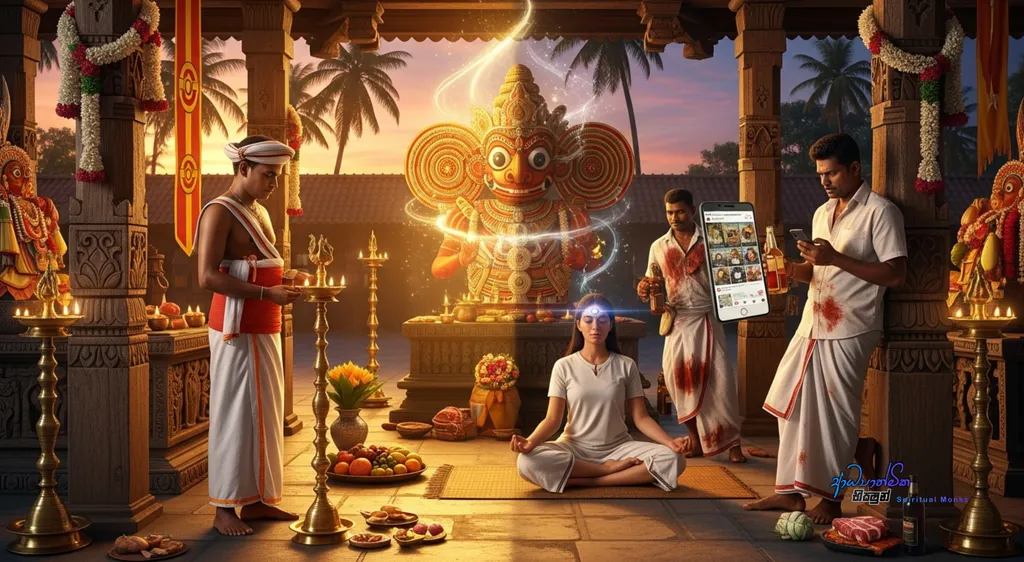
A Practical Guide: How to Meditate and See for Yourself
This is a practical exercise exclusively for those whose Third Eye is already awakened. For others, this will be merely a teaching. If you lack experience in Samatha meditation and the subtle realms, this may sound like nonsense, and it would be better to spend your time on something more meaningful to you. Please do not waste your time if this path is not yours.
For those ready to practice, follow these steps:
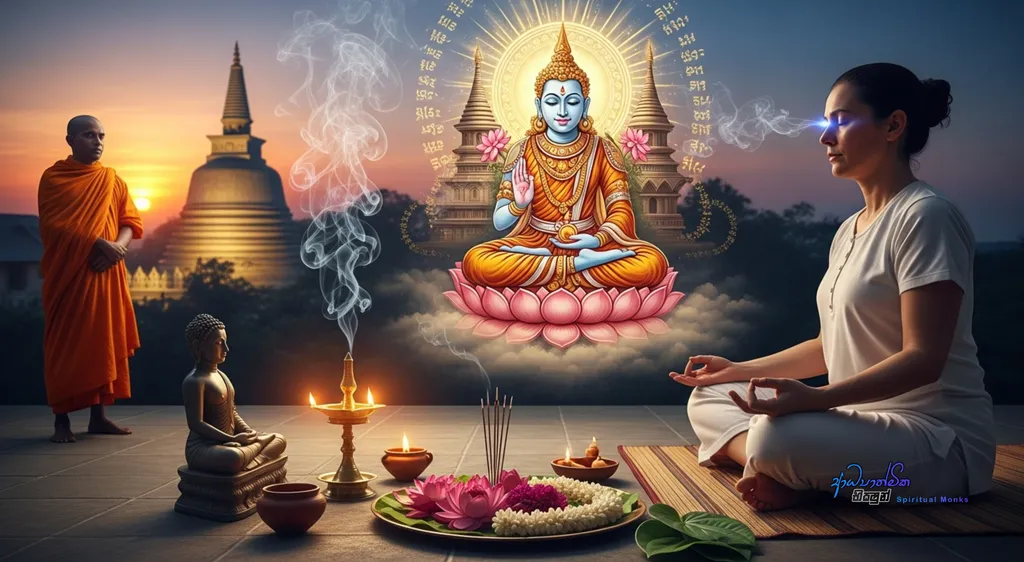
- Find a suitable place for meditation, before your home’s Buddha statue, in a quiet room, or any peaceful spot.
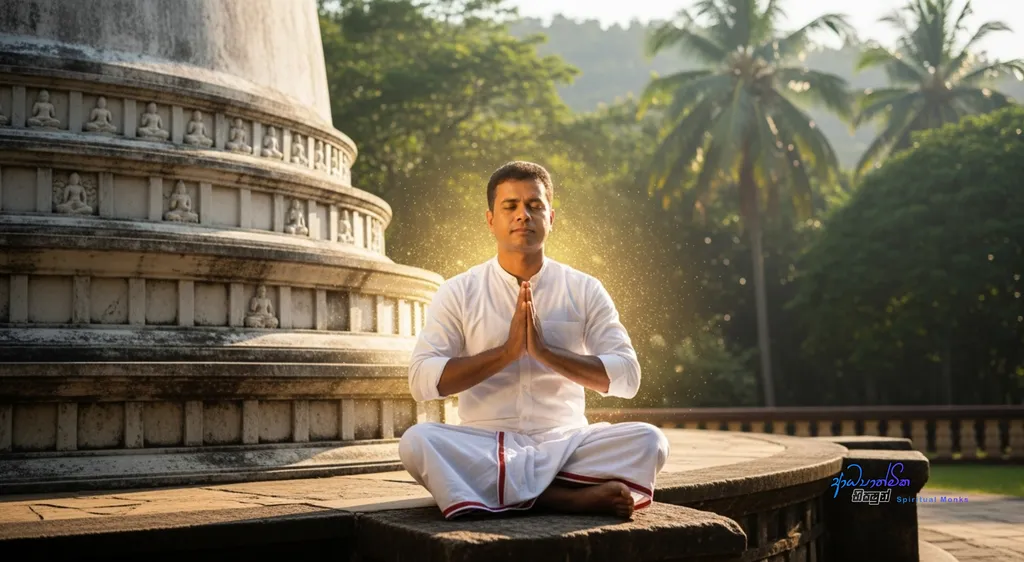
- Sit comfortably and settle your mind. Whether you already venerate the Gambhāra Siddha Sūniyam deity or not does not matter. What matters is that you are a sincere person who upholds the Five Precepts and practices meditation honestly.
- With your eyes closed, bring your awareness to your Third Eye. Make a firm resolution (adhiṭṭhāna): “May I be able to see the Gambhāra Siddha Sūniyam deity!” or “May I come to know the truths about him as taught by the spiritual monks.”
When you make this resolution, if you are a suitable person, the true, living form of the deity may appear before your mind’s eye. Even if he does not appear directly, the information you seek may begin to flow into your awareness, much like searching for information online. This process might be successful instantly for some, while for others it may take several attempts. Be patient and persistent.
What If You Don’t See Anything? Understanding the Obstacles
If, after repeated attempts, you still cannot perceive anything despite your Third Eye being open, there might be an obstacle. Not everyone is suited to perceive these cosmic matters. The reasons could be:
- An increase in mental defilements (kilesas): Your mind may be clouded by excessive greed, worldly desires, or sensual attachment, which can cause the faculty of the Third Eye to degenerate.
- Unwholesome actions: If you are engaged in harmful actions towards others, even if you maintain the Five Precepts on the surface, such as causing division or acting deceitfully, your spiritual vision will be obscured. An unethical life inevitably leads to the loss of such abilities.
- Disrespect for the unseen: You may have previously ridiculed or dismissed the existence of deities, cosmic laws, or unseen dimensions. If this is the case, it is wise to ask for forgiveness from the universe, nature, the devas, and the Triple Gem, just as we would ask for forgiveness for any wrongdoing. This can clear the path for vision to arise.
Understand these points as you prepare to focus your mind. You can resolve to see him where you are, or even make the resolution: “May I be able to travel with my mind-made body (astral body) to the celestial plane where the deity resides.”
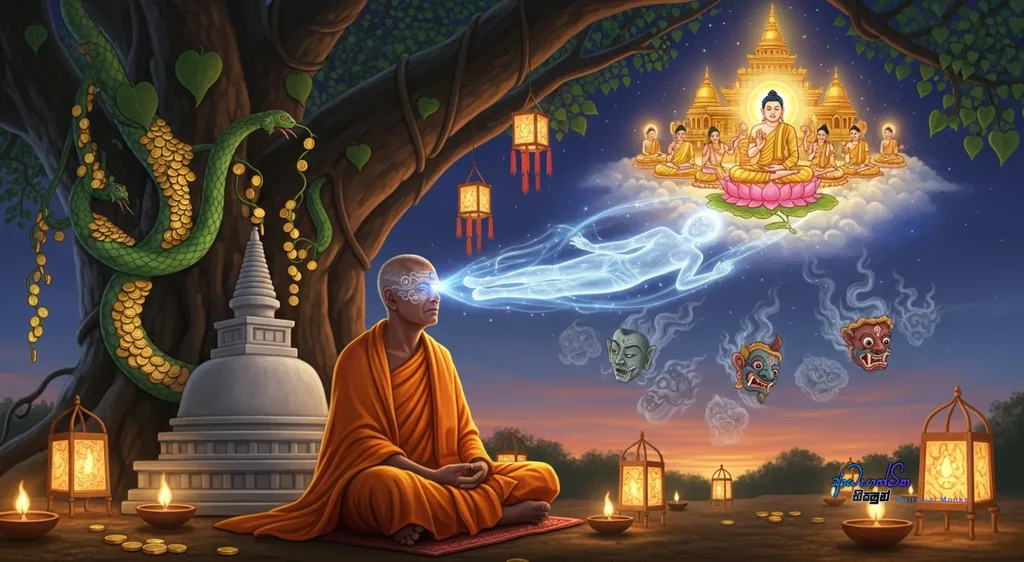
The True Appearance and Realm of the Gambhāra Siddha Sūniyam Deity
Through our spiritual interactions, we can share these truths. Your own experience may align 100%, 80%, 50%, or perhaps only 10% with this, depending on your own spiritual merit (pañña) and cosmic connections. This is what we have perceived.
The Gambhāra Siddha Sūniyam deity resides in Tāvatiṃsa, the second heavenly realm, which is presided over by Śakra, the king of the gods. You will not find his name in the Buddhist scriptures (the Tripitaka), but this does not negate his existence. His story is deeply woven into Sri Lankan culture and folklore, which you can explore through books and historical accounts. This article, however, focuses on direct spiritual experience.
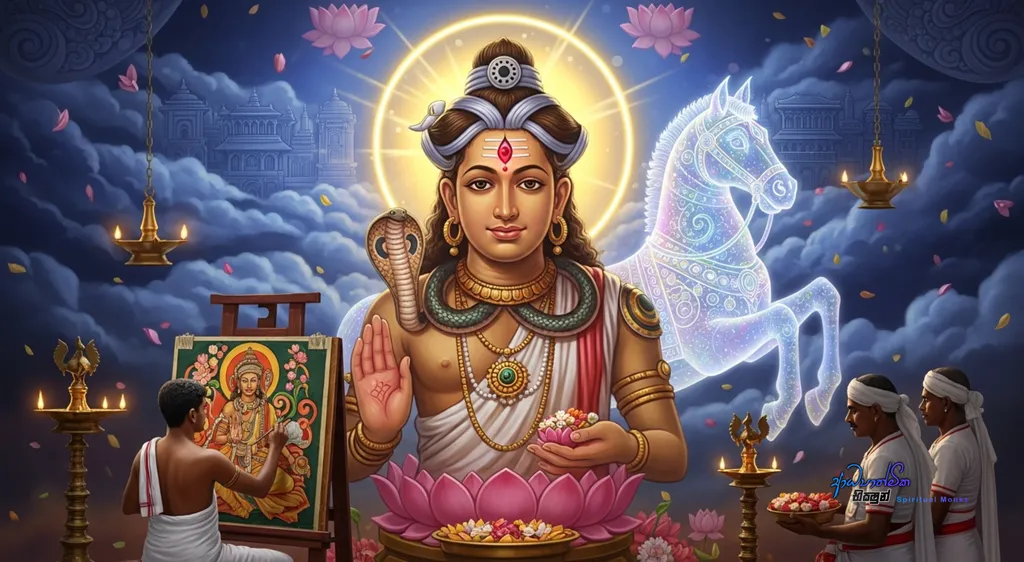
He is a maheśākya deva, a deity of great power and influence. His appearance is remarkably similar to the traditional paintings and statues you see in shrines. This is no coincidence. In the past, artists with developed spiritual vision saw him and depicted him, or the deity himself appeared to them, creating a tradition based on an authentic vision.
He wears a matted topknot (jaṭāva) with a specific emblem. On his body are one or two cobras, symbolizing that in his past human life, he awakened the powerful spiritual energy known as Kuṇḍalinī. When he becomes righteously indignant or angered, these cobras may appear to glow with a red hue to the Third Eye.
He possesses a timeless appearance, not old, but with a mature youthfulness that is incredibly captivating and beautiful. His presence evokes a deep sense of affection and admiration. His voice, too, is profoundly beautiful, a result of his immense past merit.
His majestic stature and adornments are all as they have been traditionally depicted. His vehicle, often shown as a horse, is a symbolic creation of his psychic power (iddhi). Devas in these realms can manifest whatever they need, and the horse symbolizes his swift ability to travel.
A Celestial Hierarchy: His Entourage in Two Realms
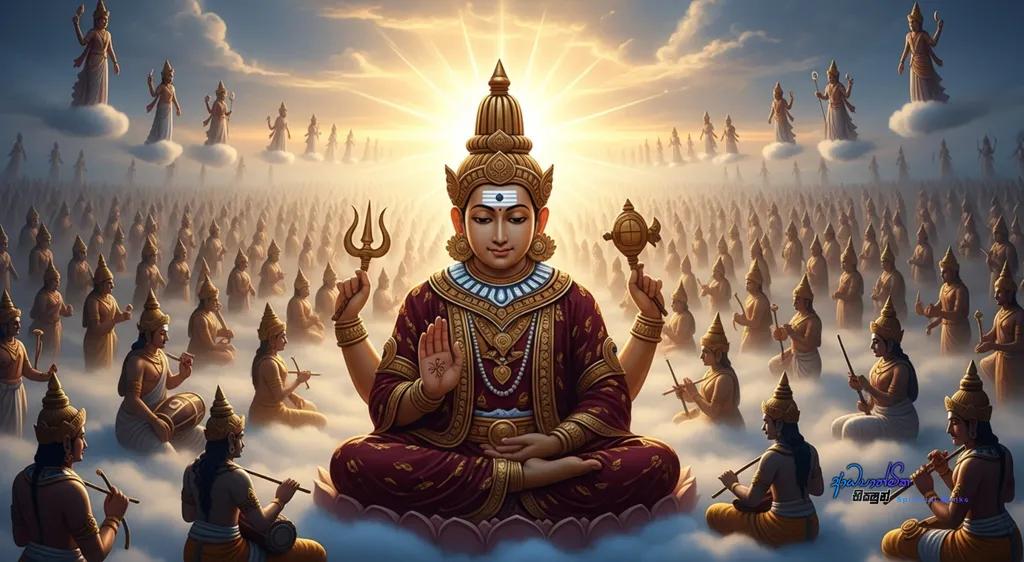
The Gambhāra Siddha Sūniyam deity is a chief deity in Tāvatiṃsa, and like a president or king, he has a vast retinue. Under his command are at least a hundred thousand other devas who were his devoted followers in their human lives. These individuals lived righteously, upheld the Five Precepts, and at the moment of death, their final thought was of him, leading to their rebirth in his celestial company.
The most fascinating aspect is this: all of these attendant devas dress exactly like him. They wear the same attire, the same topknot (jaṭāva), and the same symbols. Their physical features may vary, some taller, some shorter, with slightly different faces, but their uniform is identical.
The key to identifying them is a special symbol embedded in their headdress. When you see this with your Third Eye, zoom in and observe it closely. This is their seal of allegiance.
This hierarchy extends down to the lower heavenly realm, Cātummahārājika, which exists just above the human plane. This realm is home to four main classes of beings: Yakṣas (powerful nature spirits), Nāgas (serpent beings), Kumbhāṇḍas (grotesque spirits), and Gandharvas (celestial musicians). Just as in Tāvatiṃsa, there are legions of these beings who are also devoted to the Gambhāra Siddha Sūniyam deity.
Though they may have the appearance of a Yakṣa or Nāga, you can identify his followers because they, too, wear the same distinctive jaṭāva with his symbol. Although they are under the general jurisdiction of the Four Great Kings and Śakra, their primary allegiance is to him. They are his loyal agents in this lower celestial plane.
Myth Debunked: A Deity by Night, a Yakṣa by Day?
There is a popular myth that the Gambhāra Siddha Sūniyam deity is a god by night and a Yakṣa by day, and that one should not make offerings to him during the daytime when he is in his ‘Yakṣa form.’ Our spiritual investigation reveals the truth behind this folklore.
The deity himself does not change form. Instead, his retinue operates in shifts:
- During the night (approx. 6 PM to 6 AM): The devas from his entourage in the higher Tāvatiṃsa realm descend to the human world. They are the ones who visit homes and shrines where lamps are lit for him, bestowing blessings and assistance for wholesome, worldly purposes. The main deity rarely visits personally; it is his trusted retinue who carries out these duties.
- During the day (approx. 6 AM to 6 AM): The powerful Yakṣa legions from the lower Cātummahārājika realm are active. They are tasked with administering justice. When a person who is righteous and has been wronged makes a vow or plea for help against injustice, it is these Yakṣa forces who intervene.
So, the myth arises from seeing two different groups of his attendants operating at different times. It is not one being changing its nature. The concept of beings who experience pleasure at one time and suffering at another (as described in texts like the Petavatthu) applies to certain types of ghosts (pretas) due to mixed karma, but it does not apply to a powerful deity like this.
Who Earns His Protection? The Path of a True Practitioner
The Gambhāra Siddha Sūniyam deity, and indeed all noble celestial beings, are drawn to virtue. He does not assist those who are unethical, just as a virtuous person does not seek the company of criminals. He offers his powerful protection and guidance to those who are:
- Ethical and Virtuous: Individuals who sincerely uphold the Five Precepts (Pañcasīla).
- Dedicated to Meditation: Those who develop concentration (samādhi) and meditative absorptions (jhāna) through practices like Samatha and Vipassanā.
- Selfless and Noble: People who dedicate their lives to the welfare of their country, culture, and religion with pure intentions, free from underlying motives of fame or wealth.
- On the Path to Liberation: Sincere practitioners, both lay and monastic, who are genuinely striving for Nibbāna.
For such individuals, the true Gambhāra Siddha Sūniyam deity may personally appear, offer guidance, and engage in Dhamma discussions. He is also part of the cosmic governance, appointed by the highest World-Protecting Devas to aid humanity. His protection is a powerful support for the sincere spiritual seeker. If you are honest in your practice, one of his attendants may even be assigned to guard you.
However, a crucial warning: never try to deceive a deity. Do not approach him seeking help if you are in the wrong. Unlike humans, they cannot be fooled. If you are 100% in the right, your plea for justice will be answered. If you are partially at fault, admit your mistake when you ask for help. Honesty is the only way.
A Final Clarification: Fortune Tellers and False Channels
It is essential to understand that the true Gambhāra Siddha Sūniyam deity, or even his high-ranking attendants, will never possess a human body to act as a medium or fortune teller. Deities are repulsed by the impure nature of the human physical form. Those who claim to channel him are almost certainly dealing with low-level spirits, often ghosts (pretas), who misuse the deity’s name to gain offerings and sustain themselves. These establishments often fail after a short time because their power is not genuine.
This teaching is not about taking refuge in gods. Our ultimate refuge is the Buddha, the Dhamma, and the Sangha. This is an exploration of the cosmos through a developed mind, an exercise in Samatha meditation to expand our understanding. Use these insights to strengthen your own spiritual practice.
You can express gratitude for any protection received by offering merits (sharing puñña) to the deity and his entire retinue. They may not need it, but it is an act of wholesome gratitude.
Continue to develop your mind. The truth of these matters, and many others, can be seen directly. There is much more that could be shared, but these are the essential points for your practice at this time. Focus on your meditation, and you will be able to verify this for yourself.
Conclusion: Your Path to Direct Knowing
We have shared a great deal of information received through direct spiritual experience. Now, the path is yours to explore. Use your meditation practice to look into these matters. See for yourself the nature of unseen beings, past events, and the subtle workings of the universe. If you gain any experiences, feel free to reflect on them. By the power of the Buddha, Dhamma, and Sangha, may you all be able to develop your minds, see these realities for yourselves, and advance on your spiritual journey.
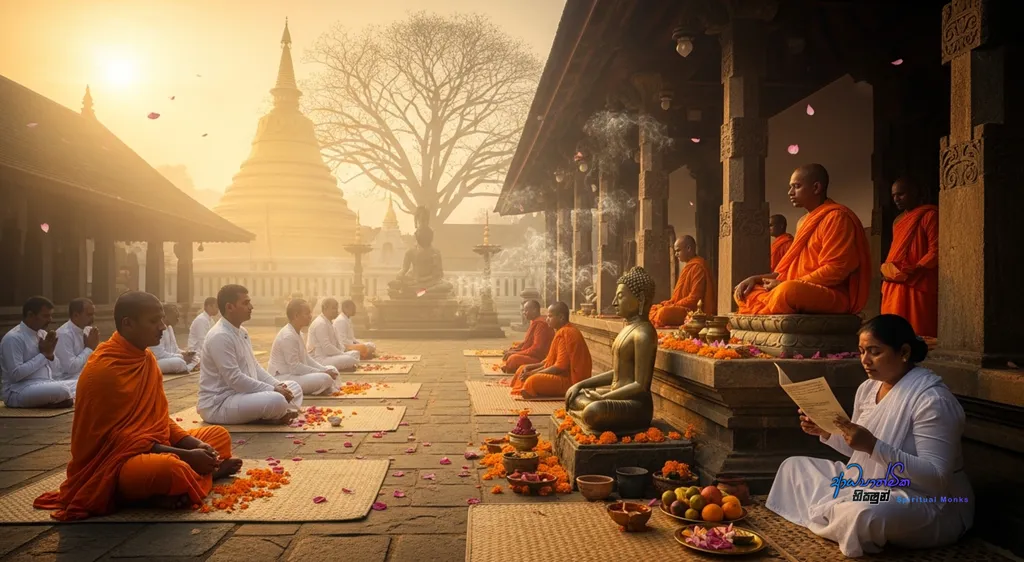
We invite you to walk this path with us. Read our teachings, and most importantly, apply them practically in your own life. as you practice, questions will naturally arise. Please feel free to share your experiences and questions in the comments below, via email or contact form. I will do my best to offer guidance in future talks based on your progress. For now, begin this practice with an open heart and a mind free from expectation. Cultivate it correctly, and may you find the clarity and peace you seek.
Thank you for joining us. We hope this blog will be of great benefit to your spiritual journey.
May you all be well and happy.
May the blessings of the Triple Gem be with you all!


