


Categories: Maintaining Mindfulness
May the blessings of the Triple Gem be with you all! Welcome. In our previous discussions, we have explored the practical application of mindfulness. Today, we fulfill our promise to delve deeper into a topic that touches so many of us: the nature of our mental states, especially when we are faced with psychological distress.
Many people in our world today experience mental health challenges. You may know someone, or perhaps you yourself have navigated these difficult waters. Conditions we label as depression, anxiety, chronic migraines, and intense stress are common. These states are often fueled by the pressures of modern life economic hardship, social instability, and the struggle to fulfill our responsibilities.
When we cannot provide for our families, ensure a good education for our children, or even afford basic necessities like food and clothing, the mind experiences immense pressure. This article is a guide to understanding and healing emotional pain from a Buddhist perspective.

The Nature of Attachment: Love and the Concept of Rāga
To understand the root of much of this suffering, let’s take a powerful example: romantic love. From a Buddhist perspective, the experience we call love is often a form of deep attachment, known in Pali as Lobha. This isn’t a judgment, but an observation of its nature. At its core is a powerful energy called Rāga, which can be understood as craving, passion, or intense desire.
While we often associate Rāga with sexuality, it is much broader. It includes the deep affection a parent has for a child, the love between family members, and the profound bonds of friendship. All these powerful connections stem from this same root of attachment. The challenge isn’t the love itself, but the clinging that comes with it, which is a key factor in our experience of attachment and suffering.
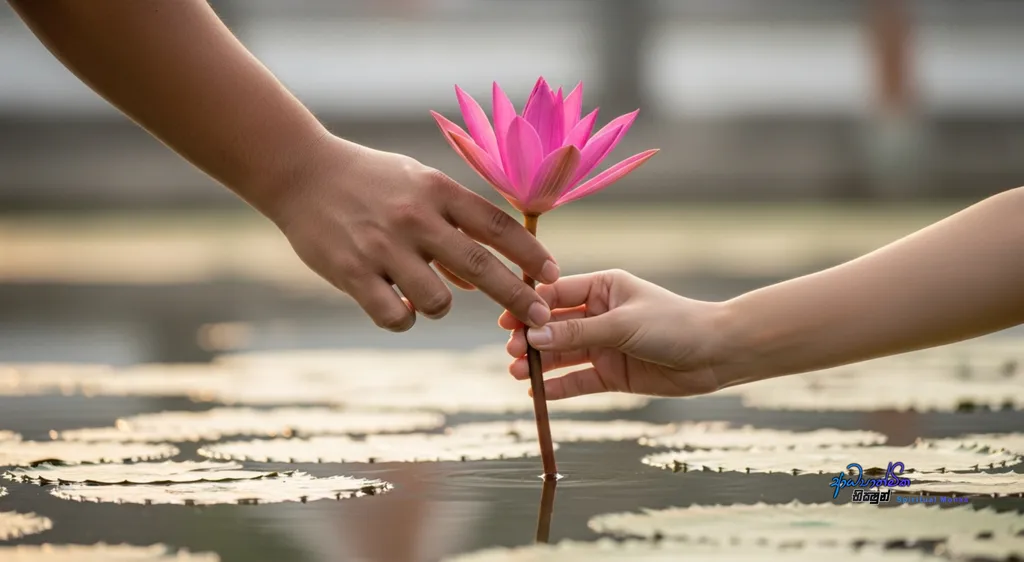
How We Become Bound: The Five Senses and the Deepening of a Bond
So, how does this binding happen? It occurs through our five senses: the eye, ear, nose, tongue, and body. When you are in a relationship, you become attached to the data received by these senses. You get attached to the sight of your partner’s face, the sound of their voice, the unique scent they carry, and the feeling of their touch. The part of you that becomes bound is the mind, or citta. Every interaction deepens this connection.
This bond doesn’t form overnight. It is cultivated day after day, week after week. As you spend more time with your loved one, this attachment strengthens and intensifies. What we often call a ‘strong’ or ‘deep’ relationship is, from this perspective, a state of profound mental binding.
If this connection continues for years two, five, even ten years before marriage it creates an incredibly powerful mental and emotional entanglement. This isn’t inherently bad, but it sets the stage for potential and significant emotional pain.

The Agony of a Broken Bond: When Attachment Leads to Heartbreak
Because the bond is so strong, its sudden rupture causes immense suffering. If your beloved partner were to pass away, the grief you feel would be unbearable, its intensity and duration often proportional to the years you spent together. The pain is a direct reflection of the depth of the attachment.
However, the pain can be even more acute if the person leaves you for someone else what is sometimes called an affair or, in colloquial terms, being ‘dumped.’ This betrayal can feel impossible to bear. We have seen people react in the most extreme ways.
Some, unable to cope with the pain, tragically harm themselves. Others don’t take that path but become lost in their grief. Their minds fixate on the loss, replaying it endlessly. We see this in mental health facilities, even here in Sri Lanka, where individuals become trapped in a state of distress so profound that even modern medicine struggles to bring them back to a state of balance. Their suffering from the broken attachment is absolute.
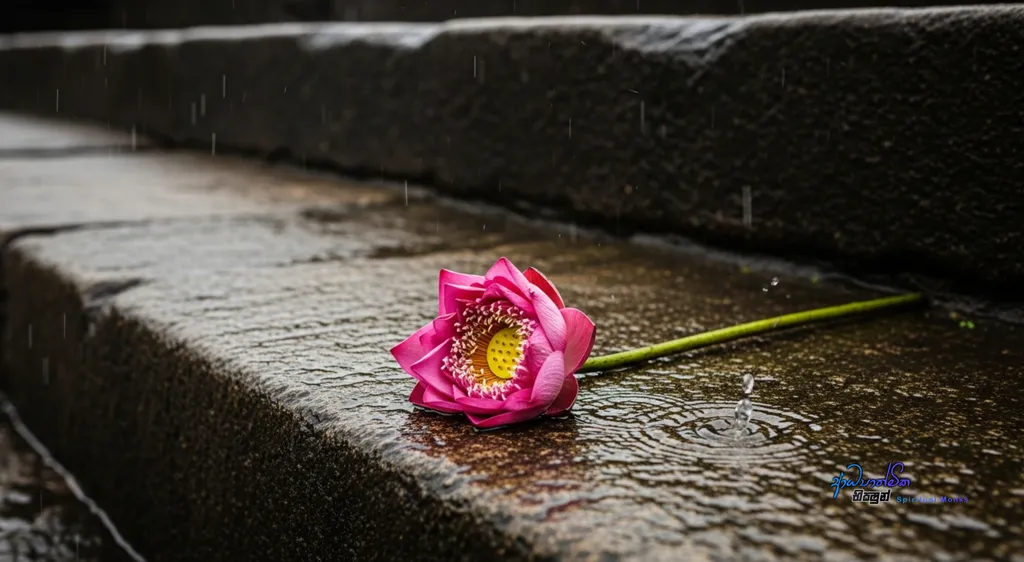
When the Mind Loses Control: How Craving Overwhelms Us
Why does this happen? Why does a broken heart sometimes lead to a complete mental breakdown? It happens because the attachment to that person became the most powerful force in the mind. That love was likely stronger than the connection to parents, siblings, or even oneself. When that central pillar is violently removed, the mind can lose its bearings.
The five senses, which were once channels for connection, may seem to shut down to the outside world. The person becomes almost ‘unconscious’ to their surroundings, a state we might call asihimath (mindlessness or loss of awareness).
The mind is overwhelmed by Taṇhā, the Pali word for ‘thirst’ or ‘craving.’ It’s a relentless force. The mind gets trapped in a loop, thinking only of the lost love. Every second, the same thought arises: the memory of that person, the pain of their absence. The thought becomes so powerful, so energized, that its pressure is unbearable.
The person loses control over their own mental processes. This is the mechanism behind this form of deep suffering and a critical part of understanding the path toward healing emotional pain.
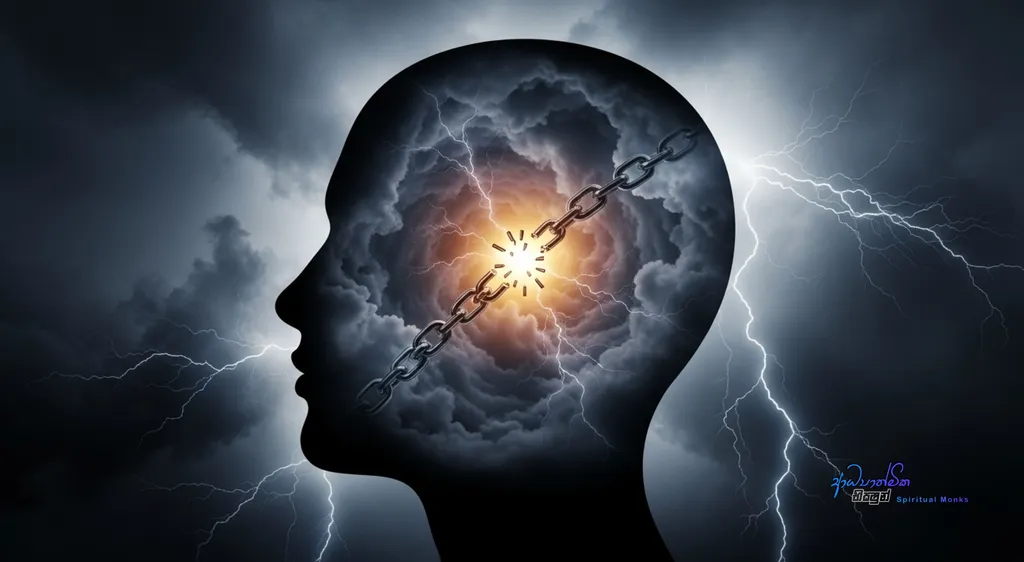
The Mindful Path Forward: Using Awareness as a Tool for Healing
For those experiencing this, the path to healing emotional pain begins with awareness. This is where the practice of Buddhist mindfulness becomes a life-saving tool. Mindfulness, or Sati, combined with clear comprehension, Sampajañña, is the practice of observing your own mind without judgment. If you are in any kind of relationship and as a layperson living in the world, you certainly are you can use this practice.
Turn your attention inward. Notice your attachments. Observe how strongly you cling not only to people but also to inanimate objects: your phone, your money, your home, your car, even a favorite perfume. You don’t need to force anything, simply watch. For those who practice mindfulness regularly, this faculty of seeing becomes sharp. You begin to notice the subtle pull of attachment in real-time. This is the first practical step you can take. You see the bond, and in seeing it, you begin to understand its nature.

Practical Steps to Reclaim Your Peace of Mind
When you are betrayed, the mind’s first reaction is often intense anger, sometimes even a desire to harm the person who hurt you. This is a natural, albeit painful, mental reaction to perceived injustice. The mind can even rationalize this rage. Following this, the loop of obsessive thought begins.
Some people try to escape this pain by burying themselves in work, studies, or other distractions. These are temporary solutions. The underlying suffering remains. A person might take three years to mentally recover from a painful breakup, living with the emotional pressure and fear of starting anew. The time it takes to heal is often proportional to the time spent building the attachment.
However, you can actively engage in healing emotional pain right now. By patiently and persistently applying mindfulness, you can observe these painful states without being consumed by them. I have personally guided individuals who have used these very techniques to find relief and reclaim their lives. The practice is to watch the mind, to understand its attachments with wisdom (paññā) and clear awareness (sati-sampajañña). This is how you heal yourself, from the inside out.

A Blessing for Your Journey of Healing
This teaching was offered to provide you with a deeper understanding of what happens within the mind during times of great emotional pain and how you can begin the process of healing. I will not extend the talk further today, as the core understanding has been shared.
Through the power and blessings of the Buddha, the Dhamma, and the Sangha the Triple Gem may you develop the ability to maintain your own mindfulness. May you recognize the nature of your own mind and act with practical wisdom and clear comprehension. May you all find the strength and clarity to walk this path.
We invite you to walk this path with us. Read our teachings, and most importantly, apply them practically in your own life. as you practice, questions will naturally arise. Please feel free to share your experiences and questions in the comments below, via email or contact form. I will do my best to offer guidance in future talks based on your progress. For now, begin this practice with an open heart and a mind free from expectation. Cultivate it correctly, and may you find the clarity and peace you seek.
Thank you for joining us. We hope this blog will be of great benefit to your spiritual journey.
May you all be well and happy.
May the blessings of the Triple Gem be with you all!


