


Categories: Can Meditation Drive You Mad?
May the blessings of the Triple Gem be with you all!
As we explore the practical spiritual life together, many of you reach out with your questions. I have been able to answer many of these, but due to the busy nature of our spiritual duties, sometimes a response isn’t immediately possible. Please know this is not for any other reason. We always strive to provide answers for your practical spiritual problems, though we do not engage with external matters beyond this scope.
Today, I wish to address a question that is frequently asked by both those who meditate and those who do not. It is a persistent concern that has been raised time and again: the issue of varam, a term you may recognize as a form of spiritual possession or divine authority.
Understanding ‘Varam’: What is Spiritual Possession?
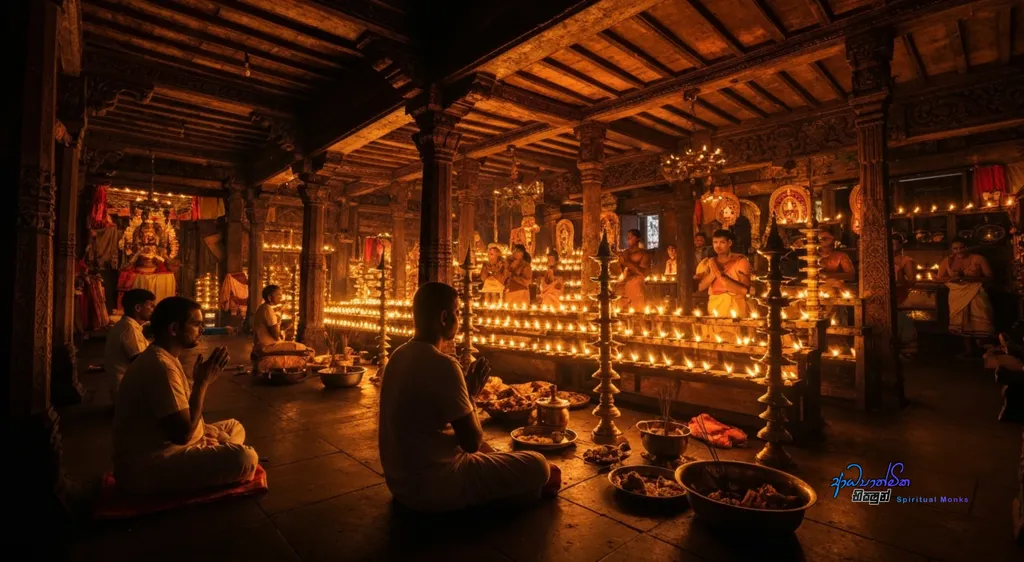
The very word varam brings to mind a specific cultural phenomenon, often associated with deity shrines, known in Sri Lanka as devalas, and the world of occult arts. This experience typically involves what we call an amanussa a non-human or unseen being. This entity may claim to be a deceased relative or an agent of a specific god.
It then attempts to enter a person’s mind or body. When it partially succeeds, especially with individuals who lack mental control or self-awareness, the entity can take over their body and mind. This state of being controlled is what we identify as spiritual possession or varam.
These beings that manifest as varam are often from weaker, less fortunate realms. They can be spirits, what some might call yakshas (a class of nature spirits), or even ghosts of the departed (known as peta or hungry ghosts). When I say ‘powerful,’ I mean relative to their own world, not that they are more powerful than deities or humans with developed spiritual strength.
So, these various classes of non-human beings can approach you, perhaps a departed mother, father, sibling, or an ancestor from this life or a past one, and declare that you have a varam. Similarly, if you visit a shrine or a person who claims to have such a gift, they might confirm this, creating a situation where you are drawn into validating and accepting this supposed spiritual possession.
The Buddhist View: A Path Beyond Spiritual Possession
I want to be very clear about my perspective on this. As someone who explores the spiritual life, as a meditator, and as a monk who follows the path laid out by the Buddha, I place no value on the phenomenon of spiritual possession. I see these things as something very base and primitive. For those dealing with rudimentary worldly problems perhaps believing they are afflicted by curses or unseen forces it might seem to offer a solution. But for a meditator, a bhavana yogi, these things are not important.
I have received calls from people who practice meditation, telling me that a shrine has declared they have a special “herbal medicine varam” or some other type of spiritual possession. My answer is always the same: anyone genuinely seeking to develop their spiritual life does not need a varam. To help people through the power of one’s own cultivated mind, the strength of your own concentration developed through meditation is one thing.
To achieve this through deep meditative states, or jhanas, is another level entirely. But to allow a random, unseen entity, whether a relative or not, to enter your body and establish a shrine with idols is the work of amanussa (unseen beings) alone. It is a fundamental misunderstanding of the spiritual path.
Why True Deities Do Not Possess Human Bodies
A crucial point to understand is this: no true god or divine being (a deva) will ever possess a human body. To them, our physical forms are deeply repulsive and foul. Devas, if they offer help to a human, do so from a great distance. Think of it this way: if you saw an animal covered in filth, you might feel compassion and want to give it food.
But you would do so carefully, extending your hand just far enough to avoid being touched by the impurity. This is how devas interact with us. Their bodies are subtle, often transparent and luminous, unlike our physical forms.
Our bodies are a collection of systems digestive, excretory and are composed of what the Buddha described in the Asubha Bhavana (meditation on the unattractive nature of the body) as the thirty-two impure parts. We are filled with blood and waste. Our bodies emit unpleasant odors whether we have eaten or not. Every part of it is subject to decay. The only beings who would desire such a body are those from lower realms, the amanussa.

The Suffering and Deception of Unseen Beings
These amanussa are beings born from deep attachment. They were once humans who died with intense craving, for their children, property, or worldly status. This powerful attachment at the moment of death, the final thought-moment known as the chuti sitta, conditions their rebirth into a sorrowful existence where they often lack even basic sustenance.
I have spoken before about the world of these non-human beings based on practical meditative experience. For them, who suffer without food or drink, even a single drop of human saliva is precious. A piece of waste is a treasure.
Therefore, for such a being, possessing the body of a human with a weak mind is a monumental achievement. It is the greatest thing they can hope for. To achieve this, they will often lie, falsely claiming the name of a respected deity. Initially, to gain your trust, the entity speaking through the person with spiritual possession might reveal true details about your life or home. But over time, this accuracy fades, and they begin to tell lies.
Spiritual Possession or Mental Illness: A Critical Distinction
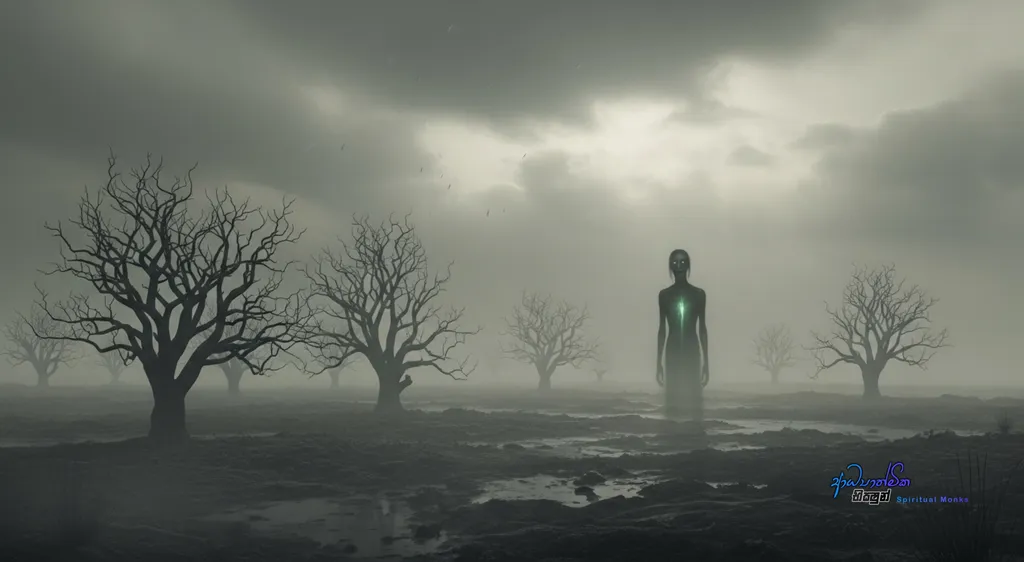
It is crucial to recognize that there are two possible explanations for what appears to be spiritual possession. One is the influence of an actual amanussa. The other is a severe mental illness, such as what modern psychology might call schizophrenia (bhinnonmada in our texts).
In this case, there is no entity involved; the person is manifesting a delusion born from their own mind’s sickness. Distinguishing between these two is extremely difficult. It truly requires someone with highly developed mental faculties or spiritual insight, perhaps gained through practices like developing the ‘third eye’ or profound mindfulness.
You may have seen this pattern yourselves. A new shrine opens, and at first, people flock to it rich and poor, educated and uneducated because the pronouncements seem true. Cars and buses arrive daily. But after some time, the crowds disappear. The place becomes deserted, not even visited by someone on a bicycle. This happens because the initial truths give way to falsehoods. This happens in villages and cities alike. It’s important to understand these dynamics.

The Karmic Danger: How Spiritual Possession Affects Your Next Life
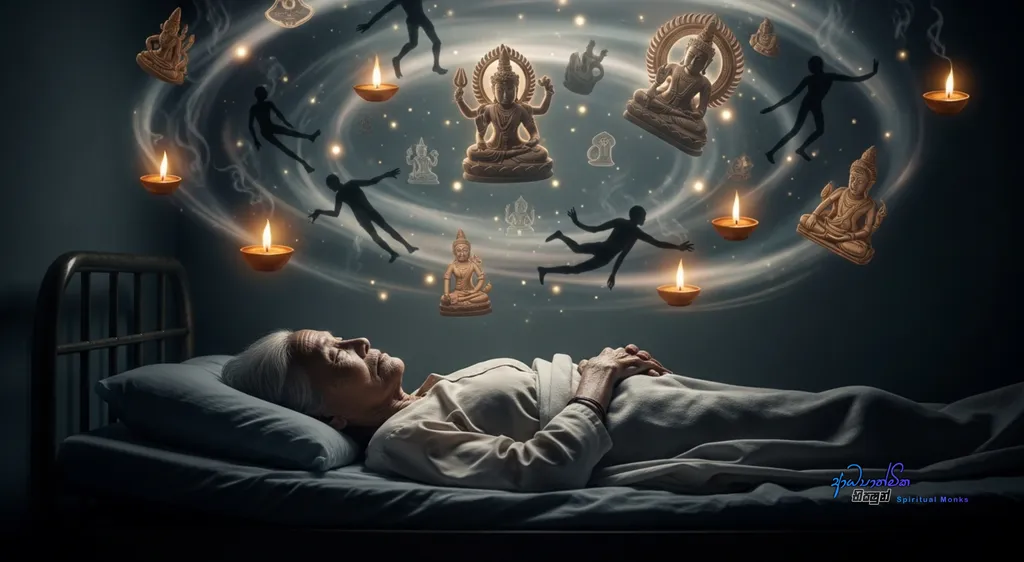
There is a grave danger in consistently engaging with these shrines and entities. If you constantly turn to them for guidance, your mind becomes saturated with these thoughts and images. The shrine, the rituals, the entity itself these become dominant thought patterns. Like a student who constantly thinks about studying or a professional who is consumed by their work, your mind will be preoccupied with the world of spiritual possession.
If death approaches while your mind is in this state, your final thought-moment the chuti sitta that determines your next life will likely be one of these very images. You will think of the shrine, the entities, the curses, and the rituals. Consequently, you will almost certainly be reborn in that same unhappy realm of the amanussa.
While a powerful past good deed, or kusala, might surface and lead to a better rebirth, the overwhelming tendency is to be reborn according to your mind’s most frequent obsession. Please do not create the causes for such a future.
A Practical Guide to Freeing Yourself from Unseen Influences
Many people, especially women, from both Sri Lanka and abroad, contact me about these issues of varam. They call and send messages relentlessly. To them, and to anyone struggling with this, I say this: do not try to become a recipient of a varam. It is not a path of spiritual development; it is a primitive and degrading state. When these influences arise, what can you do?
First, when a fearful thought appears such as ‘I have a fever because I rejected the varam‘ recognize it for what it is. It is just a thought. Your mind, weakened by the suggestion from the shrine, is creating this link. The thought is not a reality. Practice mindfulness. See that this thought, like any other, arises from a cause and will pass away. You can explore the teachings on mindfulness to learn how to do this practically.
Second, actively practice Mettā Bhavana, or loving-kindness meditation. When you cultivate a mind of unconditional love and goodwill, you become an inhospitable place for negative entities. They thrive on fear and confusion, not compassion. By strengthening your mind through these Buddhist meditation practices, the entity will lose its grip. It cannot control a mindful and compassionate mind. Gradually, it will leave you, and the disturbances you feel will fade away. This is how you achieve true victory.
Conclusion: Choose Inner Development Over External Powers
Remember, spiritual possession is not mind development. It is a very basic, unrefined phenomenon. Give priority to meditation. Give priority to developing your own mind. When you put these teachings into practice, you will build confidence in this path and your spiritual life will flourish.
No true spiritual seeker, no one practicing meditation, needs a varam. You do not need the authority of Goddess Kali, Goddess Pattini, God Vishnu, or God Kataragama. In fact, these divine beings offer their help to sincere meditators in a much more profound way, supporting those who develop both tranquility (samatha) and insight (vipassana). It is said that even Sakka, the king of the gods, bows to human beings who possess great virtue. Explore these teachings.
Therefore, if you are committed to a spiritual life, to a life of meditation, you have no need for these things. From now on, I ask that you do not contact me with questions about varam or spiritual possession. I will not be answering them, as my time is better spent guiding those who are on the practical path of mental cultivation. Please take these teachings to heart.
May the power of the Triple Gem the Buddha, the Dhamma, and the Sangha help you to understand these points clearly. May you be inspired to develop your practical meditative life. May you all have the strength and determination to do so.
We invite you to walk this path with us. Read our teachings, and most importantly, apply them practically in your own life. as you practice, questions will naturally arise. Please feel free to share your experiences and questions in the comments section below, via email or contact form. I will do my best to offer guidance in future talks based on your progress. For now, begin this practice with an open heart and a mind free from expectation. Cultivate it correctly, and may you find the clarity and peace you seek.
Thank you for joining us. We hope this blog will be of great benefit to your spiritual journey.
May you all be well and happy.
May the blessings of the Triple Gem be with you all!


