Categories: Other Meditation Teachings
May the blessings of the Triple Gem be with you all!
In our journey through life, many of us encounter overwhelming moments of pain, emotional distress, and thoughts of escaping life entirely. While psychiatrists and medical professionals explain these challenges through clinical perspectives, looking at emotional collapse through spiritual understanding provides a transformative path toward true relief. By integrating Buddhist wisdom for mental suffering, we can understand why our minds experience such unbearable pressure and how we can systematically free ourselves from it.
At the center of human emotional breakdown, especially across many Asian nations and globally, lies the pain of broken romantic relationships. Both men and women experience profound grief when love is lost, particularly when caused by deceit or betrayal by a partner. Whether people resort to extreme actions like jumping in front of trains, hanging, or drinking poison, the psychological root is identical: a deep, unexamined attachment that suddenly shatters.

The Mechanism of Attachment and Modern Digital Distrust
To understand why emotional betrayal hurts so intensely, we must examine what love represents in the human mind. Falling in love involves clinging to sensory experiences, which stems from deep-seated desire or greed, known in Theravada teachings as Lobha, an unwholesome root of mind focused on attachment. When romantic passion, known as Raga, binds a person to another, they gradually feel they cannot exist without them.
Clinging is our most ingrained habit across the cycle of rebirths, known as Samsara, the continuous wandering through cycles of life, death, and suffering. Swimming downstream into attachment is effortless for the mind, while swimming upstream toward detachment requires intentional practice. We attach rapidly to a person's voice, physical form, tone, touch, and mental companionship through our five physical senses and the mind door.
In our modern era, technology amplifies this attachment and underlying insecurity. Partners feel compelled to share live phone locations, remain constantly on calls, or monitor every screen interaction. Indirectly, this behavior is driven by hidden suspicion and the fear of deception. Yet, despite constant digital surveillance, betrayal still occurs because it is the unpredictable nature of human society and Samsara.

The Psychological Shock of Betrayal and Immediate Coping Strategies
When someone discovers definitive evidence of a partner's infidelity, the psychological impact is catastrophic. The mind, which had built a beautiful construct around that attachment, experiences sudden trauma. In an instant, normal awareness collapses, leading to an unmindful, dazed condition.
Because Raga was strong, the mind cannot absorb the sudden damage. The presence of mind is lost, and the person becomes indifferent to their current reality. This intense mental pressure renders students unable to study, workers incapable of performing their jobs, and spouses unable to carry out daily family duties.
For individuals without a established spiritual foundation or meditation practice, the most effective immediate solution during severe stress is engaging intensely in external physical work. Immersing oneself in manual tasks or busy routines helps distract the mind, temporarily relieving the overwhelming internal pressure until emotional stability can be rebuilt.

Attachment Beyond Romance: Ego, Betrayal, and Karmic Laws
Severe distress is not restricted to romantic loss. People experience intense mental pressure due to economic hardship, family disputes, workplace conflicts, and social humiliation. If someone is not deeply attached to these external factors, the stress does not drive them to self-destruction. However, when an individual's honor or self-identity is attacked, the outcome can be severe.
Consider a person who is falsely accused of theft at work. If they come from a respected family or place high value on their reputation, the unbearable insult to their ego, known as attachment to Atta or self-concept, can drive them to take their own life. Similar breakdowns occur in academic environments, such as intense university initiation rituals or intellectual theft, where a student discovers a breakthrough mathematical formula only to have a professor claim full credit for it. Such severe betrayal has driven brilliant students into genuine psychosis.
According to cosmic order and karma, known as Kamma, the universal law of intentional cause and effect, anyone who inflicts severe mental torment or madness on another will inevitably harvest that exact suffering in future births. No amount of money, bribes, or social status can exempt anyone from the precise operation of Kamma.

The Severe Physical Toll of Unaddressed Stress
When people cling fiercely to an outcome and lose it, their minds repeatedly replay the painful loss. This continuous mental looping produces an unmindful, irrational state often labeled as madness. The unceasing internal pain causes people to neglect basic needs, appearance, and hygiene.
Over time, extreme mental stress transforms into severe physical illness. Medical conditions like heart attacks, high blood pressure, and paralysis frequently stem from prolonged emotional distress. The body's physical elements deteriorate, leading to darkened skin, extreme weight loss, and an exhausted, hollow appearance.
Understanding Buddhist wisdom for mental suffering reveals that our mind is the primary driver of both physical health and psychological pain. When craving shatters, finding mental balance becomes a life-saving necessity.

The Karmic Consequences of Suicide and Lower Realm Rebirths
When emotional pain becomes overwhelming, individuals often mistakenly assume that ending their physical life will bring peace. In reality, the final state of consciousness before death, known as the Cuti Citta or death-proximate mind, determines the nature of the next rebirth.
When a person dies by suicide, their mind is filled with intense anger, grief, or self-aversion, known as Dosa. Because of this dark, agitated state, spiritual principles state that those who end their own lives cannot take rebirth in a pleasant realm. Through intuitive spiritual vision or divine eye sight, termed Dibbacakkhu, such individuals are observed reborn as distressed spirits or ghosts, known as Petas or Yakkhas.
These unwholesome states trap spirits in the exact physical agony of their final moments. Spirits of those who hanged themselves linger in dark corners of their former homes, suffering continuously with broken necks and intense physical pain, screaming unheard by ordinary human ears. Similarly, those who drank poison continue to endure torment in ghost realms. Furthermore, most ghost realms cannot receive merit dedicated through traditional almsgiving, except for a specific category known as Pirokuddha or Paramattupajivi Petas. Thus, taking one's life multiplies suffering across time rather than ending it.

The Rarity of Human Birth and the Story of Kisagotami
The Buddha taught that obtaining a human birth is extraordinary, described by the Pali phrase Dullabho manussatta patilabho, meaning rare is it to gain human existence. He illustrated this with the famous metaphor of a blind sea turtle surfacing once every century, accidentally placing its neck through a single golden yoke floating on a vast ocean. Destroying this rare human birth over temporary heartbreak or loss is an irreparable mistake.
We can find inspiration in the historical story of Kisagotami during the Buddha's time. Overwhelmed with grief upon the death of her young child, she carried his body everywhere seeking medicine. The Buddha gently instructed her to gather mustard seeds from any household where no mother, father, child, or servant had ever died. As she visited every home in the city, she realized that death touches every family.
This shift in perspective opened her mind to universal truth, specifically the mark of impermanence, known as Anicca, the inherent unsatisfactoriness of conditioned life, known as Dukkha, and the truth that nothing is a permanent self, known as Anatta. Realizing this reality healed her mind and led her to full spiritual liberation.
Practical Mind Training Through Death Contemplation
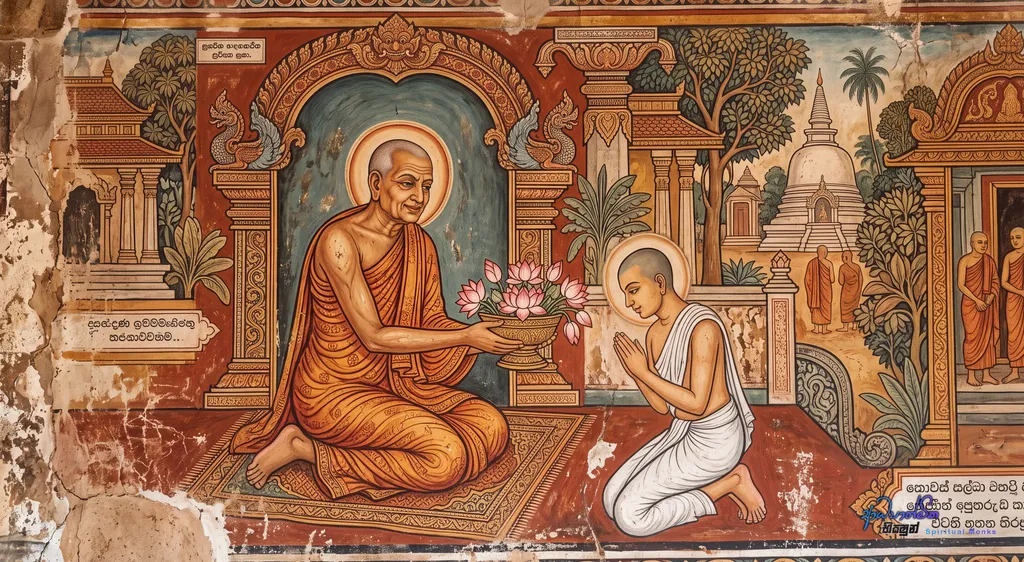
To safeguard our minds against unexpected heartbreak, betrayal, or bereavement, we must train our minds daily using practical Dhamma tools. One profound practice is death contemplation, known as Marananussati. Far from being pessimistic, Marananussati is a realistic practice that builds psychological resilience.
Through regular contemplation, we accept that everyone we love, our partners, parents, children, and our own bodies, will eventually be separated from us by death, illness, or change. When a person continuously trains their mind in this reality, a sudden loss or betrayal does not shatter their sanity. Instead of falling into hysterical grief, their mind remains grounded, recognizing that change is the inherent nature of existence.
Practical mental conditioning involves asking oneself proactively: 'If my partner deceives me or leaves tomorrow, how will I respond?' By visualizing remaining calm, observing emotional thoughts without reacting, and maintaining self-respect, we build mental immunity. When real betrayal occurs, the pre-trained mind automatically accesses this preparation, preventing emotional collapse.

Transforming Suffering into Compassion and Spiritual Progress
Every life crisis contains an opportunity for deep spiritual awakening. No matter how severe a problem appears, either the situation will resolve itself over time, or time itself will dissolve the problem's emotional weight. Giving time permission to heal our wounds, while turning our attention toward spiritual teachings, guarantees recovery.
Furthermore, if you support a friend or family member going through deep emotional pain, listen patiently to their grief, and gently guide them toward the Dhamma, you perform an act of extraordinary spiritual merit. Comforting distressed minds generates powerful positive karma that ripens in this very life, known as Ditthadhamma-vedaniya kamma, protecting you from future mental distress.
By placing our refuge firmly in the Buddha, the Dhamma, and the Sangha, we develop an unshakeable mind capable of enduring any worldly storm. Train your mind, guard your awareness, and walk forward with wisdom.

We invite you to walk this path with us. Read our teachings, and most importantly, apply them practically in your own life. as you practice, questions will naturally arise. Please feel free to share your experiences and questions in the comments below, via email or contact form. I will do my best to offer guidance in future talks based on your progress. For now, begin this practice with an open heart and a mind free from expectation. Cultivate it correctly, and may you find the clarity and peace you seek.
Thank you for joining us. We hope this blog will be of great benefit to your spiritual journey.
May you all be well and happy.
May the blessings of the Triple Gem be with you all!