


Categories: Other Meditation Teachings
May the blessings of the Triple Gem be with you all!
In our spiritual explorations, we often speak of achieving a state of balance and equanimity. We offer teachings on how to recognize the thoughts that arise in your mind and, through that awareness, cultivate mental neutrality.
Some of you, through dedicated practice with a teacher or through your own blossoming wisdom, are walking this path. Yet, many others may listen to these teachings without engaging in the practical training, and thus remain distant from this inner peace.
The world is filled with a variety of people, including those whose minds are influenced by what we call Mara, the internal and external forces of delusion and distraction. This teaching today is for anyone who feels caught between belief and disbelief, and seeks a way to find a stable footing amidst the confusion.
The Challenge of Belief: From Ancient Texts to Psychic Powers
In Buddhism, and indeed in life, we encounter a vast spectrum of ideas that can be difficult to accept. Consider the teachings within the Buddhist canon, the Tipitaka (the three baskets of teachings), the commentaries (Atuva), and sub-commentaries (Tīkā). Think of ancient history, archaeological findings, and the rich tapestry of spiritual life.
This includes concepts that may seem extraordinary to the modern mind:
- The existence of cosmic energy or Kundalini.
- The development of psychic powers, known as Pañca Abhiññā (the five higher knowledges).
- The awakening of the ‘Third Eye’.
- The reality of celestial beings like devas (gods) and brahmas.
- Realms of non-human beings such as Yakkhas, Nāgas, Kumbhāṇḍas, and Gandhabbas.
- The existence of hells (apāya) and heavens.
- The ultimate realities described in Abhidhamma: citta (consciousness), cetasika (mental factors), rūpa (matter), and Nibbāna (liberation).
- The inspiring stories from the Dhammapada.
When we encounter historical accounts of great monuments like the Ruwanwelisæya stupa or the fortress of Sigiriya, a part of our mind might immediately label them as exaggerations, fabrications, or even outright lies.
This tendency to doubt is a normal human trait. However, if this disbelief creates mental pressure, confusion, or a feeling of being overwhelmed, it becomes a source of suffering. This is a real struggle for many people in today’s world.

The Trap of Rigid Views (Diṭṭhi) and the Illusion of Certainty
You can see this conflict playing out everywhere, especially on social media. Look at the comments section under a monk’s talk, and you will find people arguing, debating, and generating friction, anger, and aversion. This clinging to one’s own perspective is what we call holding a rigid view, or diṭṭhi in Pali.
For example, on our own platform, we have offered practical instructions on awakening the ‘Third Eye’. Many practitioners have experienced ‘light signals’ (āloka saññā) or even clear mental images (citta rūpa), and some have developed the faculty fully.
For those who couldn’t, we offered an alternative path to deep states of meditation, or jnana’s. Yet, some people fixate only on the ‘Third Eye’ concept, attacking it as a mental illness, a Western invention, or ‘just dreaming.’ These rigid views are a perfect trap for Mara to exploit.
This isn’t a new problem. The great scholar-monk Balangoda Ananda Maitreya Thero once humorously remarked on the different monastic fraternities (nikāyas). He said that if the Buddha himself were to reappear, some sects would only accept him if he wore his robes in their specific style, fully covering both shoulders or just one. This illustrates just how deeply ingrained and resistant to reality our views can become. Trying to correct every fixed view in the world is a fruitless effort.
A Pragmatic Approach: What if You Simply Cannot Believe?
When faced with ideas you cannot believe, what should you do? Some people, especially the young, say there is no such thing as hell. The Buddha offered a very pragmatic way to approach this. He advised us to consider: ‘But what if there is a hell? If it does exist, won’t I have to suffer because of my unskillful actions?’ This way of thinking isn’t about forcing belief, but about encouraging caution and skillful living, regardless of one’s metaphysical convictions.
Let’s bring this down to your direct experience. When someone loves you, you feel it. You can’t deny the feeling, though you might struggle to locate it. Is it in your chest? Your heart? Your brain? Likewise, if that person leaves you, the pain of that heartbreak is intensely real. You feel that, too. Where does this feeling of pain exist?
The point is, these feelings are undeniably real to you. The suffering they cause is real. Is there a way to be free from this pain? The path begins not by winning an argument, but by managing your relationship with your own mind.
The Middle Path of the Mind: ‘It Could Be, It Could Not Be’
So, if you feel pressured and distressed, whether by spiritual claims, political turmoil, economic hardship, or historical stories that seem exaggerated, here is the practical path. Let it all go.
Do not try to attach to these ideas, and do not try to create conflict with them. In simple terms: do not force yourself to believe, and do not force yourself to disbelieve. Arrive at the simple, calm, and powerful position of: ‘It could be, or it could not be.’
This is the heart of mental neutrality.
- A hell realm might exist, or it might not.
- A heaven might exist, or it might not.
- The Buddha may have had psychic powers, or he may not have.
Settle your mind in this middle ground. By doing so, you release the tension. You are no longer fighting with reality. You are simply allowing things to be as they are, unknown and uncertain, and that is perfectly okay.
A Clarification: For Whom Is This Teaching Intended?
It is very important to understand who this advice is for. This teaching on mental neutrality is specifically for those who are troubled by doubt and find themselves drawn into mental extremism. It is for those who feel pressured by these unproven claims.
It is not for those who have deep, unwavering faith (saddhā). It is also not for those who, through their own meditative practice, have gained direct knowledge (paṭiyakkha) of these things. A person who has experienced states of jhāna or seen the ‘Third Eye’ for themselves doesn’t need to debate its existence.
Their ‘belief’ is not blind; it is a form of knowing, just as you ‘know’ you have graduated after completing your studies. They have verified it for themselves and are not extremists. They too have arrived at a state of peace and mental neutrality, because their conviction comes from within, not from argument.
This message is for those who have not yet verified these things for themselves and are caught in the storm of conflicting opinions.
Why Mental Neutrality Is the Gateway to True Liberation (Nibbāna)
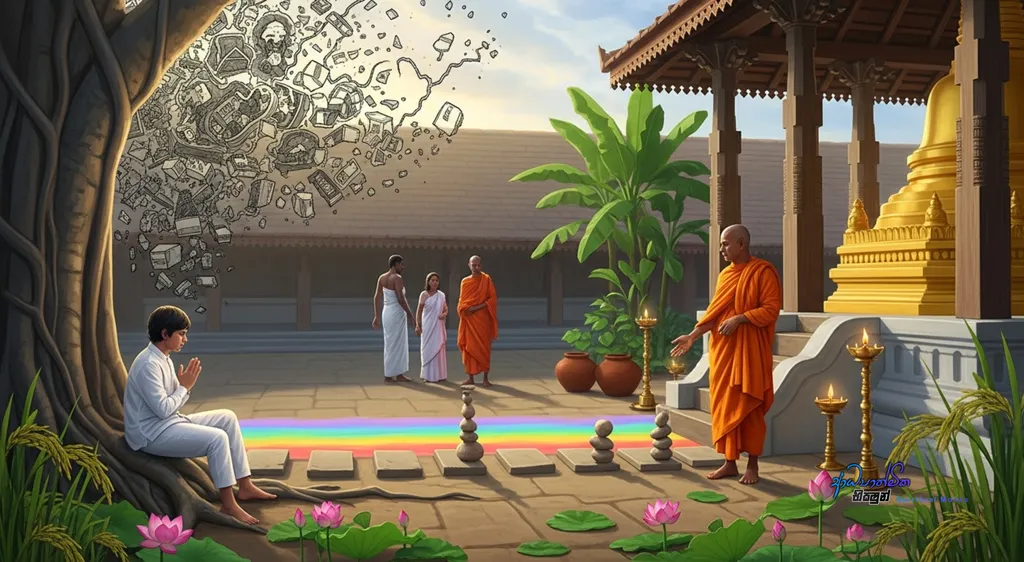
Never forget that the Buddha taught the Four Foundations of Mindfulness (Satipaṭṭhāna) as the direct path to liberation, or Nibbāna. However, it is incredibly difficult to realize the fruits of this path, let alone attain full liberation, if your mind is shackled by rigid views.
Nibbāna is the state where all frames of reference, all fixed views, and all such mental constructions have ceased. You can never reach it as long as you are clinging to them.
The person journeying towards liberation must mentally let go of arguments about where the Buddha was born, whether he had psychic powers, whether historical accounts are true, or whether science has proven it all yet. Clinging to the idea that ‘only science is true’ or ‘these stories are all lies’ is just another form of extremism.
These very views will block your path. The rigid structure in your own mind becomes your own barrier. Understanding this is essential for making real progress. Let go, and allow your mind to be free.
May the powerful blessings of the Buddha, Dhamma, and Sangha, the Triple Gem, give you the strength to put this teaching into practice. May you all find peace.
We invite you to walk this path with us. Read our teachings, and most importantly, apply them practically in your own life. as you practice, questions will naturally arise. Please feel free to share your experiences and questions in the comments section below, via email or contact form. I will do my best to offer guidance in future talks based on your progress. For now, begin this practice with an open heart and a mind free from expectation. Cultivate it correctly, and may you find the clarity and peace you seek.
Thank you for joining us. We hope this blog will be of great benefit to your spiritual journey.
May you all be well and happy.
May the blessings of the Triple Gem be with you all!


