


Categories: Cosmic & Kundalini Energy
May the blessings of the Triple Gem be with you all!
Today, I wish to share an important piece of advice, a clarification that many of you have asked for. We receive numerous questions through calls and messages from people who are exploring their spiritual path. A common theme in these questions is a deep curiosity about concepts like Chakras and Kundalini, Universal Energy, and the Third Eye. You seek knowledge, wanting to understand what these things are, how they work, and what role they play in meditation.
We are gradually explaining the path in our meditation programs, offering practical methods that everyone can follow, whether you feel your ‘third eye’ is open or not. Everything we teach is meant to be practical. However, it’s crucial to address this constant search for information.
The Trap of Seeking: Why Knowledge Can Hinder Practice
Here is my direct advice to you: please, do not get caught up in searching for details about Chakras and Kundalini, the third eye, or universal energy. While it’s fine to learn about these topics for general knowledge, actively looking for them during your meditation practice is counterproductive. There is simply no benefit to it. In fact, it becomes a significant obstacle.
Why?
Because the person who is constantly analyzing their experience can never truly deepen their meditation. For years, some of you have told me you’ve been searching, wondering, “What is this Kundalini energy? What is the third eye? Why is this happening to me?” You read about it in books or listen to what others say, but you fail to engage in the practice directly. When you do meditate, you compare your experience to the theory in the book. But the practical experience is almost never exactly like the theory. It happens in its own way.
When you feel a sensation during meditation, your mind immediately jumps to label it: “Is this the Muladhara chakra awakening? Is this the Svadhisthana, or Manipura? Is this universal energy? Is this the awakening of Chakras and Kundalini?” This process of intellectual analysis keeps your mind busy and prevents it from settling down and becoming developed. You remain stuck in a loop of thinking and questioning, which is the exact opposite of meditative cultivation.
The Journey to Jaffna: An Analogy for Your Practice
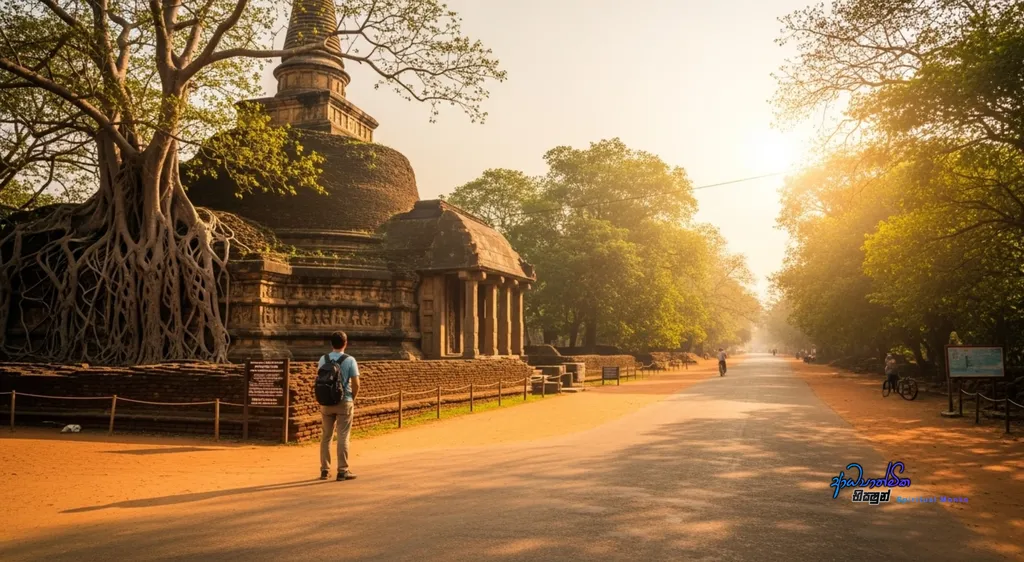
Let me give you an analogy. Imagine you are traveling from Colombo to Jaffna. Your destination, your target, is Jaffna. Along the way, you pass through many cities, including the beautiful and ancient city of Anuradhapura. Anuradhapura is rich with sacred sites and natural beauty; it’s a place that makes you want to stop and stay awhile.
Now, if you get off your path and start exploring every detail of Anuradhapura, studying its history, visiting every monument, what happens to your main goal? You will never reach Jaffna. You become lost, engrossed in the journey’s midway point.
This is precisely what happens when you get obsessed with identifying Chakras and Kundalini during your meditation. These are just phenomena along the way. If you stop to analyze them, you lose sight of your ultimate spiritual destination.
Embrace the Mind of a Child
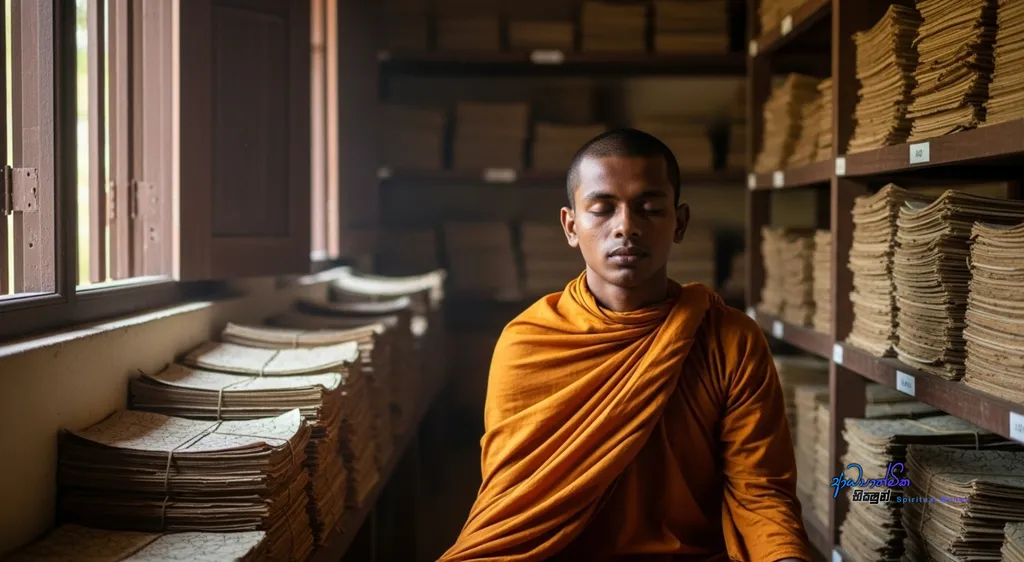
Instead, when you meditate, you must become like a small child. I have emphasized this before because it is essential. When you teach a child to write the letter ‘A’, the child simply focuses on writing ‘A’. They don’t ask, “Is there also a letter ‘B’? Are there more letters? Is this the only one?” They are given a task. perhaps to fill two pages of a notebook with the letter ‘A’ and they do just that. They complete the task with simple focus.
This is the mindset that allows meditation to develop. A person who has a lot of theoretical knowledge about Chakras and Kundalini often finds it impossible to practice effectively. Their mind is always working, always analyzing: “Which chakra was that? What energy did I just feel?” They are not meditating; they are thinking about meditating. You end up lost and confused. So please, put the knowledge aside. It is not needed for the practical work.
A Teacher’s Personal Approach: Practice Over Theory
I am sharing this with you from my own experience. As your teacher, I am knowledgeable about these concepts. But in my own practice, I am like that child. To this day, I have never gone searching for chakras. I don’t search for Chakras and Kundalini energy or universal energy. I don’t listen to talks or read books on these subjects because I know it is just knowledge. It is a waste of time that could be better spent in meditation.
The real secret is to face your practice fearlessly. The Pali word is Nirbhaya, which means to be without fear. You must be brave and face whatever comes up in your meditation. The problem is when you try to interpret your experience through the lens of a book. You will never progress that way. You could practice for ten or twenty years and remain in the same place.
The True Path: Fearlessness, Honesty, and Direct Experience
So, what is truly required for this journey? It is not a map of Chakras and Kundalini. What you need is to be Nirbhaya (fearless). You need honest with yourself. And most importantly, you need to cultivate Sati, or mindfulness, to overcome the mental defilements, known in Buddhism as the Kilesas (such as greed, hatred, and delusion). That is the entire work.
The Buddha himself taught that the path is Paccattaṃ veditabbo viññūhi, which means ‘to be experienced individually by the wise.’ It is a journey of seeing and understanding for yourself, through your own direct experience. It is not about collecting knowledge from others. Study yourself, see for yourself, and walk the path. So please, do not come to me asking these questions anymore. Instead, practice quietly and diligently, like a child. If you feel your mind developing, if you are gaining something, just continue with that. Trust the process.
I hope you have understood this important point. May you take this advice to heart and commit to your practice without distraction.
We invite you to walk this path with us. Read our teachings, and most importantly, apply them practically in your own life. as you practice, questions will naturally arise. Please feel free to share your experiences and questions in the comments below, via email or contact form. I will do my best to offer guidance in future talks based on your progress. For now, begin this practice with an open heart and a mind free from expectation. Cultivate it correctly, and may you find the clarity and peace you seek.
Thank you for joining us. We hope this blog will be of great benefit to your spiritual journey.
May you all be well and happy.
May the blessings of the Triple Gem be with you all!


