


Categories: Maintaining Mindfulness
May the blessings of the Triple Gem be with you all!
Welcome. In our ongoing exploration of practical spirituality, we have often discussed the path of developing mindfulness. Through these teachings, many of you have cultivated a greater sense of balance, equanimity, a state the Buddha called Upekkhā, and built a stronger inner foundation. We have received messages that your patience and resilience have grown, and this is the very practical result we hope to inspire.
Our teachings are drawn from direct, practical experience, not limited to what is written in books or said by others. They come from the insights cultivated through practice. If you are new to this path, we encourage you to explore our articles in order to build a solid foundation.
We have provided guidance to address many common questions you might have. There is no need to be afraid. Should a practical meditation question arise, we have provided ways to seek clarification. Please understand that our focus is on supporting your meditation practice, and with that understanding, let us proceed.
Today, we will delve into a topic that many of you will encounter as your practice deepens: the experience of the emptiness of mind.
Two Paths, One Experience: Samatha and Vipassanā
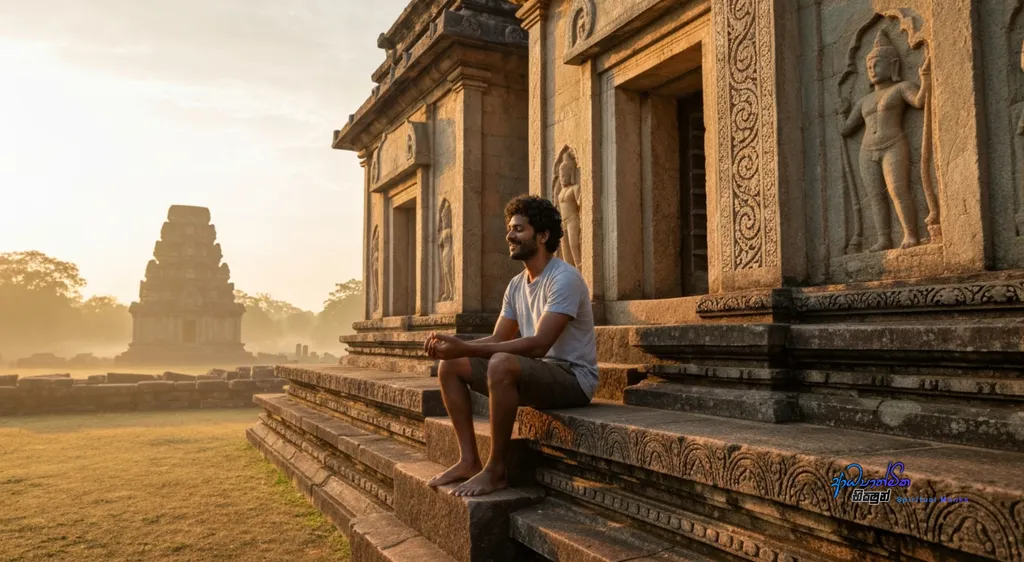
This feeling of inner space or emptiness of mind can arise through two primary forms of meditation. When you cultivate deep concentration and tranquility, a practice known as Samatha, your mind can settle into profound states of calm, often leading to this experience of emptiness. This can happen in practices we’ve discussed, like those for developing the ‘third eye’ or attaining higher states of consciousness.
Alternatively, this emptiness can arise through insight meditation, or Vipassanā. This is the path of pure mindfulness, where you simply observe the nature of your mind and body from moment to moment. As your mindfulness sharpens, you begin to see the constant flow of thoughts and sensations, and in the gaps, this spacious emptiness appears.
It’s crucial to understand that whether you arrive here via the stillness of Samatha or the insight of Vipassanā, the state of emptiness itself feels the same. The difference lies in how you perceive and relate to it. The Samatha practitioner might simply rest in the peaceful state, while the Vipassanā practitioner uses it as an object of investigation, guided by wisdom. The experience is one, but the ways of seeing it are two.

The Beautiful Trap: The Allure of Spiritual Attachment
For someone practicing concentration (Samatha), this emptiness of mind is incredibly pleasant. It’s a refuge from the noisy world of thoughts. As the practice deepens over time, this feeling becomes more frequent and powerful. Naturally, a strong liking, a desire, and even an attachment to this state can form. It feels good, and we want more of it.
This is the subtle trap. Even for those practicing insight (Vipassanā), the arising of this mental quietude can become something we cling to. The goal of our practice today, which is beneficial for everyone regardless of their path, is to learn how to relate to this experience without getting caught. This practice doesn’t hinder your progress; in fact, it sharpens your wisdom, or Prajñā, and accelerates your spiritual development.
The Practice: Applying Mindfulness to Emptiness Itself
So, what should you do when this emptiness of mind arises? The key is to apply the same mindfulness that got you here. Normally, in your daily life, you practice identifying thoughts with mindfulness: ‘This is a lustful thought,’ ‘this is an angry thought,’ ‘this is a thought of jealousy,’ ‘this is a thought of kindness,’ and so on. You learned to recognize the texture of your mind.
Now, you must apply that same skill to the state of emptiness itself. When the emptiness is present, you will notice that thoughts, especially distracting ones like sensual desire, are few. This brings a great sense of relief and peace. However, because it is so pleasant, we are often unmindful within it. We are simply enjoying it. This is where the work begins.
Turn your attention to your relationship with the emptiness. Ask yourself: ‘Am I clinging to this feeling? Am I attached to this peace?’ Watch the mind closely. You will begin to see a subtle ‘liking’ or ‘desire’ for the state to continue. This is the attachment, known in Buddhism as rāga or craving. Don’t judge it; simply recognize it. ‘Ah, there is attachment to this emptiness.’
Beyond Peace: Understanding Attachment, Aversion, and Liberation
Why is this so important? According to the Buddha’s teachings, any form of attachment or clinging is the root cause of our continued journey in Samsara, the endless cycle of birth, death, and suffering. We stop our journey through this cycle only on the day we completely eliminate attachment and its opposite, aversion.
When this peaceful emptiness of mind fades, as all states do, what happens? Observe your mind again. Do you feel a sense of loss, disappointment, or frustration? Do thoughts like, ‘Oh no, it’s gone,’ or ‘I wish it had lasted longer,’ arise? This reaction is aversion, or dosa. By observing this, you are now recognizing the other side of the coin: aversion to the absence of emptiness.
When you mindfully recognize both the attachment to the presence of emptiness and the aversion to its absence, your wisdom is born. You are seeing a fundamental truth about your mind. This act of seeing begins to weaken the defilements, or kilesas. Over time, as you continue this practice, the automatic desire for the state lessens. The disappointment when it fades also softens. You are moving from being a victim of your states to being a wise observer of them.
Practical Steps for Your Journey with Emptiness
This practice isn’t just for formal meditation sessions. For those who cultivate mindfulness throughout the day, this emptiness of mind can arise at any moment. The instruction is the same: watch your relationship to it. See how long you can remain in the state without attachment.
For example, if the emptiness lasts for five minutes, can you notice how much of that time is spent clinging, and how much is spent in balanced observation? With practice, lethargy or sleepiness that can arise in this state will diminish, and the attachment will naturally fade because you are seeing it clearly.
As you stabilize in this observation, you can gently make a determination, an adhiṭṭhāna: ‘May this feeling deepen for the sake of clear understanding. May it be for the sake of wisdom.’ This sets the right intention, not for pleasure, but for liberation.
Recognizing this attachment is a step forward. Recognizing the aversion is another step forward. When you see and understand this clinging, you are directly weakening the sense of ‘I’ and ‘mine’, the ego-conceit or mamathwa, that wants to possess the experience. You are letting go of the desire and aversion associated with it, which naturally reduces the grip of the ego.
Conclusion: The Path to True Understanding
As you continue to practice in this way, you will gain more direct experience. The results that lie beyond this stage will unfold naturally for you. There is no need to anticipate or strive for them. As we always say, if you do the work of this moment with mindfulness, the future results will take care of themselves. This was the core point we wanted to share with you today.
Let us dedicate ourselves to recognizing the attachment and aversion related to the emptiness of mind. By the power and blessings of the Buddha, the Dhamma (the teachings), and the Sangha (the community of the wise), the Triple Gem, may you have the strength to practice these instructions diligently. May your practice lead you to profound understanding and true liberation.
We invite you to walk this path with us. Read our teachings, and most importantly, apply them practically in your own life. as you practice, questions will naturally arise. Please feel free to share your experiences and questions in the comments below, via email or contact form. I will do my best to offer guidance in future talks based on your progress. For now, begin this practice with an open heart and a mind free from expectation. Cultivate it correctly, and may you find the clarity and peace you seek.
Thank you for joining us. We hope this blog will be of great benefit to your spiritual journey.
May you all be well and happy.
May the blessings of the Triple Gem be with you all!.


