


Categories: Other Meditation Teachings
May the blessings of the Triple Gem be with you all!
As someone exploring the spiritual path, perhaps walking a brave journey of self-discovery, there is a fundamental question you may have encountered in your practice. It is a question that lies at the heart of many meditative techniques: why do we use a specific part of our own body parts as a focus point in meditation? Why is a physical anchor used to concentrate the mind, achieve serenity, and unlock deeper results?
This article aims to illuminate this very topic, helping you understand the profound wisdom behind this practice.
The Power of a Physical Anchor: Choosing Your Focus Point
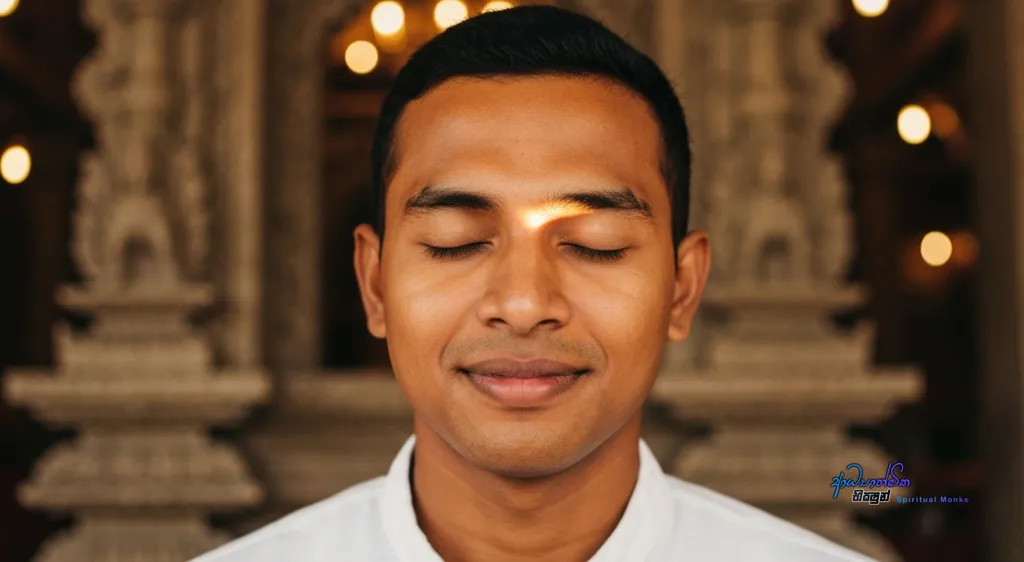
In the meditation programs we have explored, such as the ‘Third Eye Practical Meditation‘ series or the ‘To the Brahma Realm‘ practices, specific instructions are given. We guide you to bring your attention to a particular location on your body. Often, this is the center of the forehead, or the space between the eyebrows. Sometimes, the area of focus extends in a line from the forehead down to the middle of the nose. You are encouraged to choose any spot within this specific region.
But why this area exclusively?
The reason we select a part of the body is to give the mind a clear, tangible anchor. This simplifies the process, making it easier to move from a scattered state to one of clarity and insight. By choosing a specific focus point in meditation, we create a foundation for the deeper work to come.
Mind Over Brain: How Concentration Creates Tangible Sensations
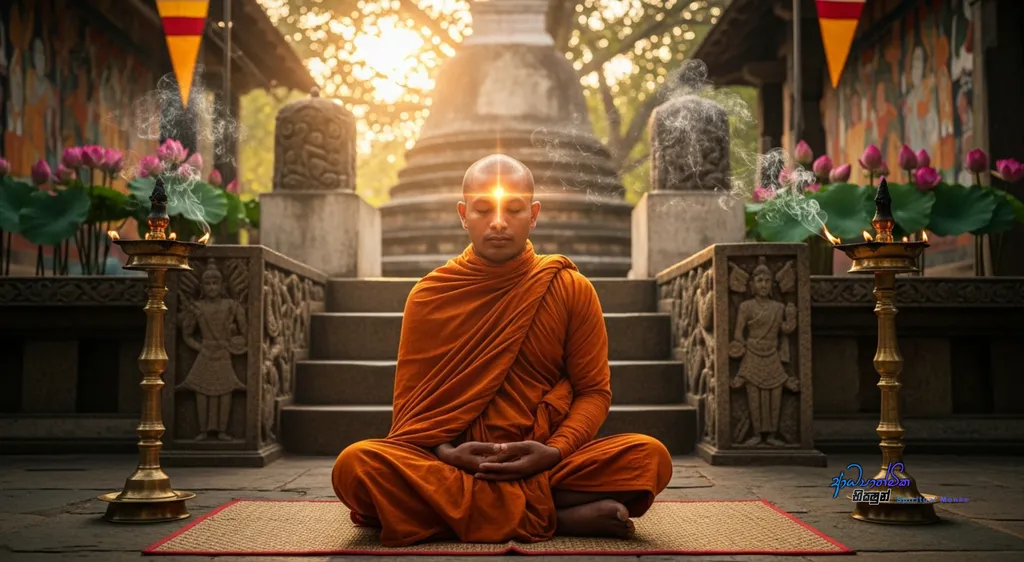
When you direct your mind to your chosen focus point and gently hold it there, perhaps repeating a simple word like ‘empty‘ as a support, you begin to notice something remarkable. The body responds.
From a conventional, Western medical perspective, many are taught that the brain is the master controller of the body. But in the spiritual sciences, especially as understood by great sages and supremely enlightened beings like the Buddha, there is a deeper truth. They understood through direct experience that the mind, or citta, as it is known in the Pali language, is a faculty that operates beyond the brain.
The Buddha taught that while the mind is associated with this body parts, it is not merely a product of it. As an ancient verse says: ‘Dūraṅgamaṃ ekacaraṃ asarīraṃ guhāsayaṃ’, meaning, ‘It wanders far, travels alone, is without a physical body, and lies in a cave (the body).‘ This mind, this formless consciousness, is what we work with.
This is why your simple act of focusing has a physical effect. The mind is so powerful that when you direct its energy to one spot, that spot begins to manifest sensations. Many who practice this feel a distinct pressure on the forehead, as if something is gently pushing there. Others feel a coolness, a tingling, or a sensation like an ant crawling.
The words to describe it are many, but the experience is a direct testament to the power of your own mind. You can realize, right in that moment, how potent an instrument your consciousness truly is when it is unified and directed.
Activating Your Inner Energy: The Science and Spirit of Concentration
So, what is happening on a deeper level?
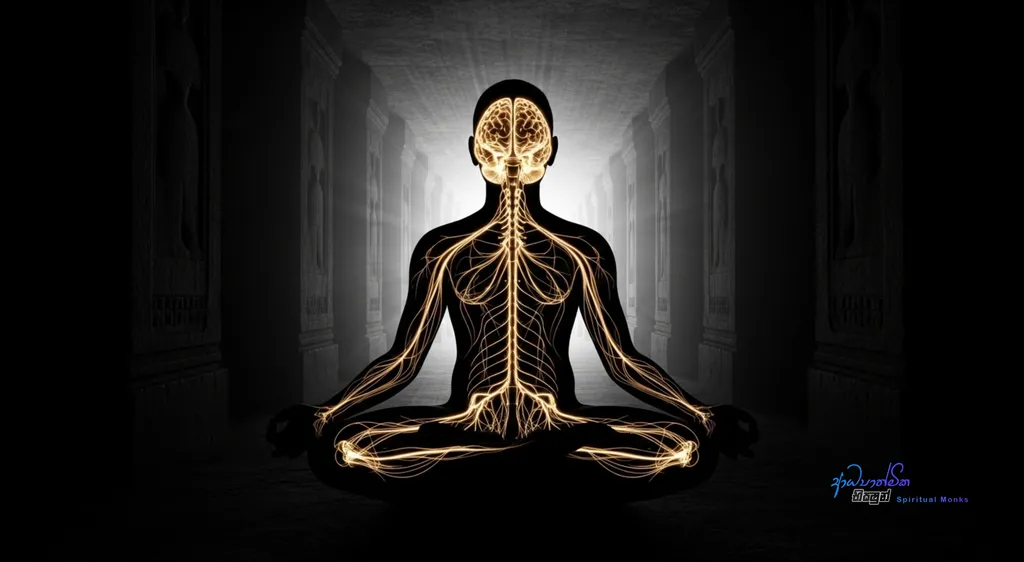
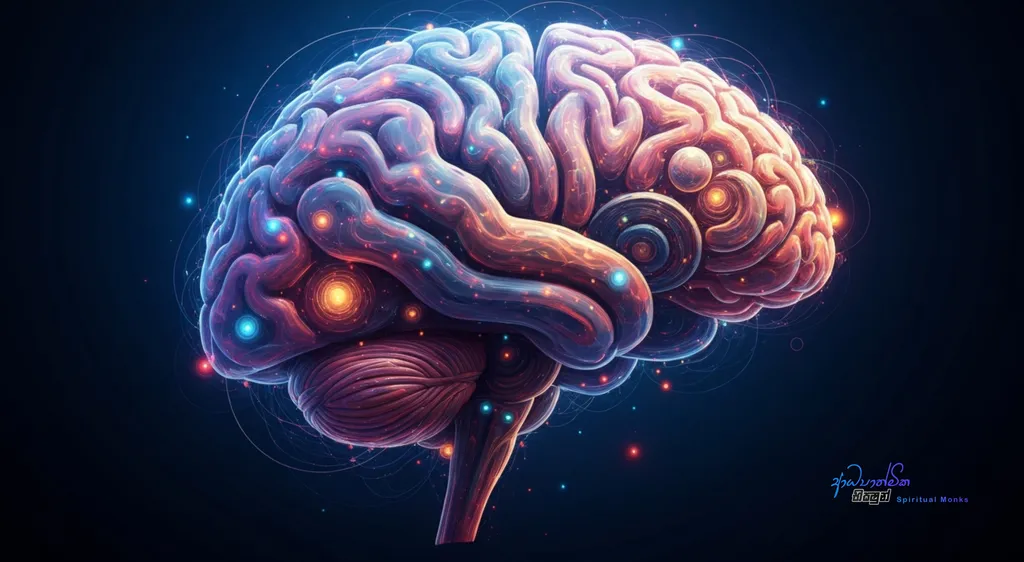
When you consistently hold your mind on this focus point in meditation, you are initiating a profound change. Your mental energy, or citta shakti, begins to stimulate the nerves in that area. This region of the forehead is connected to crucial centers within the brain, including what some call the pineal gland. By concentrating here, you are gently encouraging these systems to function in a new, more refined way.
Think of it like starting a special kind of engine. Since the day we were born into this human life, our inner faculties have operated in a certain default mode. This meditative practice introduces a new operational pattern. It’s an upgrade. The brain’s activity begins to shift, and this change radiates throughout the entire body, from the top of your head to the soles of your feet.
During your meditation session, your whole being starts to function differently, in a way it hasn’t since you were born. The senses become more developed, more refined. This is the mechanism by which spiritual energy is awakened and developed.
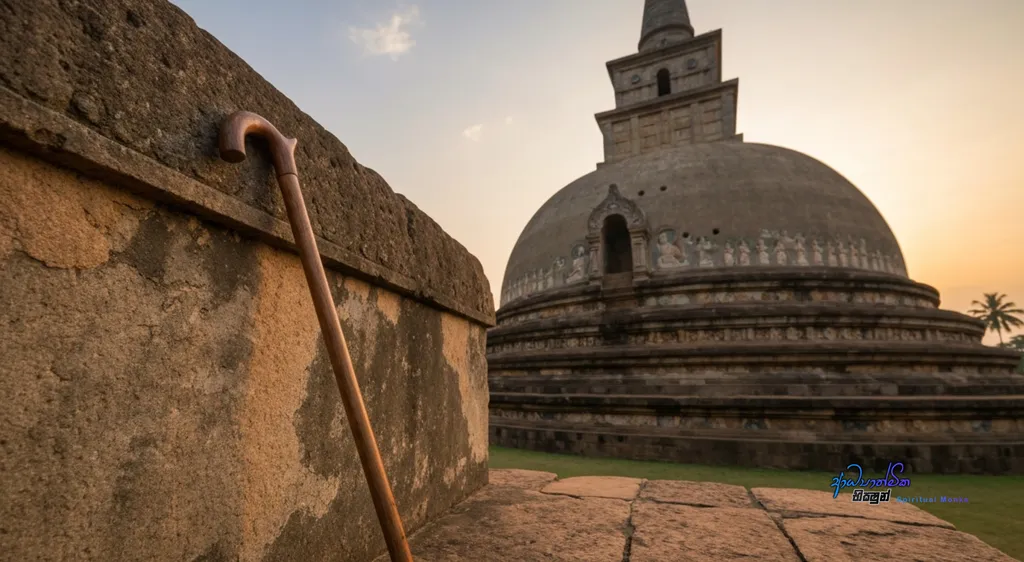
A Crutch for the Climb: The True Purpose of a Focus Point
It is critical to understand that this physical focus point in meditation is a means, not an end. It is a tool, a crutch, a helpful walking stick to support you on the journey. Its sole purpose is to help you gather your mind, achieve concentration (a state known as samādhi), and eventually enter deeper states of meditative absorption, or jhāna.
Once you arrive at these more advanced stages, for example, when the ‘Third Eye’ awakens or you attain the first jhāna, you no longer need to lean on the crutch. You have arrived at the next stage of the path, and you will engage with that new reality directly. The physical focus point has served its purpose, and you can let it go.
Meditate Without Fear: Trusting Your Mind’s Innate Wisdom
Some people develop a fear around this practice. They ask, ‘What if I use a slightly different spot? What if I change my focus point within this area? Could I cause myself some harm?‘ This fear can be a significant obstacle.
The path requires courage. A person who is determined to develop their mind,who meditates with the fearless attitude of ‘whatever happens, let it happen; even if I die, it is alright‘,will not be harmed. This is because their confidence is placed in the right thing: the development of the mind, as taught by the Buddha.
With this self-trust, you understand that these physical points are just temporary aids. Whether you focus between the eyebrows or on the center of the forehead, you are simply using a stepping stone to achieve concentration. Once the mind is unified, you move on. So, approach your practice without confusion or fear, trusting in the process.
I hope this explanation why are body parts used to concentrate the mind has brought you clarity on why we use a physical focus point in meditation. Understanding this allows you to engage with any meditation method with greater confidence and precision.
May the powerful blessings of the Buddha, the Dhamma, and the Sangha grant you the ability to understand these matters and continue to progress on your path.
We invite you to walk this path with us. Read our teachings, and most importantly, apply them practically in your own life. as you practice, questions will naturally arise. Please feel free to share your experiences and questions in the comments below, via email or contact form. I will do my best to offer guidance in future talks based on your progress. For now, begin this practice with an open heart and a mind free from expectation. Cultivate it correctly, and may you find the clarity and peace you seek.
Thank you for joining us. We hope this blog will be of great benefit to your spiritual journey.
May you all be well and happy.
May the blessings of the Triple Gem be with you all!


